When operating heavy machinery indoors, the focus is often on the height of the reach or the stability of the platform. However, the most significant impact—quite literally—is often happening at ground level. Scissor lift tire socks have emerged as an essential accessory for facility managers, contractors, and safety officers who need to balance heavy-duty productivity with the preservation of high-end flooring.
In this comprehensive guide, we will explore why scissor lift tire socks are a non-negotiable tool for modern indoor projects, how they compare to alternative solutions, and how you can implement them to safeguard both your surfaces and your staff.
Common Problems Caused by Exposed Scissor Lift Tires
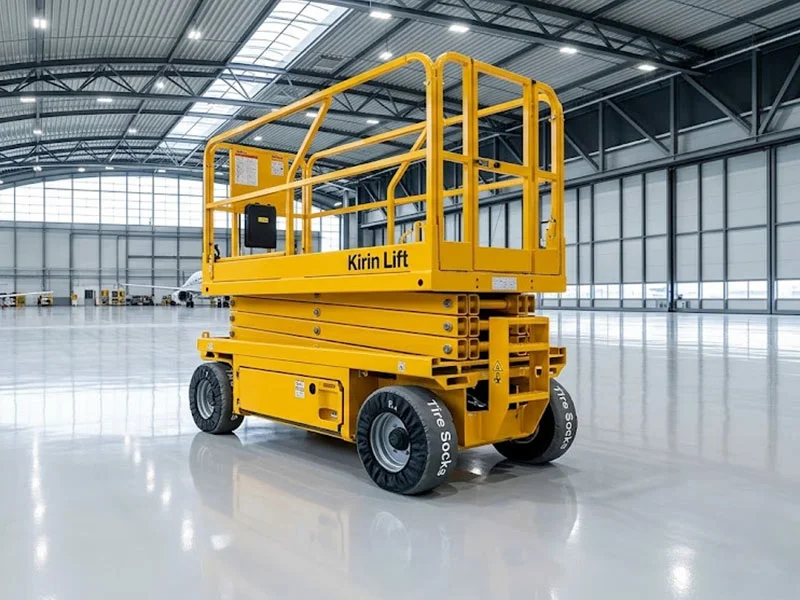
Standard scissor lift tires are designed for durability, but that durability often comes at the cost of the floor’s integrity. When an aerial work platform (AWP) moves across a finished surface, several issues can arise:
- Black Scuff Marks: Heavy rubber tires rotating and pivoting on polished concrete or epoxy leave carbon-based streaks that are notoriously difficult to remove.
- Abrasive Scratches: Tires often pick up small pebbles, metal shavings, or grit from the loading dock. Once the lift enters a finished area, those trapped particles act like sandpaper under the weight of several tons.
- Fluid Leaks and Stains: While the tires themselves don’t leak, they can track hydraulic fluid or grease across a clean floor if the machine has a minor leak that drips onto the wheels.
- Floor Delamination: On sensitive surfaces like vinyl composition tile (VCT) or specialized coatings, the sheer weight and friction of bare tires can cause the top layer of the flooring to peel or crack.
What Are Scissor Lift Tire Socks?
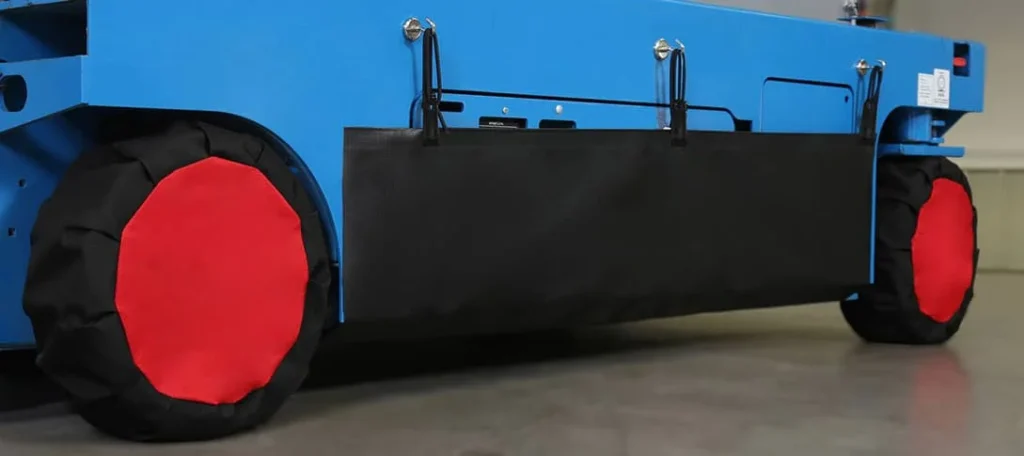
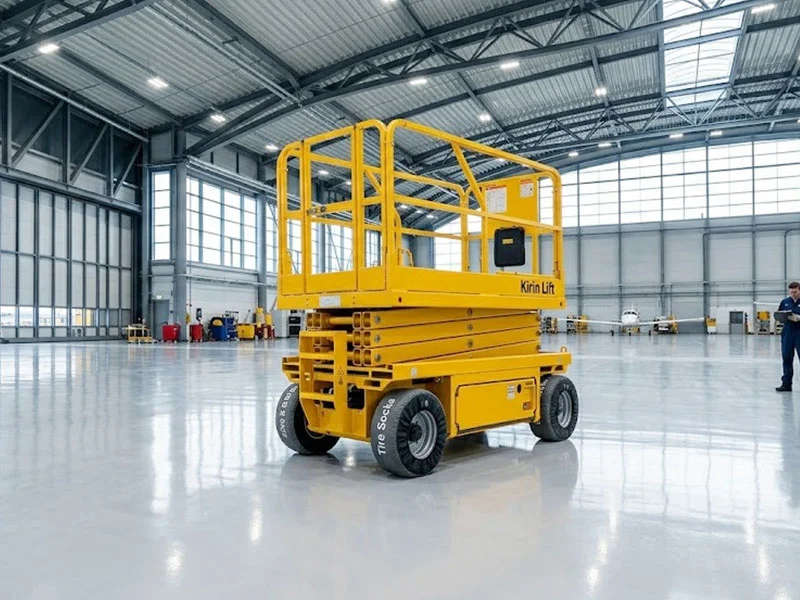
Scissor lift tire socks (also frequently referred to as scissor lift wheel covers or scissor lift socks) are heavy-duty, reinforced fabric sleeves designed to fit snugly over the wheels of an aerial lift. Think of them as high-performance “booties” for your machinery.
Constructed from industrial-grade materials—often a blend of woven polyester and heavy-duty elastic—scissor lift tire socks create a protective barrier between the rugged rubber of the tire and the delicate surface of the floor. They are engineered to withstand the immense pressure of the lift while remaining flexible enough to allow for full steering and driving functionality.
Why Scissor Lift Tire Socks Matter for Workspace Protection
The decision to use scissor lift tire socks isn’t just about aesthetics; it’s about the bottom line. Repairing a damaged industrial floor can cost thousands of dollars and result in significant operational downtime.
Prevent Floor Damage
The primary mission of scissor lift tire socks is to disperse the friction created during movement. By covering the tread, the “sock” ensures that the rubber never directly grinds against the substrate. This is particularly vital in new construction where the flooring is the final, most expensive piece of the puzzle.
Maintain Clean Indoor Environments
In “clean-room” environments—such as pharmaceutical labs, data centers, or food processing plants—contamination is a major risk. Bare tires bring in dust and debris from outside. Scissor lift tire socks act as a filter, ensuring that the machine remains “indoor-ready” from the moment it crosses the threshold.
Reduce Tire Marks and Stains
Even “non-marking” tires can leave ghost marks or heat-induced streaks on certain resins. Scissor lift tire socks provide a physical textile layer that eliminates the chemical transfer of oils and rubbers to the floor, keeping epoxy and polished concrete looking brand new.
Improve Workplace Safety
A clean floor is a safe floor. When tires leave slick marks or track in oil, they create slip-and-fall hazards for pedestrians. Furthermore, scissor lift tire socks ensure that the lift itself maintains a consistent level of contact with the floor without the “stuttering” or “skidding” that can happen when rubber meets a wet or waxed surface.
Key Benefits of Scissor Lift Tire Socks
Why choose tire socks for scissor lift applications over other methods? The benefits are multifaceted:
- Cost-Effectiveness: Compared to the cost of refinishing a floor or the daily rental surcharge for specialized non-marking lifts, a set of scissor lift tire socks is a minor investment.
- Universal Compatibility: Most tire socks for scissor lifts are designed to be adjustable, meaning they can fit various brands like JLG, Genie, Skyjack, and Haulotte.
- Ease of Use: They can be installed in minutes by a single operator, requiring no special tools or mechanical disassembly.
- Durability: High-quality scissor lift tire covers are designed for repeated use across multiple jobsites.
- Professionalism: Using scissor lift wheel socks shows the client that you respect their property. It’s a visual indicator of high-quality service and attention to detail.
Industries That Commonly Use Scissor Lift Tire Socks
While any indoor project can benefit, certain industries have made scissor lift tire socks a mandatory requirement:
- Hospitality and Retail: High-traffic areas with marble, tile, or luxury vinyl flooring cannot tolerate scuffs.
- Warehousing and Logistics: Large distribution centers use scissor lift wheel covers to maintain the integrity of their joint-sealed polished concrete.
- Data Centers: These facilities require extreme cleanliness. Scissor lift tire socks prevent the generation of rubber dust that could interfere with sensitive servers.
- Aviation: Hangar floors are often coated with specialized high-gloss epoxies that are susceptible to staining from heavy aircraft and maintenance equipment tires.
- Healthcare: Hospitals require the highest standards of hygiene and floor preservation to ensure easy cleaning and sterilization.
How to Choose the Right Scissor Lift Tire Socks
Not all scissor lift covers are created equal. When shopping for tire socks, scissor lift enthusiasts should look for the following criteria:
| Feature | What to Look For |
| Material Weight | Look for heavy-duty, double-layered fabric in the “tread zone.” |
| Sizing | Ensure the socks match your tire diameter (e.g., 12×4, 16×5). |
| Elastic Quality | High-tension elastic ensures the socks don’t slip off during tight turns. |
| Traction Strips | Some scissor lift tire socks feature internal silicone grips to prevent the tire from spinning inside the sock. |
Installation and Maintenance Tips
To get the most out of your scissor lift tire socks, proper installation is key:
- Clean the Tires: Before putting on the scissor lift tire covers, wipe down the tires to remove any grease or sharp debris that could tear the fabric from the inside.
- The “Half-On” Method: Slip the scissor lift tire socks over the top half of the tire. Drive the lift forward slightly so the wheel rotates 180 degrees, then pull the remainder of the sock over the rest of the tire.
- Check the Fit: Ensure the elastic is seated behind the rim so the sock won’t migrate during operation.
- Regular Inspection: Check your scissor lift wheel socks daily for holes. If a sock is torn, it can bunch up and potentially cause a trip hazard or mechanical interference.
- Cleaning: Most scissor lift tire socks are machine washable. Remove them after a dirty job, wash them, and air dry to maintain their integrity.
Common Mistakes to Avoid
Even with the best tire socks for scissor lifts, user error can lead to problems:
- Using Them Outdoors: Scissor lift tire socks are designed for smooth, indoor surfaces. Using them on asphalt or gravel will shred the fabric in minutes.
- Driving at High Speeds: Rapid acceleration or “burning out” will cause the tires to spin inside the scissor lift tire socks, leading to friction heat that can melt the elastic.
- Ignoring the Load Limit: Always ensure your lift is within its weight capacity. Excessive weight can crush the fibers of the scissor lift tire covers, reducing their effectiveness.
- Improper Sizing: Using a sock that is too large can lead to the fabric getting caught in the lift’s drive motor or steering linkage.
Scissor Lift Tire Socks vs. Non-Marking Tires
A common question is: “Why use scissor lift tire socks if I already have non-marking tires?”
While non-marking tires (usually grey or white) are better than standard black rubber, they are not perfect. Non-marking tires can still pick up debris, leave “ghost” impressions on soft floors, and develop flat spots. Scissor lift tire socks provide an extra layer of “insurance.” Many high-end jobsites actually require scissor lift wheel covers even if the machine is equipped with non-marking tires, just to be absolutely certain the floor remains pristine.
Furthermore, renting a lift with non-marking tires specifically can be more expensive. Owning a set of scissor lift tire socks allows you to use a standard lift on any jobsite, saving you money on rental premiums.
Frequently Asked Questions (FAQ)
Are scissor lift tire socks reusable?
Yes! High-quality scissor lift tire socks are made from durable textiles and can be used on multiple projects. As long as they are not torn or heavily saturated with oil, they can be washed and reused.
Do tire socks fit all scissor lifts?
Most tire socks for scissor lift manufacturers offer several sizes. You will need to know your tire dimensions (usually found on the sidewall of the tire) to ensure a proper fit.
Can they be used outdoors?
Generally, no. Scissor lift tire socks are intended for indoor use on smooth surfaces. Rough outdoor terrain like gravel or unfinished concrete will quickly destroy the fabric.
How long do scissor lift tire socks last?
Depending on the frequency of use and the condition of the floors, a good set of scissor lift wheel socks can last several months of active project work.
Do they improve traction?
Scissor lift tire socks are designed for protection rather than traction. However, on very slick, waxed floors, the fabric can sometimes provide a more consistent grip than cold, hard rubber.
Are tire socks better than non-marking tires?
They serve different purposes. Non-marking tires are a permanent equipment feature, while scissor lift tire socks are a removable protective barrier. Many professionals prefer socks because they are easier to clean and provide 100% certainty against scuffing.
Conclusion
Whether you are managing a high-end retail renovation or a sensitive clean-room installation, the right equipment protection makes all the difference. Protecting your client’s property is just as important as the work you perform at height. By integrating scissor lift tire socks into your standard safety and maintenance protocols, you ensure a professional finish that keeps both floors and reputations spotless.
If you are looking to upgrade your fleet with high-quality aerial work platforms or need expert advice on the best accessories for your specific project, our team is here to help. At Kirin Lift, we specialize in providing robust lifting solutions tailored to global standards.
For inquiries regarding our equipment or to discuss how we can support your next project, please reach out to us through the following channels:
- Email: info@klingtec.com
- WhatsApp: +86 188 6686 3188
Our specialists are ready to provide the technical support and product information you need to keep your workplace safe and efficient.