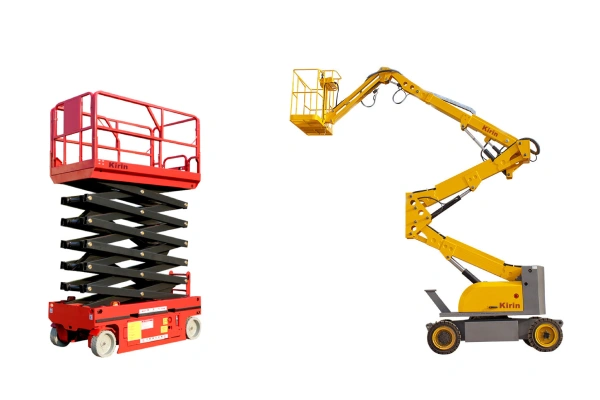
In the modern industrial, construction, and facility maintenance landscapes, aerial work platforms are indispensable assets. Among them, scissor lifts stand out for their exceptional stability, large platform areas, and significant weight capacities. However, a standard scissor lift in its out-of-the-box configuration is essentially a blank canvas. To truly unlock its operational potential and maximize return on investment, savvy project managers and fleet operators rely on specialized scissor lift attachments.
Integrating the right scissor lift attachments onto your equipment transforms a simple elevating platform into a highly optimized, task-specific workstation. Whether you are dealing with complex electrical installations, heavy mechanical piping, bulk material handling, or delicate facility maintenance, the strategic use of scissor lift attachments can dramatically alter your project timelines, labor expenditure, and safety margins. This comprehensive guide explores the world of scissor lift attachments, detailing their benefits, the most popular options across various industries, selection criteria, safety protocols, and maintenance schedules required to ensure an efficient, compliant, and highly productive job site.
What Are Scissor Lift Attachments?
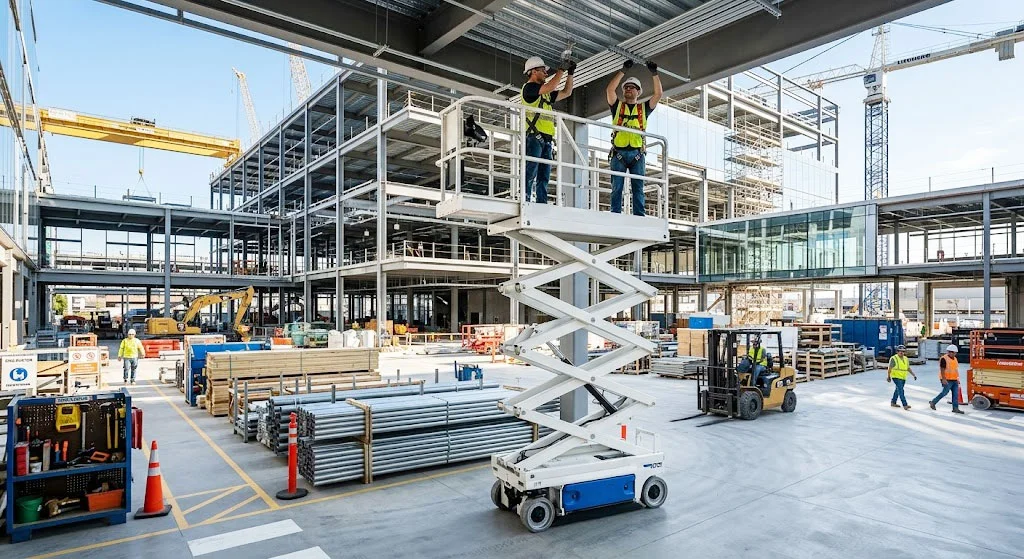
At their core, scissor lift attachments are engineered tools, accessories, or structural add-ons designed to be mounted directly onto the platform, guardrails, or chassis of a scissor lift. Unlike general-purpose tools, aftermarket or OEM scissor lift attachments are specifically developed to solve common aerial work challenges, such as tool organization, secure material transport, restricted space access, and operator ergonomic positioning.
Why Attachments Matter on Job Sites
On a busy construction or industrial site, efficiency is dictated by how smoothly tasks can be executed without unnecessary interruptions. Without specialized scissor lift attachments, operators frequently face logistical bottlenecks. For instance, an electrician installing overhead conduit might have to repeatedly lower the platform to retrieve more pipe, or an HVAC installer might struggle to balance heavy ductwork on a standard guardrail, creating a severe safety hazard.
By utilizing dedicated scissor lift attachments, companies can effectively customize their aerial platforms for the exact task at hand. These attachments securely hold materials, organize hand tools, extend the reach of the operator, and keep the floor space of the platform clear of tripping hazards. In essence, scissor lift attachments bridge the gap between generic machinery and specialized trade requirements, transforming a basic piece of lifting equipment into an integrated, high-efficiency aerial workshop.
Key Benefits of Using Scissor Lift Attachments
Investing in high-quality scissor lift attachments yields measurable returns across several operational dimensions. By matching your equipment to the unique demands of your workforce, you can realize substantial improvements in workflow velocity, safety metrics, and asset longevity.
Increased Productivity
The primary driver behind the adoption of scissor lift attachments is the immediate boost in workflow efficiency. When an aerial platform is equipped with targeted accessories, like material trays or pipe racks, operators have everything they need within arm’s reach. This eliminates the non-productive time spent lowering the lift to restock supplies, searching for misplaced tools on the platform floor, or manually holding awkward items while attempting to fasten them. Projects move from one milestone to the next with minimal downtime, directly accelerating project delivery dates.
Enhanced Workplace Safety
Safety is the cornerstone of any aerial operation. Standard scissor lifts offer exceptional stability, but human error and improper material handling can introduce severe risks. scissor lift attachments are engineered to mitigate these specific hazards. For example, using dedicated scissor lift attachments to secure heavy objects prevents tools or building materials from accidentally slipping over the guardrails and striking workers below. Furthermore, keeping the platform floor free of scattered tools drastically minimizes the risk of slips, trips, and falls—the leading causes of injuries on aerial work platforms.
Reduced Worker Fatigue
Manually lifting, holding, and positioning heavy or bulky materials while working at heights is physically exhausting. Over an eight-hour shift, this physical strain leads to worker fatigue, which correlates directly with an increase in errors, reduced craftsmanship quality, and a higher likelihood of workplace injuries. Utilizing ergonomic scissor lift attachments, such as panel carriers or specialized lifting mechanisms, transfers the physical burden of material handling from the human body to the machine. Operators remain fresh, focused, and energized throughout the work day.
Better Material Management
Material damage is a hidden drain on project profitability. When fragile materials, such as drywall panels, glass sheets, or calibrated electronic components, are piled haphazardly onto a lift platform, they are highly susceptible to cracking, scratching, or breaking. Trade-specific scissor lift attachments provide dedicated, secure slots and padding for these materials. This structured organization ensures that items arrive at the elevated workspace in pristine condition, reducing waste and the associated costs of ordering replacement parts.
Cost Savings Over Time
While purchasing specialized scissor lift attachments requires an initial capital expenditure, the long-term financial benefits far outweigh the upfront cost. The combination of minimized labor hours per task, zero material waste from damage, lower incident rates, and reduced worker compensation claims contributes to a highly favorable total cost of ownership. Additionally, by extending the utility of your existing fleet through versatile scissor lift attachments, you can avoid the need to rent or buy multiple highly specialized, single-purpose machines.
Most Popular Scissor Lift Attachments
To maximize your machine’s capabilities, it is essential to understand the wide array of options available in the marketplace. Here is a detailed breakdown of the most widely used and effective scissor lift attachments deployed across modern industrial sites.
Material Trays
Material trays are among the most basic yet transformative scissor lift attachments available. These rugged trays typically mount directly to the interior or exterior of the platform guardrails, providing a dedicated, lip-protected surface for fasteners, small parts, conduit connectors, and handheld power tools. By keeping small, high-frequency items out of the main walking area, material trays ensure that the platform floor remains clean, organized, and safe.
Pipe Racks
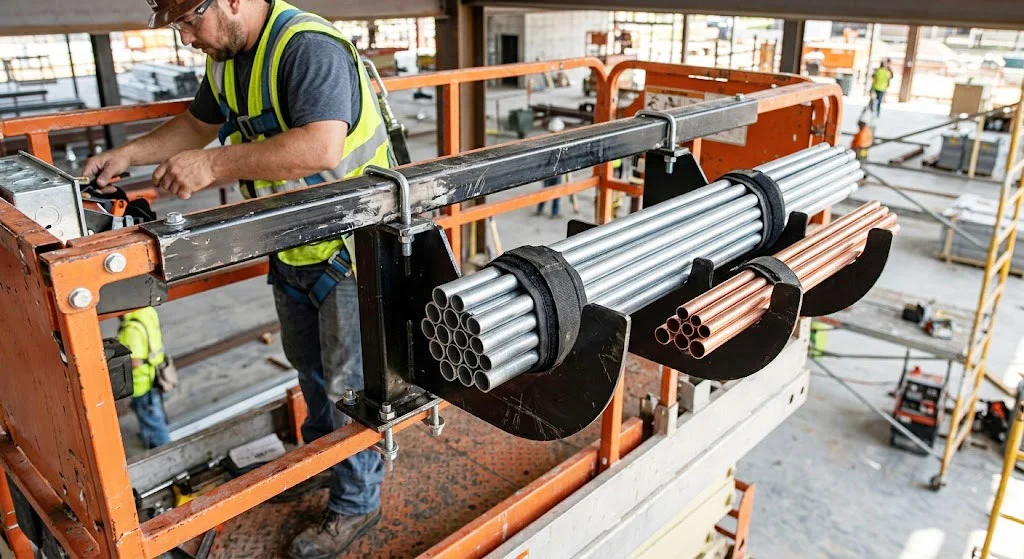
For mechanical, electrical, and plumbing (MEP) contractors, a specialized scissor lift pipe rack attachment is an absolute necessity. These scissor lift attachments consist of heavy-duty brackets that mount securely to the platform rails, allowing long segments of conduit, copper piping, or PVC tubes to be stored neatly on the outside or perimeter of the workspace. Using a designated scissor lift pipe rack attachment prevents pipes from rolling around underfoot, protects the materials from damage, and allows the operator to easily select and handle individual pipes without destabilizing the lift.
Panel Carriers
When installing large, flat materials like drywall, plywood, architectural siding, or glass panels, a panel carrier is an invaluable asset. These scissor lift attachments feature deep, padded channels that support the bottom edge of wide panels, holding them vertically and flush against the outside of the guardrail system. This keeps the interior deck space completely open for the operators to move freely, while keeping the panels stabilized against wind loads and sudden movements.
Tool Holders and Storage Boxes
To prevent expensive power tools from falling or getting damaged, specialized tool holders and heavy-duty storage boxes can be integrated directly into the platform layout. These scissor lift attachments feature custom cutouts, holsters, and weatherproof enclosures designed to hold specific tools, such as impact drivers, hammer drills, laser levels, and welding torches. This level of organization not only protects your technological investments but also ensures that operators can quickly swap tools without losing operational rhythm.
Lift Gates and Entry Accessories
Standard scissor lifts use swing-gates, chains, or drop-bars for operator entry. However, customized lift gates and specialized scissor lift step up attachment variants provide enhanced ergonomics and accessibility. A scissor lift step up attachment allows workers to safely adjust their working height within the platform enclosure to access highly confined or overhead spaces without standing on the mid-rails or guardrails—a practice that is strictly forbidden by OSHA safety regulations.
Outrigger Systems
For operations that require working on slight inclines, uneven terrain, or at maximum height configurations under windy conditions, outrigger systems provide critical structural stabilization. These heavy-duty structural scissor lift attachments extend outward from the machine’s chassis to widen its overall footprint, distributing the equipment’s center of gravity across a broader area and preventing tipping hazards on challenging surfaces.
Non-Marking Tire Kits
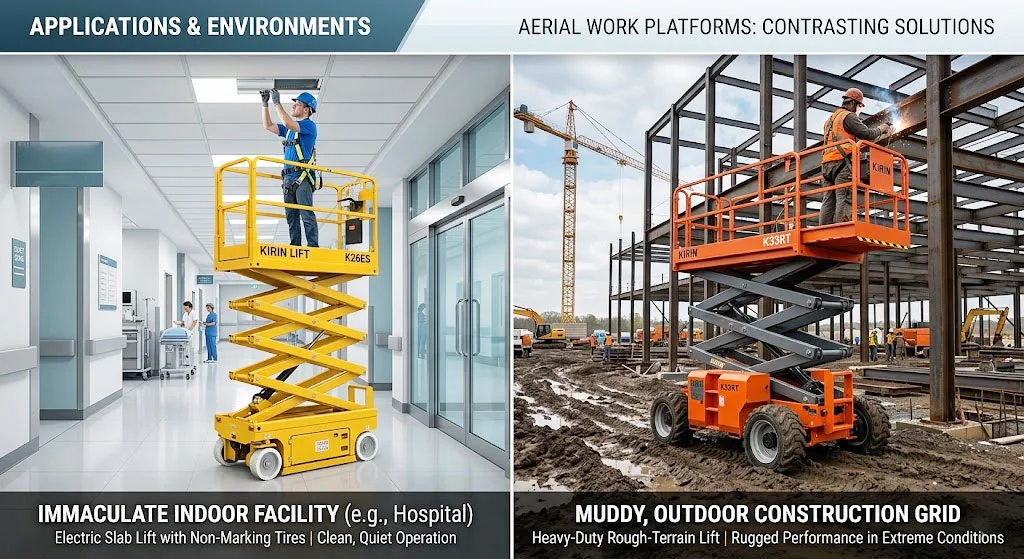
While not an attachment mounted to the platform itself, non-marking tire kits and protective tire covers are crucial rolling-assembly scissor lift attachments for indoor environments. These accessories prevent the scissor lift from leaving black rubber streaks, scuffs, or structural damage on finished epoxy, polished concrete, tiled, or carpeted floors inside commercial buildings, schools, and hospitals.
Fall Protection Accessories
While the guardrail system serves as the primary fall prevention mechanism, supplementary fall protection scissor lift attachments add an extra layer of defense. These include heavy-duty, certified overhead anchor points, retractable lanyard holsters, and self-closing entry gates that guarantee compliance with stringent international safety standards, protecting workers from the catastrophic consequences of an accidental fall.
Specialized Scissor Lift Attachments for Different Industries
Different industries present completely distinct operational challenges. The modular nature of modern scissor lift attachments allows organizations to tailor their equipment fleets to the precise demands of their specific vertical sector.
Construction Industry
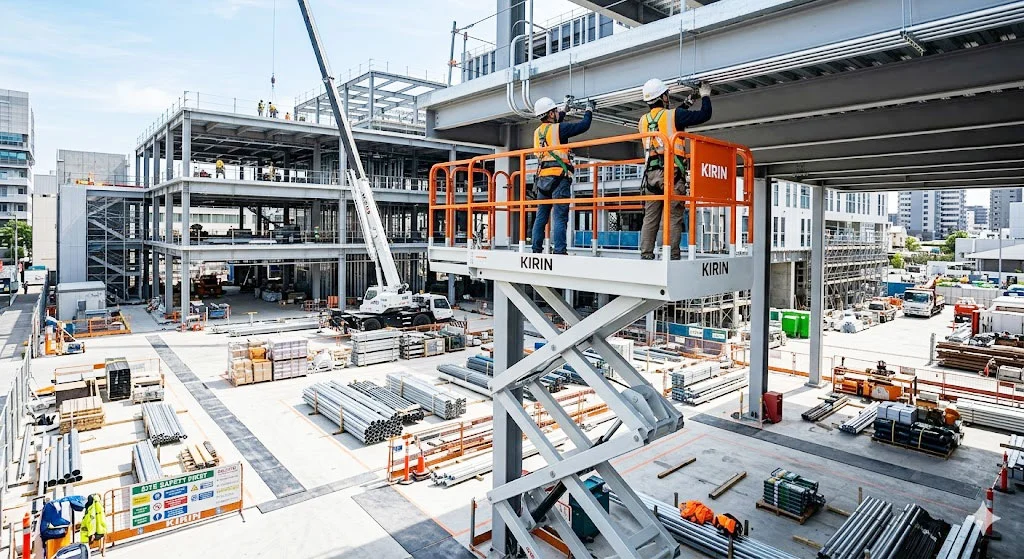
In the rugged world of commercial and residential construction, scissor lifts are subjected to punishing schedules and heavy material demands. Here, robust lifting attachments for scissor lifts and high-capacity panel carriers are frequently utilized. Contractors rely heavily on external material handling systems to hoist heavy steel studs, structural timber, and exterior insulation panels to upper floors. Furthermore, on sites where heavy machinery dominates, a skid steer scissor lift attachment is occasionally deployed to give compact loaders the capability to lift a stable work platform in muddy, rough-terrain environments where standard wheeled lifts cannot easily travel.
Warehouse and Logistics Operations
Modern logistics hubs and distribution centers operate on massive scales, featuring high-bay racking systems that extend dozens of feet into the air. In these environments, scissor lifts equipped with integrated barcode scanner holsters, heavy-duty inventory boxes, and high-frequency order-picking scissor lift attachments are standard. These tools enable warehouse personnel to perform cycle counts, stock replenishment, and order fulfillment tasks with extreme speed, minimizing fulfillment errors and maintaining inventory accuracy.
Electrical and HVAC Installation
Electrical contractors and HVAC technicians spend the vast majority of their working hours dealing with overhead infrastructure. For these trades, a specialized scissor lift pipe rack attachment is combined with large-format material trays to manage heavy wire reels, commercial duct sections, and electrical junction boxes. These specialized scissor lift attachments allow crews to systematically lay out hundreds of feet of conduit and ducting without needing constant ground-support assistance, turning a multi-person installation job into a streamlined, highly coordinated operation.
Facility Maintenance and Cleaning
For facility managers overseeing corporate campuses, stadiums, or shopping malls, maintaining aesthetics and structural integrity is paramount. These operations heavily utilize soft, non-marking tire wraps, padded bumper kits to prevent wall damage, and specialized pressure washing or window cleaning scissor lift attachments. These attachments securely hold fluid lines, spray wands, and squeegees, allowing maintenance crews to clean expansive facades and high-ceiling glass safely and efficiently without damaging finished architectural surfaces.
Manufacturing Plants
Inside automotive, aerospace, and heavy machinery manufacturing plants, scissor lifts are often integrated directly into assembly lines for overhead crane maintenance or large-component assembly. In these highly technical settings, a scissor lift attachment for alignm tasks or heavy component positioning is invaluable. Precision scissor lift platform attachment modules can feature micro-adjustment capabilities, built-in power strips, and pneumatic lines, allowing technicians to use air-powered assembly tools directly from the platform without dragging long hoses from the factory floor.
How To Choose the Right Scissor Lift Attachments
Selecting the proper scissor lift attachments requires a balanced analysis of your specific tasks, your existing equipment specifications, and relevant regulatory requirements. Using an incorrect or poorly engineered accessory can jeopardize worker safety and damage your machinery.
Consider the Type of Work
The first step in selection is analyzing the specific physical demands of your daily tasks. Are you primarily lifting long, linear materials like pipes? A scissor lift pipe rack attachment is your best choice. Are you working inside a finished office building on delicate flooring? You will need non-marking tire protection and padded bumper kits. Avoid buying generalized accessories if your business relies on highly specialized trade workflows; targeted, task-specific scissor lift attachments always deliver a superior return on investment.
Check Platform Capacity Limits
Every aerial work platform has a strictly defined Maximum Rated Load, which includes the weight of the operators, their personal tools, the materials being lifted, and all installed scissor lift attachments. Before installing any accessory, you must verify its weight and subtract that from the lift’s net capacity. Heavy-duty lifting attachments for scissor lifts can significantly reduce the remaining allowable passenger and material weight. Never exceed these engineered thresholds under any circumstances.
Ensure Attachment Compatibility
Not all accessories are universal. A scissor lift platform attachment designed for a wide, rough-terrain diesel lift will rarely fit properly or safely on a narrow, electric slab scissor lift. Always check with the original equipment manufacturer (OEM) or a certified aftermarket provider to verify that the specific model of scissor lift attachments you intend to buy is explicitly rated and certified for use with your exact brand and model of scissor lift.
Evaluate Indoor vs. Outdoor Use
Environmental conditions play a massive role in how scissor lift attachments perform. Wind acts as a major force when you are working outdoors; adding large, flat accessories like panel carriers can turn the lift into a sail, dramatically increasing the risk of a tip-over. Outdoor attachments must be rated for wind loads, whereas indoor applications focus more heavily on floor protection, compact dimensions, and exhaust-free operations.
Prioritize Safety Certifications
Never cut corners by fabricating your own makeshift accessories or buying uncertified, low-cost modifications online. High-quality scissor lift attachments should always carry official engineering certifications from recognized bodies such as ANSI (American National Standards Institute), OSHA, or CE. These certifications guarantee that the accessory has undergone rigorous structural testing, load-bearing stress analysis, and safety evaluations to ensure it will not fail under field conditions.
Safety Tips When Using Scissor Lift Attachments
Operating an aerial lift with modified or enhanced platform configurations requires strict adherence to specialized safety protocols. Integrating scissor lift attachments alters the machine’s ergonomics and dynamics, demanding heightened operator awareness.
Follow Manufacturer Guidelines
The golden rule of aerial work platform operation is to strictly follow the manufacturer’s operational manual. When you install authorized scissor lift attachments, they frequently come with specific addendums regarding maximum travel speeds, height restrictions, and reduced weight capacities. Ensure these documents are kept inside the weatherproof storage container on the lift platform so operators can reference them at any time.
Avoid Overloading the Platform
It can be incredibly tempting to load up a spacious scissor lift platform attachment with as many materials as possible to avoid making multiple trips. However, overloading is one of the leading causes of structural failures and catastrophic tipping accidents. Operators must actively calculate the combined weight of their body, personal safety gear, tools, and materials alongside the deadweight of the installed scissor lift attachments to ensure they remain safely below the rated capacity limit.
Inspect Attachments Before Use
A scissor lift inspection should always include a meticulous evaluation of any installed accessories. Before starting every shift, operators must inspect the mounting points, weld integrity, locking pins, and structural components of all scissor lift attachments. Look for signs of metal fatigue, stress cracks, deep rust, or bent frames. If any component shows signs of degradation or damage, the accessory must be immediately removed from service and tagged for repair or replacement.
Train Operators Properly
Even the most experienced aerial lift operator requires additional training when a machine is modified with new scissor lift attachments. Training programs should specifically address how the attachments alter the machine’s center of gravity, how to load materials into the accessories safely, how to use specialized internal extensions like a scissor lift step up attachment, and how to react in emergency situations. Documented training ensures operational competency and maintains regulatory compliance.
Maintain Proper Weight Distribution
How weight is arranged on an aerial platform is just as important as how much weight is loaded. Concentrating heavy materials on one specific side or corner of the platform can destabilize the lift, especially when elevating to maximum heights or driving over minor floor irregularities. When utilizing scissor lift attachments like pipe racks or panel carriers on the exterior perimeter, ensure that materials are balanced evenly across both sides of the platform to maintain a stable, centered vertical gravity axis.
Common Mistakes To Avoid
To maximize safety and productivity, fleet managers and operators must actively recognize and eliminate dangerous habits regarding the deployment of platform modifications.
Using Incompatible Attachments
Attempting to force an unapproved or incompatible accessory onto a scissor lift guardrail using improvised fasteners, heavy-duty zip ties, or custom welds is a recipe for disaster. Incompatible scissor lift attachments can shift unexpectedly during travel, break under sudden load shifts, or deform the lift’s structural guardrails, leading to severe structural failure and potential falls.
Ignoring Weight Restrictions
Ignoring the derating requirements specified by the addition of heavy accessories is an all-too-common error. Remember, if your lift has a 500-pound capacity and you install heavy-duty lifting attachments for scissor lifts weighing 75 pounds, your actual working capacity drops to 425 pounds. Failing to adjust your material loading calculations accordingly puts excessive strain on the hydraulic systems and scissor linkages.
Poor Attachment Maintenance
Many organizations meticulously maintain the engine, batteries, and hydraulics of their scissor lifts while completely ignoring the physical condition of their scissor lift attachments. Loose bolts, missing retention pins, and rusted structural sleeves on a pipe rack or tool tray can cause heavy components to detach at height, creating an immediate, lethal drop hazard for anyone walking below the platform.
Overcrowding the Work Platform
While a large scissor lift platform attachment or extension deck provides ample room, overcrowding it with multiple workers, massive toolboxes, and piles of material defeats the entire purpose of using specialized accessories. Overcrowded platforms restrict operator movement, increase the likelihood of accidental control activation, create severe tripping hazards, and make it incredibly difficult to safely navigate around the workspace.
Maintenance Tips for Scissor Lift Attachments
To guarantee long-term operational reliability, safety compliance, and a maximized lifespan, your scissor lift attachments must be integrated into your company’s comprehensive preventive maintenance program.
Regular Inspection Procedures
Establish a highly structured inspection protocol for all scissor lift attachments. On a monthly basis, a competent or certified mechanic should thoroughly inspect all critical structural welds, look for microscopic stress fractures using non-destructive testing if necessary, check the torque settings on all mounting hardware, and verify that all quick-release pins and secondary locking mechanisms function flawlessly.
Cleaning and Storage Best Practices
When scissor lift attachments are removed from a machine, they should not be left exposed to the elements or tossed carelessly into a scrap pile. Clean off all construction debris, drywall dust, adhesive residue, and moisture before storage. Store your attachments in a dry, covered, and well-organized warehouse space. Keeping them off the ground on heavy-duty pallet racks protects them from moisture-induced rust and accidental impacts from forklifts.
Replacing Worn Components
Never attempt to straighten a bent structural arm, weld over a cracked joint, or reuse a stripped bolt on a certified aerial accessory. If an inspection reveals a compromised component within your scissor lift attachments, always replace the part using genuine OEM replacement pieces. If the structural integrity of the main frame is compromised, decommission the accessory entirely to prevent any possibility of field failure.
Scheduling Preventive Maintenance
Incorporate your scissor lift attachments directly into your fleet management software system. Match their maintenance cycles with the parent scissor lift’s standard 250-hour, 500-hour, and annual inspection schedules. By syncing these maintenance windows, you ensure that your specialized accessories are never overlooked, keeping your entire operational asset base fully certified, safe, and ready for deployment at a moment’s notice.
Conclusion
Standard aerial work platforms are incredibly useful, but integrating the correct scissor lift attachments transforms them into highly specialized, hyper-efficient work systems. By deploying dedicated solutions like a scissor lift pipe rack attachment, heavy-duty material trays, ergonomic panel carriers, or internal access steps, companies can achieve remarkable improvements across all operational metrics.
The benefits of utilizing engineered scissor lift attachments are clear and compelling: reduced labor hours, enhanced workplace safety compliance, minimized material damage, and significantly lower operator fatigue. However, achieving these results requires a steadfast commitment to selecting certified, compatible accessories, adhering strictly to engineered weight limitations, providing comprehensive operator training, and maintaining rigorous equipment inspection schedules.
By investing in the right accessories and prioritizing a culture of safety, you can unlock the full potential of your fleet and drive your business toward higher levels of profitability and operational excellence. If you are looking to optimize your lifting setups or need expert guidance on configuring your aerial units with high-performance equipment, our team is ready to assist you. Get in touch with us today via Email: info@klingtec.com or reach out directly on WhatsApp: +86 188 6686 3188 to find the ideal structural and workspace solutions for your job site.
FAQ Section
What are the most useful scissor lift attachments?
The most useful scissor lift attachments depend heavily on your specific trade and application. For electrical and plumbing contractors, a scissor lift pipe rack attachment is invaluable for managing long conduit and tubing. For general contractors and drywall installers, material trays and panel carriers provide the greatest utility by keeping the work area organized and keeping large panels stabilized during installation.
Can scissor lift attachments improve safety?
Yes, high-quality scissor lift attachments significantly improve safety when used correctly. By providing dedicated, engineered storage spaces for heavy materials, tools, and supplies, they prevent items from falling over the guardrails and striking ground personnel. Additionally, they clear the platform floor of debris, drastically reducing the risk of operator slips, trips, and falls within the aerial workspace.
Are scissor lift attachments universal?
No, scissor lift attachments are not universal. Different scissor lift manufacturers employ distinct platform dimensions, guardrail configurations, and weight capacities. An accessory designed for an industrial rough-terrain lift will not fit safely onto a compact electric slab lift. Always consult your equipment’s OEM or a certified distributor to verify that an attachment is explicitly approved for your exact machine model.
How much weight can scissor lift attachments hold?
The weight capacity of scissor lift attachments varies wildly depending on the specific accessory type and its engineering design. Some material trays are rated for 50 to 100 pounds, while heavy-duty external pipe racks or material handling systems can hold several hundred pounds. Crucially, the weight of the attachment itself plus its payload must always be subtracted from the scissor lift’s overall rated platform capacity.
What industries use scissor lift attachments the most?
The industries that rely most heavily on specialized scissor lift attachments include commercial construction, electrical engineering, HVAC installation, mechanical plumbing, warehousing and logistics, high-density manufacturing, and commercial facility maintenance. Each sector utilizes tailored accessories to streamline their unique overhead work requirements.
How often should scissor lift attachments be inspected?
Like the aerial work platforms themselves, scissor lift attachments must undergo a visual and operational inspection by the operator before every single shift. Furthermore, they should be subjected to rigorous, documented structural and mechanical inspections on a monthly basis and during the machine’s comprehensive annual safety certification process to ensure ongoing structural integrity.