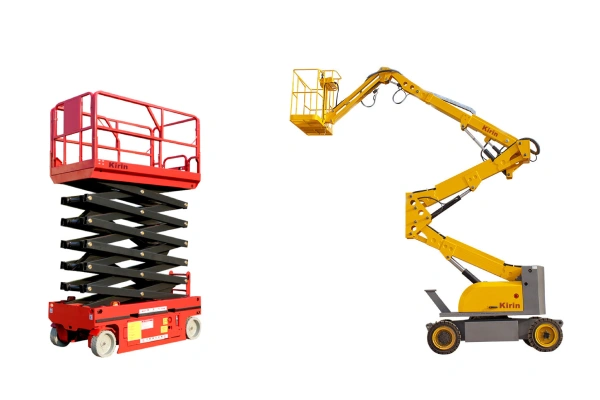
Aerial work platforms are the backbone of modern construction, maintenance, and industrial projects. Among them, boom lifts are unparalleled in their ability to reach high, navigate obstacles, and position workers exactly where they need to be. However, the immense utility of these machines comes with strict operational boundaries.
The most critical of these boundaries is boom lift weight capacity. Understanding and respecting this limit is not just a matter of machinery efficiency; it is a fundamental safety requirement. Operating a lift without a clear understanding of its weight constraints can lead to catastrophic equipment failure, tip-overs, severe injuries, and costly project delays.
This comprehensive guide breaks down everything you need to know about boom lift weight capacity, from how manufacturers calculate these limits to reading load charts and ensuring your crew stays safe on the job site.
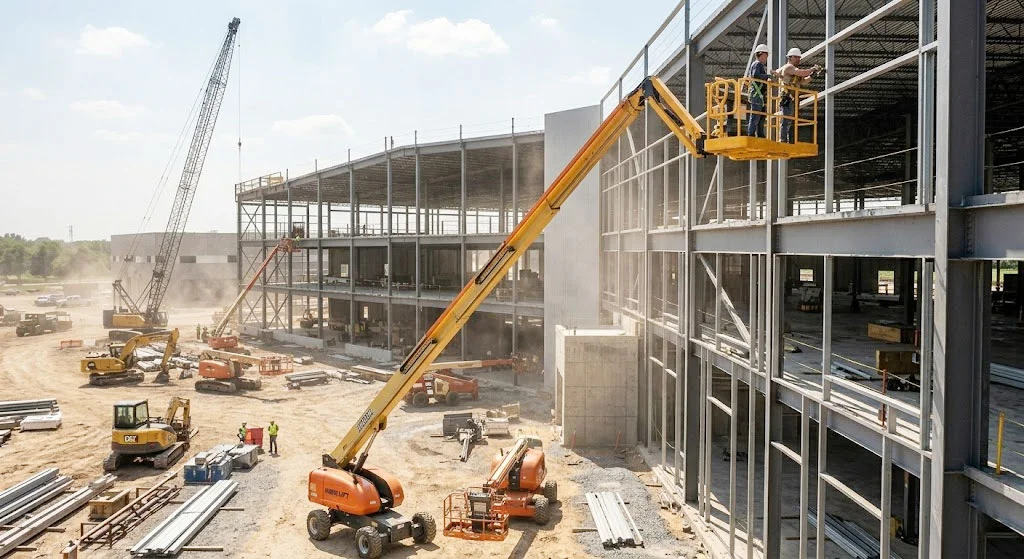
Why Boom Lift Weight Capacity Matters
At its core, adhering to the established boom lift weight capacity is about physics, stability, and structural integrity. Boom lifts are engineered with precise counterweights to balance the weight of the platform as it extends away from the machine’s base. If you exceed the maximum boom lift capacity, you disrupt this delicate balance.
Understanding your lift’s capacity matters for three primary reasons:
- Operator Safety: The most severe consequence of exceeding a boom lift weight limit is a machine tip-over or structural collapse. When a lift tips at a height of 60, 80, or 150 feet, the results are almost always fatal for the occupants in the platform and highly dangerous for ground personnel.
- Equipment Longevity: Overloading places immense stress on hydraulic cylinders, boom sections, cables, and electronic components. Regularly pushing a machine to or past its rated boom lift specifications accelerates wear and tear, leading to frequent breakdowns and shortened equipment lifespans.
- Legal and Financial Liability: OSHA (Occupational Safety and Health Administration) and ANSI (American National Standards Institute) maintain strict regulations regarding aerial lift operation. Violating rated capacities can result in hefty fines, increased insurance premiums, and severe legal liability in the event of an accident.
How Boom Lift Weight Capacity Is Measured
When reviewing boom lift specifications, you will notice that capacity is always measured in total pounds (lbs) or kilograms (kg) allowed inside the platform. This rating represents the maximum safe load the machine can support under specific operational conditions.
Manufacturers determine boom lift weight capacity through rigorous structural engineering tests and mathematical stability calculations. These tests account for:
- The Weight of the Boom Itself: The weight of boom lift components changes dynamically as the boom extends, retracts, raises, or lowers.
- Center of Gravity: As the platform moves horizontally away from the chassis, the center of gravity shifts. The further out the platform extends, the greater the leverage exerted against the machine’s base.
- Dynamic Forces: Capacity ratings must account for more than just static weight. They must factor in dynamic forces such as wind resistance, the movement of workers inside the platform, and the sudden shifting of tools or materials.
Typical Boom Lift Weight Capacity by Lift Type
Not all boom lifts are created equal. The boom lift weight capacity varies drastically depending on the design, size, and intended use of the machine. Below is a breakdown of typical weight capacities across the most common types of boom lifts.
Articulating Boom Lift Weight Capacity
Articulating boom lifts, often called “knuckle booms,” feature multiple sections that fold or bend. This design allows them to reach up, over, and around obstacles in tight spaces. Because their complex geometry alters the center of gravity across multiple joints, their standard boom lift weight capacity typically ranges from 500 to 660 pounds (227 to 300 kg). Some specialized, heavy-duty articulating models may offer higher capacities, but the standard industry benchmark remains around two workers and their basic tools.
Telescopic Boom Lift Weight Capacity
Telescopic boom lifts, or “stick booms,” feature a straight boom that extends linearly. These machines are built for maximum horizontal and vertical reach. Because their structural design is more direct than articulating lifts, they often boast higher weight tolerances. Standard telescopic models usually start with a boom lift weight capacity of 500 to 750 pounds (227 to 340 kg), while dual-capacity models can handle up to 1,000 pounds (454 kg) within a restricted operating zone.
Towable Boom Lift Weight Capacity
Towable boom lifts are compact, lightweight options designed to be transported behind a standard pickup truck. Because the overall weight of boom lift units in this category must remain low for towing purposes, their platform capacities are naturally limited. A typical towable boom lift weight limit sits strictly at 400 to 500 pounds (181 to 227 kg). This is generally enough for one worker and a modest set of tools.
Trailer-Mounted Boom Lift Weight Capacity
Similar to towable models, trailer-mounted boom lifts rely on outriggers for stability rather than a massive, heavy chassis. Consequently, their boom lift capacity mirrors that of towable units, maxing out between 400 and 500 pounds (181 to 227 kg). Attempting to overload a trailer-mounted lift is exceptionally dangerous, as these lighter machines rely entirely on their outrigger footprint to prevent tipping.
| Lift Type | Typical Weight Capacity Range | Best Suited For |
| Articulating Boom | 500 – 660 lbs (227 – 300 kg) | Navigating complex, cluttered spaces |
| Telescopic Boom | 500 – 1,000 lbs (227 – 454 kg) | Maximum height and straight-line reach |
| Towable Boom | 400 – 500 lbs (181 – 227 kg) | Light maintenance, residential work |
| Trailer-Mounted | 400 – 500 lbs (181 – 227 kg) | High portability across multiple job sites |
Key Factors That Affect Boom Lift Weight Capacity
A lift’s rated capacity is not a magical, unchanging number. Several environmental and operational factors can instantly reduce the safe boom lift weight capacity on a job site:
- Boom Extension and Angle: As a boom extends horizontally, the leverage on the base increases exponentially. A lift that can safely hold 1,000 pounds when extended straight up may only be rated for 500 pounds when extended fully horizontally.
- Wind and Weather Conditions: High winds act as an external force pushing against the platform and the boom. This adds dynamic lateral load to the machine. Most manufacturers mandate a reduction in capacity or complete shutdown of operation if wind speeds exceed 28 mph (45 km/h).
- Ground Slope and Terrain: Boom lift capacities are calculated based on the machine operating on a firm, level surface. Operating on an incline shifts the machine’s center of gravity toward the downhill side, severely compromising stability and reducing safe load limits.
- Side Hazards and Pull: Pushing or pulling objects outside the platform (such as pulling wires through a conduit or pressure washing a wall) introduces side forces. These forces subtract from the available boom lift weight capacity and can trigger a tip-over if not managed carefully.
Understanding Restricted and Unrestricted Platform Capacity
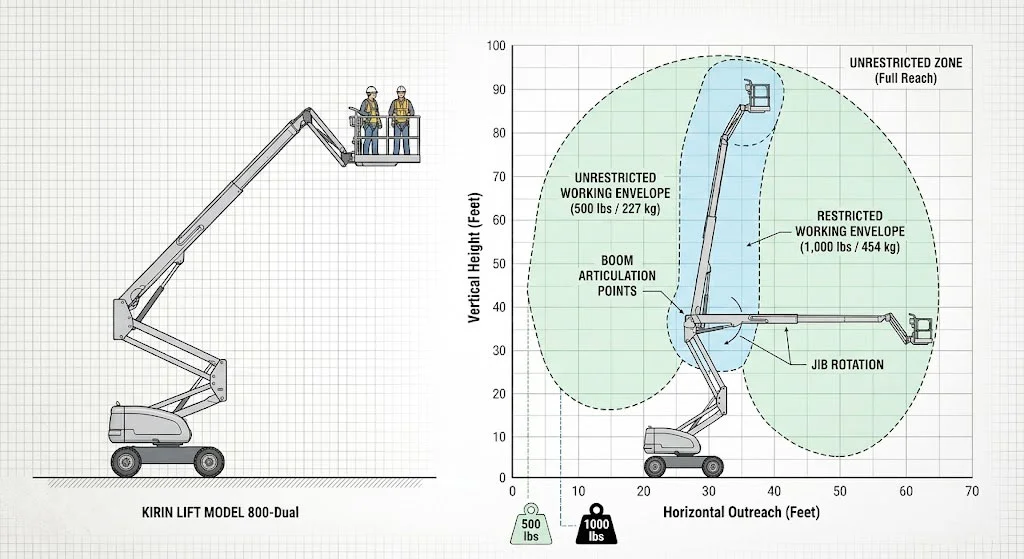
Modern aerial lifts frequently feature dual-capacity ratings, which categorize the platform’s limits into two distinct zones: restricted and unrestricted.
Unrestricted Capacity
Unrestricted capacity refers to the amount of weight the platform can safely hold throughout the machine’s entire envelope of motion. No matter how far you extend the boom horizontally or how high you raise it vertically, the machine will remain stable with this load. For most standard lifts, the unrestricted boom lift weight capacity is 500 pounds (227 kg).
Restricted Capacity
Restricted capacity allows for a higher weight limit—often up to 1,000 pounds (454 kg)—but limits the boom’s movement to a smaller, more vertical operating zone. When carrying a restricted load, the machine’s internal sensors will automatically prevent the operator from extending the boom too far horizontally, protecting the unit from tipping over.
How to Read a Boom Lift Capacity Chart
Every aerial work platform is equipped with a specific boom lift load chart, usually located on a placard near the ground controls and inside the platform. Understanding how to interpret this chart is a non-negotiable skill for any operator.
A typical boom lift load chart uses a grid system where:
- The Vertical Axis represents the platform height.
- The Horizontal Axis represents the horizontal outreach from the center of rotation.
- Arcing lines across the grid define the boundaries of the platform’s operating envelope.
When reading the chart, locate your required height and outreach. The point where those two lines intersect must fall within the approved envelope for your specific load weight. If your platform load is 750 pounds, you must look for the smaller, restricted boundary line. If your intended position falls outside that arc, you cannot safely reach that point with that much weight.
Calculating Total Platform Load Correctly
One of the most common errors operators make is miscalculating the actual weight inside the basket. The phrase boom lift weight capacity does not just refer to the materials you are lifting; it refers to everything added to the platform.
To calculate your total platform load correctly, you must sum the following components:
Total Platform Load = Weight of Operators + Weight of Personal Gear + Weight of Tools +Weight of Materials + Weight of Attachments
Let’s look at a practical scenario:
- Two workers weighing 200 lbs and 220 lbs respectively = 420 lbs
- Safety harnesses, lanyards, and heavy winter clothing = 30 lbs
- Toolboxes and hand tools = 50 lbs
- Replacement light fixtures or conduit materials = 150 lbs
- Total Platform Load = 650 lbs
If this crew is using a standard articulating lift with an unrestricted boom lift capacity of 500 pounds, they are overloaded by 150 pounds, creating a highly hazardous situation.
Common Causes of Boom Lift Overloading
Overloading rarely happens intentionally; rather, it is usually the result of oversight, poor planning, or a lack of training. Common causes include:
- Underestimating Worker Weight: Failing to account for the actual weight of workers plus their heavy-duty work boots, tool belts, and cold-weather apparel.
- Using the Platform as a Material Crane: Boom lifts are designed to lift personnel, not to act as cranes. Loading heavy bundles of pipes, drywall, or HVAC equipment into the basket quickly exceeds the safe boom lift weight limit.
- Accumulation of Debris: On demolition, sandblasting, or masonry jobs, waste materials like concrete dust, brick pieces, or water from pressure washing can pool in the basket, adding silent, unmeasured weight.
- Adding Rigging or Welder Packs: Mounting heavy equipment like welding power sources, gas cylinders, or aftermarket pipe racks to the outside of the guardrails adds significant weight and shifts the center of gravity.
Safety Tips for Staying Within Boom Lift Weight Capacity
Maintaining job site safety requires proactive management and strict adherence to equipment limits. Implement these best practices on every project:
- Know Your Specs Before You Rent or Buy: Always check the boom lift specifications of your specific make and model before starting a job. Never assume all 60-foot lifts have the same weight limits.
- Weigh Assets Before Loading: Use a digital scale to weigh heavy toolboxes and materials before they are handed up to the platform.
- Utilize On-Board Load Sensors: Modern boom lifts are equipped with automatic platform load-sensing systems. If the platform is overloaded, these systems will sound an alarm and disable all boom functions except for retraction and lowering. Never attempt to bypass or tamper with these safety sensors.
- Clear the Platform Regularly: Do not allow trash, discarded parts, or empty toolboxes to accumulate in the basket during a shift.
- Conduct Daily Pre-Operation Inspections: Verify that the boom lift load chart placard is clean, legible, and present at the control stations, and ensure all electronic load cells are functioning correctly.
Frequently Asked Questions About Boom Lift Weight Capacity
How much weight can a boom lift hold?
Most standard boom lifts have an unrestricted weight capacity ranging between 500 and 660 pounds (227 to 300 kg). High-capacity telescopic models can support up to 1,000 pounds (454 kg) within a restricted operating zone.
Does boom lift capacity change with height?
Yes. While the maximum allowed weight inside the basket remains anchored to the rated specifications, your ability to reach maximum horizontal extension changes based on how much weight is in the basket. Heavier loads restrict how far outward the boom can safely stretch.
Can I lift materials and workers at the same time?
Yes, provided that the combined weight of the workers, their personal protective equipment, the tools, and the materials stays entirely below the rated boom lift weight capacity. Furthermore, materials must be safely secured inside the basket and must not hang over the guardrails unless approved manufacturer attachments are used.
What happens if a boom lift exceeds its rated capacity?
If a modern lift is overloaded, its integrated electronic sensors will sound an alarm, flash warning lights, and lock out operational controls. On older machines without these sensors, overloading can lead to structural bending, hydraulic failure, or an immediate machine tip-over.
How do I find the capacity of my boom lift model?
The capacity ratings are clearly stamped on the machine’s data plate (serial plate), which is usually located on the turntable or chassis. It is also prominently displayed on the boom lift load chart located inside the platform basket and in the original manufacturer’s operator manual.
Choosing the Right Boom Lift Capacity for Your Project
Selecting the ideal machine requires balancing your height requirements with your total load expectations. If your project simply involves a single painter carrying a few cans of paint, a standard towable or articulating lift with a 500-pound capacity will suffice.
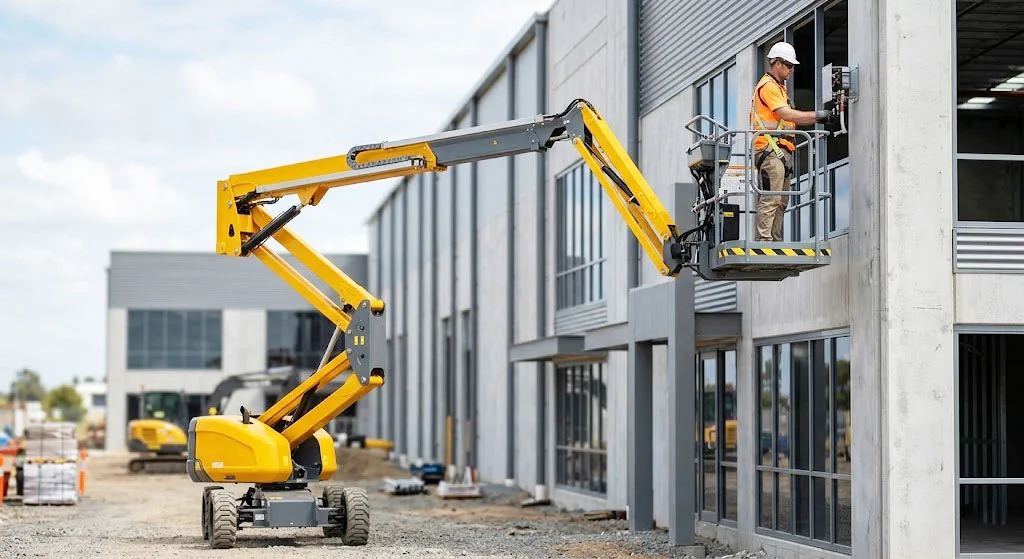
However, if your project involves heavy industrial installations—such as hanging large commercial glass panels, running heavy electrical conduit, or lifting a two-man welding crew with their gear—you must source a high-capacity telescopic boom lift rated for 750 to 1,000 pounds.
Always prioritize a safety buffer. If your calculated platform load sits right at 490 pounds, do not opt for a 500-pound capacity lift. Upgrading to a machine with a higher boom lift weight capacity provides peace of mind, ensures absolute compliance with safety standards, and protects your most valuable asset: your crew.
Conclusion
Mastering the nuances of boom lift weight capacity is a fundamental pillar of job site safety and operational efficiency. By recognizing how different lift types handle weight, understanding the critical difference between restricted and unrestricted capacities, and carefully calculating every pound that enters the platform, you eliminate guesswork from your aerial operations.
Never push the limits of your machinery—take the time to review your boom lift specifications, consult your load charts, and keep your projects moving safely. If you need assistance choosing the right high-capacity equipment for your next project, or have questions about specific machinery metrics, our team is here to help. Contact us today via email at info@klingtec.com or connect with us on WhatsApp at +86 188 6686 3188 to find the perfect, safe lifting solution for your team.