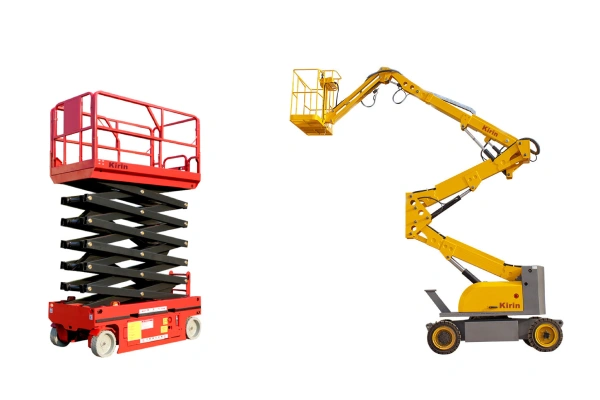
Aerial work platforms are essential tools in modern construction, warehousing, and maintenance industries. Among these, the scissor lift is widely relied upon for its stability, high payload capacity, and straightforward vertical reach. However, if you spend enough time operating or working around this heavy machinery, you are likely intimately familiar with its piercing, repetitive motion alarm.
While these alarms are vital for maintaining high standards of workplace safety, there are specific, highly controlled scenarios where the noise becomes a significant hindrance. For instance, teams working in sound-sensitive environments like occupied hospitals, high-end commercial offices, active schools, or television filming sets often find the standard factory decibel level unmanageable. This comprehensive industry guide will break down the technical realities of the underlying scissor lift system, explain exactly why these audio components are installed, and address the frequent operational query of how to disconnect beeper on scissor lift units safely, legally, and without exposing your business to massive liabilities.
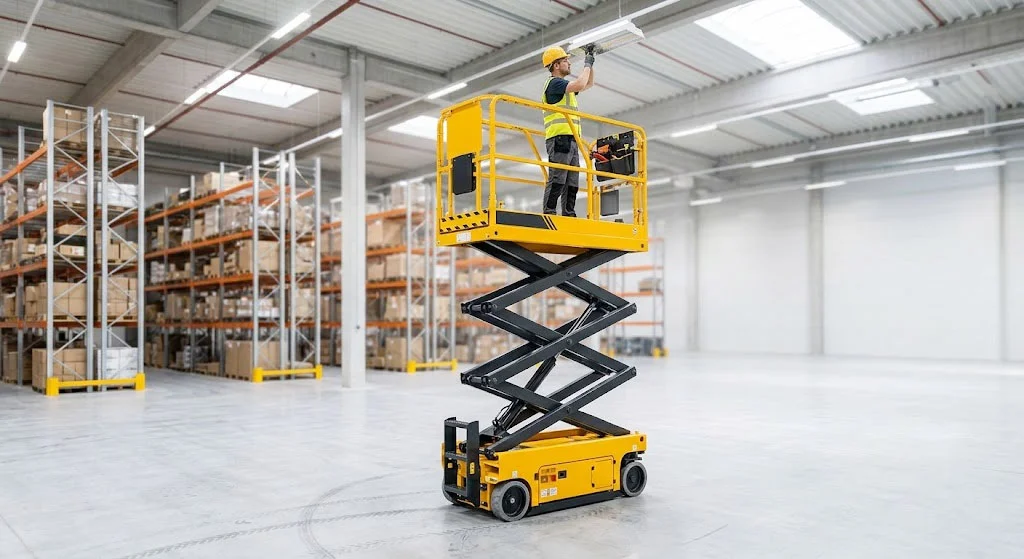
What is the Beeper System on a Scissor Lift?
The beeper or alarm system on an aerial work platform is a specialized, high-decibel electronic audible warning device. Unlike simple aftermarket horns, it is integrated into the machine’s primary electrical engineering schema. The device is designed to trigger automatically based on sensory input, ensuring it functions whenever the equipment undergoes active motion or encounters an operational hazard:
- Driving and Traveling: Pulsing continuously when the joystick is pushed to move the chassis forward or backward.
- Ascending and Descending: Emitting high-frequency alerts while the hydraulic cylinders expand or contract to change platform height.
- Safety Interlocks (Tilt and Overload Alarms): Sounding a rapid, continuous, or altering tone when internal angle sensors or load cells detect that the lift is on an unsafe grade or carrying weight beyond its rated capacity.
The hardware typically consists of a solid-state piezoelectric buzzer or a heavy-duty, weather-sealed automotive-grade horn. This assembly is generally mounted securely near the base of the machine, deep inside the lower chassis compartment, or nestled safely behind the ground control box to protect it from falling debris and moisture. The unit draws power directly from the lift’s main industrial battery bank (typically operating on a 24V or 48V DC loop) whenever the corresponding directional movement contactor closes.
Why the Beeper Is Important for Safety
Before exploring how to disconnect beeper on scissor lift components, an operator or facility manager must deeply analyze its structural role in workplace accident prevention. The primary function of an audible movement alarm is to continuously notify ground personnel, nearby utility workers, and forklift operators who may not have a direct line of sight to the lift.
Scissor lifts feature inherent blind spots, particularly when the platform is fully extended with tools, or when the operator is navigating tight, narrow industrial corridors. The high-decibel, penetrating pulse cuts through standard ambient factory noise, forcing ground crews to maintain a safe perimeter. This acoustic barrier drastically reduces the occurrence of blind-spot crushing accidents, foot injuries from moving tires, and catastrophic structural collisions with nearby scaffolding or structural columns.
Common Reasons Operators Want to Disconnect the Beeper
Despite its obvious safety utility, there are valid logistical and physiological reasons why an operator or job site manager might research how to disable beeper on scissor lift systems:
- Noise-Sensitive Zones: Performing interior retrofits or facility maintenance inside operational hospitals, surgical centers, call centers, or educational institutions where loud, repetitive alarms directly disrupt critical public services or patient recovery.
- Acoustic Echo and Auditory Fatigue: In enclosed concrete structures, deep basements, or narrow tunnels, the high-frequency beep bounces off hard surfaces, creating an echoing wall of sound. This induces severe auditory fatigue for the operator and can ironically mask other critical verbal safety commands or radio transmissions on site.
- Specialized Commercial Industries: Sound stages, indoor movie sets, or multi-tier automated logistics environments where strict noise control regulations are legally mandated during specific hours of operation.
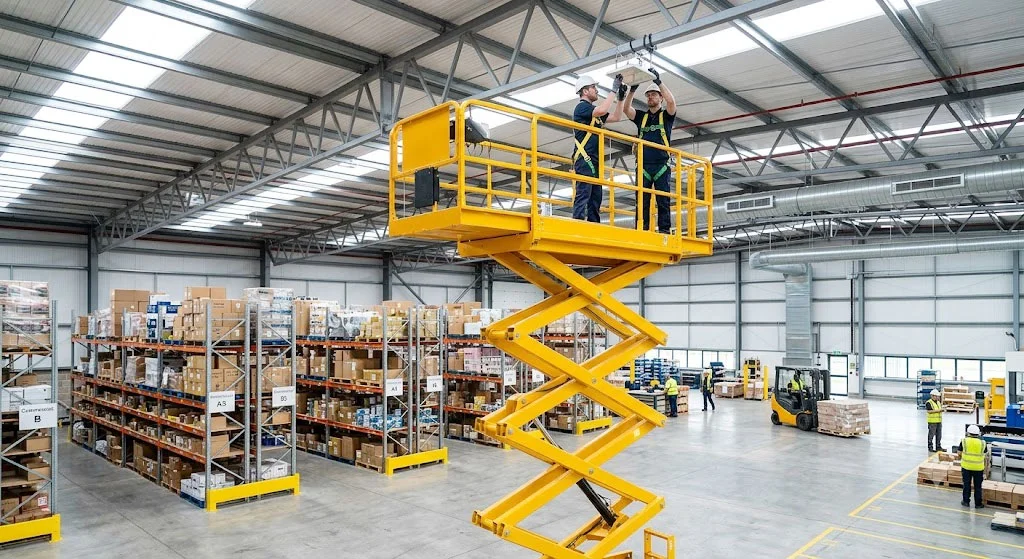
Before You Attempt Any Modification (Critical Safety Section)
If you are searching for structural steps on how to disconnect beeper on scissor lift wiring loops, you must halt immediately and review national regulatory compliance frameworks.
Critical Regulatory Warning: Performing unauthorized scissor lift modifications can violate strict regional occupational safety standards. Under OSHA (Occupational Safety and Health Administration) standard 29 CFR 1926.601(b)(4) in the United States, and strict CE certifications across Europe, removing, bypassing, or permanently disabling an active, factory-installed safety warning device is illegal. Doing so can result in severe financial compliance penalties, immediate job site shutdowns, and the total voiding of the equipment manufacturer’s structural warranty.
Furthermore, if an accident occurs on a job site where it is discovered that the safety alarm circuit was intentionally severed, the company, site supervisor, and individual technician can be held criminally liable for negligence. Before touching a single electrical lead, you must obtain explicit, written engineering authorization from the equipment manufacturer or the corporate safety director managing the project.
How the Beeper System Typically Works (Technical Overview)
To understand the mechanics behind how to disconnect beeper on scissor lift hardware, one must look closely at the underlying electrical system. The alarm is integrated directly into the lower ground control panel circuit or managed downstream by a central ECM (Electronic Control Module) or ECU (Electronic Control Unit).
In a standard factory wiring diagram, the alarm relies on a direct positive feed wire coming from the travel or lift relay circuit and a solid ground wire connected firmly to the steel chassis frame.
- Locating the Physical Unit: The compact buzzer is usually housed safely behind the ground control panel shroud or inside a weather-resistant junction box located near the primary hydraulic pump and valve manifold.
- The Circuit Interface: The alarm unit utilizes standard male/female spade connectors or a sealed multi-pin deutsch plug wiring harness.
While physically unplugging this wire or clipping the circuit will successfully stop the sound, doing so on modern units introduces technical complications. Modern digital control systems continuously monitor the resistance and continuity of safety-critical circuits. Severing the line can cause the ECU to instantly throw an open-circuit fault code, locking out the lift’s hydraulic and drive functionality entirely as a built-in safety fail-safe.
Safe Alternatives to Disconnecting the Beeper
Instead of executing a permanent electrical disconnect that breaks compliance laws and compromises human life, professional fleet managers utilize these smart, highly effective alternatives to scissor lift noise issues:
- White Noise / Broadband Alarms: Replace the traditional, irritating high-pitched tonal beep with a modern “smart” broadband or white noise directional alarm. These devices emit a multi-frequency “ssh-ssh” sound that is highly locatable to workers in the immediate hazard zone but dissipates rapidly outside the work perimeter, drastically decreasing overall site noise pollution.
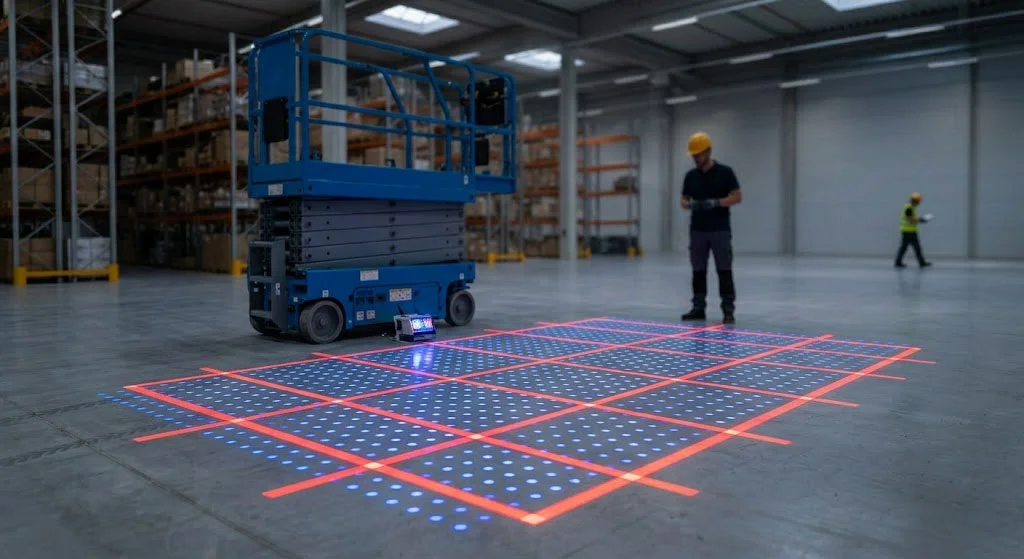
- Visual Warning Projectors: Install high-intensity blue or red LED safety spotters and line-projecting lights to the lift chassis. These project a bright, clear visual boundary or traveling dot onto the floor surface around the perimeter of the lift, providing an unmistakable warning to ground personnel without making a sound.
- Dedicated Ground Marshals: In ultra-strict noise-restricted zones, site supervisors can formally mute the alarm only if they deploy a dedicated ground spotter whose sole, uninterrupted responsibility is keeping the machine’s path entirely clear of personnel and obstacles during operation.
When You Should NOT Disconnect the Beeper
Under no circumstances should an operator ever attempt to circumvent the factory safety components or execute a process on how to disconnect beeper on scissor lift circuits in the following environments:
- High-Traffic Construction Sites: Mixed-trade environments where drywallers, electricians, and painters are operating concurrently in close proximity, and workers rely heavily on auditory cues to remain aware of their changing surroundings.
- Dimly Lit or Congested Warehouses: Facilities with poor visibility, blind corners, or high racking systems where the audible motion alarm is the single most effective tool to prevent forklift-to-lift collisions.
- Rental Fleet Equipment: If your company does not hold legal title to the machine, making physical scissor lift modifications or altering factory wiring harnesses is an immediate breach of contract, resulting in severe financial penalties and total liability transference in the event of an incident.
Professional Recommendation
As a global source manufacturer of advanced hydraulic elevators and aerial access equipment, our engineering position is absolute: Do not mechanically cut, alter, or permanently remove factory alarm wiring harnesses.
If your long-term commercial application demands an ultra-quiet working environment, you must handle the modification through approved, safe engineering channels. Consult with the equipment manufacturer to determine if the specific model’s firmware supports an adjustable decibel profile via an authorized digital control diagnostic tool, or replace the harsh tonal buzzer with factory-certified directional broadband signaling devices. Safety, regulatory compliance, and corporate liability protection must always take precedence over temporary field convenience.
Frequently Asked Questions (FAQ)
Is it legal to disconnect a scissor lift beeper?
Generally, no. In most jurisdictions, disabling a factory safety device without manufacturer authorization violates OSHA or local occupational health guidelines, exposing the contractor to major liability.
Can I silence the alarm instead of disconnecting it?
Muffling the external horn opening permanently with heavy duct tape, structural foam, or rags is still legally classified as unauthorized tampering with a safety device. If sound reduction is required, it must be achieved using an approved adjustable OEM part or alternative visual spotting systems under a strict job-site safety variance permit.
Why does my scissor lift beeper stay on constantly?
If the motion alarm sounds continuously without any directional joystick input from the operator, it indicates an active safety fault. The most common causes are an activated tilt sensor (the chassis has exceeded its safe slope angle), a tripped platform overload matrix (excessive weight in the basket), or a direct electrical short circuit inside the upper control box wiring harness.
Will disconnecting the beeper affect machine performance?
On older, purely analog hydraulic lifts, removing the buzzer simply breaks that branch of the circuit without affecting drive speed. However, on modern digital equipment managed by an integrated ECU, learning how to disconnect beeper on scissor lift systems by snipping wires will trigger a critical system fault code, instantly locking out all lift and drive functions to protect the operator.
What should I do if the beeper is malfunctioning?
If the alarm is broken, cutting out intermittently, or producing an abnormally weak sound, you must tag out the machine immediately using standard Lockout/Tagout (LOTO) protocols. Contact a certified heavy equipment field technician to diagnose the electrical fault and replace the damaged component with an OEM certified part.
Conclusion
Successfully mastering how to disconnect beeper on scissor lift systems requires looking past temporary convenience and focusing heavily on long-term operational safety and strict legal compliance. While repetitive, high-frequency alarms can be a source of frustration in confined or quiet zones, they represent a critical line of defense against workplace accidents and severe ground-crew injuries. Always prioritize factory-sanctioned adjustments, broadband white-noise swaps, or visual projection signaling over unauthorized manual wiring modifications to keep your personnel safe and your business fully protected from liability.
If you have technical questions about your equipment’s electrical systems or are looking to upgrade your fleet with compliant, modern aerial work platforms, our technical team is here to support you. Contact us directly for professional guidance and custom equipment configurations:
- Email: info@klingtec.com
- WhatsApp: +86 188 6686 3188