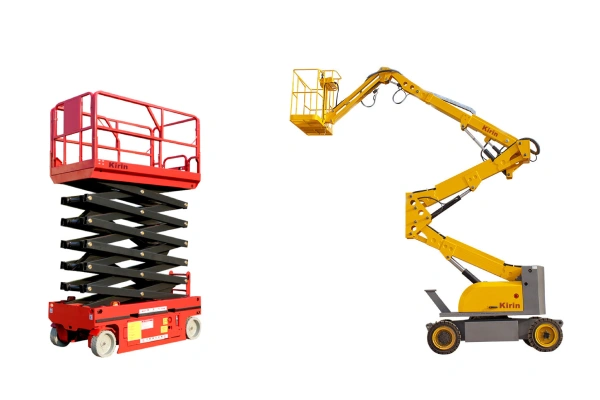
When working on indoor construction, facility maintenance, or warehousing tasks, accessing high workspaces safely and efficiently is a top priority. Traditional ladders and scaffolding can be unstable, slow to set up, and limiting in terms of platform space. That is where aerial work platforms come into play. Among the most reliable and specialized tools for these indoor projects is the slab scissor lift.
Whether you are an electrical contractor installing overhead fixtures, a warehouse manager optimizing vertical storage, or a facility owner looking for a scissor lift for sale to add to your permanent fleet, understanding this machinery is essential. This complete guide breaks down everything you need to know about the slab scissor lift, including how it works, its core features, major advantages, and how to select the right model for your specific job site.
What Is a Slab Scissor Lift?
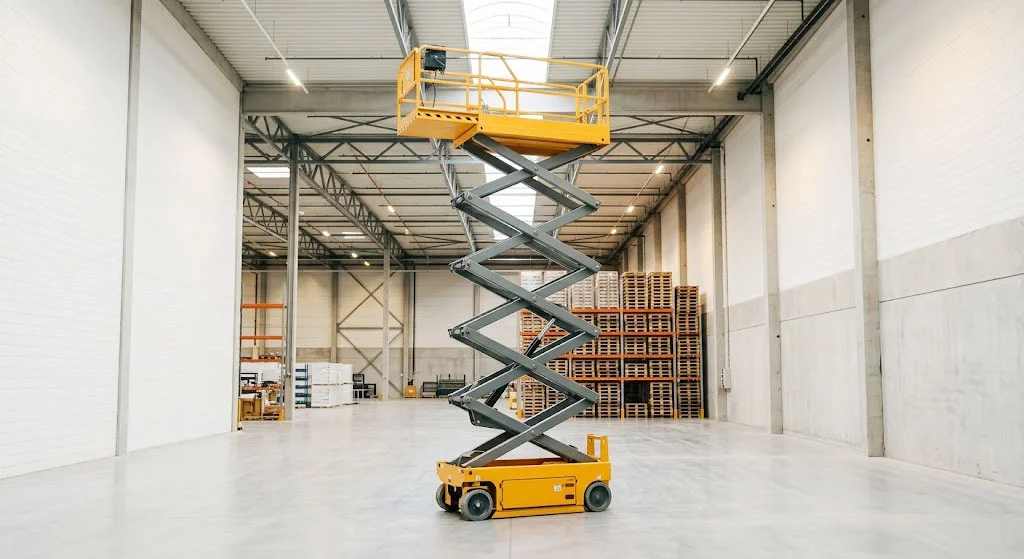
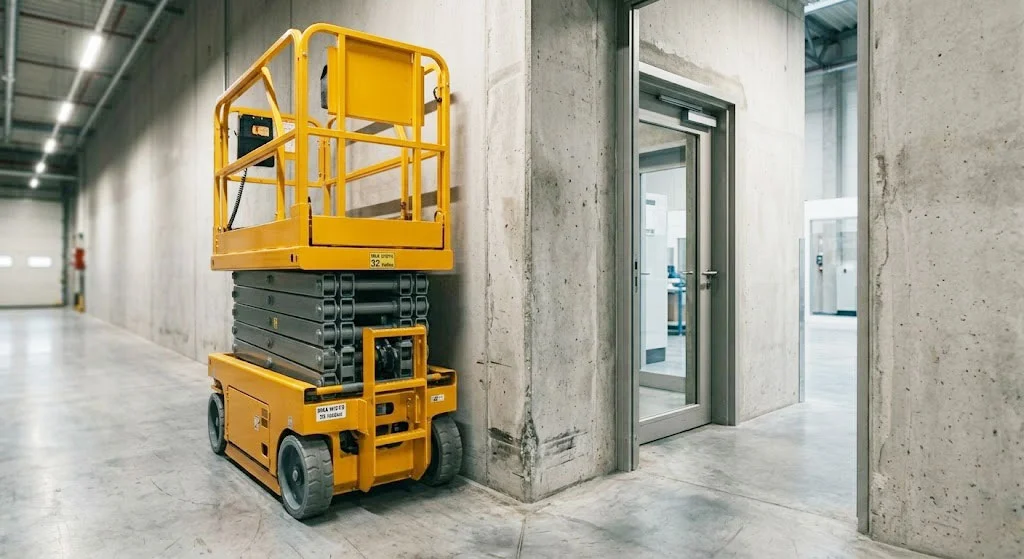
A slab scissor lift is a compact, highly maneuverable mobile elevating work platform (MEWP) engineered specifically for use on flat, level, and solid surfaces—commonly referred to in the construction industry as a “slab.” These surfaces typically include finished concrete warehouse floors, tile, asphalt, or smoothly paved outdoor zones.
Unlike heavy-duty outdoor construction lifts, a scissor lift is designed with a smaller physical footprint, quiet operation systems, and specialized tires to ensure it can operate within finished indoor environments without causing structural or cosmetic damage.
How a Slab Scissor Lift Works
The operational design of a slab scissor lift relies on a mechanical linked folding support structure known as a pantograph or “scissor mechanism.”
- The Lifting Process: When the operator initiates the lift command from the platform or base controls, hydraulic fluid is pumped into the lifting cylinders.
- Vertical Extension: This pressure forces the crisscross steel beams to unfold and extend vertically. Because the mechanism only moves straight up and down, a slab scissor lift provides an exceptionally stable platform directly above its own base.
- Proportional Controls: Modern units feature proportional drive and lift controls. This means the machine responds dynamically to how far the joystick is pushed, enabling micro-adjustments when positioning workers near delicate ceiling grids or expensive machinery.
Common Types of Slab Scissor Lifts
Not all indoor projects require the same size or reach capacity. To accommodate diverse workplace demands, manufacturers design several distinct varieties of the scissor lift:
Electric Slab Scissor Lifts
The standard electric slab scissor lift is the workhorse of indoor industrial maintenance. Powered by deep-cycle industrial batteries, an electric slab scissor lift offers completely emission-free operation and near-silent functionality. They typically offer working heights ranging from 19 feet to over 40 feet, making them versatile for the vast majority of commercial projects.
Compact Mini Slab Scissor Lifts
When standard frames are too heavy or cumbersome, a compact mini slab scissor lift is the ideal alternative. These micro-lifts feature remarkably low stowed heights and lightweight frames, often allowing them to be transported in standard passenger elevators. They are perfect for low-level access tasks (lifting between 10 to 15 feet) like changing lightbulbs in office buildings or hanging interior retail signage.
Narrow Slab Scissor Lifts
In tightly packed warehouses or narrow facility aisles, a standard machine footprint simply will not fit. A narrow electric scissor lift is specifically built with a slim chassis—often measuring just 30 to 32 inches wide. This narrow profile allows the narrow electric scissor lift to easily glide through standard single doorways and navigate congested spaces where a larger slab scissor lift would get stuck.
Key Features of a Slab Scissor Lift
The engineering behind a slab scissor lift targets the specific challenges of indoor work environments. Here are the defining features that make a slab scissor lift uniquely suited for indoor operation:
Non-Marking Tires
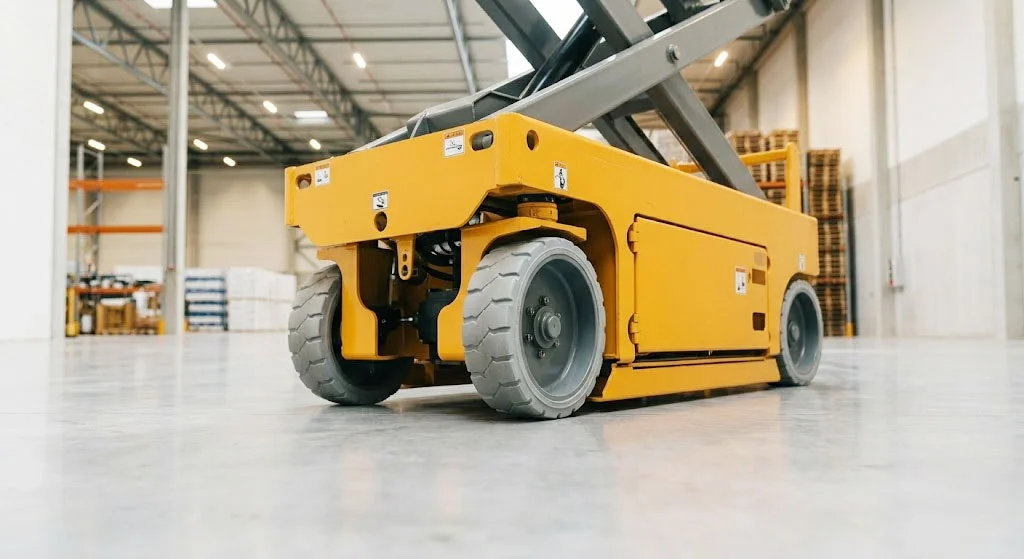
One of the most noticeable features of a slab scissor lift is its tires. Unlike the dark, knobby pneumatic tires found on outdoor machinery, a slab scissor lift uses solid rubber, non-marking tires. These specialized wheels prevent dark scuff marks, streaks, and structural tracks on delicate indoor flooring like epoxy coatings, finished concrete, tile, or marble.
Compact Design
An indoor slab scissor lift is incredibly compact. Many models are engineered to pass through standard commercial doorways and navigate tight right-angle turns without hitting walls or inventory shelving. Their stowed height is also low enough to clear standard door headers, removing the need to dismantle components just to move the machine from room to room.
Electric Power System
Virtually every modern slab scissor lift features a zero-emission electric motor powered by an onboard battery bank. This clean power framework makes the slab scissor lift perfect for enclosed environments where internal combustion engine exhaust would pose severe carbon monoxide safety hazards to personnel.
Platform Height and Capacity
Do not let the compact build fool you; a scissor lift provides excellent structural capacity. Depending on the exact model class, an electric slab scissor lift can provide platform capacities ranging from 500 lbs to upwards of 1,200 lbs. This ensures that two operators, along with their heavy toolboxes, replacement parts, and materials, can elevate safely.
Smooth Indoor Operation
Because a slab scissor lift drives on predictable, flat concrete surfaces, its drive motors and braking systems are fine-tuned for high precision. The braking mechanisms engage automatically the moment the joystick is released, providing rock-solid stability while extended.
Common Applications of Slab Scissor Lifts
Thanks to its versatility, a slab scissor lift is utilized across a vast range of commercial, industrial, and institutional sectors. Some of the most common applications include:
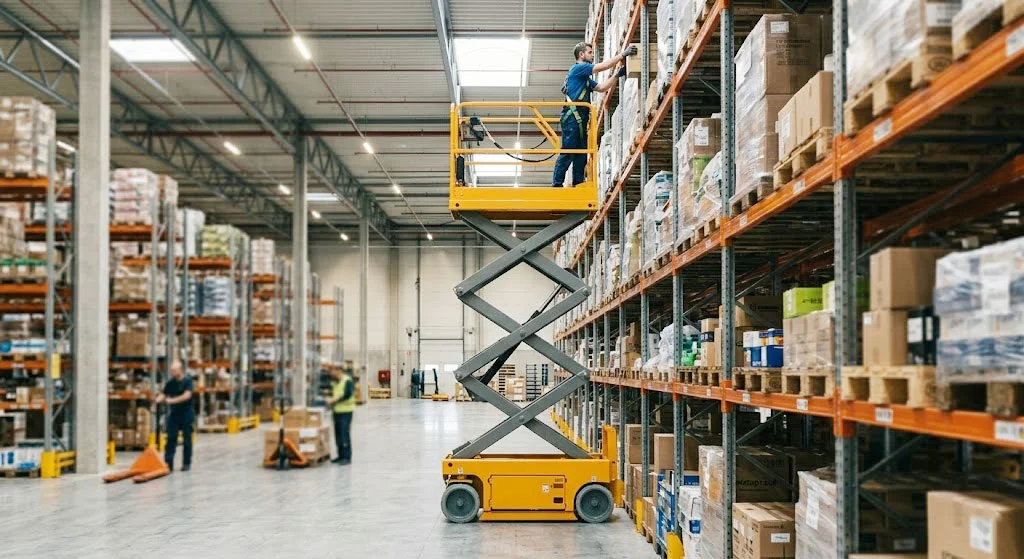
- Warehouse Operations & Inventory Management: Workers utilize a slab scissor lift to stock high-density pallet racks, conduct inventory audits, and safely retrieve items from overhead shelving.
- Electrical and HVAC Installation: Contractors depend heavily on a narrow electric scissor lift to string electrical conduit, hang lighting arrays, run data lines, and mount heavy ductwork along industrial ceilings.
- Facility Maintenance & Building Repairs: From replacing burnt-out light bulbs in sports arenas to performing routine maintenance on overhead crane tracks, a slab scissor lift keeps facilities running efficiently.
- Interior Commercial Painting & Drywall: When finishing large retail spaces or office complexes, a slab scissor lift provides a spacious elevated platform where painters can work continuously without resetting heavy ladders.
- Retail Displays and Signage: Large-format department stores and supermarkets deploy compact slab scissor lifts to safely hang seasonal marketing materials and change out structural window displays.
Slab Scissor Lift vs. Rough Terrain Scissor Lift
When sourcing aerial equipment, choosing the correct category for your workspace is vital. Misunderstanding the environmental limits of a slab scissor lift versus a rough terrain (RT) scissor lift can lead to workspace inefficiencies or serious tip-over hazards.
| Operational Feature | Slab Scissor Lift | Rough Terrain (RT) Scissor Lift |
| Primary Environment | Strictly Indoors / Smooth Concrete Pavement | Outdoors / Unimproved Dirt, Gravel, Mud |
| Power Source | Electric Battery (Zero Emissions) | Diesel, Dual-Fuel (Gas/LPG), or Hybrid |
| Tire Construction | Solid, Smooth, Non-Marking Rubber | Heavy-Duty, Foam-Filled, Deep Tread |
| Ground Clearance | Low (typically 2 to 4 inches with pothole guards) | High (typically 6 to 10+ inches) |
| Drive & Traction | 2-Wheel Drive (optimized for smooth floors) | 4-Wheel Drive (optimized for climbing slopes) |
| Leveling Capabilities | Must operate on completely level surfaces | Equipped with hydraulic leveling outriggers |
While a scissor lift focuses on compactness and indoor floor preservation, rough terrain lifts prioritize raw power, extreme outdoor terrain navigation, and massive weight capacities.
Advantages of Using a Slab Scissor Lift
Investing in a slab scissor lift for sale or renting an electric slab scissor lift for your next project yields immediate operational benefits:
- Enhanced Workspace Safety: Compared to traditional ladders or scaffolding, a scissor lift features fully enclosed steel guardrails, secure lanyard anchor points, and emergency shutoff valves, vastly minimizing the risk of catastrophic falls.
- Increased Work Efficiency: Instead of climbing down to relocate a ladder, an operator can drive a slab scissor lift while it is fully elevated (on approved level surfaces), moving seamlessly from one overhead task to the next.
- Zero Emissions for Clean Air: The battery-powered nature of an indoor slab scissor lift eliminates exhaust fumes entirely, keeping indoor air quality safe for workers in enclosed distribution centers or operational retail stores.
- Substantial Labor Savings: Setting up industrial scaffolding can take hours and require multiple workers. A slab scissor lift is instantly ready to deploy at the push of a button, freeing up labor hours for the actual project tasks.
- Minimized Structural Damage: Thanks to non-marking rubber wheels and specialized weight distribution designs, a slab scissor lift protects expensive commercial floor sealants, tiles, and subfloor systems from cracks and scuffs.
Limitations of a Slab Scissor Lift
While an incredibly effective piece of machinery, a slab scissor lift has specific environmental limitations that operators must respect:
- Strict Surface Dependencies: A scissor lift is strictly designed for level, hard surfaces. It cannot safely cross soft mud, loose gravel, or deep sand without sinking or tipping over.
- Limited Slope Gradeability: These machines have low ground clearance and lack the high-torque four-wheel-drive systems required to scale steep outdoor inclines.
- Battery Charging Downtime: Because a slab scissor lift relies on deep-cycle batteries, it requires regular charging intervals (typically 6 to 8 hours overnight). If a crew forgets to plug the machine in, it can stall project progress the next morning.
- Strict Vertical Reach Path: Unlike a boom lift, which can extend outward horizontally to clear obstacles, a slab scissor lift can only lift straight up. If your target work area is directly behind a large piece of fixed industrial machinery, you cannot reach it without clear overhead access.
How to Choose the Right Slab Scissor Lift
Selecting the ideal scissor lift requires analyzing your project environment and architectural constraints. Keep these key criteria in mind when looking over a slab scissor lift for sale or booking a rental:
Determine Required Working Height
It is vital to distinguish between platform height and working height.
- Platform Height: The actual measurement from the floor to the floor of the extended basket.
- Working Height: Calculated by adding roughly 6 feet to the platform height to account for the physical reach of an average human worker standing in the basket. Ensure your model’s working height easily clears your highest ceiling fixtures.
Evaluate Weight Capacity
Calculate the cumulative weight of everything going into the basket. This includes the weight of all workers, heavy power tools, replacement wiring, pipe fittings, or structural components. Never exceed the rated capacity of your chosen slab scissor lift.
Consider Workspace Dimensions
Measure the narrowest entry doorways, elevator openings, and storage aisles on your job site. If your paths are highly restricted, prioritizing a specialized narrow electric scissor lift is essential to avoid structural gridlock.
Battery Runtime and Charging
Review the amp-hour rating of the onboard battery pack. If you run high-intensity, multi-shift warehouse projects, look for a modern electric slab scissor lift equipped with high-efficiency maintenance-free AGM or Lithium-ion batteries to reduce charging downtime.
Review Safety Features
Ensure the unit is equipped with standard safety integrations, such as an automatic pothole protection system, tilt sensors with audible alarms, descent alarms, and an easily accessible emergency lowering valve at the base.
Important Slab Scissor Lift Safety Tips
Safety must always remain at the forefront of any aerial operations. Adhering to these strict safety protocols protects your crew and minimizes equipment damage:
- Conduct Pre-Operation Inspections: Every shift must begin with a comprehensive walk-around inspection. Check for hydraulic leaks, battery terminal corrosion, cracked structural welds on the scissor arms, and test the functionality of all emergency stop buttons.
- Verify Floor Integrity and Levelness: Even though a slab scissor lift features automatic pothole guards, always verify that the concrete floor is free of debris, floor drains, unanchored utility covers, or unexpected drop-offs.
- Never Overload the Platform: Adhere strictly to the manufacturer-specified weight limit posted inside the basket. Overloading drastically shifts the machine’s center of gravity, risking structural failure or a rollover.
- Wear Appropriate Fall Protection: While the guardrails provide primary protection, OSHA and local safety regulations often require operators to wear a full-body harness attached via an approved safety lanyard to the lift’s engineered anchor points.
- Keep the Extension Deck Clear: If your scissor lift features an extendable rollout platform deck, keep it completely clear of trash, loose tools, and materials to prevent tripping hazards at extreme heights.
Maintenance Best Practices for Slab Scissor Lifts
Routine preventative maintenance ensures your scissor lift operates reliably and holds its resale value over years of service.
- Monitor Battery Water Levels: If your electric slab scissor lift utilizes traditional flooded lead-acid batteries, check the water levels weekly. Top them off with distilled water only after a full charging cycle has concluded.
- Inspect the Scissor Pins and Bushings: The pivot points on the structural scissor stack experience high friction. Regularly inspect these zones and apply approved lubricants to keep structural movement smooth and noise-free.
- Check Hydraulic Fluid Levels: Low hydraulic fluid can lead to jerky lifting performance or prevent the lift from reaching its maximum rated platform height. Ensure the fluid is clean, clear, and filled to the appropriate reservoir lines.
- Keep Controls Clean: Ensure the upper platform control box is clear of dust, drywall mud, spray paint buildup, and moisture. Utilize protective vinyl covers when the machine is stowed in dusty industrial environments.
Frequently Asked Questions About Slab Scissor Lifts
What does “slab” mean in a slab scissor lift?
In the heavy equipment industry, “slab” indicates that the machine is strictly engineered to operate on hard, flat, level surfaces like poured concrete foundation slabs, asphalt, or interior flooring. They are not rated to handle uneven soil or rugged outdoor dirt.
Can a slab scissor lift be used outdoors?
Yes, but with strict limitations. A slab scissor lift can be operated outdoors only on completely flat, level surfaces like finished concrete pads or smooth asphalt parking lots. Additionally, operators must be highly aware of wind ratings, as outdoor wind gusts can affect the lateral stability of an extended indoor lift.
How high can a slab scissor lift go?
Standard indoor slab scissor lift models typically provide platform heights starting around 10 to 19 feet for smaller tasks, climbing all the way up to 40 to 45 feet for high-ceiling industrial warehouses and stadium maintenance.
What is the difference between slab and rough terrain scissor lifts?
A slab scissor lift utilizes solid non-marking tires, has low ground clearance, is electric-powered, and is built for indoor flat surfaces. A rough terrain scissor lift features large, heavy-treaded tires, four-wheel drive, high ground clearance, outriggers, and internal combustion engines designed to conquer rugged outdoor mud and grades.
Are slab scissor lifts electric or diesel?
The overwhelming majority of slab scissor lifts are battery-powered electric machines. This design ensures silent operation and completely eliminates emissions, making them safe for closed commercial spaces.
Do slab scissor lifts require certification to operate?
Yes. In most regions, regulatory bodies like OSHA require all operators to complete comprehensive aerial lift safety training and earn a formal operator certification before using a slab scissor lift on a commercial workspace.
Conclusion
A slab scissor lift is an indispensable asset for maximizing productivity and establishing an uncompromising safety culture during indoor aerial projects. From compact mini variants to specialized narrow electric scissor lift configurations, these machines offer the precise combination of zero emissions, pristine floor protection, and vertical stability that modern interior building maintenance demands. By matching your specific project height constraints, workspace widths, and weight loads to the right machine, you guarantee an efficient, safe, and highly successful workflow from start to finish.
If you are looking to add a top-tier, reliable solution to your fleet or need expert advice on selecting the perfect model for your upcoming indoor projects, our team is here to help. Reach out to us today to explore our high-quality equipment options, request pricing, or discuss your customized requirements:
- Email: info@klingtec.com
- WhatsApp: +86 188 6686 3188