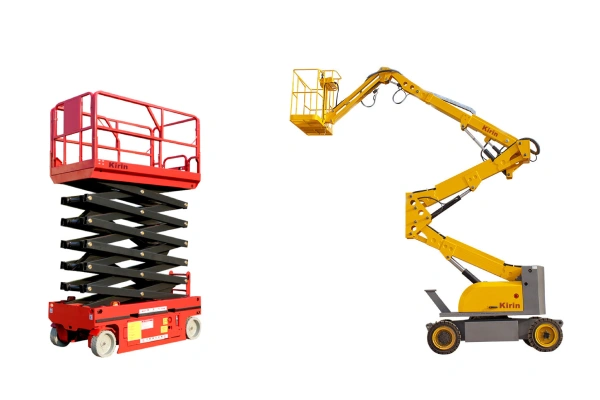
When projects call for accessing great heights in contained environments, the right equipment is non-negotiable. Traditional methods like ladders or scaffolding often fall short in terms of safety, efficiency, and maneuverability. That’s where the indoor boom lift steps in, offering a specialized solution engineered for the unique demands of interior work.
An indoor boom lift, typically an electric-powered model with non-marking tires, is an Aerial Work Platform (AWP) or Mobile Elevating Work Platform (MEWP) designed for quiet, clean operation within facilities such as warehouses, shopping malls, hospitals, convention centers, and factories. Its articulating or telescopic boom provides superior “up and over” reach compared to vertical-only lifts, making it an indispensable asset for maintenance, installation, and inspection tasks. This post will detail the distinct advantages and critical applications that make the indoor boom lift the optimal choice for your elevated interior projects.

Core Advantages of an Indoor Boom Lift
The design of the indoor boom lift provides several compelling benefits that directly address the environmental and operational constraints of indoor spaces.
Superior Reach and Maneuverability
The standout feature of an indoor boom lift is its articulated or telescopic boom, which gives it unparalleled reach both vertically and, crucially, horizontally.
- Up and Over Access: An articulating indoor boom lift, also known as a knuckle boom, has multiple hinged sections that allow the platform to navigate around obstacles like shelving, ventilation ducts, machinery, or existing infrastructure. This capability is virtually impossible with vertical-only lifts.
- Precision Positioning: The boom can be precisely positioned to place workers and tools exactly where they are needed, reducing the need for constant repositioning of the entire machine.
- Compact Footprint: While providing extensive outreach, many electric-powered indoor models are designed to be compact, often featuring zero tail-swing (the machine’s rear does not extend beyond its base when turning the turret). This allows the indoor boom lift to operate effectively in tight aisles and confined spaces.

Clean, Quiet, and Eco-Friendly Operation
Indoor environments require equipment that minimizes disruption and maintains air quality.
- Zero Emissions: The vast majority of indoor boom lift models are electric-powered. This means they produce zero exhaust emissions, making them safe for use in food processing plants, clean rooms, and public areas where air quality is a concern.
- Low Noise Levels: Electric operation is significantly quieter than combustion engine models, which is essential for working in noise-sensitive locations like offices, libraries, hospitals, and operational facilities where loud machinery could disrupt work or patient care.
- Non-Marking Tires: Equipped with special non-marking tires, these lifts protect expensive or sensitive floor surfaces, such as polished concrete, epoxy, or tile, preventing scuffs, streaks, and damage.
Enhanced Safety and Stability
Safety is paramount when working at height, and the indoor boom lift is designed with this in mind.
- Stable Platform: The boom lift provides a solid, guarded platform for the operator, tools, and materials, offering a much more secure workspace than a ladder.
- Controlled Descent: Modern indoor boom lift systems feature proportional controls for smooth, precise movement and controlled descent mechanisms for safety.
- Load Sensors and Alarms: Advanced models include safety features like load-sensing systems, tilt alarms, and emergency shut-offs to ensure the lift operates within its safe working limits, further reducing the risk of accidents.
Key Applications and Industries
The specialized features of the indoor boom lift make it the preferred solution across a multitude of industries for varied tasks.
Industrial and Manufacturing Facilities
The reach and maneuverability of the indoor boom lift are vital in large factory and warehouse settings.
- Equipment Installation and Maintenance: Reaching high machinery, conveyor systems, overhead cranes, and ventilation to perform complex repairs or routine preventative maintenance.
- Lighting and Electrical Work: Installing, repairing, and replacing high-bay lighting, junction boxes, and extensive cable trays above production areas.
Retail, Commercial, and Public Buildings
The quiet, clean operation is critical in environments with high public traffic or sensitive materials.
- Facility Maintenance: Changing high ceiling lights, cleaning skylights and high windows, and repairing ceilings or decorative features in atriums or grand halls.
- HVAC and Sprinkler Systems: Accessing and maintaining heating, ventilation, air conditioning (HVAC) ductwork, and fire suppression systems often located over obstacles.
- Signage and Displays: Installing large, intricate displays, banners, or advertising signage in shopping centers and convention halls.
Transportation and Aviation
In maintenance hangars and terminals, access to high, complex structures is a constant need.
- Aircraft Maintenance: Providing access to the tops of aircraft, wings, and tails for inspection and repair.
- Terminal Infrastructure: Maintaining high ceilings and structural components within busy airport terminals.

Comparing Indoor Boom Lifts to Alternatives
Choosing the correct Aerial Work Platform (AWP) is essential. The indoor boom lift offers distinct benefits over the two most common alternatives: Scaffolding and Scissor Lifts.
| Feature | Indoor Boom Lift | Scissor Lift | Scaffolding |
| Reach Type | Vertical and Horizontal (Up and over obstacles) | Vertical only (Straight up) | Vertical access only |
| Maneuverability | Excellent. Self-propelled, small turning radius, articulates around obstructions. | Good. Self-propelled, generally limited to vertical movement on a fixed footprint. | Poor. Stationary once assembled, time-consuming to relocate or reconfigure. |
| Setup Time | Minimal. Drive into position and raise the boom in minutes. | Minimal. Drive into position and raise the platform in minutes. | Significant. Requires hours or days for assembly, disassembly, and engineering. |
| Working Area | The small platform is ideal for single-point access and detailed work. | Large platform supports more workers and materials for broad, frontal tasks. | Provides a full working deck for continuous work along a wide area. |
| Best For | Reaching over obstacles, tight spots, high-precision tasks. | Straight vertical access, bulk material lift, large surface painting. | Extended duration work on large facades or walls where a continuous surface is needed. |
In short, if your work requires reaching up and over any obstruction, or demands high vertical reach with precision in a restricted indoor area, the indoor boom lift is the clear winner. Scissor lifts are superior for straight, vertical work on flat surfaces, and scaffolding is reserved for long-term projects with wide working fronts.
Safety and Training Considerations
Operating any aerial work platform, including the indoor boom lift, requires strict adherence to safety protocols and comprehensive training. Safety should be the top priority on every job site.
Operator Training and Certification
All operators must be properly trained and certified according to local and national safety standards (such as OSHA and ANSI in the US). Training must cover:
- Pre-Operation Inspection: Performing a thorough visual and functional check of all controls, tires, fluid levels, and structural components before every use.
- Safe Operating Practices: Understanding the lift’s rated capacity, knowing how to safely maneuver the boom, and understanding the limits of its operating envelope.
- Worksite Hazard Recognition: Identifying overhead obstructions, floor stability issues, and proximity to power lines or complex machinery.
- Fall Protection: The use of a full-body harness and a lanyard attached to a designated anchor point on the platform is mandatory in most jurisdictions.
Worksite Planning
Prior to deploying an indoor boom lift, a thorough worksite evaluation is essential.
- Floor Load Capacity: Ensure the floor can support the weight of the indoor boom lift at full extension, which can exert significant point pressure.
- Overhead Clearance: Always be aware of sprinkler systems, lighting fixtures, overhead piping, and structural components.
- Outrigger Deployment: If the model requires outriggers or stabilizers, ensure a solid, level surface for their deployment.
A focus on training and safety minimizes risk and maximizes the efficiency of the indoor boom lift, ensuring your project is completed safely and on schedule.
Conclusion
The indoor boom lift stands as an unparalleled solution for complex work at height within interior spaces. Its combination of zero emissions, quiet electric power, non-marking mobility, and superior up-and-over reach makes it a versatile, safe, and efficient tool across diverse industries, from meticulous facility maintenance to high-stakes equipment installation. By choosing an indoor boom lift, you are investing in a technology that delivers precision access, protects your indoor environment, and ensures the highest standards of worker safety.
Contact us today at info@klingtec.com to discuss the right indoor boom lift model for your next project.
FAQs
Are all boom lifts suitable for indoor use?
No. Only electric-powered boom lifts with non-marking tires are generally suitable for indoor use. Diesel-powered models produce exhaust and are typically too large and heavy, and their tires can mark sensitive flooring. Always verify the specific model’s suitability for an indoor environment.
What is the maximum height an indoor boom lift can reach?
The reach of an indoor boom lift varies significantly by model, but small, compact electric lifts can have working heights ranging from 30 feet up to 60 or 70 feet for larger electric articulating models.
What is the difference between an articulating boom lift and a telescopic boom lift?
An articulating boom lift (knuckle boom) has hinged sections that allow it to bend and reach around obstacles. A telescopic boom lift (straight boom) has a single, straight arm that extends, offering greater horizontal outreach but without the ability to navigate over obstructions. For complex indoor spaces, the articulating indoor boom lift is often preferred.
Is special training required to operate an indoor boom lift?
Yes. In compliance with OSHA and ANSI standards, only trained and authorized personnel may operate any Mobile Elevating Work Platform (MEWP), including the indoor boom lift. Training covers pre-operation inspection, safe operation, hazard recognition, and mandatory fall protection protocols.