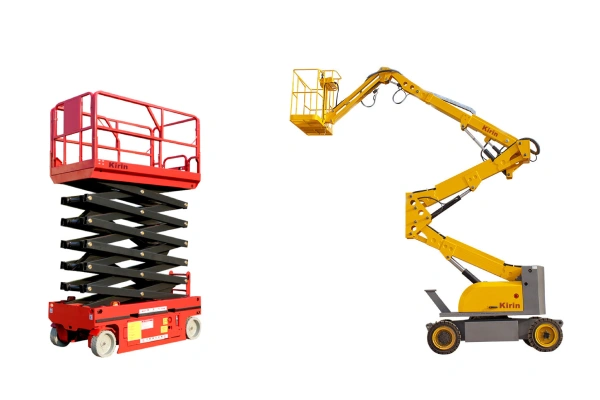
An aerial work platform (AWP), also known as an aerial lift, elevating work platform, or mobile elevating work platform (MEWP), is a machine or vehicle-mounted device used to provide temporary access for people or equipment to elevated areas. These versatile machines are indispensable in various industries, from construction and maintenance to film production and logistics. Think of them as a safer, more efficient alternative to ladders or scaffolding for reaching high places. They’re designed to improve productivity and ensure safety when working at height.
Types of Aerial Lifts
There are several types of aerial work platform machines, each designed for specific tasks and environments. Understanding the different types is crucial for choosing the right one for your job.
Aerial Boom Lifts
Boom lifts are known for their ability to extend horizontally and vertically, making them perfect for jobs requiring significant reach.
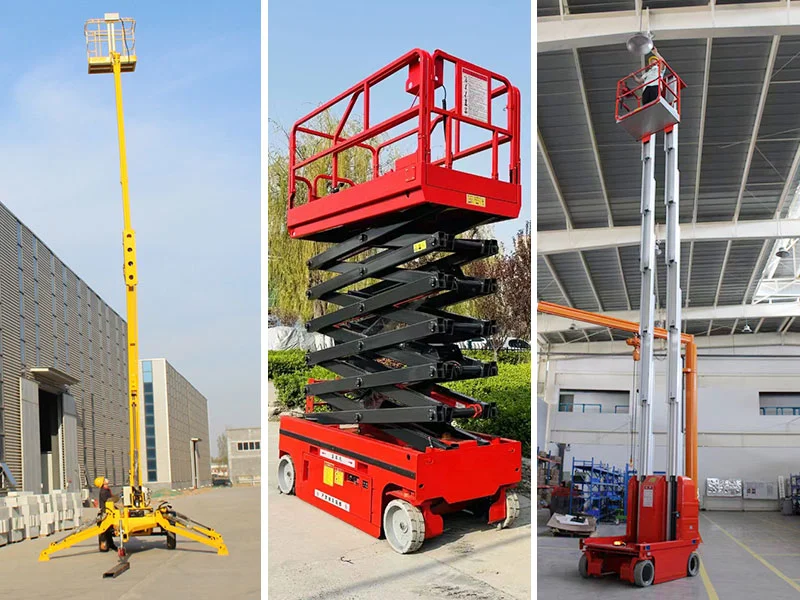
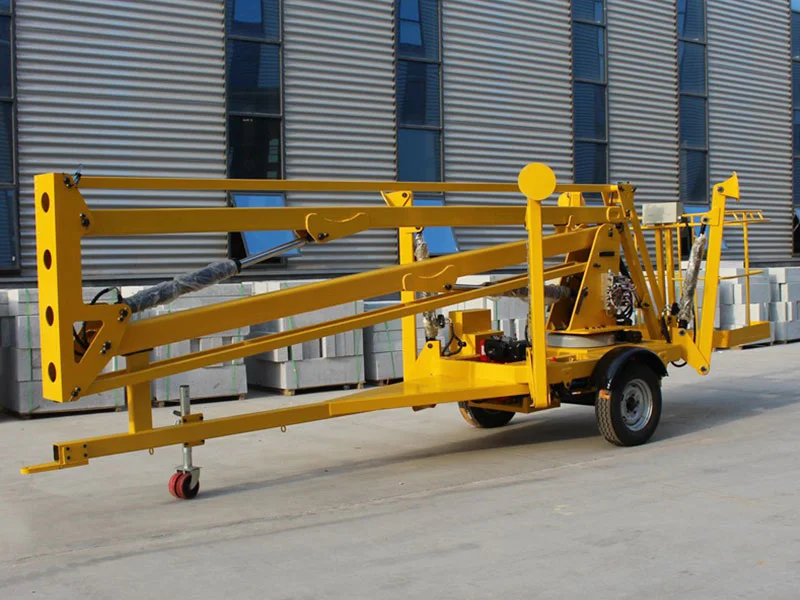
- Towable Boom Lift: These are compact, lightweight boom lifts that can be towed behind a truck. They’re often used for jobs that require frequent transport, like tree trimming or maintenance work on multiple sites.
- Telescopic Boom Lift: Also known as “stick” booms, these lifts have a straight, telescoping arm. They offer the greatest horizontal reach of any aerial work platform, making them ideal for tasks on large construction sites or industrial facilities.
- Articulating Boom Lift: These lifts have a jointed or “knuckle” boom, allowing them to bend and maneuver around obstacles. They’re a great choice for jobs in tight spaces or on uneven terrain where a straight boom can’t reach.
Scissor Lifts
Scissor lifts get their name from their crisscrossing, scissor-like mechanism that raises and lowers the platform. They only move vertically and are best for jobs where you need a large, stable work area but don’t require horizontal reach.
- Scissor Aerial Work Platform: These are the most common type of scissor lift, often powered by an electric or diesel engine. They’re perfect for indoor jobs like warehouse inventory management or installing HVAC systems, thanks to their quiet operation and zero emissions.
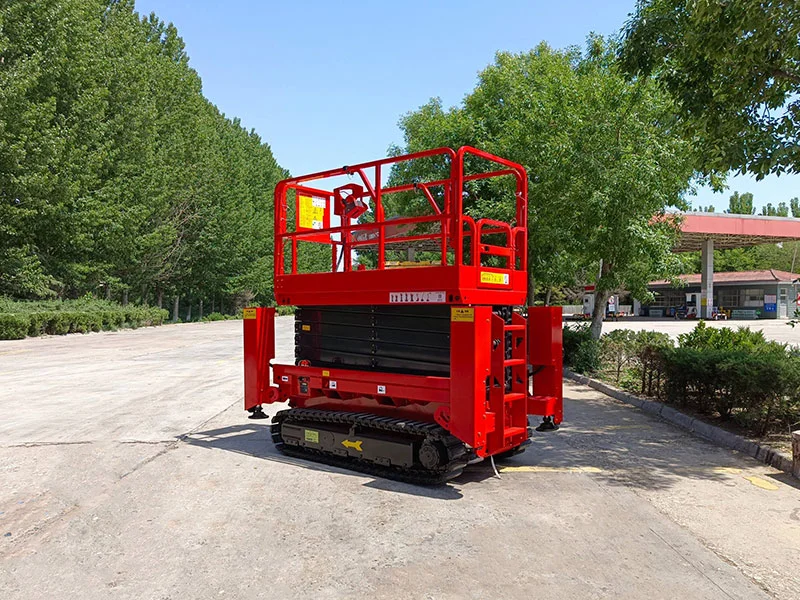
- Tracked Scissor Lift: Equipped with rubber tracks instead of wheels, these lifts are designed to navigate soft, uneven, or sloped terrain without getting stuck.
Mast Lifts
Mast lifts are compact and can often fit through standard doorways, making them a great indoor aerial work platform solution. They are designed to lift personnel straight up, offering a small footprint and high maneuverability.
- Mast Lift with Jib: Some mast lifts include a jib arm, a short extension that provides additional reach and allows the operator to work over obstacles.
- Self-Propelled Mast Vertical Lift: These lifts are battery-powered and can be driven while the platform is elevated, saving time and increasing efficiency.
How to Choose the Right Aerial Work Platform
Selecting the right aerial work platform is a critical decision that impacts safety and productivity. Here’s what to consider:
- Job Site Environment: Is the work indoors or outdoors? Is the ground level and firm, or is it rough and uneven? The terrain and available space will dictate the type of lift you need.
- Height and Reach Requirements: You’ll need to know the maximum height you need to reach and how far out you need to extend horizontally.
- Weight Capacity: Consider the combined weight of the operator, tools, and materials. Always choose a lift with a capacity that exceeds your total load.
- Power Source: Electric lifts are quiet and emission-free, perfect for indoor use. Diesel or gas-powered lifts are better for outdoor jobs and rough terrain.
Importance and Application of Aerial Lifts in Various Industries
The versatility of an aerial work platform makes it a vital piece of equipment across many sectors.
- Construction: From steel erection to facade installation, AWPs allow construction crews to work safely at various heights.
- Maintenance: They are essential for building maintenance, window washing, and repairing streetlights or traffic signals.
- Utilities: Utility workers use them for maintaining power lines, telephone poles, and telecommunication equipment.
- Film & Entertainment: In the film industry, they’re used to set up lighting, cameras, and special effects rigging.
- Warehousing & Logistics: Scissor lifts are particularly useful for managing tall shelving units and retrieving stock in large warehouses.
Aerial Work Platform Safety Features You Need to Know
Safety is the top priority when operating an aerial work platform. Modern AWPs are equipped with numerous safety features to prevent accidents and protect operators.
- Fall Protection: All platforms are equipped with guardrails, and operators are required to use a personal fall arrest system, such as a harness and lanyard, attached to a designated anchor point.
- Outriggers and Stabilizers: On many models, these extendable supports provide a wide, stable base, preventing the machine from tipping over.
- Emergency Controls: Lifts are equipped with emergency stop buttons and descent controls that can be operated from both the platform and the ground.
- Load Sensors: These sensors alert the operator if the weight on the platform exceeds the machine’s capacity, preventing dangerous overloads.
- Tilt Sensors: These sensors detect if the machine is on a slope that exceeds its safe operating angle and can prevent the lift from extending.
Conclusion
An aerial work platform is an indispensable tool for safe and efficient work at height. Whether you’re a contractor, a facility manager, or a utility worker, understanding the different types of AWPs and their specific applications is key. With the right training and a commitment to safety, these powerful machines can help you get the job done right, and safely.
FAQs
What’s the difference between an AWP and a MEWP?
The terms are often used interchangeably. Aerial work platform (AWP) is a common term in North America, while mobile elevating work platform (MEWP) is the term used in European and international standards.
Do I need a license to operate an aerial lift?
While there isn’t a single, universal government-issued license, OSHA and ANSI standards require that all operators be properly trained and certified on the specific aerial work platform they will be operating.
How much does an aerial work platform cost?
The cost can vary widely depending on the type, size, features, and whether you’re buying new or used. Rental is also a very popular and cost-effective option for many jobs.
Can I use an indoor scissor lift outdoors?
It’s generally not recommended. Indoor scissor lifts are typically built for flat, level surfaces and may not have the engine power or tire traction for uneven outdoor terrain. Using them on unstable ground can be very dangerous.