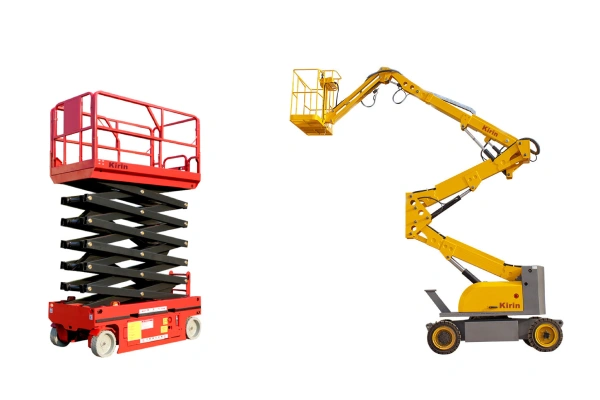
If you have ever walked past a construction site, a high-ceilinged warehouse, or even a large-scale retail store, you have likely seen a piece of machinery with a crisscrossing metal framework that extends upward to reach high places. This essential piece of equipment is known as a scissor lift.
In this comprehensive guide, we will dive deep into the question: what is a scissor lift? We will explore how they function, the different types available on the market, their primary applications, and how to choose the right one for your specific needs.
What Is a Scissor Lift?
To answer the fundamental question, what is a scissor lift, we must look at its classification. A scissor lift is a type of Aerial Work Platform (AWP) or Mobile Elevating Work Platform (MEWP). It is designed to move workers and equipment vertically. Unlike a boom lift, which can move forward and backward as well as up and down (similar to a crane arm), a scissor lift moves strictly in a vertical direction.
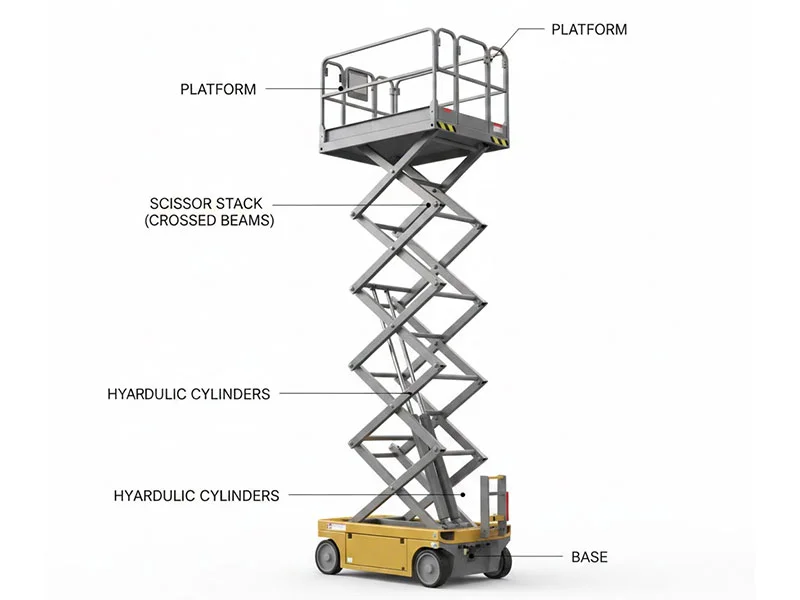
The name “scissor lift” comes from the design of its lifting mechanism—a stack of crossed tubes that work in a “pantograph” fashion. When pressure is applied to the outside of the lowest set of supports, the “scissors” elongate, pushing the platform straight up into the air.
What is a scissor lift’s primary purpose? It provides a stable, fenced-in platform for operators to perform tasks at heights that would be dangerous or impossible to reach with a standard ladder. Because the platform is usually large enough to hold multiple people and heavy tools, it is often preferred over other lifting solutions for maintenance, installation, and construction tasks.
How High Can a Scissor Lift Go?
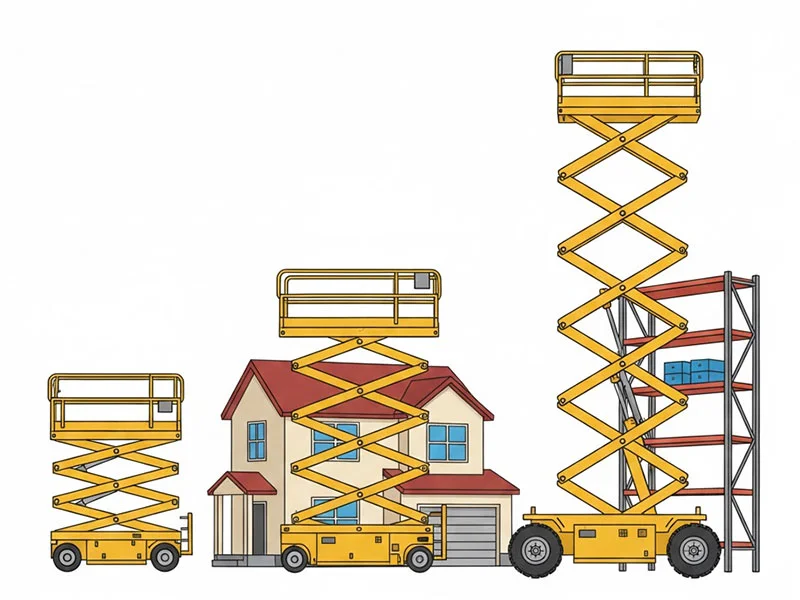
When asking what is a scissor lift, many people are most interested in its reach. The height a scissor lift can achieve depends entirely on its model, size, and intended environment (indoor vs. outdoor).
Common Height Ranges
- Low-Level Lifts: These are often used for indoor maintenance and usually reach heights of 10 to 15 feet.
- Standard Indoor Lifts: Most electric models found in warehouses reach between 19 and 40 feet.
- Rough Terrain Lifts: Heavy-duty, engine-powered lifts designed for outdoor construction can reach heights of 50 to 60 feet, with some specialized models reaching even higher.
Factors Influencing Height
When considering what is a scissor lift capable of in terms of height, you must also consider the “working height.” This is typically defined as the platform height plus six feet (the average reach of a human). If a lift has a platform height of 20 feet, its working height is approximately 26 feet.
How Does a Scissor Lift Work?
Understanding what is a scissor lift requires a look under the hood at the mechanics. While they may look simple, they rely on a sophisticated interplay of hydraulics, electronics, and mechanical engineering.
The Power Source
Most scissor lifts are powered in one of three ways:
- Electric: Uses a battery-powered motor, ideal for indoor use because it produces zero emissions.
- Hydraulic: Uses pressurized liquid (usually oil) to move the cylinders.
- Pneumatic: Uses compressed air, often used in environments where fuel or electricity might pose a fire risk.
The Lifting Mechanism
The process begins when the operator engages the lift control. This activates the motor or pump, which forces hydraulic fluid (or air) into the cylinders. As the cylinders extend, they push against the “scissor” legs. Because the legs are pinned together in a crisscross pattern, the only way they can move is upward.
Stability and Safety
One cannot fully explain what is a scissor lift without mentioning safety. As the platform rises, the base remains heavy and centered to provide a low center of gravity. Most modern lifts include:
- Pothole Guards: Metal plates that drop down to prevent the lift from tipping if it hits a hole.
- Emergency Stop Buttons: Located both on the platform and at the base.
- Tilt Sensors: An alarm that sounds if the lift is on an uneven surface.
Common Types of Scissor Lifts
To truly understand what is a scissor lift, you must recognize that there isn’t just one “standard” model. Different environments require different machines.
Electric Scissor Lifts
These are the most common lifts for indoor applications. They feature non-marking tires (to protect floors) and quiet electric motors. If you are working in a hospital, school, or warehouse, an electric model is likely what is a scissor lift you’ll be using.
Rough Terrain (RT) Scissor Lifts
Designed for the rigors of outdoor construction sites, RT lifts feature heavy-duty tires with deep treads and four-wheel drive. They are often powered by diesel or dual-fuel engines to provide the torque necessary to navigate mud, gravel, and slopes.
Hydraulic Scissor Lifts
These are frequently found in manufacturing settings. They use a simple hydraulic system to raise and lower the platform. They are valued for their reliability and ease of maintenance.
Pneumatic Scissor Lifts
As mentioned earlier, these use air pressure. They are specifically designed for “clean” or hazardous environments where a spark from an electric motor could be dangerous.
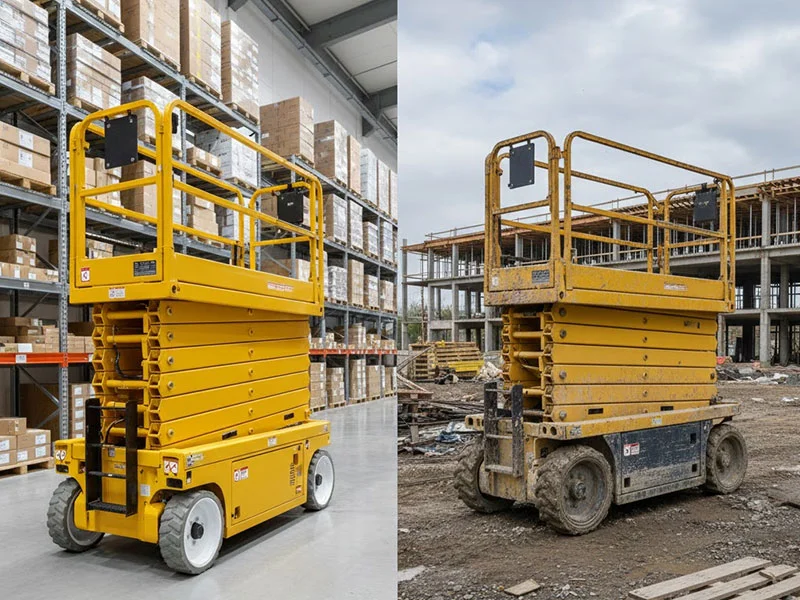
Table: Comparison of Scissor Lift Types
| Type | Power Source | Best Environment | Key Feature |
| Electric | Battery | Indoors / Flat surfaces | Quiet, Zero emissions |
| Rough Terrain | Diesel/Gas | Outdoors / Uneven ground | 4WD, High capacity |
| Pneumatic | Compressed Air | Hazardous / Clean rooms | No sparks, Eco-friendly |
| Hydraulic | Fluid Pressure | Warehouses / Factories | Simple mechanics |
What Is a Scissor Lift Used For?
The versatility of this machinery is vast. When people ask what is a scissor lift used for, the list of industries is nearly endless.
Construction and Building
This is the most visible use case. Whether it’s installing HVAC systems, hanging drywall, or wiring a new building, workers need a stable platform to hold themselves and their heavy materials.
Warehouse and Inventory Management
In modern “big box” retail and massive distribution centers, products are stacked high. A scissor lift allows workers to safely stock shelves or perform inventory counts at heights that a forklift cannot safely accommodate for humans.
Maintenance and Repairs
Think about changing the lightbulbs in a stadium or repairing a high-pressure pipe in a ceiling. For facility managers, knowing what is a scissor lift’s capability is key to maintaining large structures.
Film and Media
Ever wonder how camera operators get those perfectly steady high-angle shots? Scissor lifts are frequently used on film sets to position cameras or lighting rigs.
Signage and Utilities
From hanging holiday decorations on city streets to repairing overhead signs, the scissor lift provides a safer alternative to ladders for municipal workers.
Key Benefits of Using a Scissor Lift
When evaluating your equipment options, it’s important to understand why someone would choose this over a boom lift or scaffolding. So, what is a scissor lift’s biggest advantage?
1. Large Platform Area
Unlike a bucket lift, which only holds one person, a scissor lift has a large rectangular platform. This allows multiple workers to work side-by-side and provides space for tools, pallets, and materials.
2. Compact Storage
When fully retracted, a scissor lift takes up very little floor space. This makes them easy to store in a warehouse corner or transport on a trailer.
3. Ease of Operation
Most scissor lifts feature a simple joystick control. Operators can learn what is a scissor lift control scheme looks like in a matter of minutes, though professional certification is always required for safety.
4. Economic Efficiency
Scissor lifts are generally more affordable to rent or buy than boom lifts. Because they have fewer moving parts, they also tend to have lower maintenance costs over their lifespan.
5. Increased Safety
Compared to ladders, which account for a high percentage of workplace injuries, a scissor lift provides a fully enclosed guardrail system. This significantly reduces the risk of falls.
Ready to Find Your Perfect Scissor Lift Solution?
Now that you have a deep understanding of what is a scissor lift, the next step is determining which model fits your project. Are you working indoors on a delicate floor? Or are you navigating a muddy construction site?
Choosing the right lift involves calculating:
- The maximum height you need to reach.
- The total weight (personnel + tools) the platform must support.
- The dimensions of the tightest space the lift must pass through.
Investing in the right equipment doesn’t just make the job easier; it makes it safer. If you are still unsure about what is a scissor lift model that suits your specific needs, consulting with an equipment expert can save you time and money.
Conclusion
In summary, what is a scissor lift? It is a vital, vertical lifting solution that provides a safe, stable, and efficient way for workers to reach high places. From the quiet electric models used in retail to the rugged diesel-powered machines on construction sites, these lifts have revolutionized how we build and maintain our world.
By understanding the mechanics, the different types, and the safety protocols associated with these machines, you can ensure that your next project is completed with the highest standards of efficiency. Whether you are looking to rent for a weekend project or purchase a fleet for a large-scale operation, knowing exactly what is a scissor lift is the first step toward success.
FAQs
What is a scissor lift’s weight capacity?
The capacity varies by model. Small electric lifts typically hold between 500 and 1,000 lbs, while large rough terrain models can hold upwards of 2,500 lbs. Always check the manufacturer’s load chart before operating.
Do I need a license to operate a scissor lift?
In many regions, including the US (under OSHA), operators must be trained and certified. This ensures the operator understands what is a scissor lift’s stability limit and how to use the safety features correctly.
Can a scissor lift be used on a slope?
Most scissor lifts are designed for level surfaces. While some Rough Terrain models can handle minor slopes, they typically have sensors that prevent the lift from rising if the angle is too steep.
Is a scissor lift better than a boom lift?
It depends on the job. If you need to go straight up and have a large workspace, a scissor lift is better. If you need to reach “over” an obstacle (like a tree or a building extension), a boom lift is required.
How much does it cost to rent a scissor lift?
Costs vary by location and lift size. Generally, daily rentals range from $100 to $250, while monthly rates can range from $400 to $1,000+.