In the modern construction, maintenance, and industrial landscapes, the demand for equipment that balances raw power with environmental responsibility has never been higher. Job sites are changing; strict emissions regulations, noise ordinances, and fluctuating fuel prices mean that fleet managers and contractors must think creatively about the machinery they deploy.
Enter the hybrid boom lift. This revolutionary piece of aerial work platform (AWP) technology bridges the gap between traditional heavy-duty power and clean, efficient operation. But what exactly is a hybrid boom lift, how does it function, and why is it rapidly becoming the go-to choice for modern jobsites?
In this comprehensive guide, we will dive deep into everything you need to know about hybrid boom lifts, comparing them to their traditional counterparts and highlighting why they might be the ultimate solution for your next project.
What is a Hybrid Boom Lift?
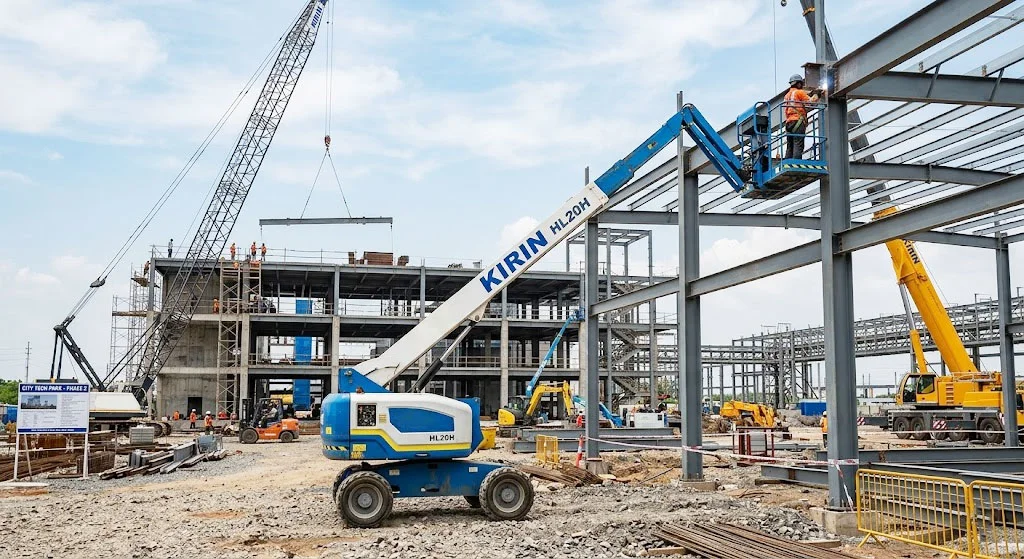
A hybrid boom lift is an aerial work platform designed to elevate workers, tools, and materials to elevated heights using a combination of two distinct power sources: a traditional internal combustion engine (usually diesel) and an electric battery pack.
Historically, the aerial lift market was strictly divided into two categories:
- Diesel boom lift models: Engineered for heavy-duty, outdoor, rough terrain lift applications where maximum power and continuous runtime are required.
- Electric boom lift models: Designed primarily for indoor use, offering quiet, emission-free operation on smooth, finished surfaces, but limited by battery life and charging constraints.
A hybrid boom lift eliminates this binary choice. By integrating both power systems into a single machine, a hybrid boom lift offers the rugged, high-performance capabilities of a diesel boom lift alongside the clean, quiet, and eco-friendly advantages of an electric boom lift.
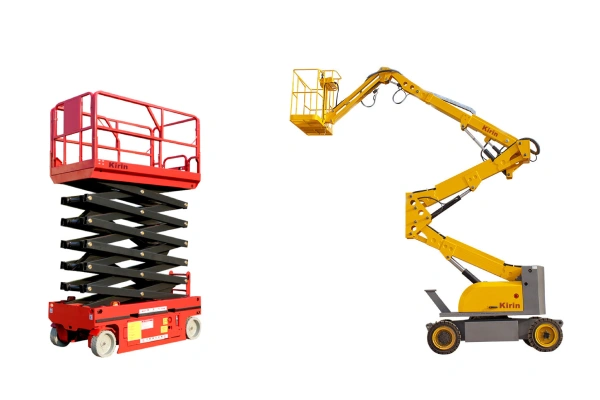
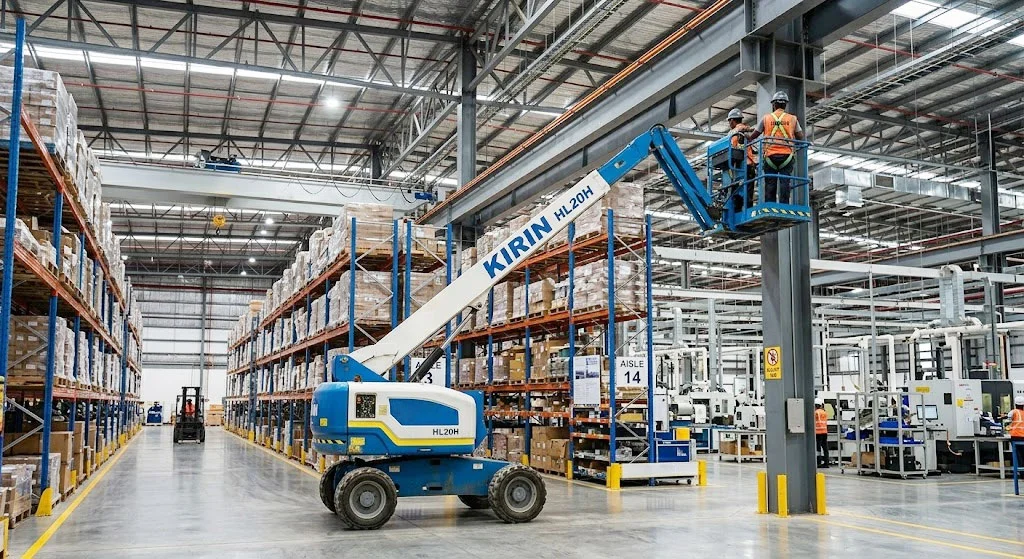
These machines come in various configurations, including the highly popular hybrid articulating boom lift, which features multiple pivot points in the arm to allow operators to reach up, over, and around obstacles in complex environments. Whether navigating a congested indoor warehouse or traversing uneven soil on a massive infrastructure project, the hybrid boom lift is engineered to adapt.
How Does a Hybrid Boom Lift Work?
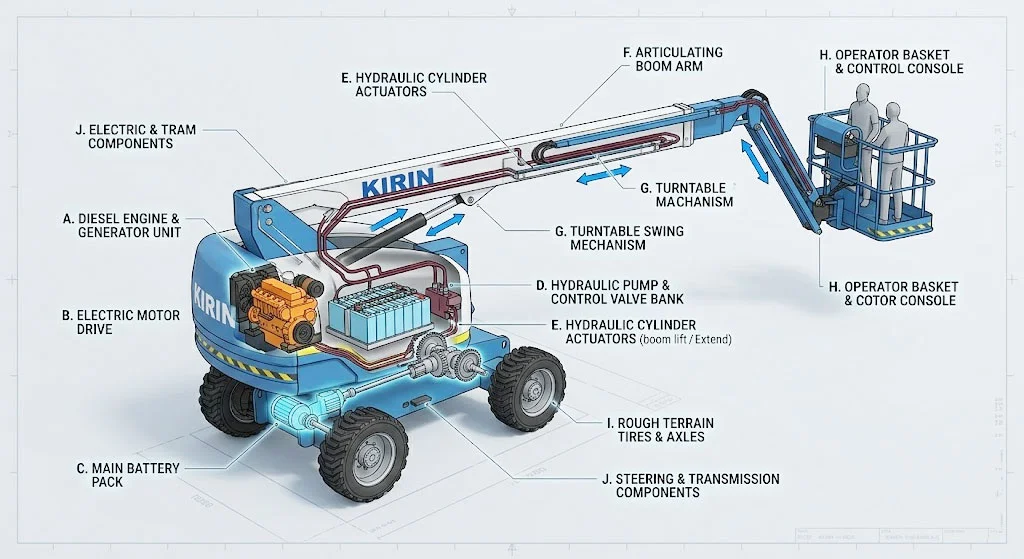
To truly appreciate the engineering marvel of a hybrid boom lift, it helps to understand how its dual-power architecture functions under the hood. Unlike standard machinery that relies on a single energy source, electric and hybrid boom lifts utilize advanced power management systems to optimize energy consumption automatically.
The operational mechanics of a hybrid boom lift typically revolve around three core modes of operation:
1. Electric-Only Mode (Zero Emissions)
When operating indoors or in noise-sensitive environments, the hybrid boom lift can run solely on its electric battery pack. In this mode, the machine operates exactly like a standard electric boom lift. The electric motor handles drive, steer, and boom functions silently and without emitting any exhaust fumes.
2. Diesel-Assisted / Boost Mode
When high-demand tasks are required—such as driving up steep inclines, navigating mud on a rough terrain lift site, or lifting heavy loads—the internal combustion engine automatically kicks in. The engine provides a massive boost of mechanical power to assist the electric motor, ensuring the machine never bogs down when the going gets tough.
3. Intelligent Battery Recharging (Generator Mode)
One of the most innovative features of a modern hybrid boom lift is its ability to self-charge. When the diesel engine is running, it doesn’t just power the wheels or the hydraulics; it also acts as a high-efficiency generator, rapidly routing power back into the battery pack. This means the machine can recharge its own batteries while working outdoors, completely eliminating the downtime associated with stopping work to plug into an electrical outlet.
Furthermore, many hybrid boom lifts utilize regenerative braking and lowering systems. When the boom is lowered or the machine decelerates, the kinetic energy is captured and converted back into stored electricity, maximizing overall system efficiency.
Key Benefits of Hybrid Boom Lifts
Investing in or renting a hybrid boom lift offers a compounding list of advantages that directly impact a project’s bottom line, safety compliance, and operational flexibility. Let’s break down the primary benefits of these advanced machines.
Versatility (Indoor & Outdoor Use)
The ultimate selling point of a hybrid boom lift is its true “one-machine” versatility. Historically, a contractor might need to rent a diesel boom lift for the initial exterior construction of a building, and then swap it out for an electric boom lift once the structure was enclosed for interior fit-outs.
A hybrid boom lift single-handedly replaces both machines. It features the durable tires, high ground clearance, and four-wheel-drive capabilities of a rough terrain lift to handle outdoor mud and debris. Yet, with the flip of a switch, it transitions into a silent, zero-emission indoor machine that won’t scuff floors or contaminate indoor air quality.
Fuel Efficiency & Cost Savings
Because the internal combustion engine in a hybrid boom lift acts primarily as a supporter and a generator rather than the sole driver of the machine, it can be significantly downsized compared to a traditional diesel boom lift.
A smaller engine consumes drastically less fuel. Additionally, because the engine only runs when needed—rather than idling continuously throughout the workday—fuel consumption drops even further. Over the lifespan of the machine, these fuel savings accumulate into thousands of dollars, significantly lowering the total cost of ownership (TCO).
Reduced Noise Pollution
Noise constraints are becoming increasingly strict, particularly for projects located near residential areas, hospitals, schools, or busy urban centers. Traditional diesel machinery can easily violate local decibel limits, leading to fines or restricted working hours.
Operating a hybrid boom lift in electric mode reduces operational noise to a whisper. This allows contractors to work early mornings, late nights, or overnight shifts without disrupting the surrounding community, expanding project timelines and speeding up completion rates.
Eco-Friendly / Lower Carbon Footprint
As environmental, social, and governance (ESG) criteria become a priority for corporations worldwide, green construction practices are no longer optional. Many project owners actively select bids from contractors who utilize sustainable equipment.
By relying heavily on battery power and optimizing engine runtimes, a hybrid boom lift vastly reduces greenhouse gas emissions. When operating in pure electric mode, its carbon footprint is zero, allowing companies to meet stringent environmental standards and qualify for green building certifications like LEED.
Hybrid vs. Diesel vs. Electric Boom Lifts
To better visualize how the hybrid boom lift stacks up against traditional machinery, let’s compare the three main types of aerial lifts across several critical operational categories.
| Operational Feature | Hybrid Boom Lift | Diesel Boom Lift | Electric Boom Lift |
| Primary Environment | Indoor & Outdoor (All-Terrain) | Outdoor Only | Indoor Only (Flat Surfaces) |
| Emissions | Zero (in electric mode) / Ultra-low | High exhaust emissions | Zero emissions |
| Noise Level | Extremely low to moderate | High | Extremely low / Silent |
| Terrain Capability | Excellent (rough terrain lift capable) | Excellent (rough terrain lift capable) | Limited (Requires slab/flat ground) |
| Fuel/Power Source | Diesel + Electric Battery | Diesel Fuel Only | Battery Power Only |
| Downtime for Charging | None (Self-charges during use) | None (Requires refueling) | High (Must be plugged into grid) |
| Long-Term Operating Cost | Lowest (Optimized fuel & maintenance) | High (High fuel use & engine wear) | Low (Requires battery maintenance) |
Analyzing the Differences
While a standard articulating boom lift powered by diesel provides raw torque, its inability to work indoors severely limits its utility. Conversely, a pure electric boom lift is fantastic for an indoor warehouse but will instantly get stuck or run out of power quickly if forced onto an unpaved construction site.
The hybrid boom lift acts as the ultimate hybridizer, taking the terrain adaptability of diesel and pairing it with the clean efficiency of electric, without the operational bottlenecks of either.
When Should You Choose a Hybrid Boom Lift? (Best Use Cases)
While a hybrid boom lift is an exceptional all-rounder, there are specific scenarios where its unique advantages shine the brightest. If your upcoming projects involve any of the following conditions, choosing a hybrid model is highly recommended:
1. Mixed Indoor/Outdoor Projects
If your project requires workers to pick materials from an outdoor yard, drive through a loading bay, and install them inside an enclosed warehouse, a hybrid boom lift is the ideal solution. The operator can seamlessly move between both environments without switching machines or violating indoor air quality standards.
2. Urban and Residential Construction
Working in dense cities often comes with strict rules regarding noise and air pollution. A hybrid boom lift allows you to navigate crowded outdoor city streets using the diesel engine, and then switch to silent electric power when working directly outside a residential window or inside a parking garage.
3. Remote Locations Lacking Electrical Infrastructure
On new construction sites, electrical grids are rarely established during the early phases. A pure electric boom lift is useless in these scenarios because there is nowhere to plug it in overnight. A hybrid boom lift solves this dilemma: it runs efficiently on battery power and uses its onboard diesel generator to charge itself automatically while working, eliminating the need for external charging stations.
4. Congested or Complex Work Areas
For projects that require reaching around structural pillars, ductwork, or overhead obstacles, a hybrid articulating boom lift provides the necessary up-and-over clearance. Combining this precise mechanical maneuverability with a hybrid powertrain creates an incredibly agile machine for tight, complex spaces.
Conclusion
The construction and industrial sectors are rapidly evolving, driven by the dual pressures of economic efficiency and environmental stewardship. In this changing landscape, the traditional boundaries separating heavy machinery are fading away.
The hybrid boom lift represents the future of aerial work platforms. By expertly blending the rugged power of a diesel boom lift with the clean, quiet, and highly efficient nature of an electric boom lift, it eliminates the compromises that project managers have had to make for decades. It offers unparalleled job site versatility, drastically slashes fuel overhead, reduces workplace noise, and minimizes environmental impact—all without sacrificing an ounce of performance.
Whether you are looking to optimize your rental fleet, lower your project’s carbon footprint, or invest in a highly versatile machine capable of tackling any environment, the hybrid boom lift stands out as a smart, future-proof choice.
At Kirin, we manufacture high-performance lifting equipment tailored to meet the demanding needs of global B2B buyers. If you are looking to source high-quality machinery directly from an established factory backed by professional technician support, our team is ready to assist you with competitive equipment configurations and direct sales solutions. Contact us today to discuss your project requirements:
- Email: info@klingtec.com
- WhatsApp: +86 188 6686 3188
Frequently Asked Questions About Hybrid Boom Lifts
Can a hybrid boom lift perform as well as a standard diesel boom lift on rough terrain?
Yes, absolutely. Modern electric and hybrid boom lifts designed for all-terrain use feature advanced four-wheel-drive systems, active oscillating axles, and high ground clearance matching their diesel counterparts. When navigating tough landscapes, the diesel engine works in tandem with the electric motor to provide equivalent, or sometimes superior, torque and traction as a pure rough terrain lift.
How long does the battery last on a hybrid boom lift?
Battery life varies by model and how the machine is used. However, because the onboard diesel engine automatically kicks in to support heavy tasks and charges the battery pack during low-demand periods, a hybrid boom lift can easily complete a full, intensive 8-to-12-hour workday without ever needing to be plugged into an external electrical outlet.
Is a hybrid articulating boom lift better than a telescopic one?
It depends entirely on your application. A hybrid articulating boom lift features joints or “knuckles” in its boom arm, making it perfect for navigating around tight obstacles and reaching complex indoor or outdoor spaces. A telescopic boom lift features a straight, telescoping arm that offers greater horizontal outreach and maximum height, making it better for open spaces. Both configurations are available with hybrid powertrains.
Do hybrid boom lifts require more maintenance than traditional lifts?
Surprisingly, no. While they contain two power systems, the internal combustion engine in a hybrid boom lift experiences significantly less wear and tear because it does not run continuously and is rarely subjected to extreme stress. Furthermore, because the engine is smaller and runs less often, oil changes, filter replacements, and mechanical servicing intervals are spaced much further apart compared to a standard diesel boom lift, often resulting in lower overall maintenance costs.
Can I plug a hybrid boom lift into a wall outlet to charge it?
Yes. While these machines are fully capable of charging themselves on the job site using their internal diesel engines, they also feature standard plug-in charging capabilities. If you have access to the electrical grid overnight, you can plug the machine in to ensure it starts the next morning with a 100% electric charge, allowing you to minimize diesel consumption even further.