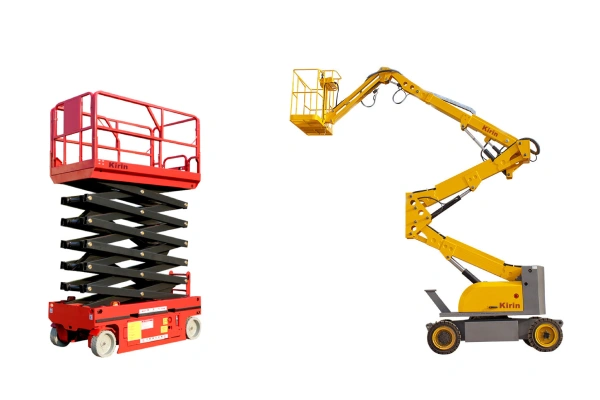
Imagine needing to reach the top of a skyscraper for a quick repair, or perhaps maneuvering over a complex industrial structure to perform routine maintenance. In all of these scenarios, one essential piece of machinery comes to mind: the cherry lift.
While its name might suggest a quaint history rooted in fruit orchards, the modern cherry lift—also commonly known as a boom lift or an aerial work platform (AWP)—is a powerhouse of engineering, versatility, and safety. It is the go-to tool for thousands of companies across every industry that requires a worker to access heights and hard-to-reach areas.
In this comprehensive guide, we’ll demystify this critical piece of equipment, detailing its anatomy, exploring its different “flavors,” and providing a clear-cut comparison to its close cousin, the scissor lift.
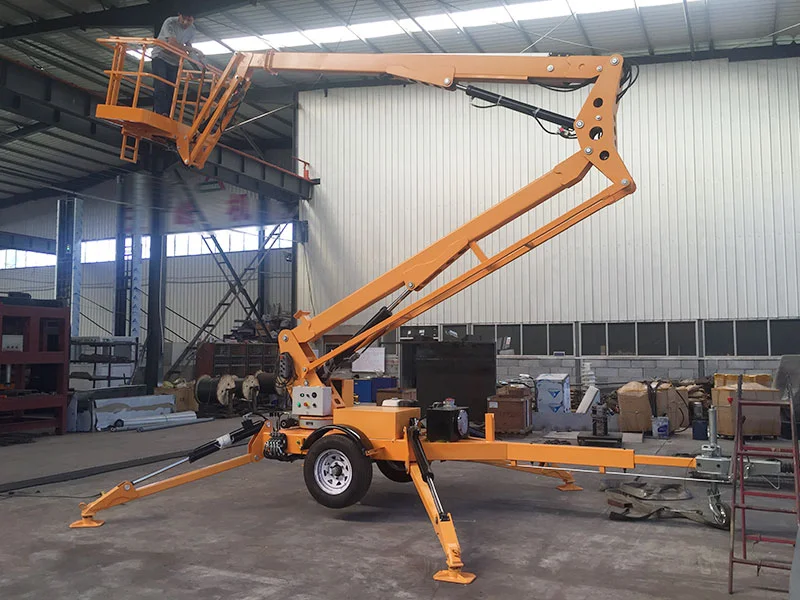
A cherry lift is a type of Mobile Elevating Work Platform (MEWP) designed to lift personnel and their tools to elevated locations for temporary work. At its core, it consists of a platform (or bucket) attached to a hydraulic arm (the boom) that is mounted on a stable base or chassis.
The origin of the charming nickname, cherry picker, is simple and literal: the earliest versions of this machine were invented and used to make the process of picking fruit, specifically cherries, from tall trees safer and more efficient than using ladders. Today, its applications have expanded far beyond the orchard, making the cherry lift an indispensable part of construction, maintenance, and utility work globally.
The versatility of the cherry lift lies in its boom mechanism, which—unlike other lifting equipment—allows for both significant vertical reach and horizontal outreach. This unique capability is what makes it an unparalleled problem-solver on challenging worksites.
The Anatomy of a Cherry Lift
While models vary greatly, the basic structure of a cherry lift remains consistent, comprising several key components that work in harmony to ensure safe and precise elevation.
- The Platform/Bucket (The Cage): This is the enclosure where the operator and their tools stand. It features guardrails for safety and houses the operating controls for maneuvering the boom. Safety harnesses are always required to be tethered to anchor points within the platform.
- The Boom: This is the hydraulic arm that provides the reach. Depending on the type of cherry lift, this arm can be straight (telescopic) or hinged (articulating), providing different ranges of motion.
- The Turret: This is the rotating base that connects the boom to the chassis. It allows the boom to swing, providing 360-degree rotation capabilities on many models.
- The Chassis/Base: This is the foundation of the machine. It can be wheeled, tracked, or mounted directly onto a truck. It contains the engine or motor, drive system, and controls for ground personnel.
- Outriggers/Stabilizers: On many models, especially those with significant height capabilities, hydraulic legs called outriggers extend outward from the base to level the machine and distribute its weight, ensuring maximum stability before and during operation.
The lifting action is powered by a hydraulic system that uses pressurized fluid to extend and articulate the boom sections, all controlled by the operator in the bucket or by ground controls.
Types of Cherry Lifts (Different “Flavors”)
Not all cherry lifts are created equal. They are categorized based on their boom design and mounting style, each optimized for different working environments and access challenges.
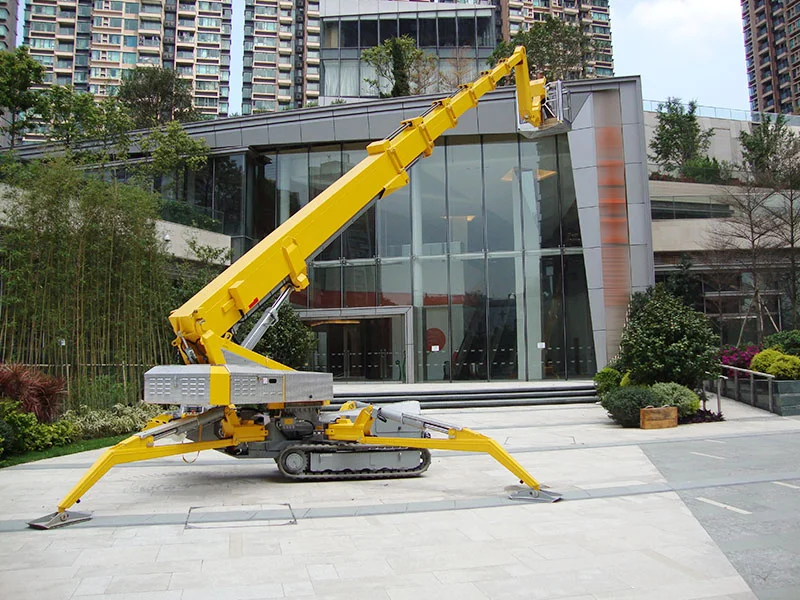
A. Telescopic Boom Lifts (Straight Booms):
These are easily identified by their straight, rigid boom that extends outward and upward like a telescope.
- Key Feature: They offer the greatest vertical reach and horizontal outreach among all types of cherry lift.
- Best For: Tasks requiring access to areas directly ahead of the base at extreme heights, such as work on high-rise facades, bridges, or telecommunication towers. They are best suited for open spaces where the lift can be positioned away from the work area.
B. Articulating Boom Lifts (Knuckle Booms):
Named for their multiple hinged sections, or “knuckles,” these booms can bend and fold.
- Key Feature: Unmatched maneuverability. The articulated sections allow the operator to navigate up and over obstacles like roof edges, machinery, or complex pipe systems to reach a work point that is not directly overhead.
- Best For: Tight, crowded, or complex worksites, such as industrial facilities, refineries, or densely packed city streets where up-and-over access is necessary.
C. Trailer-Mounted Boom Lifts (Towable Cherry Lifts):
These smaller, lighter cherry lift models are mounted on a trailer and can be towed behind a standard truck or van.
- Key Feature: Excellent portability and ease of transport. They typically feature hydraulic outriggers for stabilization.
- Best For: Smaller businesses, residential maintenance (like tree trimming), painting contractors, or any job that requires the lift to be moved frequently between different sites.
D. Truck-Mounted/Vehicle-Mounted Lifts:
These are permanently mounted onto a vehicle, often a truck chassis.
- Key Feature: High stability and speed of deployment. The weight of the truck provides a stable base, and they can be driven quickly from one location to the next.
- Best For: Utility companies (power, cable, telecom) that need to travel long distances for line maintenance, and municipal services like street light or traffic signal repair.
Primary Applications: Where are Cherry Lifts Used?
The capability of the cherry lift to solve complex access problems means its uses span virtually every industry. A small sampling of where you’ll find a cherry lift at work includes:
- Construction: Installing steel, placing cladding or curtain walls, or working on roofing and high-level structural components.
- Utility Work: Repairing, inspecting, and installing power lines, streetlights, and telecommunications equipment on poles.
- Maintenance & Repairs: Exterior building maintenance, window cleaning on high-rises, inspecting and maintaining bridges, and facility checks on large industrial machinery.
- Arboriculture (Tree Care): Safely trimming, pruning, or removing large, dangerous tree limbs. This is one of the most classic uses of a cherry picker.
- Events & Entertainment: Rigging lighting and audio equipment for concerts, setting up stages, or providing unique aerial camera angles for filming.
- Warehousing & Inventory: Although less common than a scissor lift, certain types of cherry lift are used for high-bay access for maintenance or specialized inventory retrieval in vast storage facilities.
Cherry Lift vs. Scissor Lift: A Quick Comparison
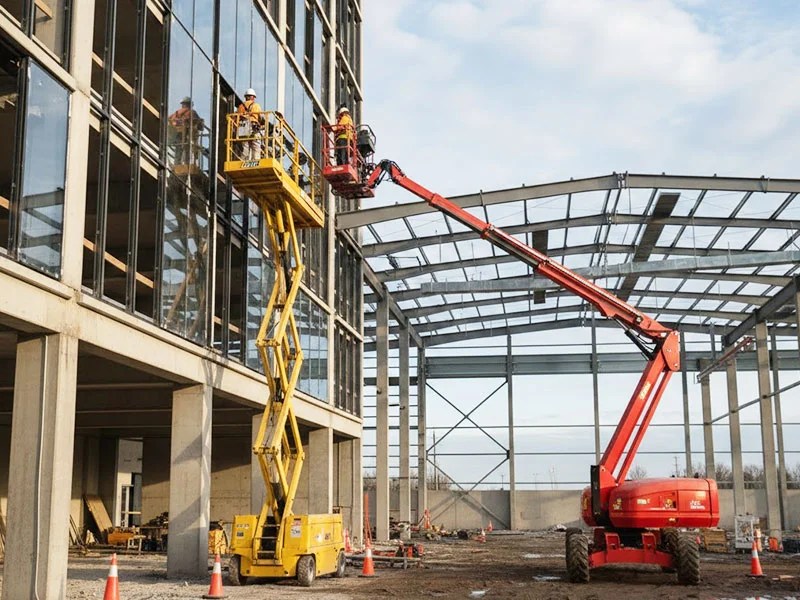
When working at height, the choice often comes down to a cherry picker or scissor lift. While both are MEWPs, they serve fundamentally different functions. Understanding the distinction is crucial for job site safety and efficiency.
| Feature | Cherry Lift (Boom Lift / Cherry Picker) | Scissor Lift |
| Movement | Vertical and Horizontal (Outreach). The boom can reach up and over obstacles. | Strictly Vertical. The platform only moves straight up and straight down. |
| Working Area | Small platform (bucket), usually accommodates 1-2 workers and limited tools. | Large, spacious platform, often extendable, accommodating multiple workers and substantial materials. |
| Footprint/Base | Compact base relative to the machine’s reach; requires outriggers for stability, making it ideal for uneven terrain. | Large base; requires a stable, relatively flat surface for operation. |
| Max Height | Generally achieves much greater heights (often 100+ ft.) and outreach. | Limited in height (typically up to 40-50 ft. for standard models). |
| Best Used For | Reaching around obstacles, accessing extreme heights, or working on uneven ground. | Tasks requiring a large, stable work surface for direct overhead work, like installing ceilings or ductwork on a flat floor. |
The key takeaway? Ask yourself: Do I need simple vertical reach, or do I need to get up and over something? If the answer is the latter, a cherry lift is the correct choice. If the work is directly overhead on a flat surface, the scissor lift is likely more efficient.
Safety and Operation Essentials
Working at height demands the utmost respect for safety. Proper training and adherence to protocols are non-negotiable for operating a cherry lift or any MEWP.
Essential Safety Practices:
- Operator Training: All operators must be fully trained and certified to use the specific type of cherry lift.
- Pre-Operation Check: A thorough inspection of the machine must be performed before every use. Check fluid levels, tire pressure, controls, and safety devices (e.g., emergency stops, limit switches).
- Harness and Lanyard: Operators must wear a full-body harness and lanyard, tethered to the designated anchor point in the platform at all times.
- Load Capacity: Never exceed the manufacturer’s specified weight limit for the platform, which includes the operator, tools, and materials.
- Ground Conditions: Ensure the ground is firm, level, and capable of supporting the machine’s weight, especially when using outriggers.
- Overhead Hazards: Maintain safe clearance from power lines, overhead structures, and tree limbs. Electricity can arc, so consult safety charts for minimum safe distances.
- Weather: Never operate the cherry picker in high winds (typically above 28 mph) or during severe weather conditions like lightning or heavy rain.
Safe operation of a cherry lift is a combination of knowing the machine’s limits and rigorously following all established safety guidelines.
Conclusion (The Wrap-Up)
The cherry lift, or boom lift, is much more than a vehicle for reaching high places—it is a sophisticated, versatile, and essential piece of modern construction and maintenance equipment. From its humble beginnings as a fruit-picking aid to its current role in building our skylines and maintaining critical infrastructure, the cherry lift continues to define efficiency and safety for working at height. Choosing the right machine, be it a telescoping giant or a knuckle-booming workhorse, is the first critical step toward successfully completing any high-access project.
Cherry Lift FAQs
Is a scissor lift the same as a cherry picker?
No. While both are types of MEWPs, a scissor lift only provides vertical elevation, while a cherry picker (boom lift) provides both vertical lift and horizontal outreach via its boom, allowing it to reach up and over obstacles.
Which is better: a cherry picker or scissor lift?
Neither is inherently “better”; the right choice depends entirely on the job.
Use a scissor lift for jobs requiring a large workspace and straight vertical access on flat, stable ground.
Use a cherry lift for jobs requiring outreach to get around an obstacle, for extreme heights, or for work on uneven terrain. The decision is often a case of cherry picker vs scissor lift.
How high can a cherry lift go?
The reach of a cherry lift varies significantly by model. Smaller towable models might reach 30 to 50 feet, while the largest, high-capacity telescopic boom lifts can easily exceed 180 feet, with some specialized models reaching over 200 feet.
Do I need a license to operate a cherry lift?
Yes. Regulations vary by region and country, but in most places, operators must complete a recognized training program and hold a valid certification (often called an MEWP or boom lift license) to legally operate a cherry lift. This training is crucial for ensuring safe operation.