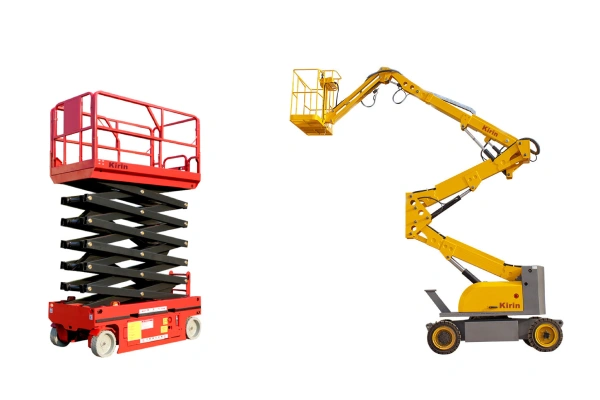
When you look at a modern skyline under construction or watch a utility crew repairing lines after a storm, you’ll almost certainly see a sturdy metal arm stretching toward the sky. That machine is a boom lift. But beyond the obvious “it goes up,” many project managers and DIYers find themselves asking: what is a boom lift used for specifically, and which type do I need?
In this comprehensive guide, we will explore the mechanics, applications, and safety protocols of these essential machines. By the end, you’ll understand exactly what is a boom lift used for across various industries and why they are the gold standard for aerial productivity.
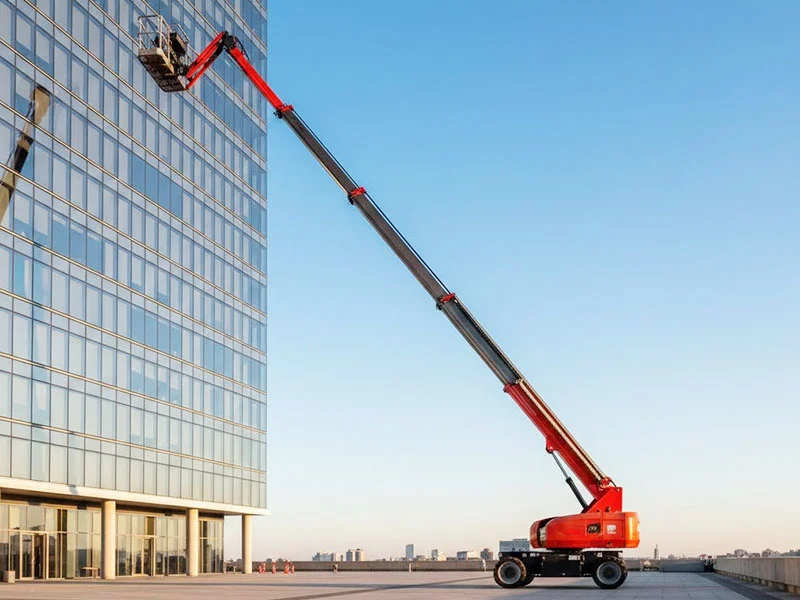
In the world of Aerial Work Platforms (AWPs), the boom lift stands out as the most versatile and high-reaching tool available. Often referred to as “cherry pickers” or “man lifts,” these machines consist of a platform or bucket attached to a hydraulic arm. Unlike a ladder or a scaffold, a boom lift provides a stable, mobile environment for workers to perform complex tasks at heights that would otherwise be unreachable.
Understanding what is a boom lift used for begins with recognizing its unique ability to move both vertically and horizontally. Whether it’s navigating over a crowded warehouse floor or reaching the upper floors of a skyscraper, the boom lift provides a level of precision that other access equipment simply cannot match.
The Two Main Types of Boom Lifts
To truly answer the question of what is a boom lift used for, you must first distinguish between the two primary designs: Telescopic and Articulating. Choosing the wrong one can lead to stalled projects or safety hazards.
Telescopic Boom Lifts (S-Lifts)
Telescopic boom lifts, often called “stick booms” or “S-lifts,” feature a straight arm that extends and retracts like a telescope.
- Maximum Reach: These machines offer the greatest horizontal outreach of any aerial platform.
- Best Use Case: They are ideal for work areas with open access where the machine can be parked further away from the target.
- The “Why”: If you are wondering what is a boom lift used for when it comes to extreme heights, the answer is usually the telescopic model. They are staples on bridge inspections and high-rise glazing projects.
Articulating Boom Lifts (Z-Lifts)
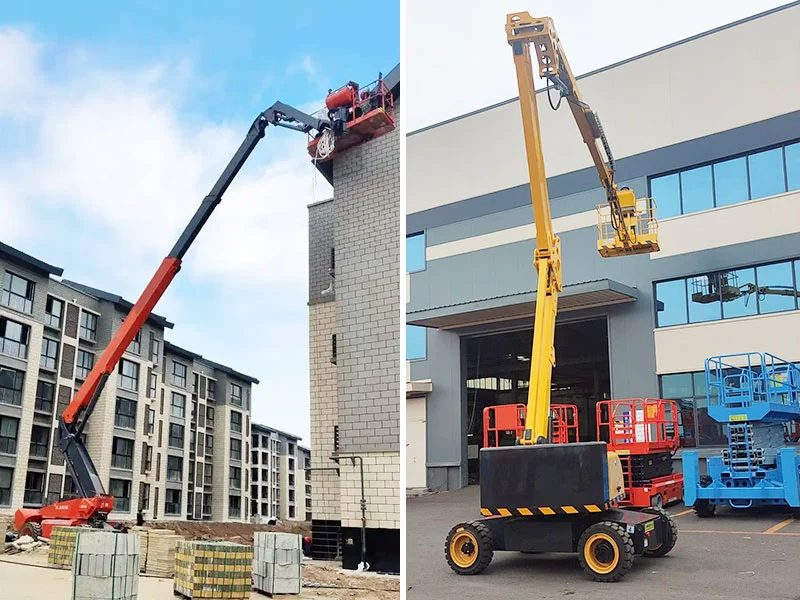
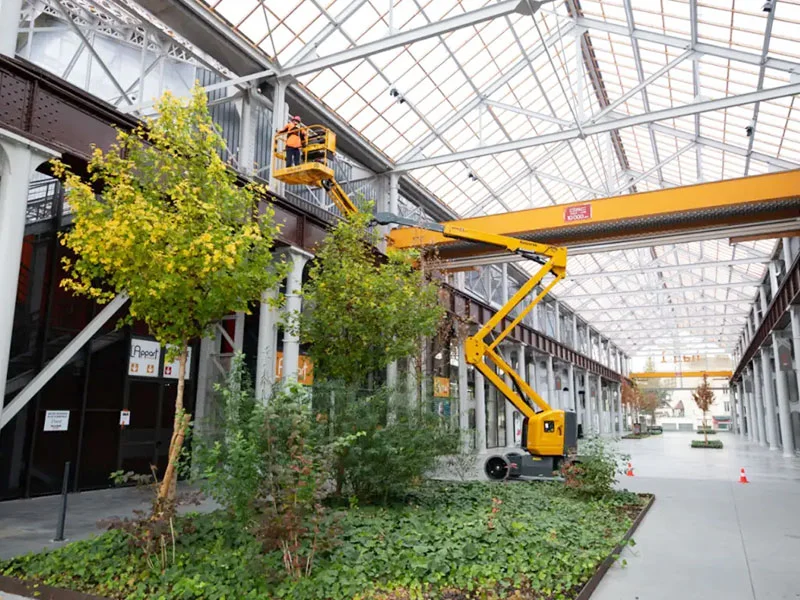
Articulating boom lifts, or “knuckle booms,” have multiple sections that “fold” or hinge. This allows the arm to bend over obstacles.
- Up-and-Over Capability: This is the defining feature. It allows the operator to reach a work area located behind a wall, a pipe, or a piece of machinery.
- Compact Design: These often have a tighter turning radius, making them suitable for indoor use or congested jobsites.
- The “Why”: When asking what is a boom lift used for in a complex factory setting, the articulating lift is the hero. It “snakes” through tight spaces where a straight beam would be blocked.
Key Industries and Use Cases
The versatility of these machines means they appear in almost every sector of the economy. To see what is a boom lift used for in the real world, let’s look at five key industries.
Construction and Engineering
Construction is the most common answer to what is a boom lift used for. From the moment a foundation is poured to the final touches on a roof, boom lifts are present.
- Steel Erection: Holding beams in place while they are bolted.
- Exterior Finishing: Installing siding, windows, and masonry at height.
- Bridge Work: Reaching under or over bridge decks for structural inspections.
Industrial and Facility Maintenance
Large-scale facilities like warehouses, airports, and stadiums require constant upkeep.
- HVAC Repair: Accessing ductwork suspended 40 feet in the air.
- Lighting: Replacing high-intensity bulbs in stadiums or hangars.
- Cleaning: Pressure washing industrial silos or high-reaching windows.
Telecommunications and Utilities
Have you ever wondered what is a boom lift used for when your internet goes out or a transformer blows? Utility companies rely on “bucket trucks”—a type of boom lift mounted on a truck chassis—to reach power lines safely.
- Line Maintenance: Repairing fiber optic or electrical lines.
- Cell Tower Upgrades: Installing new 5G equipment on existing towers.
Tree Care and Landscaping
Arborists utilize boom lifts to manage large trees that are too dangerous to climb.
- Pruning: Removing dead limbs that hang over houses.
- Emergency Removal: Safely dismantling trees after a storm.
- Fruit Picking: The original “cherry picker” application, allowing for efficient harvesting without damaging the crop.
Entertainment and Film
The magic of cinema often happens high above the ground.
- Lighting Rigs: Holding massive “sun” lights to simulate daylight on a night set.
- Camera Angles: Providing a stable platform for high-angle shots or “sweeping” cinematic movements.
- Set Construction: Building large-scale backdrops in soundstages.
Why Use a Boom Lift Instead of Other Equipment?
A common follow-up to what is a boom lift used for is: “Why can’t I just use a scissor lift or a ladder?” The answer lies in the geometry of the task.
Reach vs. Scissor Lifts
While both provide aerial access, they serve very different purposes:
- Direction: A scissor lift only moves vertically. If you need to reach something 10 feet to the left of the base, you have to move the entire machine. A boom lift can stay parked and simply swing its arm.
- Terrain: Scissor lifts usually require flat, paved surfaces. Many boom lifts come with 4WD and oscillating axles, allowing them to work on muddy, uneven construction sites.
- Height: Boom lifts can reach significantly higher (up to 180 feet or more) compared to the typical 20–50 foot limit of scissor lifts.
Safety vs. Ladders
When considering what is a boom lift used for, safety is the primary driver.
- Three Points of Contact: On a ladder, you must constantly maintain grip. In a boom lift, you are enclosed in a steel basket with a harness.
- Tool Capacity: Carrying a heavy drill or a gallon of paint up a ladder is a recipe for a fall. A boom lift platform can hold hundreds of pounds of equipment alongside the operator.
- Fatigue: Working on a ladder for 8 hours is physically draining. A boom lift allows the operator to stand on a flat surface, reducing the risk of fatigue-related accidents.
Safety When Using Boom Lifts
Understanding what is a boom lift used for is useless if the operator isn’t trained to use it safely. Because these machines involve high elevations and heavy hydraulics, safety is paramount.
- Fall Protection: OSHA requires a full-body harness and a lanyard attached to the designated anchor point in the basket.
- Wind Speeds: Boom lifts act like large sails. Most manufacturers prohibit use in winds exceeding 28 mph.
- Ground Conditions: “Tip-overs” occur when the ground is too soft or uneven. Always use outriggers if equipped and check for “sinkholes” or uncompacted soil.
- Electrocution Hazards: Always maintain a minimum distance (usually 10 feet) from energized power lines.
- Pre-Operation Inspection: Check hydraulic fluid levels, tire pressure, and tilt alarms every single morning before the machine is turned on.
Conclusion
So, what is a boom lift used for? It is the ultimate solution for “difficult access.” Whether you are a contractor building the next landmark, a technician keeping the lights on, or a filmmaker capturing a masterpiece, the boom lift provides the reach, stability, and safety needed to conquer heights.
While the upfront cost or rental price of a boom lift is higher than a ladder or scaffold, the productivity gains are undeniable. By allowing workers to reach their target faster and work with both hands free, these machines pay for themselves in labor hours saved.
If your next project involves working more than 15 feet off the ground, or requires reaching over an obstacle, stop struggling with outdated equipment. Now that you know what is a boom lift used for, you can make the right choice for your crew and your bottom line.
FAQs
Do I need a special license to operate a boom lift?
In most jurisdictions (including the US under OSHA), you do not need a “license” like a driver’s license, but you must be “certified” or “trained.” This involves a formal class and a practical evaluation to ensure you understand the specific model you are using.
What is a boom lift used for in indoor settings?
Indoor boom lifts (often electric or “hybrid”) are used for warehouse maintenance, changing lights in gymnasiums, and installing fire sprinkler systems in high-ceiling facilities. They use “non-marking tires” to avoid scuffing floors.
How high can a boom lift go?
While standard models reach between 40 and 60 feet, the largest telescopic boom lifts in the world can reach heights of over 185 feet—roughly the equivalent of a 19-story building.
Can a boom lift be used on a slope?
Only to a certain degree. Most lifts have a “tilt alarm” that disables the boom if the base is on too steep an incline (usually 3–5 degrees). For sloped work, you must level the ground or use a machine with outriggers.
What is the weight limit of a boom lift basket?
Typically, the “unrestricted” capacity is around 500 lbs (enough for two workers and tools). Some heavy-duty models offer a “restricted” capacity of up to 1,000 lbs, but the reach is often limited when carrying that much weight.