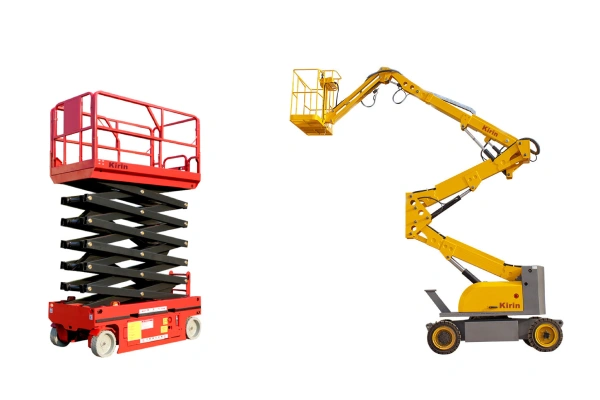
Operating heavy machinery at height is a demanding task that requires precision, focus, and, above all, a stable foundation. If you are a contractor, a landscaper, or a DIY enthusiast, you might find yourself wondering about the logistics of using a boom lift on terrain that isn’t perfectly flat. Whether it’s a construction site with loose soil or a backyard with a significant slope, the question of stability is paramount.
In this comprehensive guide, we will explore the nuances of using a boom lift on uneven ground, the risks involved, and the safety protocols you must follow to ensure everyone on-site goes home safely.
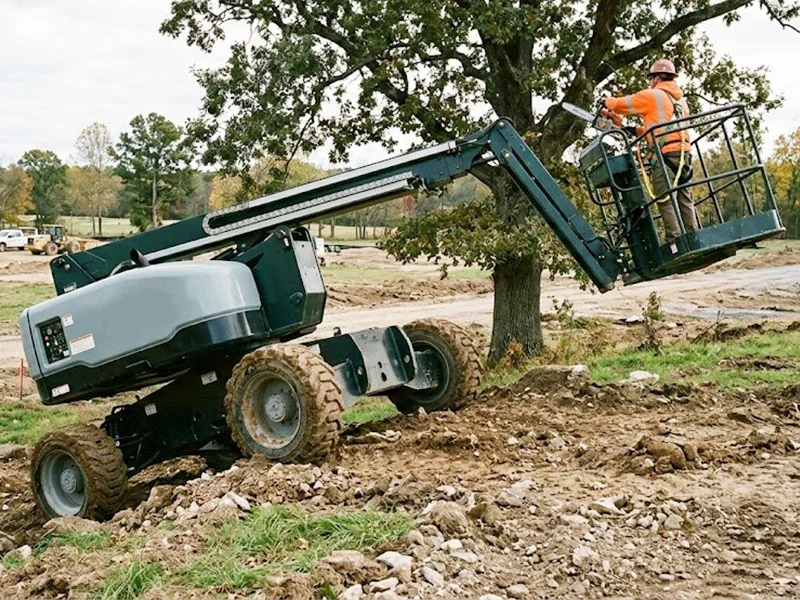
The aerial work platform (AWP) industry has revolutionized how we access high places. From painting skyscrapers to using a boom lift to cut trees, these machines provide a level of reach and flexibility that ladders and scaffolding simply cannot match. However, that utility comes with a significant responsibility: ensuring the machine stays upright.
Using a boom lift on uneven ground is one of the most common challenges faced by operators. While modern engineering has made these machines more robust, they are still subject to the laws of physics. Gravity is unforgiving, and a slight tilt at the base can translate into a massive, dangerous shift at the platform level. This post will break down everything you need to know about navigating slopes, gravel, and rough terrain while using a boom lift.
Understanding Boom Lifts and Ground Stability
Before we dive into the “how-to,” we must understand the “why.” A boom lift’s stability is dictated by its center of gravity. When the boom is retracted and stowed, the center of gravity is low and centered between the wheels. As you extend the arm—especially when reaching horizontally—that center of gravity shifts.
The Science of the “Tip”
When using a boom lift, the machine relies on its weight (counterweight) to balance the weight of the platform and the operator. On level ground, this balance is predictable. On a slope, the “downhill” side of the machine takes on a disproportionate amount of the load. If the ground is uneven, the risk of the machine exceeding its “tipping point” increases exponentially.
Ground Bearing Pressure
Stability isn’t just about the angle; it’s about the surface. Using a boom lift requires the ground to support the weight of the machine. A standard telescopic boom lift can weigh anywhere from 10,000 to over 40,000 pounds. If the ground is soft or uneven, one side of the machine might sink, creating an artificial slope even if the surface looked flat initially.
Can You Safely Operate a Boom Lift on Uneven Ground?
The short answer is yes, but with strict limitations. Most manufacturers design boom lifts to operate on a slight incline, typically between 3 degrees and 5 degrees. However, this is not a suggestion—it is a hard limit. Using a boom lift beyond the manufacturer’s rated slope capacity is an invitation for a tip-over accident.
Checking the Slope
Before using a boom lift, you must determine the grade of the work area. You can do this using:
- A Slope Indicator (Inclinometer): Most modern lifts have these built-in.
- A Laser Level: For precise measurements over a distance.
- Manual Calculation: Measuring the “rise over run” (Rise / Run x 100 = % Grade).
If the terrain exceeds the machine’s rating, you cannot proceed without leveling the ground or using a machine specifically designed for rough terrain.
Types of Boom Lifts Designed for Rough Terrain
If your job site is far from a paved parking lot, you should look into specialized equipment. Using a boom lift that is purpose-built for “Rough Terrain” (RT) can make a world of difference.
Rough Terrain (RT) Boom Lifts
These machines are the workhorses of the outdoor construction world. Key features include:
- Four-Wheel Drive (4WD): Provides the traction needed to climb slopes and move through mud.
- Oscillating Axles: This is the “secret sauce” for using a boom lift on uneven ground. The axles can pivot to keep all four wheels in contact with the ground, even when driving over bumps.
- High Ground Clearance: To avoid “high-centering” on rocks or mounds of dirt.
- Lug-Tread Tires: Deep treads designed to grip loose soil or gravel.
Tracked Boom Lifts (Spider Lifts)
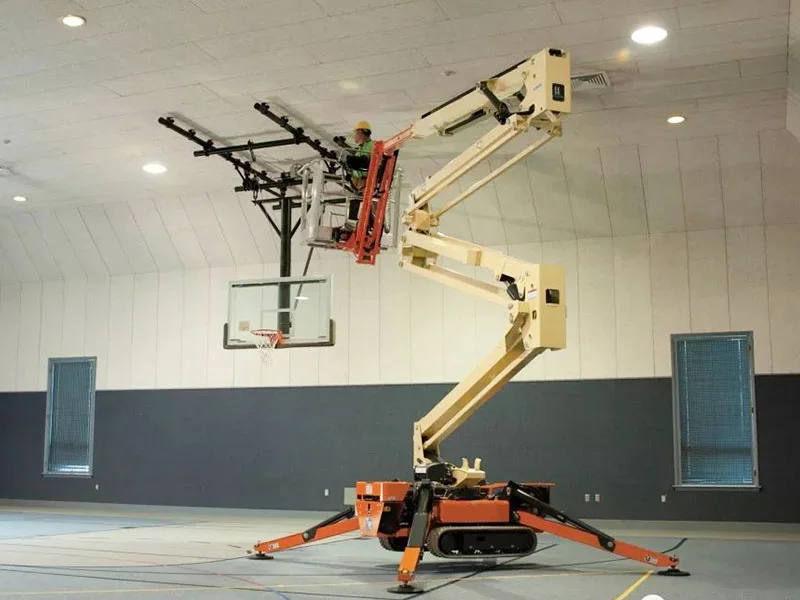
For extremely uneven or sensitive ground, a tracked boom lift is often the best choice. Instead of wheels, these use tracks to distribute weight over a larger surface area, significantly reducing ground pressure. They often feature “outriggers” that can be deployed on different levels to level the machine on a staircase or a steep hill.
Major Risks of Using a Boom Lift on Uneven Ground
Understanding the dangers is the first step toward prevention. Common mistakes when using a boom lift often involve underestimating the terrain.
Tip-Overs
This is the most catastrophic risk. When using a boom lift on an incline, the higher the platform goes, the more unstable the machine becomes. A tip-over often results in fatalities or permanent disability.
Structural Failure
When a machine is tilted, the boom arm experiences lateral (side-to-side) forces it wasn’t necessarily designed to handle at full extension. This can lead to metal fatigue or hydraulic failure.
“The Catapult Effect”
If you are using a boom lift on uneven ground and one wheel drops into a hidden hole or a soft patch of dirt, the movement is magnified at the platform. An operator can be literally catapulted out of the basket if they aren’t wearing a proper harness.
Sliding and Loss of Traction
On slopes or gravel, gravity might cause the entire machine to slide. Using a boom lift on a slippery or loose surface means the brakes may not be enough to hold the machine in place, especially if the boom is extended.
Safety Guidelines for Using a Boom Lift on Uneven Ground
Safety isn’t just a checklist; it’s a culture. If you plan on using a boom lift in less-than-ideal conditions, follow these non-negotiable rules:
1. Pre-Operation Inspection
Always walk the site before using a boom lift. Look for:
- Potholes or hidden drop-offs.
- Soft soil or “filled” ground that might collapse.
- Manhole covers or underground utilities.
2. Know Your Limits
Consult the operator’s manual. It will state the maximum allowable slope for driving and for elevating. Never exceed these. If the alarm sounds while using a boom lift, stop immediately, retract the boom, and move to level ground.
3. Use Outriggers Correctly
If your machine is equipped with outriggers, use them. They provide a wider footprint and can often compensate for minor unevenness. Always ensure the outriggers are on a firm, level surface.
4. Wear Fall Protection
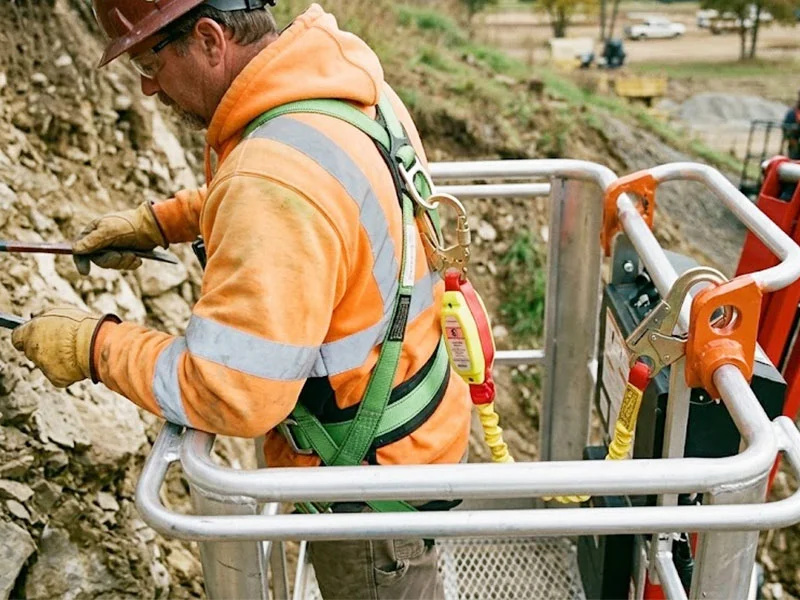
When using a boom lift, a full-body harness with a lanyard attached to the designated anchor point is mandatory. This is your last line of defense against the “catapult effect” mentioned earlier.
5. Drive with Caution
When moving the machine on a slope, keep the boom stowed and as low as possible. If you are using a boom lift to travel up a hill, ensure the counterweight is on the uphill side to maximize stability.
Alternatives to Using a Boom Lift on Uneven Ground
Sometimes, using a boom lift simply isn’t the safest or most efficient option for a specific piece of terrain. In these cases, consider the following:
- Scaffolding: If the ground is uneven, scaffolding can be built with adjustable legs to create a perfectly level working platform.
- Crane with a Man-Basket: For extreme heights over very poor terrain, a crane might be used to hoist a basket, though this requires specialized permits and highly trained operators.
- Ground-Based Tree Trimming Tools: If you were considering using a boom lift to cut trees, sometimes long-reach pole saws or professional climbers are safer for steep embankments.
- Site Remediation: Often, the best solution is to bring in a skid steer or a backhoe to level a “pad” for the lift before using a boom lift on that spot.
Frequently Asked Questions (FAQ)
How much slope is safe when using a boom lift?
Most standard boom lifts are rated for a 5-degree slope (approx. 8.7% grade). However, some rough terrain models can handle up to 40% grade while stowed. Always check the specific decals on your machine before using a boom lift on any incline.
Can you use a boom lift on a gravel?
Yes, using a boom lift on gravel is common, but it requires caution. Gravel can shift under the weight of the machine. Ensure the gravel is well-compacted and that you are using a machine with rough terrain tires to maintain traction.
What happens if a boom lift tilts too far?
Most modern machines are equipped with a tilt alarm. When using a boom lift, if the sensors detect an unsafe angle, the alarm will sound, and the machine will usually “cut out,” preventing further upward or outward movement. You must retract the boom and move to level ground to reset it.
Do rough terrain boom lifts eliminate all risks?
No. While they are better equipped for uneven ground, the risk of a tip-over still exists. Using a boom lift of any kind requires adherence to weight limits and slope ratings. Rough terrain features just expand the “envelope” of where the machine can go—they don’t make it invincible.
Should you use cribbing under outriggers?
Yes, especially on uneven or soft ground. Using a boom lift with outriggers often requires “spreader pads” or heavy-duty wood cribbing to distribute the load. This prevents the outrigger from sinking into the ground, which would cause the machine to tilt dangerously.
Conclusion
Using a boom lift is an incredibly effective way to reach new heights, but it is a task that demands respect for the environment and the equipment. When it comes to uneven ground, the margin for error is razor-thin. By understanding the stability of your machine, choosing the right equipment for the terrain, and never ignoring a tilt alarm, you can mitigate the most significant risks.
Remember, the most common mistakes when using a boom lift occur when operators prioritize speed over safety. Take the time to assess your ground, check your inclinometer, and always stay within the manufacturer’s guidelines.