Aerial lifts are indispensable tools across countless industries, from construction and warehousing to utility maintenance and filmmaking. They are designed to safely and efficiently elevate workers and equipment to heights that would otherwise be inaccessible, replacing the need for scaffolding or ladders in many cases. Understanding the different types of aerial lifts is crucial for selecting the right equipment for a job, ensuring both safety and productivity.
In this comprehensive guide, we’ll dive deep into the three main types of aerial lifts and their variants, helping you make an informed decision for your next project.

Scissor Lifts
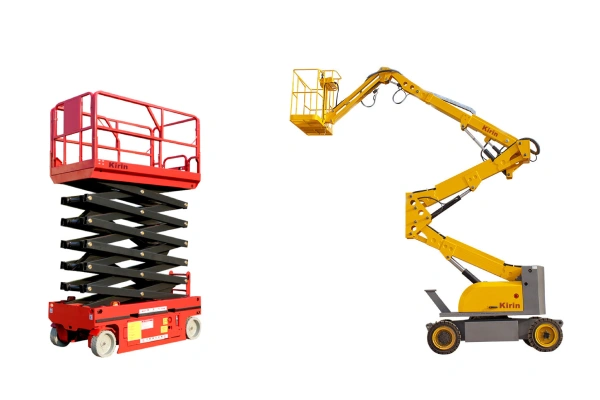
The scissor lift is one of the most recognizable and commonly used types of aerial lifts. It gets its name from the crisscrossing metal supports, or “scissors,” that extend to raise and lower the work platform. The mechanism operates similarly to a pair of opening and closing scissors.
Scissor lifts are designed primarily for vertical movement. Unlike boom lifts, which can reach up and over obstacles, the platform on a scissor lift moves straight up from its base. They are ideal for tasks that require a large, stable work area and the ability to lift significant weight, such as installing ceiling fixtures, painting large walls, or performing general maintenance on the side of a building. Their generous platform size allows for multiple workers and materials, making them a highly productive choice among the different types of aerial lifts.
Types of Scissor Lifts
While the basic mechanism remains the same, scissor lifts come in several specialized varieties tailored for different environments and needs. These variations demonstrate the diversity within the broader category of types of aerial lifts.
Electric Scissor Lifts
These are typically the smallest and quietest models. They are battery-powered, making them perfect for indoor use on finished floors, such as in warehouses, retail stores, or data centers, where zero emissions are required. They often feature non-marking tires to protect delicate flooring. Their use is crucial in tight spaces where large, internal combustion-engine machines are impractical. When considering the various types of aerial lifts for indoor projects, the electric scissor lift is often the top choice.
Diesel Scissor Aerial Work Platform
Also known as rough terrain scissor lifts, these models are built for outdoor and uneven surfaces. They are powered by diesel engines, which provide the necessary torque and power to navigate challenging terrain. Features often include four-wheel drive and rugged, aggressive-tread tires. The platforms are generally larger and have a higher lift capacity than their electric counterparts, making them essential on large construction sites where the ground is unpaved. These powerful types of aerial lifts are a staple in heavy construction.
Steering Scissor Lifts
While less common as a distinct category name, this often refers to the drive capability of the machine. Most modern self-propelled scissor lifts have excellent maneuverability, allowing the operator to steer and drive the machine while the platform is elevated, greatly increasing on-site productivity compared to push-around models. This ability is a key feature in all self-propelled types of aerial lifts.
Tracked Scissor Lift
Instead of wheels, these units use rubber or metal tracks. This design provides superior traction and flotation, distributing the machine’s weight over a larger area. They are often used in extremely muddy, sandy, or steep environments where wheeled scissor lifts would get stuck or cause excessive ground damage. They represent a highly specialized option among the various types of aerial lifts.

Boom Lifts
Boom lifts, sometimes called man lifts or aerial work platforms (AWPs), are the second major category of types of aerial lifts. Their defining feature is the hydraulic arm, or “boom,” that extends to position the work platform. This boom allows for both vertical and horizontal reach, making them ideal for accessing high, hard-to-reach areas, especially where there are obstacles that need to be cleared.
Boom lifts are distinguished from scissor lifts by their versatility in reaching out as well as up. They are essential for tasks like bridge inspection, exterior building maintenance, tree trimming, and erecting steel structures. Their agility and reach capabilities make them one of the most complex and useful types of aerial lifts.
Types of Boom Lifts
Boom lifts are classified based on the design and function of their primary arm mechanism, offering operators a range of precision and reach options. These distinct designs are critical factors when evaluating the available types of aerial lifts for a job site.
Straight Boom Lifts
Also known as telescopic boom lifts, these machines feature an arm that extends straight out like a telescope. They are designed for maximum horizontal and vertical reach, offering the highest possible working height among all types of aerial lifts. They are most effective when a straight-line path to the work area is available. Typical applications include high-rise construction, telecommunications, and high-bay maintenance.
Articulating Boom Lifts
Often referred to as knuckle booms, these lifts have a boom made up of multiple sections connected by “knuckles” or hinges. This design allows the operator to bend and maneuver the platform around obstacles, making them highly versatile for complex job sites. For instance, an articulating boom lift can reach over a building’s roof edge or navigate around pipes and equipment. These machines are favored when versatility and the ability to work in confined, complex aerial environments are paramount considerations for the types of aerial lifts being reviewed.
Towable Boom Lifts
These are smaller, lighter boom lifts mounted on a trailer chassis, allowing them to be towed behind a standard truck or van. They are popular for smaller-scale, dispersed projects like residential painting, light maintenance, or individual facility upkeep. While they require outriggers to stabilize the unit before use, their mobility makes them an excellent, cost-effective option among the various types of aerial lifts for companies with many scattered worksites.
Mast Lifts
The mast lift, sometimes called a vertical mast lift or personal lift, is the third primary category of types of aerial lifts. These machines are characterized by a single, vertical mast that raises the work platform. They are typically smaller, lighter, and more compact than both scissor and boom lifts.
Mast lifts are designed to reach moderate heights and are best suited for one person and minimal tools. They excel in tight, confined spaces where a larger machine cannot fit, such as between warehouse shelving or inside elevators. They are a staple for tasks like picking stock, installing overhead HVAC, or performing quick maintenance checks. Their compact footprint offers a level of access unique among the various types of aerial lifts.
Types of Mast Lifts
The mast lift category, while generally smaller, also offers variations to meet specific operational needs, especially concerning reach and maneuverability.
Dual Mast Vertical Lift
This design uses two parallel masts for added stability and, often, a slightly larger work platform than a single-mast unit. The increased rigidity makes the operator feel more secure at maximum height. This enhanced stability broadens the range of tasks a mast lift can safely perform, adding utility to this compact category of types of aerial lifts.
Mast Lift With Jib
Adding a jib—a short, articulated extension at the end of the main mast—allows the operator to reach a small amount out and over obstacles, similar to a mini articulating boom. This is invaluable when the work area is just slightly out of reach or positioned above a small piece of permanent equipment. This minor modification significantly increases the flexibility of this type of machine when comparing the capabilities of various types of aerial lifts.
Self-Propelled Telescopic Mast Lift
These are the most common variants, allowing the operator to drive the unit while elevated and feature a mast that extends telescopically. They are highly maneuverable with tight turning radii, making them perfect for navigating crowded, indoor spaces like production floors or crowded warehouses. They are overwhelmingly electric-powered for indoor compliance. When space is severely limited, these are the most practical types of aerial lifts available.

Choosing the Right Aerial Lift With Kirin Lift Company
Selecting the correct aerial lift is a critical decision that impacts project cost, safety, and efficiency. Kirin Lift Company specializes in providing expert guidance and a comprehensive fleet covering all types of aerial lifts mentioned above.
To ensure you choose the best machine, you must consider the following factors:
- Working Height and Reach: What is the maximum height you need to reach, and do you need horizontal outreach? If you need to go straight up, a scissor or mast lift may suffice. If you need to go up and over, a boom lift is required. The required working height will immediately narrow down the potential types of aerial lifts you can use.
- Capacity: How many workers and how much material/equipment must the platform support? Scissor lifts offer the highest capacity.
- Work Environment: Is the job indoors or outdoors? On a finished floor or rough terrain? Indoor work mandates electric, non-marking types of aerial lifts, while outdoor work may necessitate rough-terrain diesel models.
- Footprint and Maneuverability: How confined is the workspace? A mast lift or small electric scissor lift is necessary for tight aisles, whereas a large telescopic boom lift requires ample clear space. The worksite dimensions are a major constraint on the suitable types of aerial lifts.
Kirin Lift Company’s consultants are experts in assessing your site requirements and matching them to the optimal machine from our vast inventory, ensuring that you always select the best fit from the various types of aerial lifts for maximum safety and productivity. We believe that understanding the different types of aerial lifts is the first step toward a successful job.
Conclusion
Aerial lifts are complex, powerful machines that provide essential access solutions across numerous industries. Whether your project demands the high-capacity vertical access of a scissor lift, the versatile outreach of a boom lift, or the compact maneuverability of a mast lift, there is a specialized machine to meet your needs. By understanding the distinct features and applications of the three primary types of aerial lifts—and their numerous subtypes—you can significantly improve the efficiency, safety, and success of your elevated work projects. Remember that proper training and machine maintenance are just as important as selecting the correct machine from the multitude of available types of aerial lifts.
Contact Kirin Lift Company today to discuss your project and explore our fleet of high-quality types of aerial lifts. We’re ready to help you reach new heights safely.
FAQs
What is the primary difference between a scissor lift and a boom lift?
The main difference is their movement capability. A scissor lift is limited to moving vertically (straight up and down) and provides a large platform capacity. A boom lift uses an articulated or telescopic arm to reach both vertically and horizontally, allowing it to reach up and over obstacles, but it generally has a smaller platform capacity. Understanding these distinct characteristics is key when choosing between these two major types of aerial lifts.
Are there different fuel types of aerial lifts?
Yes. The most common fuel types of aerial lifts are electric (battery-powered) for indoor, clean, and quiet operations, and diesel (internal combustion) for outdoor, rough-terrain, and high-capacity applications. Some smaller units may also be powered by gasoline or propane, especially in hybrid systems.
Which types of aerial lifts are best for working in narrow warehouse aisles?
The best options for narrow warehouse aisles are mast lifts (due to their extremely small footprint) and compact electric scissor lifts. These two types of aerial lifts are designed for precision maneuvering in tight, indoor spaces and have the necessary non-marking tires.
Do you need a special license to operate these types of aerial lifts?
While specific state or local licensing laws vary, OSHA (Occupational Safety and Health Administration) in the U.S. requires mandatory training and certification for anyone operating an aerial work platform (AWP), which includes all types of aerial lifts. This training ensures the operator is familiar with the specific machine’s controls, safety features, and operating procedures.
What are rough terrain types of aerial lifts?
Rough terrain lifts are typically diesel-powered scissor lifts or boom lifts that feature four-wheel drive, high ground clearance, and aggressive-tread tires. They are built to safely travel and operate on uneven, unpaved, or muddy outdoor construction sites, unlike standard electric types of aerial lifts which are restricted to level, finished surfaces.