Navigating a modern job site often feels like a high-stakes puzzle. Whether you are working in a narrow warehouse aisle, a crowded retail floor, or a sophisticated data center, space is a luxury you simply don’t have. This is where the tiny scissor lift becomes an absolute game-changer. Unlike their massive industrial counterparts, these compact machines are designed specifically for precision and accessibility in restricted environments.
In this comprehensive guide, we will explore why a tiny scissor lift is the ultimate solution for tight spaces, what features you should prioritize, and how to choose the right model to boost your productivity without compromising on safety.
What Is a Tiny Scissor Lift?
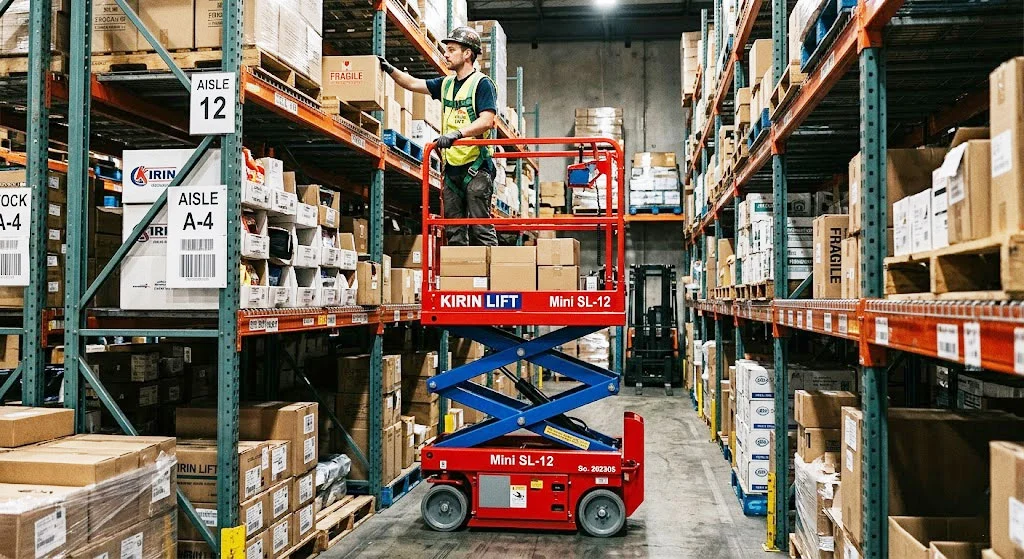
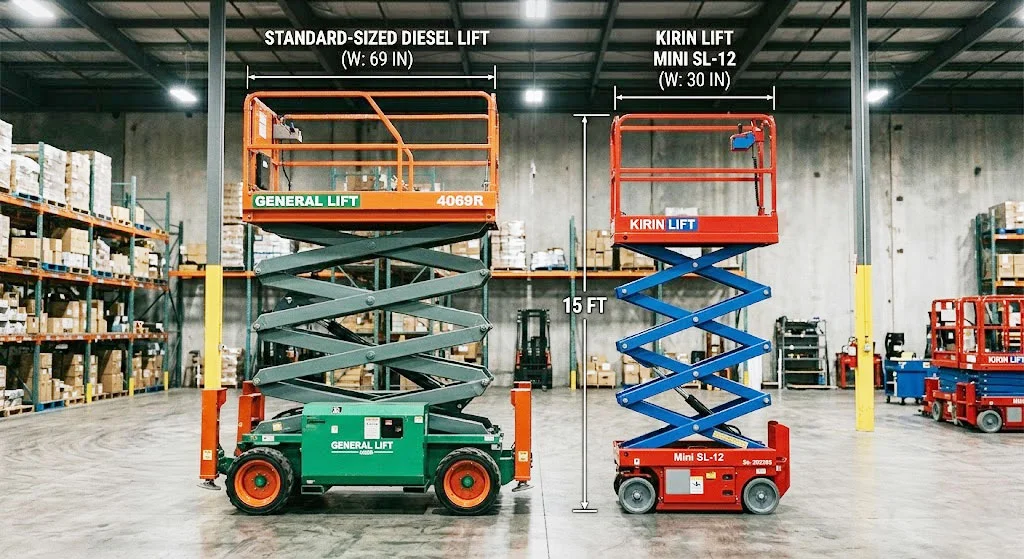
A tiny scissor lift (often referred to as a micro-lift or mini scissor lift) is a compact aerial work platform designed to provide vertical access in areas where standard lifts cannot fit. These machines typically feature a narrow chassis—often between 30 to 32 inches wide—allowing them to pass through standard single doorways and travel inside freight elevators.
Despite their small footprint, a tiny small scissor lift provides a stable, elevated platform for workers and their tools. They are the “middle ground” between a traditional ladder and a full-sized construction lift, offering the safety of a guarded platform with the mobility of a motorized vehicle.
Key Benefits of Using a Tiny Scissor Lift
Investing in a tiny scissor lift isn’t just about fitting into small corners; it’s about optimizing your entire workflow. Here are the primary advantages:
Compact Design for Tight Spaces
The most obvious benefit of a tiny scissor lift is its slim profile. In environments like hospitals, offices, or narrow-aisle warehouses, a standard lift is simply too bulky. A tiny small scissor lift can navigate tight corridors and squeeze into corners that would otherwise require scaffolding or risky ladder work.
Enhanced Mobility and Maneuverability
Modern tiny scissor lift models often feature a “zero-degree” inside turning radius. This means the machine can rotate on its own axis, making it incredibly easy to maneuver around obstacles or in dead-end hallways. Many are also lightweight enough to be moved across delicate flooring without causing damage.
Improved Safety and Stability
Ladders are a leading cause of workplace injuries. A tiny small scissor lift replaces the instability of a ladder with a rigid, steel-guarded platform. With built-in tilt sensors and pothole protection, a tiny scissor lift provides a much safer environment for tasks like electrical wiring, HVAC maintenance, or painting.
Cost-Effective Solution
A tiny scissor lift is generally more affordable to purchase, rent, and maintain than larger models. Because they are often electric, they have fewer moving parts and lower fuel costs. Additionally, the efficiency gained by being able to move the lift while elevated (in certain models) saves significant man-hours on the job.
Common Applications of Tiny Scissor Lifts
Where exactly does a tiny scissor lift shine? Their versatility makes them popular across various industries:
- Facility Maintenance: Changing light bulbs in high-ceiling lobbies or repairing HVAC vents in office buildings.
- Retail and Warehousing: Stocking shelves in narrow aisles or conducting inventory in high-density storage areas.
- Construction and Fit-outs: Installing drywall, sprinkler systems, or electrical conduits in residential or commercial interiors.
- Data Centers: Accessing overhead cable trays in tight server rows where floor loading is a concern.
- Entertainment and Events: Hanging lights, banners, or sound equipment in theaters and convention centers.
Key Features to Look for in the Best Tiny Scissor Lift
Not every tiny scissor lift is created equal. To find the best tiny scissor lift for your specific needs, pay attention to these technical specifications:
Platform Size and Load Capacity
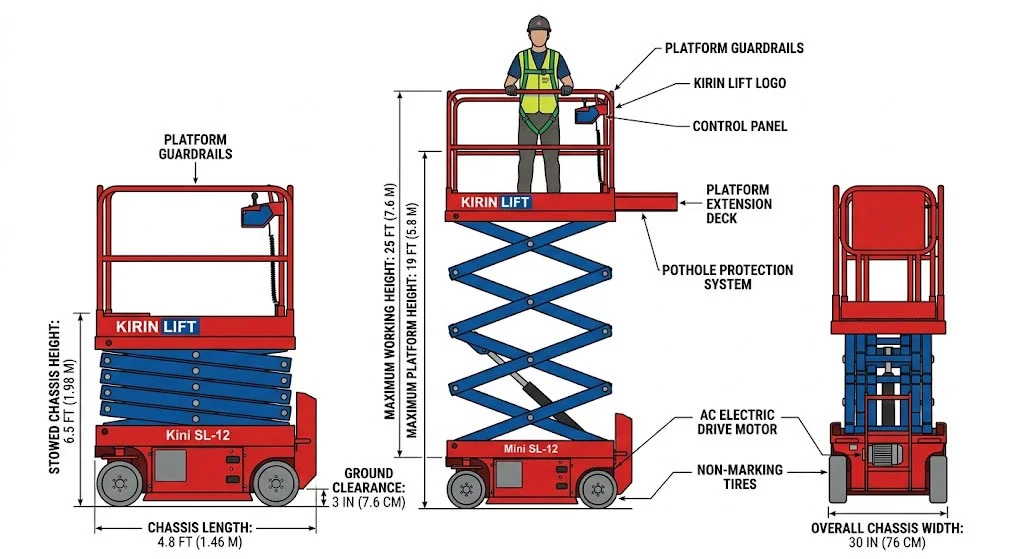
Even a tiny scissor lift needs to be functional. Look for a model with an extension deck—this allows the platform to slide out, giving you extra reach over obstacles. Common load capacities for a small scissor lift range from 500 lbs to 750 lbs, which is usually enough for two workers and their equipment.
Maximum Working Height
The “working height” of a mini scissor lift is typically about 6 feet higher than the platform height (to account for the reach of the person standing on it). For most indoor applications, a mini scissor lift with a platform height of 13 to 19 feet is the industry standard.
Power Source
Most tiny scissor lift units are battery-powered (electric). This is ideal for indoor use as it produces zero emissions and operates quietly. Look for “AC Drive” motors, which are more efficient and provide longer battery life between charges.
Portability and Weight
If you need to move your tiny scissor lift between floors, its weight is critical. Many micro models weigh under 2,000 lbs, allowing them to be transported in standard elevators and used on floors with strict weight limits.
Safety Features
A high-quality small scissor lift should include:
- Pothole Guards: To prevent tipping if the lift drives over a small dip.
- Emergency Lowering: A manual valve to lower the platform if power is lost.
- Tilt Alarms: To warn the operator if the ground is not level.
- Overload Sensors: To prevent the lift from rising if the weight limit is exceeded.
Types of Tiny Scissor Lifts
Understanding the mechanics behind your mini scissor lift will help you choose the right one for your environment.
Electric Mini Scissor Lifts
This is the most common type of tiny scissor lift. They use deep-cycle batteries to power both the wheels and the lift mechanism. They are preferred for clean environments because they don’t leak oil as easily as hydraulic-only systems and are virtually silent.
Hydraulic Tiny Scissor Lifts
While many electric lifts use hydraulic cylinders to raise the platform, some older or heavy-duty small scissor lift models rely more heavily on hydraulic fluid for all movements. These are powerful but may require more maintenance to prevent leaks.
Manual Push-Around Scissor Lifts
If you don’t need the machine to be self-propelled, a manual “push-around” tiny scissor lift is a great budget option. You manually push the lift into place, lock the wheels, and then use an electric motor to raise the platform. These are the lightest mini scissor lift options available.
How to Choose the Right Tiny Scissor Lift
To choose the perfect tiny small scissor lift, ask yourself these four questions:
- What is the narrowest point the lift must pass through? Measure your doors and aisles. If they are 32 inches wide, ensure your tiny scissor lift is at least an inch narrower.
- What is the floor capacity? If you are working on a mezzanine or finished wood floor, you need a lightweight, small scissor lift with non-marking tires.
- How high do you actually need to go? Don’t pay for a 26-foot lift if you only ever work at 15 feet. A smaller tiny scissor lift will be easier to handle.
- Is the lift for indoor or outdoor use? Most mini scissor lift models are “indoor only” because wind can make a small, high platform unstable.
Maintenance Tips for Tiny Scissor Lifts
A tiny scissor lift is a precision machine that requires regular care to stay safe and operational:
- Battery Care: Keep the batteries charged. If they are lead-acid, check the water levels monthly.
- Hydraulic Check: Regularly inspect hoses and cylinders for any signs of weeping or leaks.
- Tire Inspection: Because a small scissor lift often has small tires, even a small chunk missing can cause instability.
- Grease Points: Keep the scissor pivot points lubricated to ensure smooth rising and lowering.
- Function Test: Before every shift, test the emergency stop and lowering functions.
Safety Guidelines When Using a Tiny Scissor Lift
Safety should always be the priority when operating a tiny scissor lift. Follow these essential rules:
- Inspect the Ground: Only operate a mini scissor lift on firm, level surfaces. A small bump can become a major hazard when the lift is fully extended.
- Never Exceed Capacity: The weight limit on a tiny scissor lift includes the operator, their tools, and any materials.
- Do Not Use as a Crane: Never hang heavy loads from the side of the platform; this can shift the center of gravity and cause the small scissor lift to tip.
- Clear the Area: Ensure there are no overhead power lines or obstructions before elevating.
- Stay Inside the Rails: Never stand on the guardrails of your tiny scissor lift to get extra height.
Top Considerations Before Buying
Before you finalize your purchase of a tiny scissor lift, consider the long-term support. Does the manufacturer have a local service center? Are the parts for that specific small scissor lift model easily accessible? Brand names like Genie, JLG, and Skyjack offer great reliability, but there are also many specialized “micro” brands that focus exclusively on the mini scissor lift market.
Additionally, check the warranty. A good tiny small scissor lift should come with at least a one-year warranty on parts and a longer warranty on the structural components of the scissor stack.
Conclusion
The tiny scissor lift has revolutionized how we approach work in confined spaces. By combining the safety of a traditional aerial platform with the agility of a compact vehicle, the tiny small scissor lift allows workers to reach new heights—literally—in environments where space is at a premium. Whether you are looking to increase productivity in a warehouse or ensure the safety of your maintenance crew in an office building, finding the right small scissor lift is an investment that pays for itself in efficiency and peace of mind.
If you are ready to upgrade your fleet or need expert advice on which small scissor lift model best fits your facility’s specific layout, our team at Kirin Lift is here to help. We specialize in providing high-quality, compact access solutions tailored to your unique operational needs. For personalized quotes or technical specifications, feel free to reach out to us via email at info@klingtec.com or send us a message on WhatsApp at +86 188 6686 3188. Let’s find the perfect tiny scissor lift to keep your projects moving upward.
FAQs About Tiny Scissor Lifts
What is the average height of a tiny scissor lift?
The average platform height for a tiny scissor lift is between 13 and 19 feet. This provides a working height of approximately 19 to 25 feet, which is perfect for most indoor commercial ceilings.
Can tiny scissor lifts be used outdoors?
Most tiny scissor lift models are designed for indoor use on flat, level slabs. However, some “all-terrain” or “rated” models can be used outdoors on level concrete or asphalt, provided wind speeds are low. Always check the manufacturer’s rating for your specific tiny scissor lift.
How much weight can a tiny scissor lift hold?
Typically, a tiny scissor lift can hold between 500 and 750 lbs. This is usually sufficient for two people or one person with heavy tools and materials.
Are tiny scissor lifts safe for one-person operation?
Yes, a tiny scissor lift is specifically designed for easy, one-person operation. The controls are intuitive, and the safety systems are built to protect a single operator throughout their shift.
How do I maintain a tiny scissor lift?
Maintenance for a tiny scissor lift involves regular battery charging, checking hydraulic fluid levels, inspecting tires for wear, and performing a pre-start safety check of all controls and emergency systems.