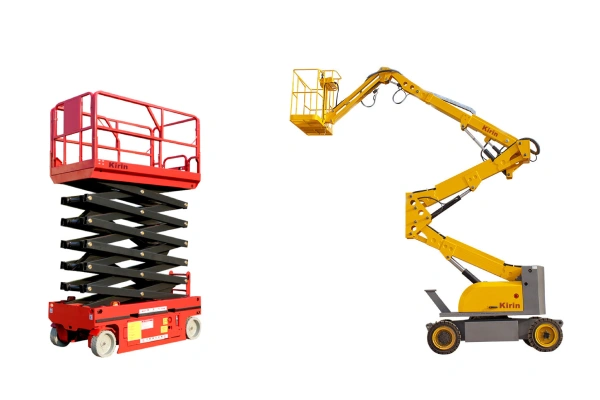
In the world of heavy machinery, choosing the right equipment can be the difference between a project that runs like clockwork and one that faces costly delays. On many construction sites, two machines often stand side-by-side, looking somewhat similar with their long, extendable arms: the telehandler and the boom lift. However, while they share some visual DNA, they are built for entirely different purposes.
Understanding the nuances of a telehandler vs boom lift is essential for project managers, contractors, and DIY enthusiasts alike. Using the wrong machine isn’t just inefficient; it can be a major safety hazard. This comprehensive guide will break down the mechanics, use cases, and critical differences to help you decide which powerhouse is right for your job site.
What is a Telehandler?
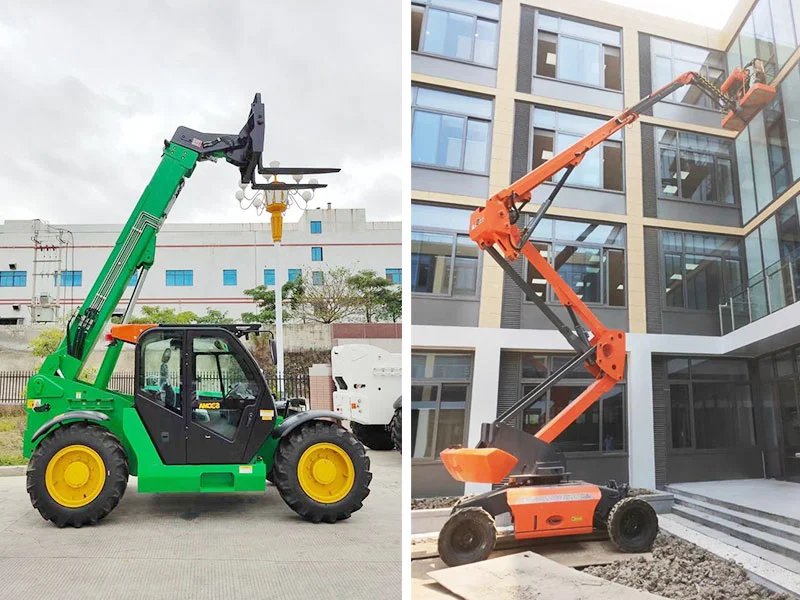
A telehandler, short for “telescopic handler,” is often described as the “Swiss Army Knife” of the construction world. At its core, it is a hybrid machine that combines the lifting capabilities of a forklift with the reach and height of a small crane.
Key Features of a Telehandler
Telehandlers are characterized by their single telescopic boom that can extend forward and upward. Unlike a standard forklift, which only moves loads vertically, a telehandler can reach over obstacles or place a pallet deep into a structure.
- High Load Capacity: Most telehandlers are built for heavy lifting, with capacities often ranging from 5,000 to over 12,000 lbs.
- Rough Terrain Capability: These machines usually feature four-wheel drive, large foam-filled or pneumatic tires, and high ground clearance, making them ideal for muddy, uneven construction sites.
- Versatility via Attachments: The “secret sauce” of the telehandler is its ability to switch attachments. While pallet forks are the most common, you can also attach buckets, lifting hooks, or even snow plows.
In the industry, you might hear a telehandler referred to as a “reach forklift” or a “zoom boom.” Regardless of the name, its primary mission is material handling.
What is a Boom Lift?
A boom lift is a type of Aerial Work Platform (AWP) designed specifically to safely lift personnel and their tools to high or hard-to-reach areas. If a telehandler is a heavy-duty mover, a boom lift is a high-access reacher.
Types of Boom Lifts
When discussing a telehandler vs boom lift, it’s important to note that “boom lift” covers two distinct designs:
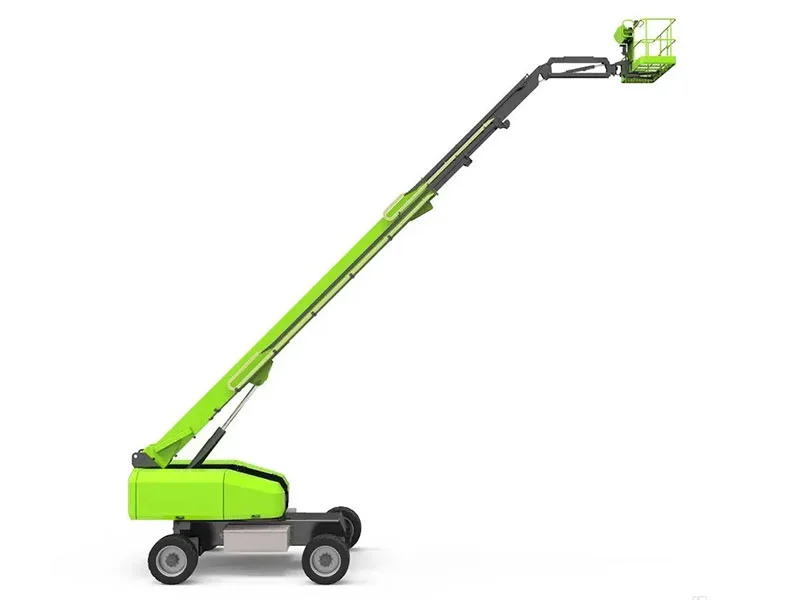
- Telescopic Boom Lifts (Straight Booms): These feature a straight, extendable arm. They offer the greatest horizontal reach and are perfect for work that requires maximum height and distance from the base.
- Articulating Boom Lifts (Knuckle Booms): These have multiple “joints” in the arm, allowing the operator to reach “up and over” obstacles like walls, machinery, or rooflines.
Key Features of a Boom Lift
- Personnel Focus: The end of the boom is equipped with a safety bucket or platform where the operator stands.
- Precision Control: Operators can control the lift’s movements directly from the platform, allowing for minute adjustments when painting, repairing, or installing electrical components.
- Maneuverability: Boom lifts are often narrower than telehandlers and can operate in tighter spaces, with some electric models designed specifically for indoor use.
Telehandler vs Boom Lift: So what’s the difference?
While both machines utilize a telescopic arm, the fundamental difference lies in what they are lifting.
| Feature | Telehandler | Boom Lift |
| Primary Purpose | Moving and placing heavy materials. | Lifting people and tools to height. |
| Weight Capacity | Very High (5,000 – 12,000+ lbs). | Lower (Usually 500 – 1,000 lbs). |
| End Attachment | Interchangeable (Forks, Buckets, Jibs). | Fixed (Safety Bucket/Platform). |
| Operator Location | Inside a protected cab on the base. | Inside the bucket/platform at the top. |
| Terrain | Strictly rough terrain/outdoor. | Indoor (electric) or Outdoor (diesel). |
| Steering | Often 4-wheel, crab, and front-steer. | Primarily 2-wheel or 4-wheel drive. |
The “Material vs. People” Rule
The easiest way to remember the telehandler vs boom lift distinction is this:
- If you need to move 2,000 lbs of lumber to a third-story window, you need a telehandler.
- If you need to send two electricians to that same window to install a light fixture, you need a boom lift.
When to Choose a Telehandler
Because of its rugged nature and heavy-lifting DNA, the telehandler is the go-to machine for the “heavy lifting” phase of a project.
1. Material Placement
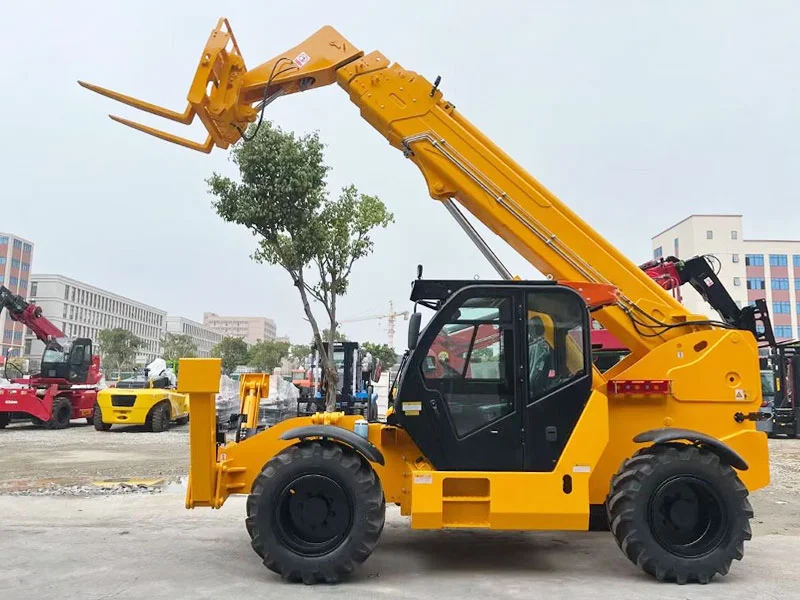
If your job involves unloading trucks and moving pallets of bricks, roofing shingles, or timber across a muddy site, the telehandler vs boom lift debate ends here. The telehandler’s reach allows it to place loads on scaffolding or through upper-story openings that a standard forklift simply couldn’t reach.
2. Agriculture and Farming
Telehandlers are massive in the agricultural sector. With a bucket attachment, they can move grain or gravel; with a bale spear, they can stack hay high in a barn. Their 4WD capabilities are essential for navigating farm fields.
3. Early-Stage Construction
During the framing and “drying in” phase of construction, a telehandler is indispensable. It acts as a mini-crane, lifting trusses and heavy steel beams into place.
When to Choose a Boom Lift
The boom lift shines when precision and personnel safety are the top priorities.
1. Maintenance and Repair
Whether it’s changing light bulbs in a stadium, cleaning windows on a mid-rise building, or repairing power lines, the boom lift provides a stable, safe platform for workers to stay at height for extended periods.
2. Working Around Obstacles
If you need to reach a spot that is blocked by a fence, a parked car, or a lower roof, an articulating boom lift is your only option. The “knuckle” design allows the arm to bend, providing access that a straight telehandler arm cannot replicate.
3. Painting and Detailing
Because the operator controls the machine from the basket, they can move themselves along a wall or around a corner with extreme precision. This is impossible with a telehandler, where the operator is on the ground and relies on a spotter or hand signals to move the boom.
Can a Telehandler Function Like a Boom Lift?
This is a common question on job sites. Since a telehandler has a boom and can reach high places, can you just put a “man basket” on the forks and use it as a boom lift?
The short answer is yes, but with major caveats.
The “Work Platform” Attachment
You can purchase or rent OSHA-approved work platforms that attach to a telehandler’s forks. However, there are strict regulations regarding this:
- No Controls in the Basket: Unlike a boom lift, a telehandler operator remains in the cab. This means the person in the basket is at the mercy of the driver below.
- Stability Requirements: The telehandler must be on level ground, often with outriggers deployed, and cannot be driven while the basket is elevated.
- Safety Harnesses: Fall protection is mandatory, and the basket must be securely pinned to the forks.
In the telehandler vs boom lift comparison, using a telehandler as a man-lift is generally considered a “backup” option. If the primary task is lifting people, a dedicated boom lift is safer, more efficient, and offers better maneuverability.
Cost Comparison: Renting vs. Buying
When deciding between a telehandler vs boom lift, budget plays a significant role.
- Purchase Price: Both machines are significant investments. A new mid-sized telehandler can cost anywhere from $80,000 to $150,000. Boom lifts range similarly, though high-reach telescopic booms can exceed $200,000.
- Rental Rates: For most projects, renting is the logical choice.
- Telehandlers typically rent for $500–$900 per day or $1,500–$2,500 per week.
- Boom Lifts vary by height. A 40ft lift might be $250–$400 per day, while a 120ft monster can cost over $1,500 per day.
Conclusion
When it comes to the telehandler vs boom lift showdown, there isn’t a “better” machine—only the “right” machine for the specific task.
The telehandler is your heavy-duty material mover, built to conquer mud and lift tons of weight to the upper reaches of a skeleton structure. The boom lift is your precision access tool, designed to keep your crew safe and mobile while they perform intricate work at height.
Before you make your choice, evaluate your site terrain, the weight of your loads, and whether you are moving pallets or people. Often, the most efficient job sites utilize both.
FAQs
Do I need a special license to operate a telehandler vs a boom lift?
Yes. In the US, OSHA requires operators to be trained and certified for the specific class of equipment they are using. Telehandler certification (Class 7 Forklift) is different from Aerial Work Platform (AWP) certification required for boom lifts.
Can a boom lift carry a pallet of bricks?
No. Boom lifts are designed for personnel and light tools. Their weight capacity is usually limited to 500–1,000 lbs. Attempting to lift heavy materials with a boom lift can cause the machine to tip or the boom to fail.
Which machine is better for indoor use?
The boom lift is the winner here. Many boom lifts come in “electric” or “non-marking tire” versions specifically for warehouses and arenas. Telehandlers are almost exclusively diesel-powered and too large for most indoor applications.
What is the max height of a telehandler vs boom lift?
Telehandlers typically max out around 55–60 feet. Boom lifts can go much higher, with some specialized telescopic models reaching up to 180 feet.
Can I use a telehandler on a slope?
Telehandlers are designed for rough terrain, but they have limits. Most feature “frame leveling” to compensate for slight slopes, but they should never be operated on steep inclines, especially when the boom is extended.