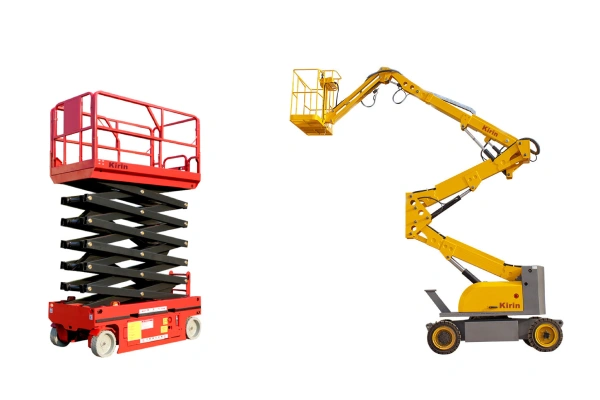
Working at heights is inherently challenging, but when you add sloped, muddy, or irregular ground to the mix, traditional aerial lifts often reach their limits. In the past, operators had to rely on manual outriggers, cribbing blocks, or extensive site preparation just to establish a safe, level base. Today, advanced engineering has solved this problem with the self-leveling scissor lift.
A self-leveling scissor lift eliminates the guesswork, safety hazards, and downtime associated with uneven jobsites. By automatically adjusting its chassis or platform to match real-time ground conditions, this specialized equipment provides a stable, vertical platform where standard lifts simply cannot operate.
Whether you are managing a major construction project, maintaining outdoor facility infrastructure, or navigating rugged industrial yards, understanding the mechanics, benefits, and applications of a self-leveling scissor lift is vital. This comprehensive guide covers everything you need to know about selecting, operating, and maintaining a self-leveling scissor lift for uneven terrain.
What Is a Self-Leveling Scissor Lift?
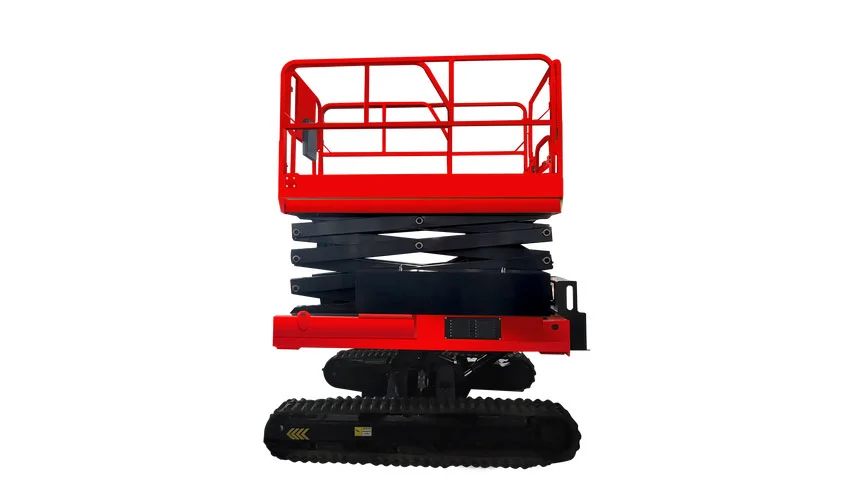
A self-leveling scissor lift is a specialized mobile elevating work platform (MEWP) engineered to automatically adjust its stance to maintain a perfectly horizontal working platform when operating on sloped, uneven, or unstable terrain.
Unlike conventional lifts that require a flat, concrete slab or perfectly graded dirt to safely elevate, a self-leveling scissor lift utilizes advanced sensor networks, intelligent control modules, and independent hydraulic or electronic actuators. As the machine encounters an incline or dip, the system dynamically alters the suspension, wheels, or outrigger legs. This real-time adjustment ensures that the overhead platform remains completely parallel to the horizon, preventing catastrophic tip-overs.
These machines are often integrated into rough-terrain designs, combining heavy-duty four-wheel drive, deep-tread tires, and robust engines with automated leveling technology. The primary goal of a self-leveling scissor lift is to optimize safety and operator productivity by taking the manual labor and human error out of machine stabilization.
Benefits of Using a Self-Leveling Scissor Lift
Investing in or renting a self-leveling scissor lift offers significant operational advantages across various demanding environments:
- Enhanced Operator Safety: The most critical advantage of a self-leveling scissor lift is its ability to minimize the risk of lateral tip-overs. Traditional lifts can easily become unstable if elevated on a slight slope. A self-leveling scissor lift ensures the center of gravity remains securely within safe operating parameters.
- Elimination of Site Preparation Costs: Before a standard lift can be deployed, project managers often have to invest time and money into grading the dirt, pouring temporary concrete pads, or clearing debris. A self-leveling scissor lift navigates these imperfections naturally, saving thousands in prep work.
- Drastic Reductions in Setup Time: Manual leveling using traditional outriggers or timber cribbing can take 15 to 30 minutes per position change. A modern self-leveling scissor lift stabilizes itself automatically in mere seconds, allowing workers to move from task to task without breaking momentum.
- Full Capability at Elevated Heights: Many standard lifts restrict driving or lifting when the chassis is tilted by even a couple of degrees. A self-leveling scissor lift counteracts this tilt, allowing operators to achieve full vertical extension safely on sloped ground.
- Improved Efficiency on Dynamic Slopes: Whether driving over curbs, navigating drainage swales, or working on roadside embankments, a self-leveling scissor lift continuously adapts without requiring the operator to constantly step down and reset manual controls.
Where Self-Leveling Scissor Lifts Are Commonly Used
Due to their versatility and rugged construction, you will find the self-leveling scissor lift deployed across an array of demanding sectors:
- Commercial Construction Sites: From steel erection and framing to exterior cladding and glazing, construction sites are notorious for being muddy, unpaved, and highly uneven. A self-leveling scissor lift provides a safe platform for tradespeople before the final grading is complete.
- Roadside Infrastructure and Utility Work: Installing signage, maintaining streetlights, or repairing overhead telecommunications lines often requires parking on sloped roadsides, embankments, or drainage ditches. The self-leveling scissor lift handles these slopes effortlessly.
- Aviation and Aerospace Maintenance: Aircraft hangars and tarmacs frequently feature subtle drainage slopes to prevent water accumulation. For precise maintenance tasks on large fuselages or wings, a high-capacity self-leveling scissor lift ensures perfect alignment and stability.
- Agricultural and Vineyard Management: Maintaining orchards, harvesting high-value crops, or installing netting on rolling hills requires a machine that can adapt to changing natural topographies.
- Industrial Plants and Storage Yards: Large outdoor storage facilities often feature unpaved gravel lots with deep potholes or depressions. Using a specialized scissor lift self-leveling pallet system or a rugged scissor lift self-leveling chassis enables safe overhead inventory management across these rough material yards.
Self-Leveling Scissor Lift vs Standard Scissor Lift
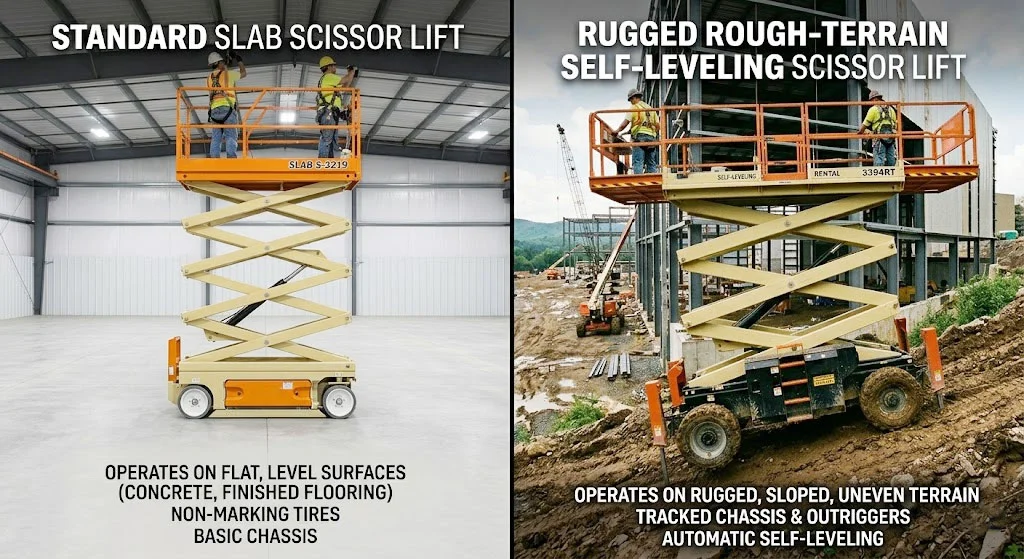
To fully appreciate the value of this equipment, it is important to contrast the self-leveling scissor lift against its standard counterpart:
| Feature | Standard Scissor Lift | Self-Leveling Scissor Lift |
| Ideal Terrain | Flat, level surfaces (concrete, asphalt) | Unpaved ground, mud, gravel, slopes up to 10-15° |
| Leveling Mechanism | None, or manual hydraulic outriggers | Automated, real-time dynamic chassis/suspension leveling |
| Setup Time | Minimal on flat ground; lengthy if using manual blocks | Instantaneous and automated |
| Drive-at-Height Capability | Limited strictly to perfectly flat zones | Enabled on moderate slopes due to continuous automatic adjustments |
| Risk of Tip-Over | High if operated outside strict level parameters | Low, as sensors prevent elevation if slope exceeds capabilities |
While a standard model is ideal for indoor warehousing with finished flooring, the self-leveling scissors lift is built to conquer unpredictable outdoor environments where a flat surface is a luxury.
Key Features to Look for in a Self-Leveling Scissor Lift
When purchasing or renting a self-leveling scissor lift, comparing key specifications ensures you select a machine capable of meeting your project requirements:
- Maximum Tilt Compensation: Different models can compensate for different degrees of slope. Look for a self-leveling scissor lift that can handle both longitudinal (front-to-back) and transverse (side-to-side) slopes, typically ranging from 4 to 12 degrees or more.
- Platform Capacity: Ensure the machine can support your crew, tools, and materials. If your work involves heavy structural elements, prioritizing a high-capacity self-leveling scissor lift is critical.
- Four-Wheel Drive and Oscillating Axles: True rough-terrain performance requires exceptional traction. Look for heavy-duty 4WD systems paired with oscillating axles that keep all four wheels in constant contact with the ground.
- Power Source Options: Decide between clean, quiet lithium-ion battery configurations for indoor/outdoor versatility or powerful diesel engines designed for round-the-clock heavy outdoor construction.
- Integrated Safety Systems: High-quality models feature clear diagnostic screens, tilt alarms, load-sensing systems, and emergency descent overrides to protect your workforce.
Safety Tips for Operating a Self-Leveling Scissor Lift
Even though a self-leveling scissor lift features highly automated safety systems, proper operator behavior and adherence to protocol are mandatory to ensure accident-free operation.
- Complete Certified Training: Never allow an untrained individual to operate a self-leveling scissor lift. Operators must be certified under relevant local standards (such as OSHA or ANSI) and fully familiarized with the specific model’s controls.
- Conduct Pre-Operation Inspections: Check hydraulic fluid lines, tire pressure, electronic sensors, and structural welds before every shift. Pay special attention to the leveling sensors and actuators.
- Evaluate Ground Conditions: While a self-leveling scissor lift can manage impressive slopes, it cannot overcome sinkholes, deep mud, or underground voids. Inspect the ground for stability before driving or elevating.
- Respect the Rated Load Capacity: Never exceed the maximum weight limit specified by the manufacturer. Remember to factor in the weight of tools, equipment, and multiple operators.
- Wear Appropriate Fall Protection: Always utilize a full-body harness and an approved lanyard anchored to the designated platform tie-off points while working inside the basket.
- Avoid Windy Conditions: High winds can exert severe lateral forces on an elevated platform. Always check the manufacturer’s maximum wind speed rating before elevating your self-leveling scissor lift.
Common Problems and Troubleshooting
Like any complex piece of machinery, a self-leveling scissor lift can experience mechanical or electrical issues. Knowing how to quickly troubleshoot common problems keeps your project on schedule.
Lift Not Leveling Properly
If your self-leveling scissor lift fails to calibrate or automatically level itself when placed on a slope, the primary culprit is often a blocked, uncalibrated, or faulty tilt sensor (inclinometer). Debris, thick mud, or structural impacts can misalign these delicate sensors. Clear away any dirt from the sensor housings and check the control panel for error codes. If the sensors are clear, the issue may stem from low hydraulic fluid or a failing proportional valve in the leveling circuit.
Uneven Platform Elevation
When the scissor arms extend, the platform should remain perfectly parallel to the chassis. If one side rises faster or looks uneven, stop operation immediately. This issue is typically caused by trapped air within the dual hydraulic cylinders, a hydraulic fluid leak, or physical binding in the scissor arm bushings. Bleeding the hydraulic system or lubricating the mechanical pivot points often resolves minor unevenness.
Stability Alarm Activation
If the built-in stability or tilt alarm sounds while you are operating a self-leveling scissor lift, it means the machine has reached or exceeded its safe operating angle, or the onboard load sensor detects an overload. Step down, lower the platform carefully using the ground controls if necessary, and move the machine to a less severe slope. If the alarm persists on flat ground, the sensor may require recalibration by a certified technician.
Battery or Engine Issues
For electric or hybrid models, a failing self-leveling scissor lift might stutter during leveling maneuvers due to low voltage. Leveling systems require a sudden burst of power to actuate hydraulic pumps or electric jacks. Ensure your batteries are fully charged and free of terminal corrosion. For diesel models, check for clogged fuel filters or air locks within the fuel lines.
Maintenance Tips for a Self-Leveling Scissor Lift
Routine maintenance ensures your self-leveling scissor lift remains reliable, safe, and retains its long-term value. Implement a strict maintenance schedule incorporating these steps:
- Keep Leveling Sensors Clean: The automated brain of your scissor lift self-leveling mechanism relies on clean electronic sensors. Regularly wipe down inclinometers and proximity switches to prevent mud, dust, or paint overspray from blocking their signals.
- Check and Change Hydraulic Fluid: Because leveling mechanisms rely heavily on precise hydraulic pressure, keeping fluid clean and filled to the appropriate level is essential. Change filters according to the manufacturer’s hourly service intervals.
- Lubricate All Scissor Pivots and Chassis Actuators: The leveling suspension and scissor stack contain numerous high-friction pivot points. Apply high-quality grease weekly to prevent premature wear and binding.
- Inspect Tire Conditions: Unequal tire wear or improper inflation pressure can trick the internal leveling system, causing it to miscalculate ground angles. Maintain exact manufacturer-specified tire pressures across all wheels.
- Perform Software and Firmware Updates: Modern self-leveling scissor lifts rely on proprietary software to manage their stabilization logic. Work with authorized dealers to ensure your machine’s control modules are running the latest factory updates.
How Much Does a Self-Leveling Scissor Lift Cost?
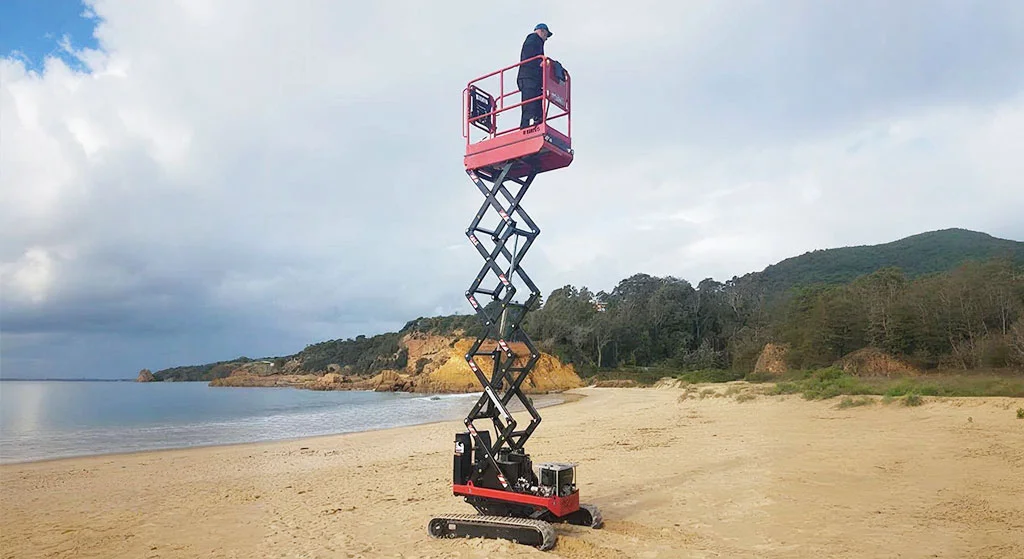
The cost of a self-leveling scissor lift varies significantly based on whether you choose to buy new, purchase used, or opt for a temporary rental.
- Buying New: A brand-new, advanced self-leveling scissor lift packed with modern rough-terrain features typically ranges from $45,000 to over $110,000, depending on maximum platform height, weight capacity, and power source.
- Buying Used: High-quality used models with verifiable service histories can be found between $20,000 and $60,000. Always check the hour meter and verify the functionality of the leveling system before purchasing a used unit.
- Renting: For short-term projects, renting is highly economical. Depending on your geographic location and the lift’s size, rental rates generally span $250 to $600 per day, $800 to $1,800 per week, or $2,000 to $4,500 per month.
While the initial price tag of a self-leveling scissor lift is higher than a standard slab scissor lift, the return on investment (ROI) is quickly realized through eliminated site preparation expenses and accelerated project timelines.
Choosing the Right Self-Leveling Scissor Lift
To choose the perfect self-leveling scissor lift for your fleet or jobsite, answer the following practical questions:
- What is the maximum working height required? Measure the absolute highest point your operators need to reach, and add six feet to account for user reach.
- What are the slope conditions of the terrain? Check the maximum gradeability and maximum leveling angles of the lift to guarantee it can conquer the steepest inclines on your site.
- How much weight will the platform carry? If you frequently lift multiple workers alongside heavy equipment, choose a robust, high-capacity self-leveling scissor lift.
- Are there space limitations? Look at the physical footprint and turning radius of the machine. Some models are ultra-compact, designed to navigate narrow pathways on rugged terrain, while others feature massive extension decks for wide working areas.
Frequently Asked Questions About Self-Leveling Scissor Lifts
Can a self-leveling scissor lift work on slopes?
Yes, this is precisely what a self-leveling scissor lift is designed for. Depending on the exact manufacturer and model, these machines can automatically compensate for slopes ranging anywhere from 4 to over 15 degrees, ensuring a safe, vertical lift on hilly or uneven terrain.
How safe is a self-leveling scissor lift?
When operated within the manufacturer’s guidelines, a self-leveling scissor lift is incredibly safe. It features advanced safety systems, including automatic tilt cut-outs, load sensors, and alarms that instantly alert the operator or prevent elevation if ground conditions exceed the machine’s balancing capabilities.
What is the difference between rough terrain and self-leveling scissor lifts?
While many people confuse the two, there is a distinct difference. A standard rough terrain lift features heavy-duty tires and 4WD to drive over uneven terrain, but it may still require a flat surface or manual outriggers to safely elevate. A self-leveling scissor lift goes a step further by using automated technology to dynamically level the chassis or platform, allowing it to elevate safely while parked directly on a slope.
Are self-leveling scissor lifts suitable for indoor use?
Absolutely. Many manufacturers produce electric or hybrid variants of the self-leveling scissor lift that feature non-marking tires and zero-emission operations. These are perfect for large indoor arenas, sloped auditoriums, or manufacturing plants with irregular floor layouts.
How often should leveling systems be inspected?
The automatic leveling system should undergo a visual inspection and basic function test before every single work shift. A more comprehensive, certified inspection of the hydraulic actuators, electronic control modules, and sensor calibrations should be conducted annually by a qualified technician.
Conclusion
Navigating unpredictable terrain shouldn’t compromise the safety or efficiency of your team. The development of the self-leveling scissor lift represents a massive leap forward in aerial work platform technology. By eliminating complex manual setup processes, reducing costly site preparation, and providing unmatched stability on slopes, these innovative machines ensure that your operators can focus on what matters most: getting the job done safely and efficiently.
When planning your next project on uneven ground, consider integrating a self-leveling scissor lift into your equipment strategy. The initial investment will pay dividends in enhanced productivity, peace of mind, and unparalleled on-site safety.
If you are ready to upgrade your fleet or need expert guidance on finding the perfect self-leveling scissor lift for your specific jobsite needs, the team at Kirin Lift is here to help. Reach out to us today via email at info@klingtec.com or message us directly on WhatsApp at +86 188 6686 3188 for detailed specifications, pricing, and custom equipment solutions.