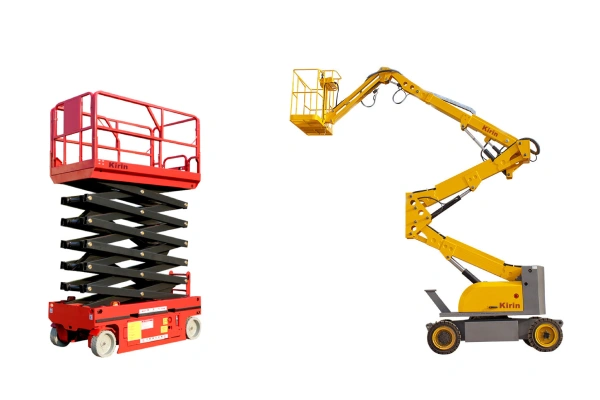
Operating a mobile elevating work platform (MEWP) makes working at heights incredibly efficient. However, because they extend anywhere from 15 to over 50 feet in the air, they carry distinct risks if mishandled.
Whether you are working under strict regulations in North America, executing OSHA scissor lift safety rules, adhering to scissor lift safety rules UK laws (LOLER/PUWER), or following scissor lift safety rules Singapore (MOM frameworks), prioritizing on-site protocols saves lives.
Implementing the core scissor lift safety rules keeps your team safe, avoids heavy regulatory fines, and ensures everyday operational efficiency.
Understanding Scissor Lift Hazards
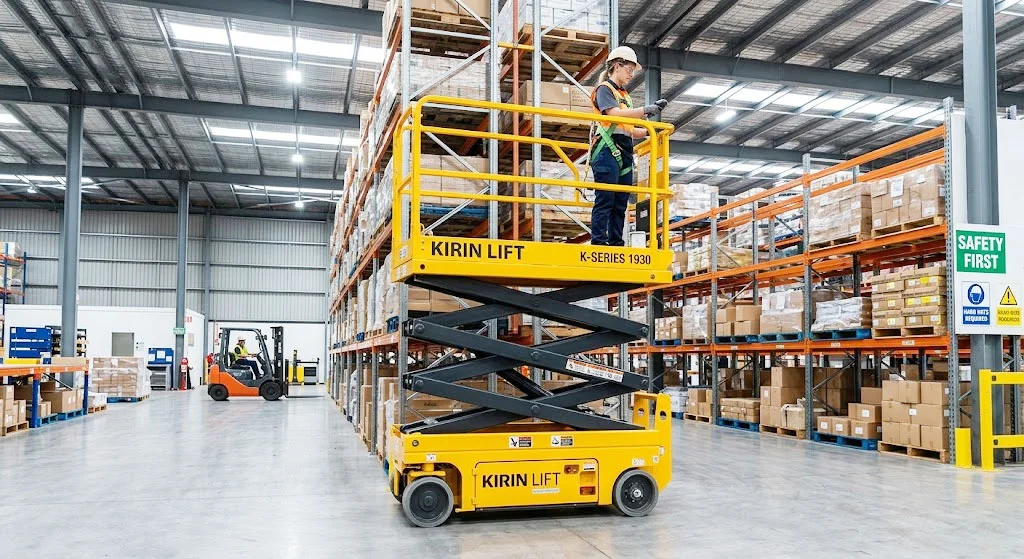
Before diving into specific scissor lift safety rules, it is vital to understand why they are required. The Occupational Safety and Health Administration (OSHA) technically classifies scissor lifts as mobile scaffolding rather than traditional boom-style aerial lifts. This distinction highlights their vertical focus and structural reliance on a perfectly flat foundation.
The primary hazards operators encounter include:
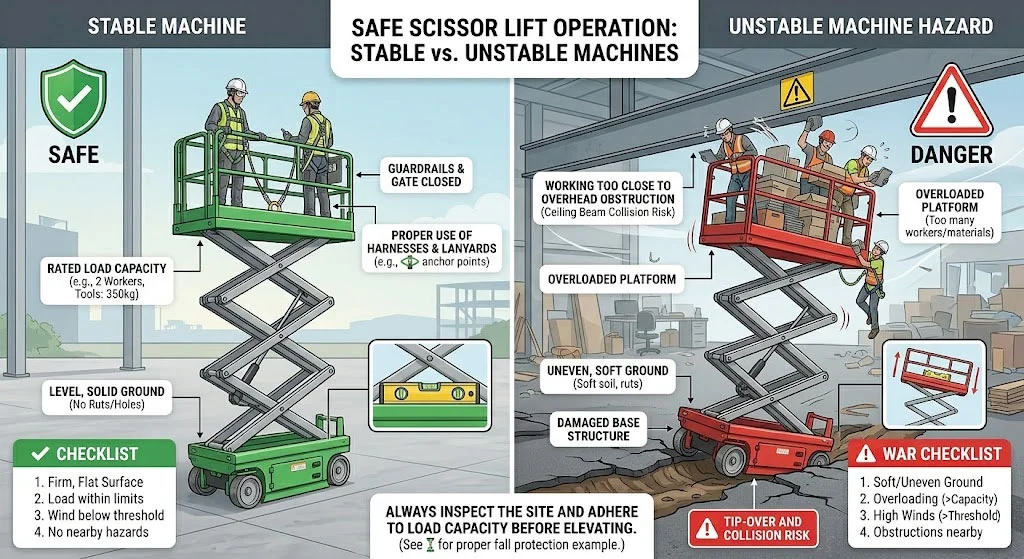
- Tip-overs: Caused by uneven ground, high winds, or shifting weight.
- Electrocution: Occurring when a platform is positioned too close to active overhead lines.
- Crushing/Entrapment: Happening when an operator is pinned between the moving platform and a fixed structure like a ceiling beam or door frame.
- Falls: Resulting from operators climbing on guardrails or bypassing gate closures.
Rule #1: Always Complete Proper Operator Training
You should never step onto a platform unless you are fully trained and certified. Comprehensive training ensures you understand the theoretical limits of your specific machine model, risk assessment techniques, and emergency lower-override procedures.
According to OSHA scissor lift safety rules (29 CFR 1926.454), training must be delivered by a qualified individual. Employers must re-evaluate or retrain personnel at least every three years, or immediately if an operator exhibits unsafe behavior or a new type of machinery is introduced to the worksite.
Rule #2: Perform Pre-Operation Inspections
A quick walkthrough before starting your shift is one of the most effective safety rules for scissor lifts. Never assume a machine is safe simply because it functioned perfectly yesterday.
Your physical inspection checklist must verify:
- Hydraulic Systems: Look for wet spots or visible leaks on hoses and fittings. A hydraulic leak is an immediate stop-work condition.
- Tires and Wheels: Check for cuts, severe gouges, or embedded debris that could compromise stability.
- Emergency Controls: Ensure the ground-level emergency descent controls and the platform Emergency Stop (E-stop) switch function perfectly.
- Guardrails and Gates: Confirm all structural rails are secure and that the entry gate latches and locks completely on its own.
Rule #3: Check Ground Conditions Before Use
Because these machines lift heavy loads straight up, their stability depends entirely on what sits beneath their tires. Always assess your immediate work environment before raising the platform.
For indoor setups, ensure the floor meets the minimum weight-bearing requirements (typically at least 125 pounds per square foot). For outdoor applications, look out for soft dirt, hidden mud pits, floor grates, drop-offs, or concrete cracks. If your lift features outriggers or stabilizing jacks, deploy them exactly as dictated by the terrain.
Rule #4: Never Exceed Load Capacity
Every machine features a prominent placard stating its maximum rated capacity. This total weight calculation is not a rough estimate; it is a strict structural limit.
Critical Safety Math: Your total load calculation must account for the combined weight of all operators, their heavy tool belts, equipment, and any raw materials loaded onto the deck.
Overloading changes the machine’s center of gravity, risking an immediate hydraulic failure or a catastrophic tip-over when fully extended.
Rule #5: Use Fall Protection When Required
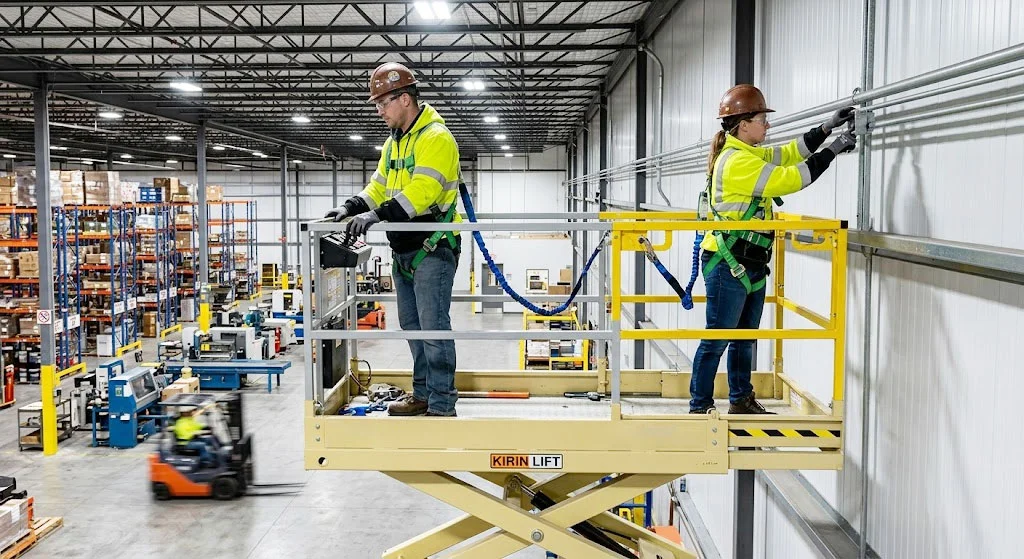
There is frequent confusion surrounding fall arrest systems on vertical platforms. Under federal OSHA scissor lift safety rules, a fully enclosed, compliant guardrail system serves as adequate fall protection on its own.
However, individual site protocols, local laws, or equipment manufacturers often demand stricter enforcement. For example, many industrial sites mandate a full-body harness and a restraint lanyard hooked to an engineered anchor point inside the platform enclosure.
Regardless of whether a harness is mandated on your specific site, one rule remains absolute: Keep both feet firmly on the platform deck. Never sit, climb, or stand on the guardrails to gain extra reach.
Rule #6: Maintain Safe Distance from Electrical Hazards
Electricity can jump or arc across open air to a metallic lift frame, meaning you do not have to touch a wire to suffer a fatal shock.
Always maintain a minimum clearance of 10 feet (3 meters) from energized overhead power lines and electrical transformers. If a task requires working within this zone, the power utility must de-energize the lines, or the work must be handled exclusively by qualified, specialized electrical workers.
Rule #7: Operate Only in Stable Weather Conditions
If you are working outdoors, weather conditions dictate your operational limits. High winds create a sail effect against the platform, which can easily destabilize and overturn the unit.
- Wind Speeds: Most outdoor-rated models have an absolute maximum wind speed threshold of 28 mph (45 km/h). Lower the platform immediately if winds approach this limit.
- Indoor-Only Models: Be aware that some modern lightweight models are strictly rated for indoor use only and carry a wind rating of zero.
- Severe Weather: Park, lower, and secure the machine immediately if lightning, heavy rain, or thick fog compromises your visibility or traction.
Rule #8: Do Not Move the Lift While Elevated (Unless Designed For It)
Driving a machine while the platform is extended significantly amplifies the risk of an accidental tip-over. A small 2-inch dip or bump in the ground floor transforms into a violent, swinging shift of weight when you are 30 feet in the air.
Unless you are operating a specific model explicitly engineered and rated by the manufacturer for slow transit while elevated on a perfectly flat surface, always lower the deck completely before releasing the brakes to drive to a new location.
Rule #9: Keep Work Area Clear of Obstacles and Personnel
Safe operations require managing the ground space around your equipment just as much as managing the platform itself.
Set up a designated exclusion zone below using traffic cones, warning tape, or physical barricades to keep pedestrians and other mobile machinery from entering your drop zone. Additionally, employ a trained ground guide to watch for blind spots and steer clear of fixed overhead obstructions like structural steel beams or door frames while moving the lift.
Rule #10: Follow Manufacturer Instructions and OSHA Standards
Every machine has a weather-resistant compartment containing its original operator’s manual. This documentation outlines specific safety interlocks, weight limits, and model-specific nuances that vary from brand to brand. Bypassing built-in safety interlocks, modifying the structure, or failing to follow these guidelines violates international safety regulations and invites severe operational hazards.
Additional Best Practices for Scissor Lift Safety
To build a comprehensive workplace safety culture, incorporate these pro-level operational habits into your daily routines:
- Apply the 3-Second Rule: When raising or lowering the platform, pause for 3 seconds after stopping before initiating another vertical movement. This practice reduces hydraulic surge pressure by up to 40%, protecting internal valves over time.
- Wear Proper PPE: A hard hat, high-visibility vest, and steel-toed, slip-resistant footwear should be mandatory apparel for every operator.
- Establish a Clear Rescue Plan: Ensure ground personnel know how to operate the manual emergency lowering valves in case the platform operator becomes unresponsive or the primary controls lose power.
Common Mistakes Operators Should Avoid
Even experienced operators can fall into dangerous habits due to complacency. Watch out for these critical mistakes:
| Mistake | Consequence | Safe Alternative |
| Using makeshift extensions (like milk crates or ladders) on the deck | Severe balance loss and fatal falls | Lower the lift and reposition it closer to the work target. |
| Tying off a safety lanyard to an adjacent structural beam | Dragging the operator out of the basket if the lift shifts | Only connect lanyards to designated anchor points on the platform floor. |
| Allowing debris, trash, or cables to pile up on the platform floor | Serious tripping hazards and accidental control activation | Clean the platform regularly and organize your tools safely. |
| Using the lift mechanism to hoist external loads or pull materials | Exceeding tipping thresholds or causing structural bending | Use an approved material hoist or crane for heavy overhead lifting. |
Conclusion
Mastering these core scissor lift safety rules ensures you complete your overhead tasks efficiently while protecting yourself and your team. Safety is a continuous commitment that begins before you turn the ignition key. Perform your pre-operation checks, respect the machine’s load capacity limits, and stay highly aware of your surrounding environment.
At Kirin Lift, we are dedicated to providing high-quality, dependable access solutions that keep your job sites safe and productive. If you have questions about equipment compliance, safety features, or sourcing the right machinery for your next project, our expert team is here to assist you. Get in touch with us today via email at info@klingtec.com or reach out directly on WhatsApp at +86 188 6686 3188.
FAQs
Do OSHA scissor lift safety rules require a harness?
Federal OSHA rules do not explicitly require a harness if the machine’s built-in guardrail system is fully intact and compliant. However, many individual employers, local jurisdictions, and equipment manufacturers mandate a full-body harness and restraint lanyard as part of their internal safety protocols.
What is the maximum wind speed limit for safe operation?
Most outdoor-rated vertical lifts are limited to maximum wind speeds of 28 mph (45 km/h). If winds exceed this threshold, or if you are using an indoor-only rated machine, you must lower the platform immediately.
Can I drive the lift while the platform is raised?
You should only drive a raised lift if the specific model is explicitly rated by the manufacturer for elevated travel, and only when traveling over firm, perfectly level ground free of obstructions. When in doubt, lower the platform completely before driving.