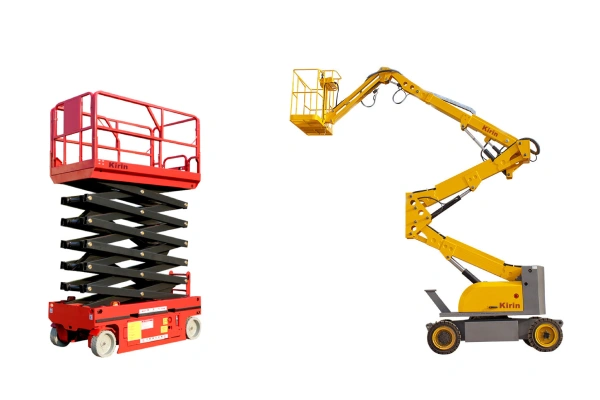
In the world of material handling and aerial work platforms, few machines are as reliable and versatile as the scissor lift. Whether utilized in construction, warehousing, manufacturing, or facility management, these robust workhorses allow personnel to complete high-altitude tasks efficiently and securely. However, the reliability of these elevated platforms is directly dependent on one crucial factor: consistent scissor lift maintenance.
Skipping or delaying essential service protocols doesn’t just put your daily operational efficiency at risk—it fundamentally compromises the safety of your operators. In this comprehensive guide, we will break down the exact processes, systems, and schedules required to keep your aerial work platforms operating in peak, factory-fresh condition for years to come.
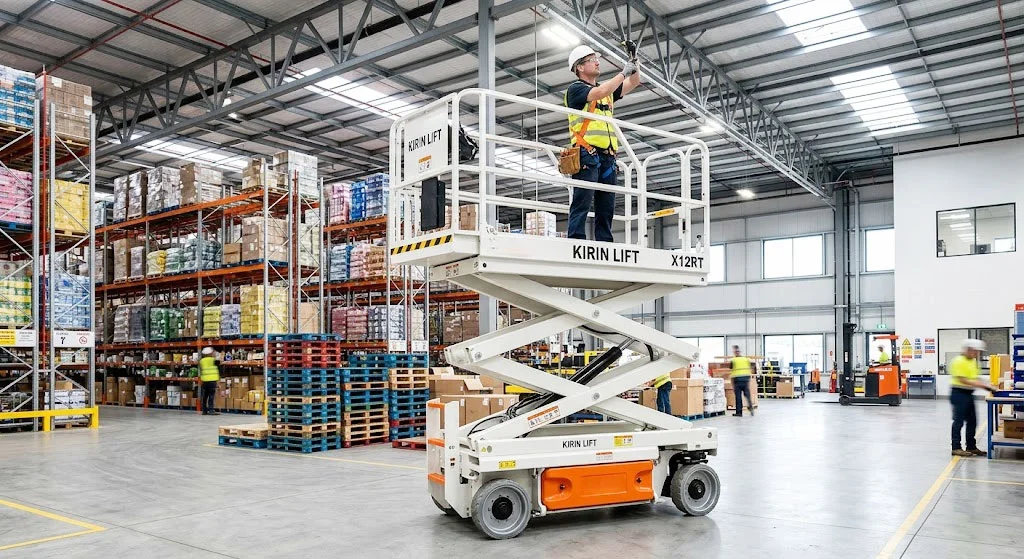
Why Routine Scissor Lift Maintenance Matters
Investing time and resources into a structured scissor lift maintenance program is not merely a legal or regulatory formality; it is a foundational business practice that delivers measurable returns on investment. When heavy machinery operates under demanding industrial conditions, microscopic wear and tear can quickly compound into major mechanical failure.
Minimizing Costly Downtime
In an active production environment or a busy construction site, unexpected equipment failure halts progress immediately. When a scissor lift goes offline unexpectedly, projects stall, labor hours are wasted, and supply chains fracture. Routine maintenance scissor lift protocols ensure that minor wear—such as a frayed seal or a loose electrical connection—is caught and remedied before it causes an unscheduled system shutdown.
Extending Equipment Lifespan
Industrial lifting equipment represents a significant capital investment. Protecting that investment requires proactive care. Regular lubrication, system flushes, and voltage checks prevent premature components from degrading, effectively doubling or tripling the operational lifespan of your machinery. A well-maintained lift performs reliably for decades, long after poorly maintained alternatives have been sold for scrap.
Compliance and Workplace Safety
Above all else, operator safety is paramount. Falling from heights, structural collapses, and sudden hydraulic drops are severe hazards associated with poorly maintained aerial platforms. Regulatory bodies worldwide dictate strict scissor lift maintenance requirements to protect workers. Adhering to these strict guidelines ensures your business remains fully compliant with occupational health and safety standards while fostering a workplace culture that genuinely values human life.
Daily Pre-Operation Inspection Checklist (The Baseline)
The most effective line of defense against workplace accidents and mechanical failure is the daily pre-operation inspection. This visual and functional evaluation must be completed by a trained operator before the machine begins its first shift of the day. Think of this checklist as the vital baseline of your overall scissor lift maintenance checklist.
If an operator notices any anomaly during this daily assessment, the unit must be immediately tagged out of service until a qualified technician evaluates it.
Visual Walk-Around Inspection
- Structural Integrity: Check the entire chassis, scissor arms, and platform for visible cracks, weld fractures, bends, or structural warping.
- Tires and Wheels: Inspect tires for severe gouges, missing chunks, embedded debris, or flat spots. Ensure lug nuts are perfectly torqued and secure.
- Fluid Leaks: Scan the ground beneath the machine and the internal components for signs of dripping hydraulic fluid or battery acid.
- Guardrails and Gates: Verify that all safety guardrails are securely bolted and that the entry gate closes and latches automatically.
Functional Operational Testing
- Emergency Stops: Test both the ground-level emergency stop button and the platform-mounted button to ensure they instantly cut all power.
- Lift and Lower Controls: Raise the platform fully and lower it completely from the ground controls first, checking for jerky movements or unusual noises, then repeat from the platform console.
- Braking Mechanisms: Drive the lift forward and backward at low speed to ensure the automatic braking system engages firmly the moment the joystick is released.
- Safety Alarms: Verify that the tilt sensor alarm, descent alarm, and motion beacons are completely audible and visible.
Deep-Dive: Core Maintenance Areas
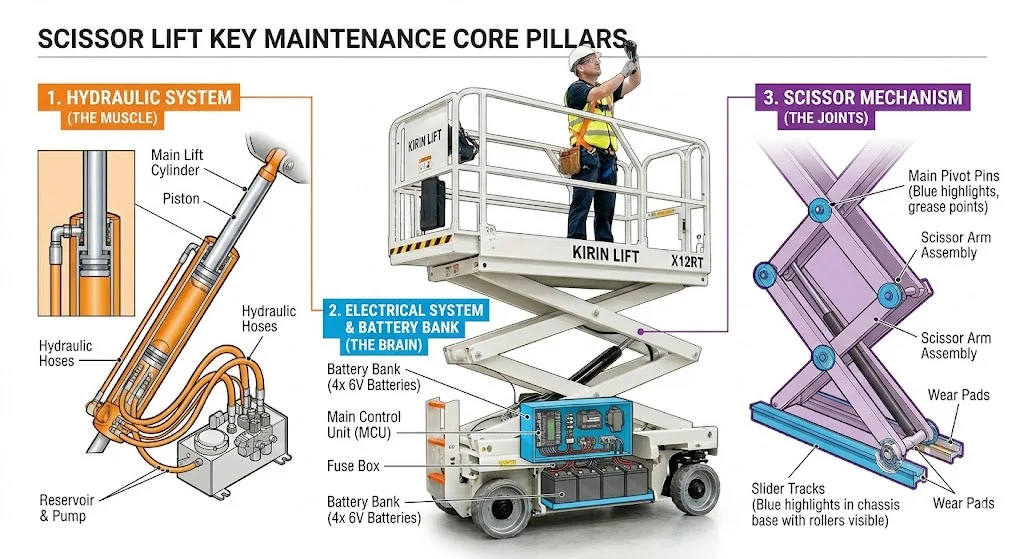
To truly understand how to preserve your machinery, we must look closely at the primary mechanical, electrical, and structural systems. Effective hydraulic scissor lift service maintenance requires specialized attention across three critical core pillars.
The Hydraulic System (The Muscle)
The hydraulic system provides the immense physical force required to push thousands of pounds of steel and personnel safely into the air. If the hydraulic system compromises, the lift loses its fundamental functionality.
- Fluid Level and Quality: Always check the hydraulic oil level when the platform is fully lowered. The oil must be crystal clear with a golden-amber hue. If the fluid appears milky, water has infiltrated the system. If it appears dark brown or smells burnt, excessive heat has broken down its viscosity, requiring an immediate system flush.
- Cylinder and Hose Inspection: Run clean cloths along the hydraulic hoses and lines to check for microscopic pinhole leaks or structural cracking. Inspect the main lifting cylinder rods for pitting, scratches, or scoring, which can ruin internal seals.
- Bleeding Air From the System: If the platform bounces or feels spongy during elevation, air may be trapped within the hydraulic lines. Follow factory specifications to safely bleed the air out, restoring smooth, rigid lifting performance.
The Electrical System & Battery Care (The Brain)
For electric scissor lifts, the battery bank is both the fuel source and the brain center of the machine. Neglecting scissor lift battery maintenance is one of the leading causes of premature equipment failure and costly service calls.
- Distilled Water Replenishment: For flooded lead-acid batteries, regularly check the electrolyte levels inside each cell. If the plates are exposed to air, top them off using only pure distilled water. Never use tap water, as the minerals will permanently destroy the internal chemistry. Fill to the designated indicator line after the battery has been fully charged.
- Terminal Cleaning and Torque: Battery terminals are highly susceptible to corrosion, which presents as a white, powdery crust. Clean the terminals using a specialized battery neutralizer spray or a baking soda solution, scrub with a wire brush, and tighten the connections securely. Loose terminals generate extreme heat and voltage drops.
- Equalization Charging: Implement an equalization charge schedule according to your manufacturer’s guidelines to balance the voltage across all individual battery cells and eliminate harmful sulfation build-up on the internal plates.
The Scissor Mechanism & Lubrication (The Joints)
The complex network of intersecting steel cross-beams—the scissor stack—undergoes immense structural stress during every single lifting cycle. Proper lubrication prevents destructive friction from wearing away the metal joints.
- Pivot Pin Lubrication: Locate all grease fittings (zerk fittings) along the main pivot pins and scissor linkages. Pump high-quality, manufacturer-approved chassis grease into these fittings until old grease is pushed out. This ensures smooth articulation and prevents the pins from binding or wearing unevenly.
- Slider Track Cleaning: As the scissor lift rises, the roller bearings slide smoothly along dedicated tracks inside the chassis and under the platform. Keep these slider tracks completely free of gravel, dirt, overspray, and debris. Clean them down with industrial degreasers and apply a dry-film lubricant that will not attract airborne dust.
- Wear Pad Evaluation: Inspect the composite wear pads that guide the sliding arms. Once these pads wear down past their minimum thickness specification, they must be replaced immediately to prevent direct metal-on-metal contact, which can permanently ruin the structural frame.
Scheduled Maintenance Intervals: Monthly, Quarterly, and Annually
A reliable, repeatable scissor lift maintenance schedule removes the guesswork from fleet management. Dividing tasks into clear timeframes ensures that deep-cleaning processes and structural testing happen consistently throughout the year.
| Interval | Core Focus | Key Actions Required |
| Daily | Pre-Op Safety | Visual checks, functional control testing, fluid leak scanning, alarm confirmation. |
| Monthly | Fluid & Battery | Battery water level inspection, terminal cleaning, hydraulic oil level top-offs, pivot pin greasing. |
| Quarterly | Structural & Electrical | Wear pad thickness measurement, wire harness inspection, hydraulic filter replacement, weld analysis. |
| Annual | Certified Overhaul | Structural non-destructive testing, full hydraulic flush, system calibration, safety recertification. |
Monthly Checks
Every 30 days or 40 operating hours, perform a more targeted review. Focus deeply on checking the critical battery electrolyte levels, cleaning off terminal corrosion, checking the air pressure in pneumatic tires (if equipped), and heavily greasing all primary mechanical pivot joints. Check all electrical wiring insulation for signs of cracking or rubbing against moving parts.
Quarterly/Semi-Annual Inspections
Every 90 to 180 days, check the physical thickness of all slider wear pads. Drain and replace the internal hydraulic system filter elements to trap microscopic metal shavings and environmental dust. Inspect all critical structural welds across the entire scissor arm stack using a high-intensity light to check for hairline stress fractures.
Annual Professional Inspection
Once a year, every machine must undergo a rigorous annual inspection mandated by industrial safety standards. This highly intensive evaluation should be conducted by a factory-certified, qualified technician. The annual service involves completely draining and replacing the entire reservoir of hydraulic oil, performing comprehensive pressure testing on the hydraulic pumps, conducting structural non-destructive testing (NDT) on critical load points, and thoroughly calibrating the electronic overload protection sensors.
Common Scissor Lift Troubleshooting & Solutions
Even with a dedicated scissor lift maintenance checklist, mechanical systems can occasionally encounter operational glitches. Knowing how to troubleshoot common issues quickly helps minimize downtime and points your maintenance team in the right direction.
Problem: The Lift Will Not Elevate, but Driving Functions Work
- Potential Cause: The platform may be overloaded beyond its rated capacity, triggering the electronic overload sensor. Alternatively, the hydraulic oil level might be too low to fill the cylinder completely.
- Solution: Verify the weight of the platform load and remove excess materials. If the load is within safe limits, lower the platform completely and check the hydraulic fluid reservoir, adding approved oil as necessary.
Problem: Erratic, Jerky, or Stuttering Movement During Elevation
- Potential Cause: Trapped air bubbles within the hydraulic cylinder lines, or a severe lack of lubrication along the main slider tracks and pivot pins.
- Solution: Clean and lubricate the slider tracks with dry-film lubricant and grease all zerk fittings. If the stuttering persists, cycle the lift up and down completely several times without a load to naturally vent trapped air back to the reservoir, or manually bleed the cylinder valve.
Problem: The Battery Depletes Exceptionally Fast During a Shift
- Potential Cause: Heavily corroded battery terminals creating high resistance, low water levels inside the flooded cells, or old, sulfated battery plates that can no longer hold an electrical charge.
- Solution: Clean all white corrosion off the terminals using a specialized neutralizing solution and secure loose connections. Check cell water levels and perform an intensive equalization charge. If the runtime fails to improve, run a professional load test to see if individual batteries require replacement.
Best Practices for Implementing a Maintenance Log
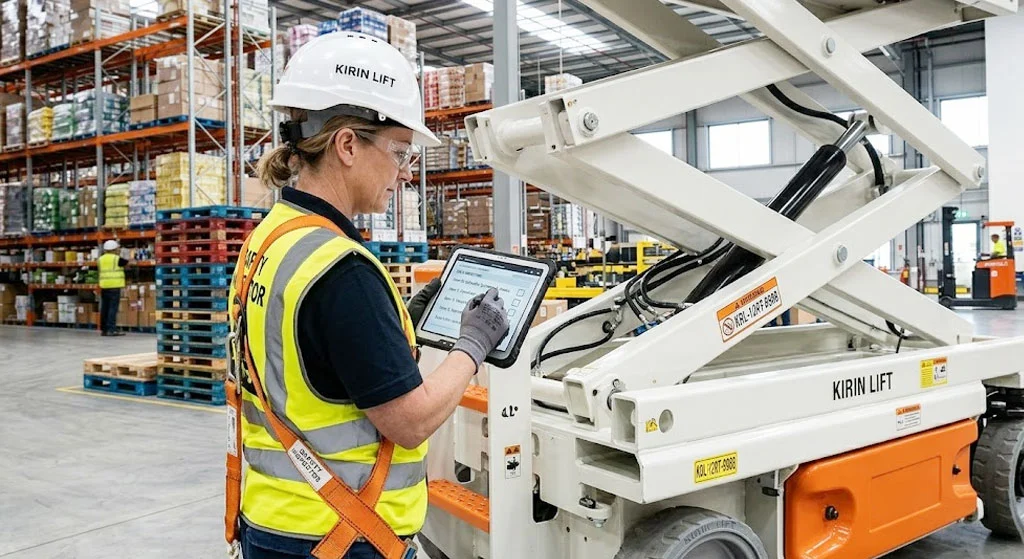
An unrecorded service action is an incomplete service action. Maintaining an accurate, chronological scissor lift maintenance log protects your business and keeps your machinery running reliably.
Digital vs. Physical Logbooks
While paper logbooks kept inside the weatherproof manual compartment on the platform are convenient for daily operator check-offs, digital management systems offer better long-term reliability. Cloud-based equipment maintenance software tracks historical repairs, automatically schedules upcoming service milestones, and sends alerts for overdue maintenance tasks.
Documenting Critical Data Points
Every log entry should capture specific details to remain useful for future troubleshooting:
- The exact machine hour meter reading.
- The calendar date and time of the service.
- A list of part numbers replaced (e.g., filters, seals, specific switches).
- The clear printed name and signature of the verifying technician.
- Detailed notes regarding any unusual component wear observed during the inspection.
Conclusion
Consistent, proactive scissor lift maintenance is the absolute bedrock of safe, productive, and highly profitable aerial equipment operations. By implementing a daily inspection baseline, focusing deeply on core hydraulic and electrical components, adhering to a strict service timeline, and recording every action in a dedicated log, you protect your workers and maximize equipment lifecycle longevity.
Taking care of your lifting equipment ensures it will take care of your business—keeping your projects moving smoothly, your overhead costs low, and your team elevated safely.
If you need expert guidance, high-quality replacement parts, or assistance establishing your preventative care program, our specialized support team is here to help. You can easily connect with us via email at info@klingtec.com or reach out directly on WhatsApp at +86 188 6686 3188 for real-time technical support and machinery inquiries.
FAQ Section
How often should scissor lift maintenance be performed?
Basic scissor lift maintenance should occur daily via pre-operation walk-around inspections. Deeper preventative maintenance tasks, such as battery conditioning and mechanical lubrication, must be scheduled monthly. Comprehensive structural and filter service should occur quarterly, while a rigorous safety recertification inspection is mandatory on an annual basis.
What is included in a scissor lift inspection?
A standard inspection covers a visual evaluation of structural welds, tires, and guardrails; physical checks of fluid levels (hydraulic oil and battery electrolyte); and functional tests of all operational controls, emergency stop buttons, braking systems, and auditory safety alarms.
How long do scissor lift batteries last?
With a diligent scissor lift battery maintenance routine—including checking water levels weekly, keeping terminals clean, and avoiding deep discharge cycles—a high-quality industrial battery pack can easily last between 4 to 6 years. Neglecting battery care can cause failure in under 12 months.
What causes hydraulic failure in scissor lifts?
The most frequent causes of hydraulic failure include fluid contamination (dirt, dust, or moisture entering the system), punctured or severely cracked hydraulic hoses, worn internal cylinder seals, and low fluid levels causing pump cavitation.
Can I perform scissor lift maintenance myself?
Daily inspections and basic fluid additions or lubrication can be performed by trained, designated equipment operators. However, complex hydraulic system overhauls, electrical wiring repairs, and mandatory annual safety inspections must strictly be handled by an experienced, factory-certified technician.
What happens if a scissor lift is not maintained properly?
Neglecting maintenance leads to unpredictable equipment breakdowns, costly operational downtime, and expensive premature component replacements. Most importantly, it creates severe workplace safety risks, increasing the potential for catastrophic equipment failure, operator injury, and serious regulatory non-compliance fines.