In the world of vertical transport and aerial work platforms, safety isn’t just a guideline—it is the foundation of every successful project. Scissor lifts are indispensable tools across construction sites, warehouses, and maintenance facilities, providing a stable platform for workers to reach significant heights. However, with elevation comes the inherent risk of falls, which remains one of the leading causes of serious workplace injuries and fatalities.
Implementing robust scissor lift fall protection strategies is not only a legal obligation under safety regulations like OSHA but also a moral imperative for any responsible business. This comprehensive guide explores the critical aspects of fall protection, regulatory requirements, and best practices to ensure every worker returns home safely at the end of the shift.
What Is Scissor Lift Fall Protection?
Definition of Fall Protection
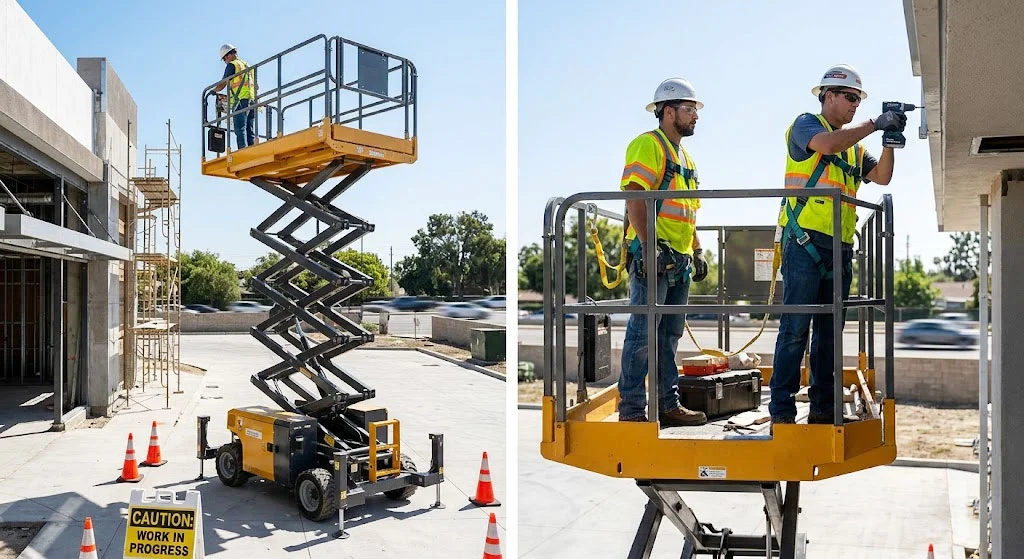
In the context of aerial work platforms, scissor lift fall protection refers to a suite of equipment, structural designs, and safety protocols intended to prevent workers from falling or to minimize the injury if a fall occurs. Unlike ladders, which rely heavily on the user’s physical grip and balance, a scissor lift is designed to provide a secure work environment at height through engineered solutions.
Fall Prevention vs. Fall Arrest Systems
It is vital to understand the distinction between these two concepts:
- Fall Prevention: These are systems designed to stop a fall from happening in the first place. The primary example is the guardrail system built into the platform.
- Fall Arrest: These systems are designed to safely stop a worker who has already fallen. This typically involves a Personal Fall Arrest System (PFAS), including a full-body harness, lanyard, and anchor point, which prevents the worker from hitting the ground or lower levels.
How Built-in Guardrails Function
On a standard scissor lift, the guardrails are the first line of defense. High-quality manufacturers design these rails to withstand specific force requirements. When used correctly, the guardrail system acts as a “passive” form of scissor lift fall protection, meaning the worker is protected simply by staying within the confines of the platform without needing to take additional mechanical action.
Is Fall Protection Required on a Scissor Lift?
The question of “is fall protection required on a scissor lift” is one of the most frequent queries in the industry. The answer depends largely on the jurisdiction and the specific equipment design.
In many regulatory frameworks, including OSHA in the United States, a scissor lift is technically classified as “mobile scaffolding.” Because the platform is fully enclosed by a compliant guardrail system, additional fall arrest equipment (like harnesses) is often not strictly required by federal law if the guardrails are in place and the worker stays on the platform floor.
However, many site-specific safety plans and “best practice” corporate policies mandate the use of a harness regardless. Furthermore, if a worker must leave the platform or if the guardrail system is compromised, the requirement for scissor lift fall protection through secondary means becomes absolute.
Key Components of Scissor Lift Fall Protection
To build a fail-safe environment, one must understand the mechanical components that make up a complete scissor lift fall protection strategy.
Guardrail System
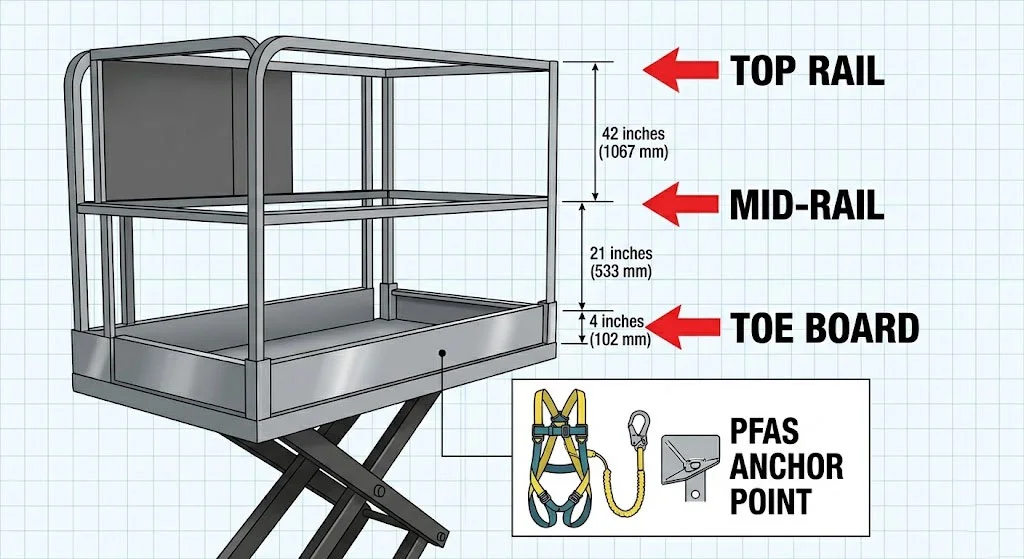
The guardrail system consists of a top rail, mid-rail, and toe boards.
- Top Rail: Usually positioned between 39 and 45 inches above the platform floor.
- Mid-Rail: Installed halfway between the top rail and the floor to prevent workers from slipping through.
- Toe Boards: Low barriers at the floor level that prevent tools and materials from falling off the edge, which could injure people below.
Personal Fall Arrest System (PFAS)
A PFAS is a secondary layer of scissor lift fall protection. It includes:
- Full-Body Harness: Distributes fall forces across the thighs, pelvis, waist, chest, and shoulders.
- Lanyard/Lifeline: The connector between the harness and the anchor.
- Deceleration Device: Often a shock-absorber that limits the force felt by the body during a fall arrest.
Anchor Points
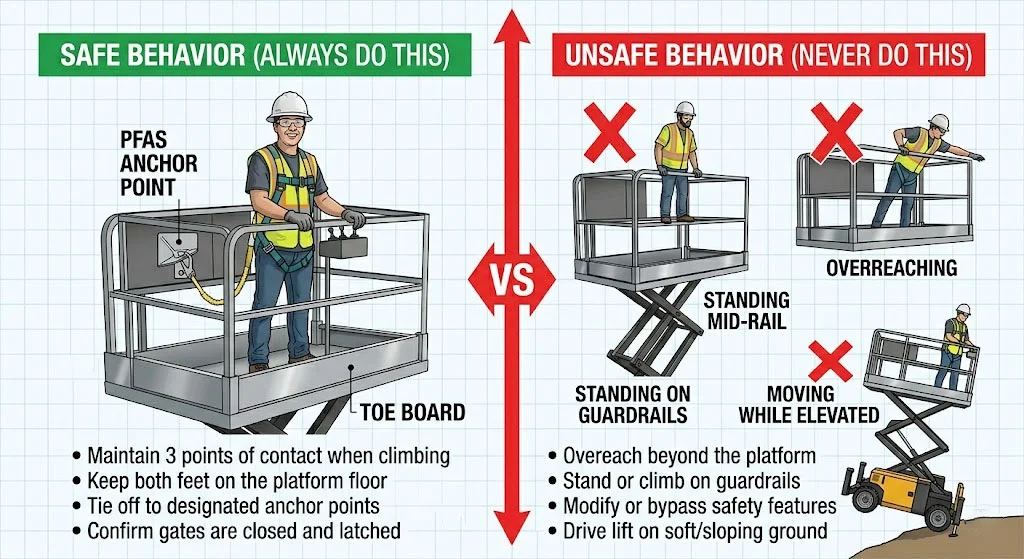
A harness is useless without a rated anchor point. Scissor lifts should have manufacturer-designated attachment points. It is crucial to never attach a lanyard to a guardrail unless the manufacturer explicitly states the rail is designed to serve as an anchor.
OSHA Requirements for Scissor Lift Fall Protection
Navigating osha scissor lift fall protection standards is critical for compliance and safety. Under OSHA 1926.451, scissor lifts are treated as scaffolding. Key requirements include:
- Guardrail Integrity: Guardrails must be installed along all open sides and ends of the platform.
- Access Gates: Chains or gates must be closed and secured while the platform is elevated.
- Floor Maintenance: The platform floor must be kept free of debris and slip hazards.
- Capacity Limits: Users must never exceed the manufacturer’s rated load capacity, as overloading can lead to tipping—a major fall risk.
While osha fall protection scissor lift standards emphasize guardrails, they also state that if the guardrail system is removed or if a worker is performing a task that puts them at risk of falling over the rail, a PFAS must be used.
Common Scissor Lift Fall Hazards
Understanding the “why” behind accidents helps in prevention. Most falls are not due to equipment failure but human error or environmental factors.
- Standing on Guardrails: This is the most dangerous common practice. Workers often climb the rails to gain a few extra inches of reach, bypassing the scissor lift fall protection entirely.
- Overreaching: Extending the body too far past the side rails can shift the center of gravity or cause a slip.
- Moving While Elevated: Driving a scissor lift while the platform is extended increases the risk of hitting a pothole or debris, which can “catapult” a worker out of the platform.
- Uneven Surfaces: Operating on a slope without outriggers or levelers can cause the lift to tip.
- Weather Conditions: High winds can act like a sail against an elevated lift. Rain creates slick surfaces on the metal platform, increasing slip-and-fall risks.
Best Practices for Scissor Lift Fall Protection
Safety is a culture, not just a checklist. Adhering to these best practices ensures that scissor lift fall protection requirements are met consistently.
Pre-Operation Inspection
Every shift should begin with a visual and functional inspection. Check the hydraulic systems, wheels, and specifically the guardrails for any signs of weld cracks, rust, or loose bolts.
Proper Positioning
Always place the lift on firm, level ground. If the ground is soft, use mud sills or pads to distribute the weight. Never use bricks or scrap lumber to level a lift.
Safe Work Behavior
Maintain “three points of contact” when climbing into or out of the lift. Once inside, keep both feet firmly on the platform floor. If you cannot reach your work, move the lift closer rather than overreaching.
Training and Certification
Only “qualified persons” should operate these machines. Training must cover scissor lift fall protection procedures, how to handle emergencies, and how to recognize site-specific hazards.
When Should You Use a Harness on a Scissor Lift?
Even if is fall protection required on scissor lifts is legally answered by “guardrails are enough,” there are several scenarios where a harness and lanyard are mandatory:
- Site Safety Rules: Many general contractors require 100% tie-off for anyone working above 6 feet, regardless of the machine type.
- Working Near Open Edges: If the lift is positioned near a floor opening or a roof edge.
- Manufacturer Recommendations: Some specific lift models are lighter or have smaller footprints, leading the manufacturer to require a PFAS.
- Inadequate Guardrails: If any part of the guardrail system is missing or broken.
Using a harness provides an extra layer of fall protection scissor lift security, particularly in preventing the “ejection” effect caused by sudden bumps.
Scissor Lift Fall Protection Checklist
Use this quick reference guide before every job to ensure scissor lift fall protection is active:
- Inspect Guardrails: Are all rails present, secure, and free of damage?
- Entry Gates: Does the gate close and latch automatically?
- Platform Stability: Is the lift on level ground with the brakes set?
- Load Limits: Have you calculated the weight of the worker plus all tools and materials?
- PPE Check: If a harness is required, is it inspected for frays and is the lanyard the correct length?
- Environmental Scan: Are there overhead power lines or high winds?
- Training: Is the operator’s certification current?
Conclusion
Safety isn’t about doing the bare minimum to pass an inspection; it’s about creating a workspace where technology and human diligence work together. Whether you are an architect planning a site or a contractor on the platform, prioritizing scissor lift fall protection requirements is the most important part of the job.
As a leading manufacturer committed to global safety standards, we ensure that every machine we produce is equipped with robust, compliant safety features. If you have questions about the specific safety configurations of our equipment or need professional advice on choosing the right lift for your project, our team is ready to assist.
For detailed product specifications or safety consultations, feel free to reach out to us at info@klingtec.com or connect with us directly via WhatsApp at +86 188 6686 3188. Let’s work together to make your job site as safe as possible.
FAQs
Does OSHA require a harness on a scissor lift?
Generally, osha scissor lift fall protection standards consider the guardrail system as sufficient protection, meaning a harness is not always federally mandated. However, employers often require them as part of a stricter safety policy.
What is the height requirement for fall protection on a scissor lift?
In construction, fall protection is generally required at 6 feet. Since most scissor lifts elevate well beyond this, scissor lift fall protection (in the form of guardrails) must be functional at all times.
Can I tie off to the guardrail?
You should only tie off to points specifically designated by the manufacturer as anchor points. Tying off to a standard guardrail can cause the rail to collapse or the lift to tip in the event of a fall.
How often should fall protection equipment be inspected?
All scissor lift fall protection components, including the lift itself and any personal PPE, should be inspected daily before use and more thoroughly by a competent
By following these scissor lift fall protection guidelines, companies can maintain a productive, compliant, and—most importantly—safe work environment.