Selecting the right aerial platform isn’t just about getting “up there”—it’s about getting there safely, efficiently, and within budget. Whether you are managing a massive construction site or performing routine warehouse maintenance, a thorough scissor lift comparison is the first step toward a successful project. With various power sources, weight capacities, and terrain capabilities available, the “standard” choice isn’t always the right one.
In this guide, we will break down everything you need to know to conduct an effective scissor lift comparison, ensuring you select a machine that matches your specific site requirements.
What Is a Scissor Lift?
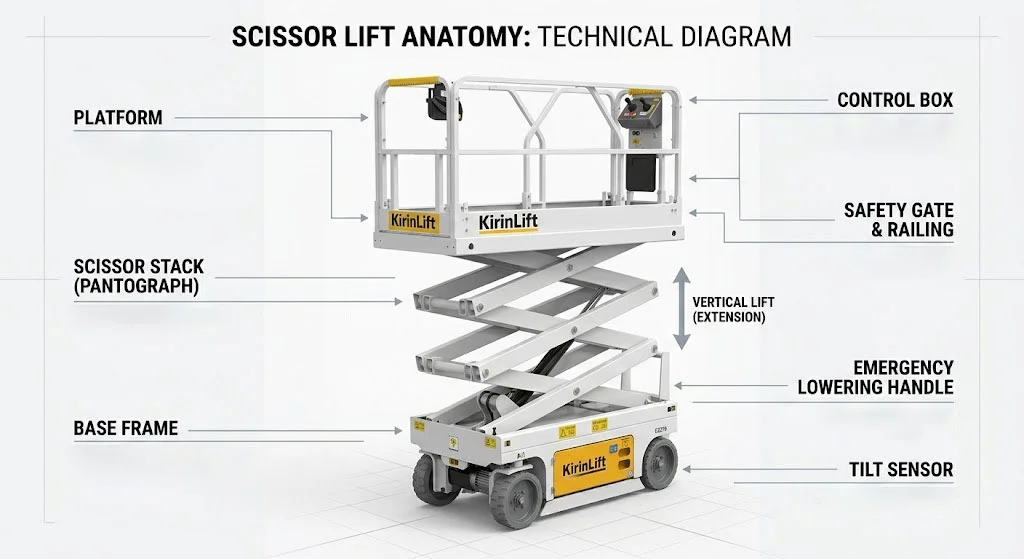
A scissor lift is a type of mobile elevated work platform (MEWP) that moves vertically. The name comes from the mechanism that raises the platform: a series of linked, folding supports in a crisscross “X” pattern, known as a pantograph. When pressure is applied to the outside of the lowest set of supports, the “scissors” extend, propelling the platform straight up.
Unlike boom lifts, which can reach out horizontally and over obstacles, scissor lifts move only up and down. However, they offer a much larger platform area and a higher lifting capacity, making them ideal for tasks that require multiple workers, heavy tools, or bulky materials to be raised simultaneously.
Why a Scissor Lift Comparison Is Important
Not all lifts are created equal. Using an indoor electric lift on a muddy construction site isn’t just inefficient—it’s dangerous. Conversely, using a heavy diesel lift inside a finished retail space could lead to floor damage and toxic fume buildup.
A detailed scissor lift comparison helps you:
- Maximize Safety: Ensure the machine can handle the terrain and load without risking a tip-over.
- Optimize Budget: Avoid paying for “too much machine” or wasting money on a rental that can’t complete the task.
- Improve Efficiency: Select a lift with a platform size and height that allows your crew to work faster.
- Ensure Compliance: Meet OSHA or local safety standards by using equipment rated for your specific environment.
Main Types of Scissor Lifts Compared
To start your scissor lift comparison, you must understand the primary categories of lifts available on the market today.
Electric Scissor Lifts
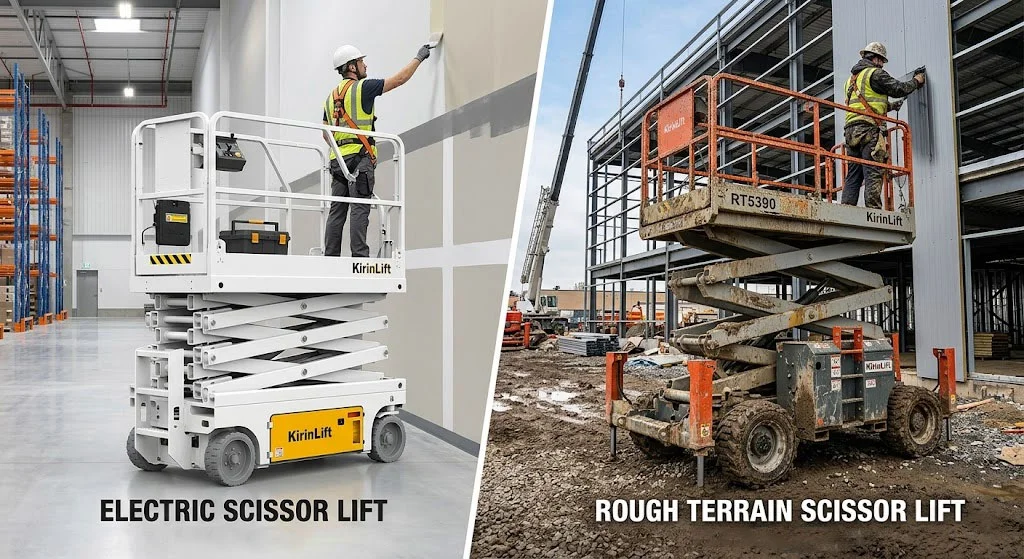
Electric models are the workhorses of the indoor world. Powered by deep-cycle batteries, they are designed for flat, slab surfaces.
Best for indoor use: Warehouses, shopping malls, schools, and hospitals.
- Pros:
- Zero Emissions: Safe for use in enclosed spaces without ventilation.
- Quiet Operation: Ideal for work in sound-sensitive environments like offices or libraries.
- Non-Marking Tires: Usually equipped with specialized tires that won’t scuff finished floors.
- Compact Design: Often narrow enough to fit through standard doorways and into freight elevators.
- Cons:
- Limited Runtime: Batteries require hours of charging, typically overnight.
- Lower Capacity: Generally hold less weight than their diesel counterparts.
- Slab-Only: Not designed for grades or uneven dirt.
Diesel Scissor Lifts
When you need raw power and height, the diesel scissor lift is the industry standard. These are built for the rigors of heavy construction.
Designed for outdoor, heavy-duty jobs: Steel erection, siding installation, and large-scale exterior maintenance.
- Pros:
- High Torque: Can easily climb ramps and navigate rougher job sites.
- Unlimited Duration: As long as you have fuel, the machine can run 24/7.
- Larger Platforms: Often feature massive “deck extensions” for extra workspace.
- Cons:
- Noise and Fumes: Cannot be used indoors due to carbon monoxide risks and high decibel levels.
- Bulkier Frames: Larger footprint makes them difficult to maneuver in tight spaces.
Rough Terrain Scissor Lifts
Rough terrain scissor lifts are a specialized subset of diesel (and sometimes hybrid) lifts designed specifically for unfinished job sites.
- Key features:
- 4-Wheel Drive (4WD): Provides the traction needed for mud, sand, and gravel.
- Outriggers/Stabilizers: Hydraulic “legs” that level the machine on uneven slopes before elevating.
- High Ground Clearance: To move over debris without bottoming out.
- Ideal use cases: New construction sites before the concrete is poured, utility work, and outdoor events on grass or dirt.
Hydraulic vs. Pneumatic Scissor Lifts
While most modern mobile lifts use a hydraulic system (fluid-driven), you may encounter pneumatic options in specialized industrial settings.
- Hydraulic: The most common. Uses liquid (oil) to create pressure. It is smooth, reliable, and capable of lifting very heavy loads.
- Pneumatic: Uses compressed air. These are often found in “clean” manufacturing environments or where there is a risk of sparks/fire, as they don’t use electricity or flammable hydraulic fluid at the point of lift. However, a pneumatic scissor lift typically has a lower weight capacity.
Key Factors in a Scissor Lift Comparison
When performing your own scissor lift comparison, use these technical specifications to narrow down your choices.
Platform Height and Working Height
This is the most common area of confusion.
- Platform Height: The maximum height the floor of the lift can reach.
- Working Height: Generally calculated as the platform height plus six feet (the average reach of a person).
Pro Tip: Always choose a lift that allows you to work at chest level. Reaching over your head for hours is a primary cause of fatigue and injury.
Load Capacity
Total capacity includes the weight of the workers, their tools, and any materials (like drywall or pipes). If you exceed the rated capacity, the lift’s safety sensors will likely prevent it from rising.
Platform Size
Consider the “footprint” of your work. If you are installing long segments of HVAC ducting, a standard electric lift might be too short, requiring you to move the base constantly. A rough terrain scissor lift with a dual-deck extension might be more efficient.
Power Source
The application of scissor lift technology depends heavily on power.
- Electric: Best for 8-hour shifts on flat floors.
- Diesel: Best for outdoor, multi-shift work.
- Bi-Energy/Hybrid: A growing segment that uses a small diesel generator to charge batteries, offering the best of both worlds.
Mobility and Maneuverability
Inside a crowded warehouse, you need a “zero inside turning radius.” Check the specifications for the turning circle to ensure you can navigate tight aisles.
Terrain Compatibility
Check the “Gradeability” rating. This tells you the maximum slope the lift can climb in the stowed position. A typical electric lift might have a 25% gradeability, while a diesel scissor lift might reach 40% or higher.
Scissor Lift Comparison Table
| Feature | Electric Scissor Lift | Diesel Scissor Lift | Rough Terrain (RT) Lift |
| Primary Environment | Indoor / Flat Slab | Outdoor / Construction | Uneven / Unfinished Ground |
| Tires | Non-Marking Solid | Lugged / Foam Filled | Large Lugged / 4WD |
| Power Source | Battery (Lead-Acid/Lithium) | Diesel Fuel | Diesel / Hybrid |
| Average Max Height | 15 – 45 Feet | 30 – 60 Feet | 30 – 70 Feet |
| Noise Level | Very Low | High | High |
| Leveling | None (Requires flat ground) | Manual or Auto Outriggers | Automatic Outriggers |
Safety Features Comparison
Safety is the non-negotiable part of any scissor lift comparison. Modern machines come equipped with a suite of sensors designed to prevent accidents.
Guardrails and Fall Protection
All lifts come with standard guardrails. However, some have “folding” rails that allow the lift to pass through low doorways. Ensure the lift has designated lanyard attachment points for OSHA-compliant fall arrest systems.
Emergency Stop and Lowering Systems
Every lift should have an E-stop button on both the platform and the ground base. Additionally, check for a manual emergency lowering valve, which allows the platform to be brought down if the engine fails or the battery dies.
Tilt Sensors and Alarms
On an electric lift, a tilt sensor will cut off the lift function if the base is on an incline of more than a few degrees. In your scissor lift comparison, look for machines with “smart” alarms that provide visual and audible cues before a hazardous condition occurs.
Compliance with Safety Standards
Ensure the lift meets ANSI A92.20 (in the US) or CE standards (in Europe). These standards govern the design, load-sensing, and stability requirements for MEWPs.
Cost Comparison: Buying vs. Renting
Deciding whether to buy or rent is a major part of the scissor lift comparison process.
- Renting: Best for one-off projects or specific needs (e.g., needing a 50ft lift for one month). Renting ensures you always have a modern, well-maintained machine without the hassle of storage or transport.
- Buying: If your facility requires daily use of a lift (like a large distribution center), buying a used or new electric lift can pay for itself within 12–18 months. However, you must factor in the cost of annual inspections and battery maintenance.
Best Scissor Lift for Different Applications
The application of scissor lift equipment varies wildly by industry. Here are the best matches for common scenarios:
Construction Sites
For new builds, rough terrain scissor lifts are essential. They handle the mud of early-stage construction and provide the high capacity needed for heavy steel and lumber.
Warehousing and Logistics
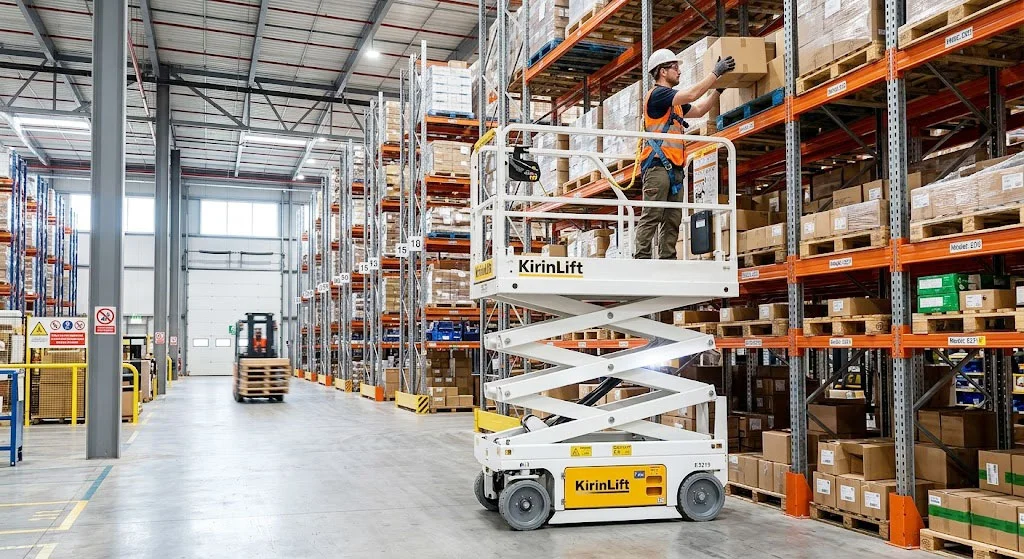
Small electric lifts (often called “Micro” lifts) are the winners here. They fit in narrow aisles and provide just enough height to reach the top of pallet racking without blocking traffic.
Facility Maintenance
For changing lightbulbs in an arena or painting a church ceiling, a mid-size electric lift is ideal. It is quiet enough to be used during off-hours without disturbing neighbors and won’t ruin the flooring.
Outdoor vs. Indoor Projects
If a project straddles the line—such as working on an exterior hangar door—a high-capacity diesel scissor lift is usually preferred for its wind resistance and stability, even if the floor is concrete.
Common Mistakes to Avoid When Comparing Scissor Lifts
Even experts can make errors during a scissor lift comparison. Avoid these four common pitfalls:
- Choosing Based on Price Alone: The cheapest rental might be a 19-foot lift when you actually need a 26-foot lift. The lost productivity from workers struggling to reach their target will cost far more than the daily rental difference.
- Ignoring Terrain Requirements: Never assume a “flat” parking lot is flat enough for an electric lift. Small potholes or a 3-degree slope can trigger safety cut-outs on non-RT models.
- Overlooking Safety Features: Ensure the lift has a current inspection sticker. Using outdated equipment is a liability that no scissor lift comparison can justify.
- Misjudging Height and Capacity Needs: Always add a 10-20% “buffer” to your height and weight estimates. It is better to have a lift that is slightly too strong than one that refuses to move because of an extra toolbox on the deck.
Conclusion
Choosing the right equipment doesn’t have to be a guessing game. By performing a thorough scissor lift comparison, you can align the power, height, and terrain capabilities of a machine with the specific demands of your job. Remember that the “right” lift is the one that allows your team to work comfortably and safely while minimizing downtime.
Whether you opt for a quiet electric model for indoor shelving or a rugged diesel scissor lift for a muddy job site, prioritize safety and capacity above all else. Your project’s success—and your team’s safety—depends on it.
If you need expert guidance on selecting the perfect hydraulic lifting solution for your next project, our team is ready to assist with technical specifications and global shipping details. For professional inquiries and personalized quotes, feel free to reach out to us via email at info@klingtec.com or connect with us directly on WhatsApp at +86 188 6686 3188.
FAQs
What is the best scissor lift for indoor use?
The best choice for indoor use is an electric scissor lift. These models feature non-marking tires to protect floors, zero-emission motors for indoor air quality, and a compact frame to fit through narrow hallways and doors.
How do I choose the right scissor lift height?
First, determine your “target height” (the actual spot you need to touch). Subtract 6 feet from that number to find the required platform height. For example, if you need to work on a ceiling that is 25 feet high, a lift with a 19-foot platform height is usually sufficient.
What is the difference between electric and diesel scissor lifts?
The primary difference is the power source and the environment. Electric lifts are battery-powered, quiet, and designed for flat, indoor surfaces. Diesel lifts use internal combustion engines, are much louder, and offer the high torque and 4WD needed for outdoor, uneven terrain.
How much weight can a scissor lift hold?
Weight capacity varies by model. Small electric lifts typically hold between 500 and 1,000 lbs, while large rough terrain scissor lifts can hold upwards of 1,500 to 2,500 lbs. Always check the specific “load capacity” sticker on the machine before loading materials.