Choosing the right aerial work platform is a critical decision for any construction, maintenance, or warehousing project. Whether you are managing a massive distribution center or painting the exterior of a commercial building, the equipment you choose impacts your timeline, budget, and—most importantly—the safety of your crew.
One of the most ubiquitous sights on job sites today is the scissor lift. Known for its signature “X” pattern mechanism, this machine is a staple of industrial efficiency. However, no tool is a one-size-fits-all solution. To help you make an informed investment, we have compiled this comprehensive guide to scissor lift advantages and disadvantages. By understanding the strengths and limitations of these machines, you can ensure you’re selecting the most effective tool for your specific needs.
What Is a Scissor Lift?
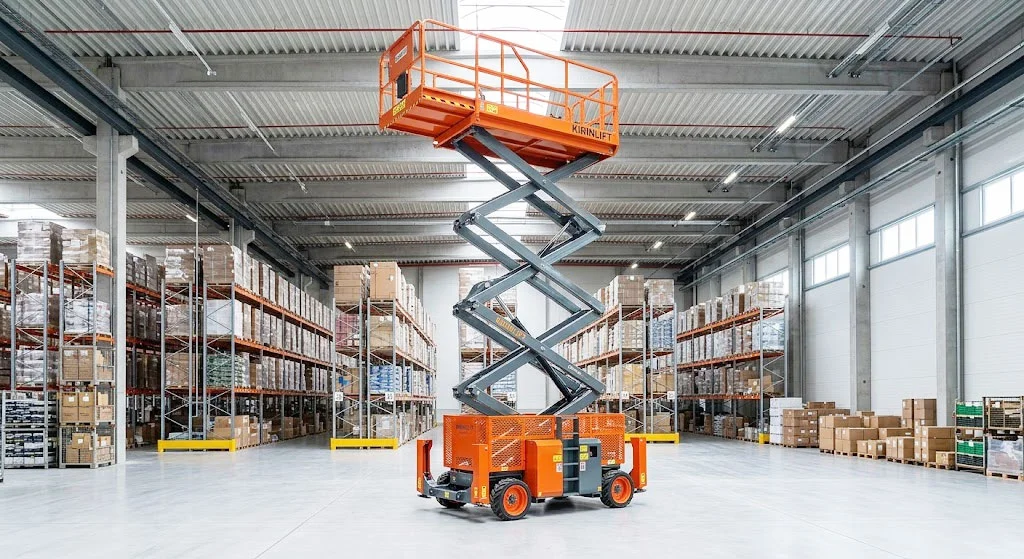
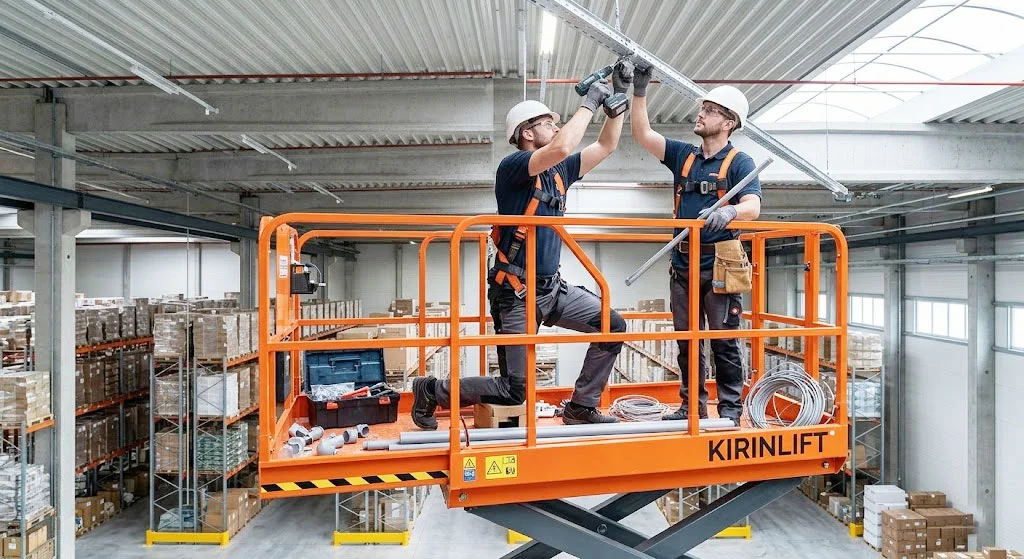
Before diving into the specific scissor lift advantages and disadvantages, it is important to understand what this machine actually is. A scissor lift is a type of mobile elevated work platform (MEWP) designed to move workers and equipment vertically.
The name comes from the folding “pantograph” mechanism—a series of linked, folding supports in a crisscross pattern. When pressure is applied (typically via hydraulic, pneumatic, or electric systems), the supports extend, pushing the platform straight up. Because the platform stays directly over the base, it provides incredible stability compared to other lifts.
While they serve a similar purpose to ladders or scaffolding, scissor lifts offer a much higher level of security and efficiency. They are categorized primarily by their power source (electric vs. diesel) and their intended environment (slab vs. rough terrain).
Key Advantages of Scissor Lifts
When weighing the scissor lift advantages and disadvantages, the benefits often heavily outweigh the drawbacks for indoor and vertical-heavy tasks. Here are the primary reasons why these machines are industry favorites.
1. Excellent Vertical Reach
The primary function of a scissor lift is to get people and materials to high places quickly. Unlike scaffolding, which can take hours or even days to assemble, a scissor lift can reach its maximum height in less than a minute. This efficiency is one of the most cited advantages and disadvantages of scissor lift comparisons. For repetitive tasks like changing light bulbs in a stadium or installing HVAC ducting, the vertical speed of a scissor lift is unmatched.
2. Enhanced Safety Features
Safety is the most significant advantage and disadvantage of scissor lift discussions. Compared to ladders, scissor lifts are exponentially safer. They come equipped with:
- Sturdy Guardrails: Providing a fall-protection barrier for workers.
- Emergency Stop Buttons: Located both on the platform and the ground base.
- Tilt Sensors: Alarms that sound if the lift is on an uneven surface.
- Emergency Lowering Systems: Allowing the platform to descend even if power is lost.
By providing a stable, flat surface to work from, these lifts significantly reduce the risk of fall-related injuries.
3. High Load Capacity
One of the standout scissor lift advantages and disadvantages is the platform’s capacity. Unlike boom lifts, which often have smaller buckets meant for one or two people, scissor lifts feature large platforms. Many models can support upwards of 1,000 to 1,500 lbs. This allows multiple workers to stand on the platform simultaneously alongside their heavy tools, pallets of bricks, or electrical equipment.
4. Easy to Operate
You don’t need a pilot’s license to operate a scissor lift. Most models feature intuitive joystick controls for driving, steering, and elevating. While OSHA-compliant training is required, the learning curve is relatively shallow. The simplicity of the controls reduces the likelihood of operator error, which is a major benefit for busy job sites.
5. Cost-Effective Solution
When looking at the scissor lift advantages and disadvantages from a financial perspective, scissor lifts are often the most budget-friendly aerial lift option. They are generally cheaper to rent or purchase than boom lifts. Furthermore, because they are compact and easy to transport, you save on mobilization and fuel costs.
6. Ideal for Indoor Use
Electric scissor lifts are the gold standard for indoor maintenance. They feature non-marking tires (to protect finished floors) and produce zero emissions. Their ability to turn in tight circles makes them perfect for narrow warehouse aisles where a larger machine simply couldn’t maneuver.
Main Disadvantages of Scissor Lifts
To have a balanced view, a buyer must also consider the disadvantages of scissor lift technology. These limitations often dictate when you should look for an alternative machine.
1. Limited Horizontal Reach
The most notable disadvantage of a scissor lift is its lack of horizontal outreach. Because the platform moves strictly in a vertical line, you must be able to park the base of the machine directly underneath the area where you need to work. If there is a permanent obstacle on the ground (like a fixed machine or a swimming pool), a scissor lift cannot “reach over” it.
2. Terrain Limitations
Standard electric scissor lifts (slab lifts) require a firm, level surface—usually concrete. If the ground is slightly sloped or soft, the machine may refuse to lift for safety reasons. While “Rough Terrain” models exist, they are still more prone to tipping issues than tracked vehicles or larger boom lifts. This terrain sensitivity is a frequently discussed disadvantage of hydraulic scissor lift systems.
3. Height Restrictions
While they are great for many tasks, scissor lifts generally tap out at heights between 20 to 50 feet. If you are working on a high-rise building or a massive bridge, the scissor lift advantages and disadvantages shift toward the “disadvantage” side, as you will likely need a boom lift that can reach 100 feet or more.
4. Bulky Size
While they are compact compared to cranes, scissor lifts can still be quite heavy and bulky. An electric scissor lift can easily weigh 2,000 to 5,000 lbs, which might exceed the floor load capacity of some mezzanine levels or older buildings. Additionally, their width can make it difficult to pass through standard single-entry doors.
5. Weather Sensitivity
For outdoor use, wind is a major enemy. Because a scissor lift acts like a giant sail when extended, high winds can create a tipping hazard. Most scissor lifts have a “wind speed rating,” and exceeding it can be fatal. This environmental limitation is a key point in understanding the what is the advantage and disadvantage of scissor lift debate.
Scissor Lifts vs. Other Aerial Lifts
To truly understand the scissor lift advantages and disadvantages, we must see how they stack up against the competition.
Comparison with Boom Lifts
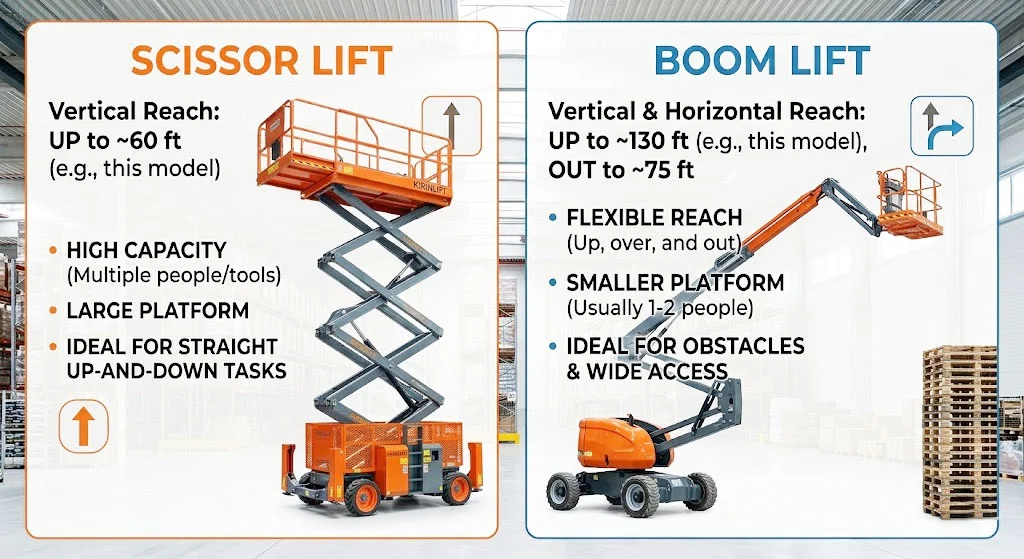
Boom lifts (both articulating and telescopic) offer something scissor lifts don’t: Reach.
- Flexibility: A boom lift can move up, over, and out. If you need to reach a rooftop while parked in the street, you need a boom.
- Capacity: Scissor lifts win on capacity. A boom lift bucket is usually limited to 500 lbs, whereas a scissor lift can carry three times that amount.
Comparison with Vertical Mast Lifts
Vertical mast lifts are like the “little brothers” of scissor lifts.
- Footprint: Mast lifts are even smaller and can fit through standard doorways and into passenger elevators.
- Weight: They are much lighter, making them ideal for gym floors.
- Downside: They have very low weight capacities and only hold one person.
When to Choose a Scissor Lift
You should choose a scissor lift when your work is directly overhead, you have multiple people working at once, or you are working on a budget and have a flat, solid floor.
Common Applications of Scissor Lifts
Understanding the scissor lift advantages and disadvantages helps pinpoint where they shine:
- Warehousing: Stocking high shelves and performing inventory counts.
- Construction: Installing ceiling joists, electrical wiring, and fire sprinkler systems.
- Retail: Hanging signage or seasonal decorations in big-box stores.
- Facility Maintenance: Changing high-bay lights or cleaning windows.
- Manufacturing: Accessing large machinery for repairs.
How to Decide If a Scissor Lift Is Right for You
To determine if the scissor lift advantages and disadvantages align with your project, ask yourself these four questions:
- What is the maximum height I need to reach? (If over 50ft, look at boom lifts).
- Will I be working on concrete or dirt? (If dirt, you need a Rough Terrain model).
- Are there obstacles between the floor and the work area? (If yes, a scissor lift won’t work).
- How many people and tools need to be elevated? (If more than two, the scissor lift is your best bet).
Safety Tips When Using a Scissor Lift
Regardless of the advantages and disadvantages of scissor lift models, safety is the operator’s responsibility.
- Inspect the Site: Check for overhead power lines and floor holes.
- Check the Weather: Never operate a scissor lift outdoors if wind speeds exceed the manufacturer’s limit.
- Never Use Scaffolding on the Platform: It might be tempting to get an extra two feet of height by standing on a bucket or ladder inside the lift, but this is a leading cause of tipping accidents.
- Wear Proper PPE: Even with guardrails, many job sites require a harness and lanyard (fall arrest system).
- Don’t Exceed Weight Limits: Always account for the weight of the operator, their tools, and the materials.
Conclusion
In the debate over scissor lift advantages and disadvantages, the conclusion is clear: the scissor lift is a specialized tool that excels at vertical efficiency, safety, and high-capacity lifting. While it lacks the “reach-over” capability of a boom lift and is restricted by terrain, its cost-effectiveness and ease of use make it an essential asset for most indoor and level-surface projects.
By prioritizing your project’s specific height requirements and ground conditions, you can harness the advantages and disadvantages of scissor lift technology to complete your work safely and under budget.
If you are still unsure which model fits your specific job site, our team of experts is ready to help you navigate the various scissor lift advantages and disadvantages to find your perfect match. For personalized advice, detailed equipment specifications, or a quick quote, feel free to reach out to us. You can contact us via email at info@klingtec.com or send us a message on WhatsApp at +86 188 6686 3188. We look forward to helping you take your project to new heights!
FAQs About Scissor Lift Advantages and Disadvantages
What are the main benefits of using a scissor lift?
The main benefits include a high load capacity for multiple workers and tools, a stable and large work platform, ease of operation, and a more affordable price point compared to other aerial lifts.
What is the biggest limitation of a scissor lift?
The biggest disadvantage of a scissor lift is its lack of horizontal reach. It can only move straight up and down, meaning the base must be positioned directly under the work area.
Are scissor lifts safe for outdoor use?
Yes, but with caveats. You should use a “Rough Terrain” model for uneven ground, and you must always monitor wind speeds, as high winds pose a significant tipping risk.
How high can a scissor lift go?
Most standard scissor lifts reach heights between 19 and 40 feet, though some specialized heavy-duty models can reach up to 50 or 60 feet. For anything higher, a boom lift is generally required.
What is a disadvantage of a hydraulic scissor lift?
A specific disadvantage of hydraulic scissor lift models is the potential for fluid leaks. If a hydraulic hose nicks, it can create a slip hazard or damage sensitive flooring in an indoor environment. Additionally, they may require more maintenance than purely electric-actuated lifts.
Summary of Hydraulic Scissor Lift Advantages and Disadvantages
When comparing hydraulic scissor lift advantages and disadvantages, the “pros” are their immense lifting power and durability in rough environments. The “cons” involve the maintenance of the hydraulic fluid and the slower lift speeds compared to some modern electric-drive systems.