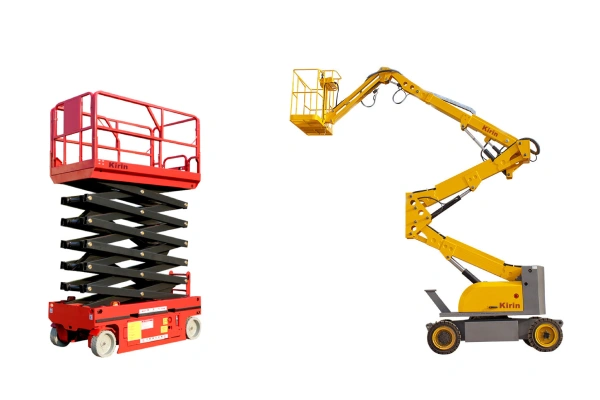
Scissor lifts are indispensable tools in construction, warehousing, and maintenance. They provide a stable, mobile platform that allows workers to reach heights safely and efficiently. However, as with any heavy machinery, they come with inherent risks. When safety protocols are ignored, a scissor lift accident can occur in the blink of an eye, leading to severe injuries or even fatalities.
Understanding the mechanics of scissor lift accidents is the first step toward a safer workplace. In this comprehensive guide, we will explore the most frequent causes of these incidents, examine the statistics that highlight the danger, and provide seven powerful strategies to ensure your team stays safe while working at height.
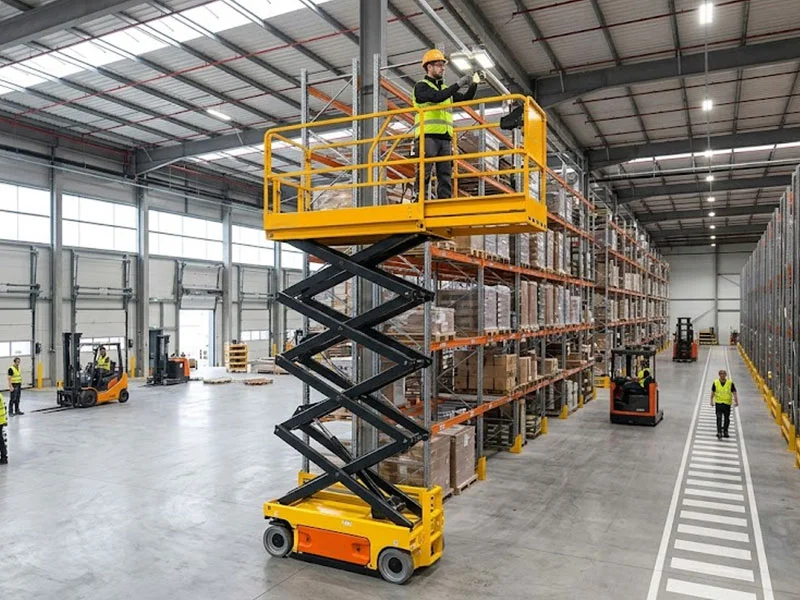
What Is a Scissor Lift Accident?
Scissor lift platform accidents are any unplanned event involving a mobile vertical work platform that results in property damage, bodily injury, or death. While these machines are often grouped with aerial lifts, they are technically classified as “mobile scaffolding” because the platform only moves vertically.
A scissor lift platform accident can range from a minor “pinch point” injury to a catastrophic tip-over. Because these machines often operate in high-traffic areas like warehouses or busy construction sites, a warehouse scissor lift accident can also involve bystanders or nearby equipment.
The Most Common Scissor Lift Accident
When we look at the data surrounding scissor lift accidents, one type of incident stands out above the rest: Falls from height.
While the machine itself is designed to be a “fall protection” device with its guardrails, a warehouse scissor lift fall accident usually happens when a worker attempts to gain extra height by climbing on the railings or using a ladder on top of the platform. Once a worker leaves the floor of the platform, the safety features of the lift are negated, and the risk of a fatal scissor lift accident skyrockets.
The most common cause of fatal scissor lift accidents is:
Industry data and OSHA reports consistently show that the most common cause of fatal scissor lift accidents is a combination of tip-overs and falls, usually driven by human error or environmental factors. Below are the primary contributors to these tragic events.
Lack of Proper Training
You wouldn’t let someone drive a semi-truck without a license, yet many workers are asked to operate machinery without formal instruction. Scissor lift accidents are frequently the result of an operator who does not understand the lift’s weight limits, how to check for overhead hazards, or how to properly engage the emergency brakes.
Failure to Use Safety Equipment
Even though the platform has guardrails, personal protective equipment (PPE) is often necessary. Scissor lift accidents can occur when workers fail to wear harnesses or lanyards when required by company policy or specific job site hazards. Furthermore, failing to check that guardrails are securely locked is a recipe for a warehouse scissor lift fall accident.
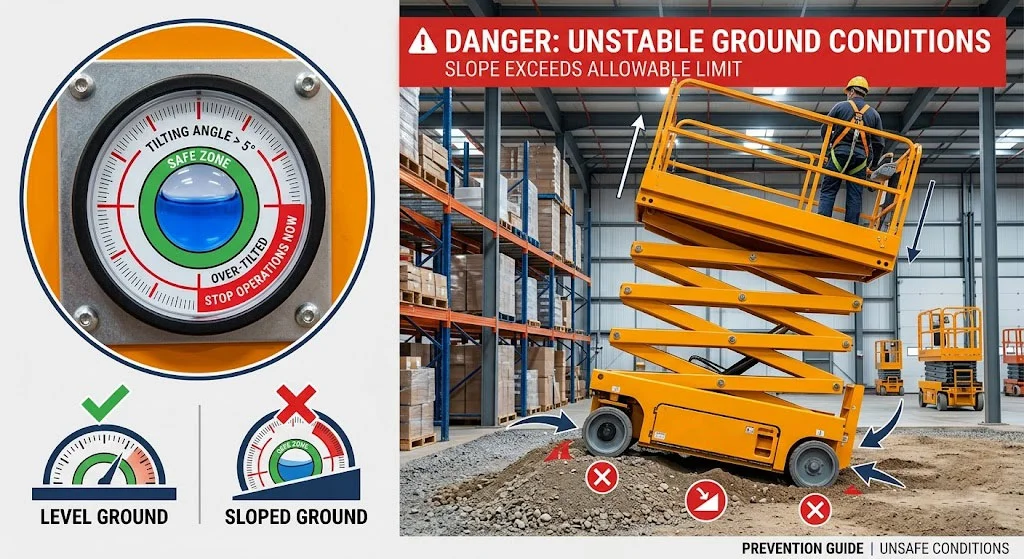
Unstable Ground Conditions
Scissor lifts require level, firm ground to operate safely. Scissor lift accidents often occur because the lift was positioned on a slope, soft soil, or over a floor hole (like a drain) that wasn’t properly covered. When the platform is extended, even a slight shift in the base can cause a massive tip-over.
Overloading the Platform
Every machine has a rated capacity. When a crew tries to save time by loading extra materials or having too many people on the platform, they increase the risk of a scissor lift accident. Overloading shifts the center of gravity, making the machine highly unstable, especially when fully extended.
Improper Use of Equipment
Using a scissor lift for something it wasn’t intended for—such as using it as a crane to lift heavy objects or using it to “push” other objects—is a leading cause of a scissor lift accident. The lateral force applied during these maneuvers can easily buckle the scissor mechanism or tip the unit over.
Weather Conditions
For outdoor projects, wind is a silent killer. High winds can catch the large surface area of the platform and act like a sail. Scissor lift accidents caused by wind are particularly dangerous because it often results in a full tip-over of the machine with the worker trapped inside.
Other Common Types of Scissor Lift Accidents
While falls and tip-overs are the most frequent, scissor lift platform accidents can take many forms depending on the environment.
- Tip-over incidents: These often happen during travel. If the platform is elevated while the machine is moving over uneven terrain, scissor lift accidents are almost inevitable.
- Crushing or pinching injuries: These occur when a worker’s hands or body parts get caught in the “scissor” mechanism during descent, or when a worker is pinned between the platform and a fixed object (like a ceiling beam).
- Collisions with overhead obstacles: In a warehouse scissor lift accident, operators often focus on the floor and forget to look up, leading to collisions with rafters, lights, or sprinkler systems.
- Electrical hazards near power lines: If a lift is positioned too close to energized lines, the entire metal structure can become electrified, leading to a fatal scissor lift accident via electrocution.
7 Powerful Ways to Prevent a Scissor Lift Accident
Prevention is the only way to lower scissor lift accident statistics and ensure every worker goes home at the end of the shift.
- Conduct Mandatory Training: Never allow an uncertified employee to operate the lift. Training should cover controls, emergency procedures, and weight limits to prevent scissor lift accidents.
- Perform Daily Inspections: Before every shift, the operator should check the hydraulics, tires, and guardrails. A mechanical failure is a common precursor to scissor lift accidents.
- Evaluate the Ground: Always ensure the lift is on a flat, stable surface. If you are working in a warehouse, check for debris or slick spots that could lead to a warehouse scissor lift accident.
- Enforce the “Feet on the Floor” Rule: To prevent a warehouse scissor lift fall accident, workers must keep both feet firmly on the platform floor. Never use planks or ladders to gain more height.
- Monitor Wind Speeds: Use an anemometer to check wind speeds for outdoor work. Most manufacturers recommend grounding the lift if winds exceed 28 mph.
- Maintain Clearance Zones: Mark off the area around the base of the lift with cones or tape to prevent bystanders from being involved in scissor lift accidents.
- Use Fall Protection: Even if not strictly required by OSHA in all scissor lift scenarios, wearing a harness and a short lanyard provides a secondary “safety net” against a scissor lift accident.
Real-Life Examples of Scissor Lift Accidents
To understand the gravity of these events, we can look at documented cases. In one warehouse scissor lift accident, a worker was moving the lift while it was fully extended. The wheel hit a small piece of wood on the floor, causing the lift to oscillate and eventually tip over, resulting in a 25-foot fall.
In another instance, a scissor lift platform accident occurred when a worker attempted to reach a high shelf by standing on the mid-rail of the guardrail. He lost his balance and fell to the concrete floor. This warehouse scissor lift fall accident could have been prevented by simply repositioning the lift or using a taller model. These stories are a grim reminder that the most common cause of fatal scissor lift accidents is preventable human error.
Why Prevention Matters
The ripple effects of scissor lift accidents extend far beyond the immediate injury.
Financial Costs of Accidents
Single scissor lift platform accidents can cost a company hundreds of thousands of dollars in medical bills, equipment repair, and lost productivity. Insurance premiums often skyrocket following reported scissor lift accidents.
Impact on Worker Safety and Morale
Nothing kills workplace morale faster than preventable scissor lift accidents. When workers feel their safety is not a priority, productivity drops, and turnover increases. A safe environment is a productive environment.
Legal and Compliance Consequences
OSHA fines for safety violations leading to scissor lift accidents can be massive. Furthermore, companies may face personal injury lawsuits that can last for years, damaging the firm’s reputation and bottom line.
Conclusion
Scissor lift platform accidents are a tragedy that is almost always preventable. By acknowledging that the most common cause of fatal scissor lift accidents is a lack of training and poor environmental assessment, we can take proactive steps to change the culture of safety. Whether you are dealing with a warehouse scissor lift accident or a construction site tip-over, the principles of stability, training, and awareness remain the same.
Stay vigilant, keep your equipment maintained, and never take shortcuts when working at height. The safety of your team depends on it.
Need help choosing safe and reliable scissor lifts? Contact us today for expert support and solutions.
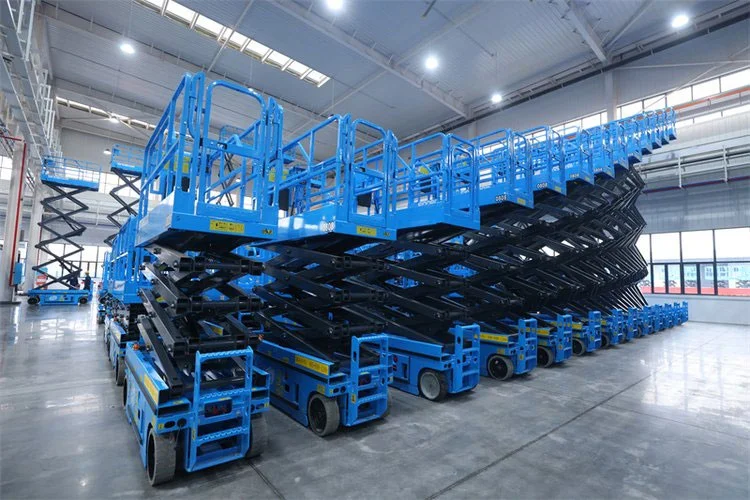
At Kirin, we are committed to providing the highest quality equipment and training resources to help you eliminate the risk of scissor lift accidents in your workplace. Explore our range of durable products designed with industry-leading safety standards to keep your operations running smoothly.
For personalized advice or to request a quote, reach out to our team:
- Email: info@klingtec.com
- WhatsApp: +86 188 6686 3188
FAQs
What is the most common cause of fatal scissor lift accidents?
Most data suggests that the most common cause of fatal scissor lift accidents is a tip-over or a fall from height, often due to improper positioning or workers climbing on guardrails.
How often should a scissor lift be inspected to avoid a scissor lift accident?
A pre-start inspection should be performed at the beginning of every single shift. A more thorough annual inspection by a qualified mechanic is also required.
Is a harness required on a scissor lift?
While OSHA does not always require a harness if guardrails are in place, many company policies mandate them to prevent a warehouse scissor lift fall accident. Always check your local and company-specific regulations.
Can a scissor lift be used on a slope?
Most scissor lifts are designed for level surfaces. Operating on a slope significantly increases the risk of a scissor lift accident. Always check the manufacturer’s inclinometer or “tilt alarm” before elevating.
What are the most common scissor lift accident statistics?
According to various safety reports, hundreds of injuries and dozens of fatalities occur annually due to a scissor lift accident, with falls accounting for the majority of severe incidents.