Working at height is a fundamental requirement across dozens of industries, from construction and facility maintenance to film production and warehousing. However, the days of relying solely on ladders and precarious scaffolding are largely behind us. Today, mobile elevating work platforms (MEWPs) have become the industry standard for providing a safe, stable, and versatile way to reach elevated areas.
Whether you are a site manager, a safety officer, or an equipment operator, understanding the nuances of mobile elevating work platforms is essential for both operational efficiency and workplace safety. In this comprehensive guide, we will explore the different classifications, types, and selection criteria for these vital machines.

Understanding MEWP Classifications (The “Group & Type” System)
To the untrained eye, a lift is just a lift. However, the industry uses a specific classification system—defined by standards like ISO 16368 and adopted by organizations like ANSI and IPAF—to categorize mobile elevating work platforms. This system is divided into Groups and Types.
The Two Groups (Based on Platform Location)
The “Group” refers to where the platform sits in relation to the machine’s chassis (the base).
- Group A: This group includes mobile elevating work platforms where the vertical projection of the center of the platform stays within the “tipping lines” of the machine at all times. In simpler terms, the platform moves straight up and down and does not extend outside the footprint of the base. A classic example is the scissor lift.
- Group B: This category covers all other mobile elevating work platforms where the platform can move outside the tipping lines. If the platform can extend horizontally away from the base, such as a boom lift, it falls into Group B.
The Three Types (Based on Travel Control)
The “Type” refers to how the machine is moved from one location to another.
- Type 1: These mobile elevating work platforms can only be moved when they are in the stowed (fully lowered) position. They must be set up, used, lowered, and then moved to the next spot.
- Type 2: These machines can be driven while the platform is elevated, but the controls for moving the base are located on the chassis rather than the platform itself.
- Type 3: This is the most common variety. Type 3 mobile elevating work platforms allow the operator to control the movement of the chassis directly from the work platform while elevated. This provides maximum autonomy and efficiency for the worker.
Common Types of Mobile Elevating Work Platforms
Because every job site presents unique challenges—such as narrow aisles, rough terrain, or extreme heights—manufacturers have developed several distinct types of mobile elevating work platforms.
1. Scissor Lifts
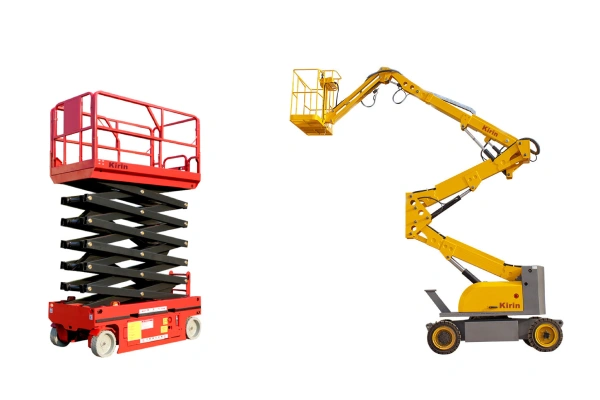
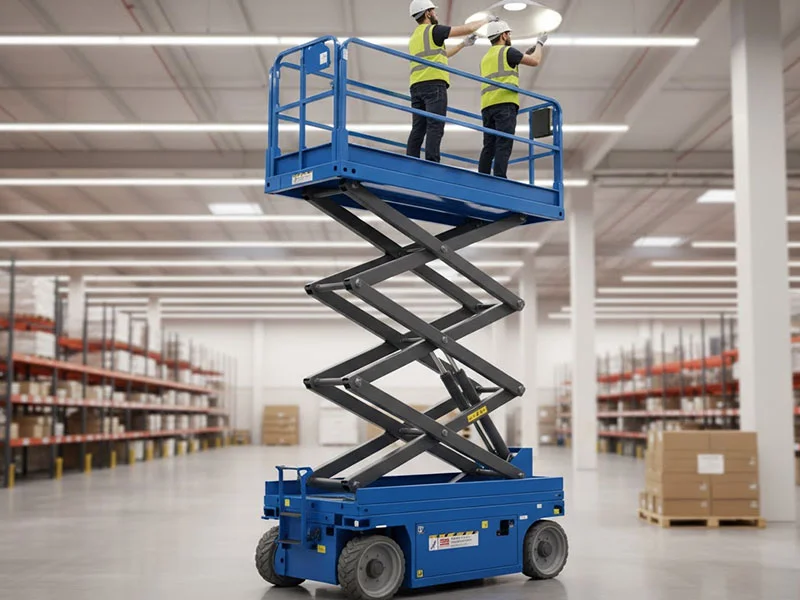
Scissor lifts are perhaps the most recognizable mobile elevating work platforms. They use a linked, folding support system that opens in a crisscross “X” pattern to move the platform vertically.
- Primary Use: Scissor lifts provide a large platform area, making them ideal for tasks that require multiple workers or heavy tools. They are frequently used for ceiling work, sign installation, and warehouse stocking.
- Key Characteristics: Because they are Group A machines, they only move vertically. They offer high stability and can lift significantly more weight than most boom lifts.
- Varieties: You will find electric models with non-marking tires for indoor use, as well as rough-terrain (RT) models equipped with outriggers and four-wheel drive for construction sites.
2. Boom Lifts
When you need to reach “up and over” an obstacle, boom lifts are the mobile elevating work platforms of choice. These belong to Group B because the platform can extend far beyond the base.
- Telescopic Boom Lifts (S-Lifts): These feature a straight, extendable arm. They offer the greatest horizontal reach, making them perfect for work on bridges, high-rise exteriors, or open-space construction.
- Articulating Boom Lifts (Z-Lifts): These have multiple “knuckles” in the arm, allowing the operator to navigate around pipes, rafters, or other obstacles. They provide “up-and-over” capability that a straight boom cannot match.
3. Vertical Mast Lifts
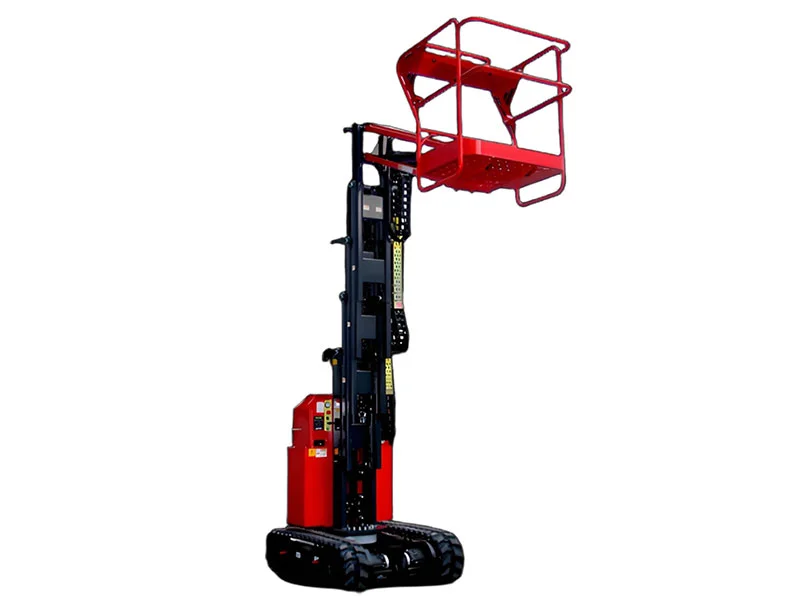
Vertical mast lifts are compact, lightweight mobile elevating work platforms. They consist of a platform attached to a telescoping mast that rises straight up.
- Primary Use: These are designed for tight spaces. They are often found in retail environments, hospitals, and schools for changing light bulbs or performing minor repairs in narrow hallways.
- Key Characteristics: They have a very small footprint and are often light enough to be used on sensitive flooring or transported in service elevators.
4. Specialty MEWPs
Some environments require highly specialized mobile elevating work platforms that don’t fit the standard mold.
- Spider Lifts (Tracked Booms): These are ultra-lightweight boom lifts that run on tracks rather than wheels. They feature “spider-like” outriggers that allow them to set up on uneven terrain, stairs, or even soft grass. They are often narrow enough to fit through a standard single door.
- Vehicle-Mounted Platforms: Commonly known as “bucket trucks,” these are mobile elevating work platforms mounted onto a truck or van chassis. They are essential for utility companies, arborists, and street light maintenance where the machine needs to travel long distances on public roads.
Key Factors for Selecting the Right MEWP
Choosing the wrong machine can lead to delays, increased costs, or dangerous safety compromises. When selecting mobile elevating work platforms, consider these four pillars:
Work Environment
- Indoor vs. Outdoor: Indoor projects usually require electric mobile elevating work platforms to avoid exhaust fumes and non-marking tires to protect floors. Outdoor projects may require diesel engines and rough-terrain capabilities.
- Ground Conditions: Is the surface level and paved, or is it muddy and sloped? Some mobile elevating work platforms require perfectly level ground to operate, while others use hydraulic outriggers to level themselves.
- Aisle Width: If you are working in a warehouse, the “stowed width” of the mobile elevating work platform is a critical measurement.
Reach Requirements
- Vertical Height: How high do you actually need to go? Always account for the “working height,” which is generally 6 feet above the platform height.
- Horizontal Reach: Do you need to reach over a machine, a bush, or a structural beam? If so, a Group B mobile elevating work platform (boom lift) is mandatory.
Load Capacity
Every mobile elevating work platform has a strictly defined rated capacity. This includes:
- The weight of the operators.
- The weight of all tools and equipment.
- The weight of any materials being installed (like HVAC ducting or heavy glass panels). Never exceed the rated capacity, as this can lead to machine failure or tipping.
Power Source
- Electric: Quiet and emission-free. Best for indoor use but requires charging time.
- Internal Combustion (Diesel/Dual Fuel): Offers more power for rough terrain and can work continuously as long as there is fuel.
- Hybrid: A growing segment of mobile elevating work platforms that uses batteries for quiet operation but features an onboard generator for extended runtimes.
MEWP Safety and Regulations
Safety is the most critical aspect of operating mobile elevating work platforms. Because these machines involve heights and heavy machinery, the risks are high.
Training and Certification
Operators must be trained and “familiarized” with the specific model of the mobile elevating work platform they are using. Training should cover:
- Pre-start inspections.
- Function tests.
- Workplace hazard assessments (looking for power lines, floor holes, or overhead obstructions).
Fall Protection
On most Group B mobile elevating work platforms (boom lifts), the use of a full-body harness and a personal fall-arrest system is mandatory. For Group A (scissor lifts), requirements vary by jurisdiction and company policy, but the guardrail system acts as the primary fall protection.
Mobile Elevating Work Platforms Aerial and Scissor Lift Safety
To maintain mobile elevating work platforms aerial and scissor lift safety, companies must implement a rigorous maintenance schedule. This includes:
- Daily Inspections: Checking fluid levels, tire pressure, and emergency stop buttons.
- Annual Inspections: A comprehensive mechanical review by a qualified technician.
- Stabilization: Always ensuring outriggers are deployed correctly if the machine requires them.
Conclusion
In the modern industrial landscape, mobile elevating work platforms are indispensable. From the compact vertical mast lift used in a quiet library to the massive 180-foot telescopic boom lift on a skyscraper site, these machines provide the reach and stability necessary to get the job done safely.
By understanding the differences between Group A and Group B machines, and selecting the right Type for your mobility needs, you can ensure that your project remains both productive and compliant with safety standards. Always remember that the most important component of any mobile elevating work platform is a trained, competent operator who prioritizes safety above all else.
FAQs
What is the difference between an aerial work platform (AWP) and a MEWP?
“MEWP” is the current international term (Mobile Elevating Work Platform). “AWP” (Aerial Work Platform) was the older term commonly used in North America. They refer to the same equipment.
Can I drive a mobile elevating work platform on a public road?
Generally, no. Most mobile elevating work platforms are not “road legal” unless they are vehicle-mounted (like a bucket truck). They should be transported to the site on a trailer.
Do I need a license to operate mobile elevating work platforms?
While “license” is the common term, you technically need a “certification” or “operator card” (like an IPAF PAL card) that proves you have received formal training on that specific class of machine.