Indoor construction, facility maintenance, and warehousing often present unique vertical challenges. When you need to reach high ceilings, navigate around complex overhead ductwork, or work safely in confined spaces, a standard ladder or scaffolding simply won’t cut it. That is where an interior boom lift comes into play.
Unlike massive, diesel-powered outdoor machines, an aerial platform designed as an interior boom lift is engineered specifically for enclosed environments. This comprehensive guide breaks down everything you need to know about selecting, operating, and maintaining an indoor boom lift to keep your job site safe and efficient.
What Is an Interior Boom Lift?
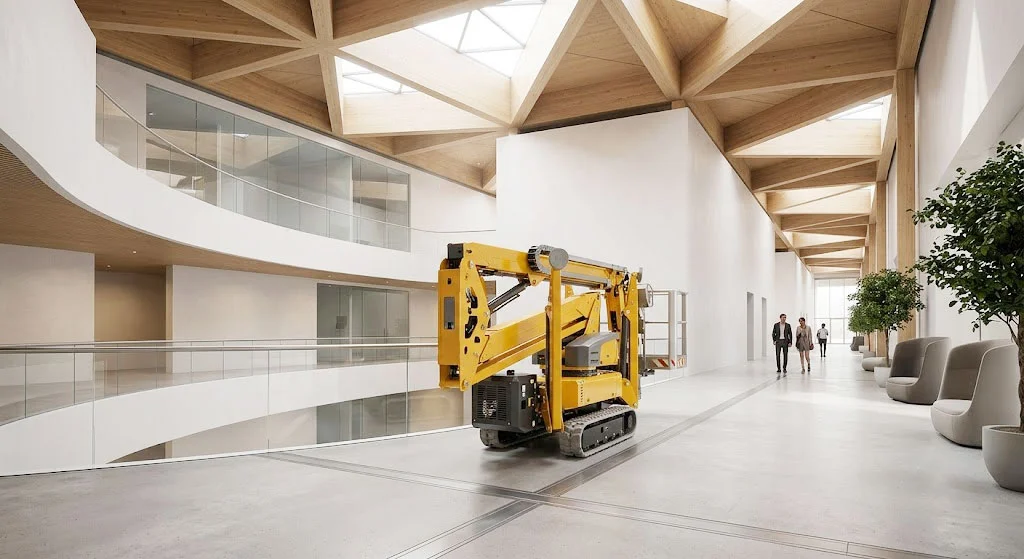
An interior boom lift is a mobile elevating work platform (MEWP) optimized for use inside buildings. While regular boom lifts rely on heavy internal combustion engines, a high-quality interior boom lift is typically battery-powered or electric.
These machines feature extendable arms (booms) attached to a bucket or platform, allowing operators to reach high, out-of-the-way areas. Because they operate indoors, manufacturers construct every indoor boom lift with specialized modifications—such as compact chassis, tighter turning dimensions, and emissions-free drive systems—to protect both the structure and the personnel inside.
Types of Interior Boom Lifts
Not all indoor high-reach jobs are the same. Depending on your spatial constraints and building layout, you will want to choose the right style of machine:
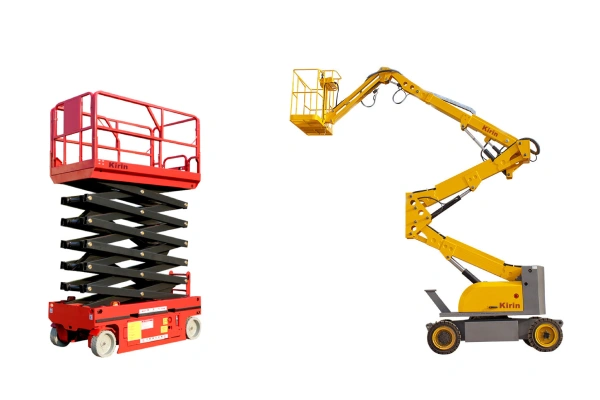
- Articulating interior boom lifts: Featuring multiple joints or “knuckles” in the arm, an articulating indoor boom lift is best for tight spaces and obstacles. It allows you to reach up, over, and around structural beams or machinery.
- Telescopic interior boom lifts: These lifts extend straight out like a telescope. A telescopic indoor boom lift offers maximum horizontal and vertical reach, making it perfect for vast, open indoor areas like arenas or convention centers.
- Compact or electric boom lifts: An electric interior boom lift focuses heavily on low-weight profiles and zero emissions. These are highly versatile, general-purpose machines for standard commercial projects.
- Mast boom lifts: Exceptionally compact, a small interior boom lift with a vertical mast is built specifically for narrow aisles and warehouses. They lift almost completely vertically, minimizing the machine’s footprint.
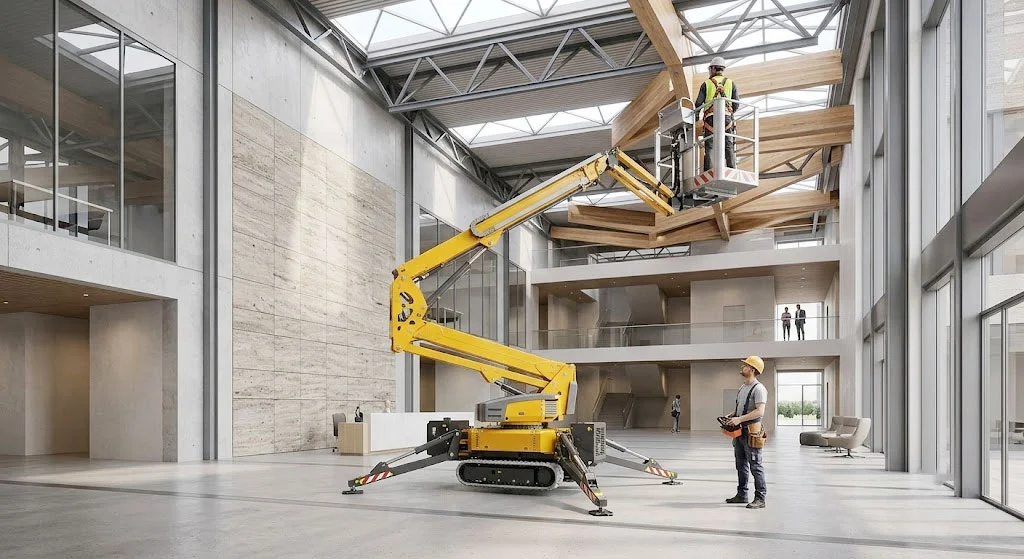
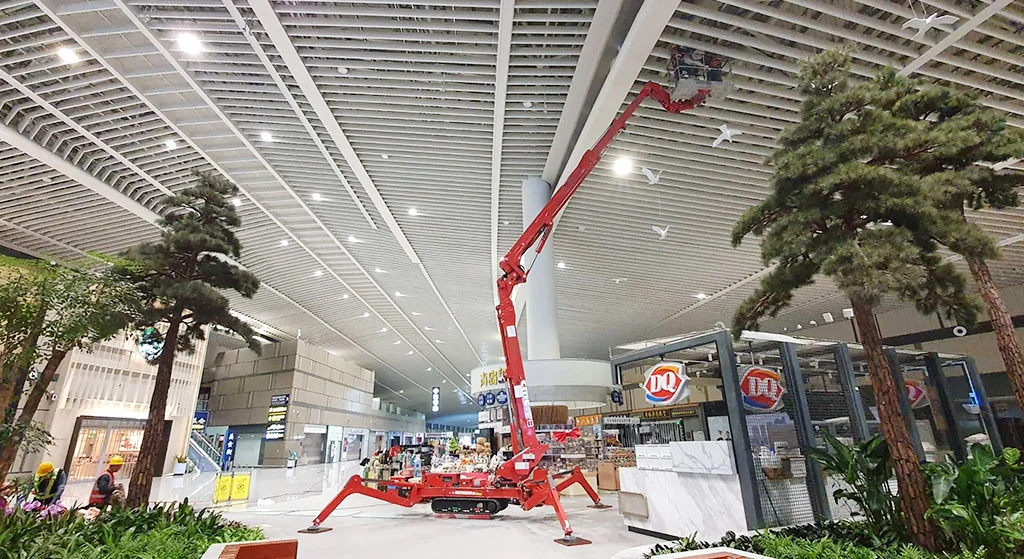
- Interior spider boom lift models: Equipped with track-style wheels and stabilizing outriggers, an interior spider boom lift distributes its weight evenly. They are ideal for delicate tile or historic floors that cannot support traditional heavy equipment.
Key Features of Interior Boom Lifts
To operate safely inside a building, a boom lift interior design must prioritize distinct engineering features:
- Electric or battery-powered operation: A premier interior electric boom lift runs on deep-cycle batteries. This ensures zero emissions, completely removing the risk of toxic exhaust buildup in enclosed spaces.
- Compact turning radius: Indoor spaces are tightly packed. An indoor boom lift usually features highly responsive steering and a near-zero tailswing to maneuver through tight corridors.
- Non-marking tires: To prevent damage to polished concrete, hardwood, or gym flooring, an indoor boom lift utilizes specialized solid rubber tires that leave no dark marks behind.
- Quiet operation: The electric motors inside a boom lift interior system run quietly, minimizing echo and allowing communication on the ground to remain loud and clear.
- Precise control systems: Smooth proportional controls allow operators to position the basket precisely near fragile ceiling fixtures or glass.
Common Applications of Interior Boom Lifts
Where do you see an indoor boom lift at work? They are vital across several major industries:
- Warehouse Management: Reaching top-tier pallet racks and maintaining overhead sprinkler lines.
- Facility Maintenance: Changing light fixtures in commercial complexes, cleaning high-atrium windows, and repairing HVAC systems.
- Aviation Hangars: Servicing large aircraft bodies under shelter.
- Retail and Commercial Outlets: Installing seasonal decorations or point-of-sale signage in mega-malls.
- Construction Fit-outs: Electrical wiring, drywalling, and painting before building handovers.
Safety Benefits of Using an Interior Boom Lift
Safety is the primary reason project managers upgrade to an indoor boom lift instead of using traditional scaffolding:
- Stable Guardrails: Operators work within a fully enclosed metal basket, severely reducing fall risks compared to ladders.
- Elimination of Fumes: Utilizing an electric interior boom lift keeps indoor air clean and oxygen levels safe.
- Ergonomic Positioning: Workers can position the platform precisely where they need it, reducing physical strain and overreaching.
- Rapid Relocation: Unlike scaffolding that requires manual teardown, an indoor boom lift can be driven to the next point instantly, reducing transit risks.
How to Choose the Right Interior Boom Lift
Before renting or purchasing your next indoor boom lift, run through this checklist to match the machine to your venue:
| Consideration | Key Question to Ask |
| Working Height | Exactly how high are the fixtures or ceilings? |
| Horizontal Clearance | Do you need to reach over any fixed machinery or inventory? |
| Floor Load Capacity | Can the subfloor or tile support the weight of a heavy chassis? (Consider an interior spider boom lift if limits are low). |
| Aisle Width | Will a standard interior electric boom lift fit, or do you need a small interior boom lift? |
| Power Access | Are there adequate charging stations available overnight for battery maintenance? |
Safety Tips for Operating Interior Boom Lifts
Operating an interior boom lift safely requires strict adherence to industry protocols:
- Mandatory Training: Ensure every operator holds a valid MEWP certification specifically covering an interior boom lift.
- Pre-Start Inspections: Check fluid levels, tire inflation or structural integrity, and function test all emergency stop buttons before every shift.
- Wear a Harness: Always wear a full-body harness with a safety lanyard attached to the designated anchor point inside the basket.
- Check Overhead Obstructions: Watch out for low-hanging beams, light fixtures, and overhead power lines.
- Clear the Ground Zone: Block off the area directly beneath the indoor boom lift to protect ground workers from falling tools.
Maintenance Tips for Long-Term Performance
To keep your indoor boom lift reliable, maintain a consistent servicing schedule:
- Battery Hydration: For wet-cell batteries, check distilled water levels weekly after charging cycles complete.
- Keep It Clean: Dust can settle into electronic components indoor; wipe down control panels and hydraulic cylinders regularly.
- Check Hydraulic Systems: Periodically inspect lines for micro-leaks or pressure drops that could destabilize the boom arm.
- Tire Inspections: Ensure non-marking solid tires remain free of embedded debris like screws or metal shavings from the job site floor.
Common Mistakes to Avoid
Avoid these frequent slip-ups to ensure your indoor boom lift operates without incident:
⚠️ Never Override Weight Limits: Exceeding the platform capacity rating will throw off the machine’s center of gravity and risk a tip-over.
⚠️ Never Use Ladders Inside the Basket: If your indoor boom lift cannot reach a certain spot, do not stand on guardrails or place a stepstool inside the basket to extend your reach.
⚠️ Ignoring Floor Debris: Driving a small interior boom lift over a simple drywall scrap or a stray bolt can cause sudden, dangerous shifts at maximum extension heights.
Conclusion
An interior boom lift is an indispensable tool for safe, productive high-reach indoor work. By choosing the right model—whether that is a nimble interior spider boom lift or an efficient interior electric boom lift—and training your crew thoroughly, you can minimize job site accidents and complete overhead projects faster than ever.
Ready to elevate your indoor operations safely? The team at Kirin Lift is here to help you find the perfect equipment tailored to your facility’s exact layout. Get in touch with our experts today for custom recommendations and quotes:
- Email: info@klingtec.com
- WhatsApp: +86 188 6686 3188
FAQs About Interior Boom Lift
What is an interior boom lift used for?
An indoor boom lift is used to safely reach elevated areas indoors, such as ceilings, lighting systems, and high shelving in warehouses, factories, shopping malls, and commercial buildings.
How is an interior boom lift different from an outdoor boom lift?
An interior boom lift is typically electric-powered, compact, and designed with non-marking tires for smooth indoor floors. Outdoor boom lifts are larger, often diesel-powered, and built for rough terrain.
What types of interior boom lifts are available?
Common types include articulating boom lifts, telescopic boom lifts, and mast boom lifts. Each type of interior boom lift is designed for different height, reach, and space requirements.
Are interior boom lifts safe to use indoors?
Yes, an indoor boom lift is safe when properly operated. Most models include safety features such as emergency stop buttons, overload protection, and stable platforms for secure indoor work at height.
What power source do interior boom lifts use?
Most interior boom lifts are powered by electric batteries, making them ideal for indoor environments because they produce zero emissions and operate quietly.
What surfaces can an interior boom lift operate on?
An interior boom lift is designed for smooth, level indoor surfaces such as concrete floors, epoxy flooring, and warehouse surfaces. It should not be used on uneven or rough terrain.
How high can an interior boom lift reach?
Depending on the model, an interior boom lift can typically reach between 20 to 60 feet (6 to 18 meters), with some specialized models reaching even higher.
Do operators need training to use an interior boom lift?
Yes, operators should be properly trained and certified. Training ensures safe operation, correct use of controls, and awareness of workplace hazards when using an interior boom lift.
Can an interior boom lift be used in narrow spaces?
Yes, many compact interior boom lift models are designed for tight indoor spaces like aisles, warehouses, and retail environments, offering excellent maneuverability.
What safety precautions should be taken when using an interior boom lift?
Operators should wear fall protection gear, inspect the equipment before use, avoid overreaching, and ensure the floor can support the lift’s weight before operating an indoor boom lift.
Can you use a regular gas or diesel boom lift indoors?
Generally, no. Standard combustion engines emit dangerous carbon monoxide. You should always use an electric interior boom lift or an interior electric boom lift variant to ensure safe indoor air quality.
Do interior boom lifts damage delicate flooring?
Most indoor boom lift models feature non-marking tires specifically to protect floors. If your floor has strict weight limits, opting for a lightweight interior spider boom lift with stabilizing pads distributes pressure safely.
How often do interior boom lift batteries need to be charged?
A fully charged indoor boom lift typically provides a full 8-hour shift of intermittent operation. It is best practice to plug the lift into a dedicated outlet overnight so it is ready for the next working day.