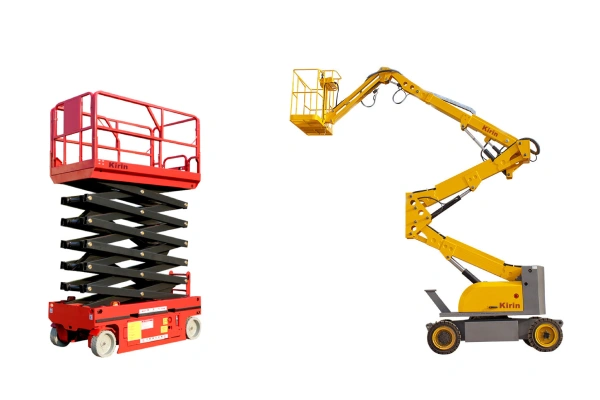
Moving heavy industrial machinery requires precision, strict adherence to safety protocols, and the right equipment. Whether you are managing a busy construction site, upgrading a facility, or moving equipment between projects, knowing how to transport a scissor lift safely and efficiently is critical.
Improper transport not only risks damaging expensive aerial work platforms (AWPs) but also poses severe safety hazards to operators and other motorists. This comprehensive guide breaks down the essential steps, regulatory compliance standards, and best practices for scissor lift transport.
How to Transport a Scissor Lift: The Core Requirements
Before diving into the step-by-step process, it is vital to understand that transporting a scissor lift involves more than just driving it onto a trailer. Because these machines feature a high center of gravity and dense concentrated weights, they demand specific handling procedures.
To ensure safety and compliance with global industrial safety standards (including OSHA, CE, ISO, and ANSI), the transport process must be split into four distinct phases: preparation, vehicle selection, secure loading, and safe transit.
Preparing a Scissor Lift for Transport
Preparation is the foundation of a safe heavy equipment move. Skipping basic prep work can lead to mechanical shifting, component damage, or structural failure during transit.
Inspect the Equipment
Before any loading begins, conduct a thorough pre-transport inspection of the scissor lift. Check for any fluid leaks (hydraulic fluid or battery acid), inspect the tires for proper inflation or damage, and ensure there are no structural cracks in the chassis or scissor arms. Documenting the machine’s condition before transport protects your assets and ensures the lift is job-site ready upon arrival.
Lower and Secure the Platform
The platform must be fully lowered to its stowed position to achieve the lowest possible center of gravity.
- Collapse Guardrails: If the scissor lift features folding guardrails (common on compact models to clear low doorways), fold them down and lock them into place.
- Secure Loose Items: Remove all tools, materials, debris, and debris trays from the platform.
- Lock the Extensions: Ensure the slide-out platform extension is fully retracted and the locking pin is securely engaged.
Disconnect Power Sources
To eliminate the risk of accidental activation during transit, shut down the engine or turn off the main battery disconnect switch. For electric scissor lifts, ensure the key switch is turned to the “Off” position and remove the key. If the unit is equipped with an emergency stop button on both the base and platform controls, depress both.
Protecting Sensitive Components
The control box on the platform is highly susceptible to weather damage and high-velocity wind friction during highway transport.
- Disconnect or Protect Controls: If the control pendant is removable, disconnect it and store it safely in the truck cab. If it is fixed, wrap it securely in a waterproof, heavy-duty protective cover.
- Secure Access Panels: Check that all side maintenance doors, battery compartments, and hydraulic tanks are completely latched and locked.
Choosing the Right Transport Vehicle
Selecting an inappropriate vehicle for scissor lift transport can result in structural overloading, transport fines, or catastrophic tipping.
Flatbed Trucks vs. Trailers
Your choice between a dedicated flatbed truck and a towed trailer depends heavily on the machine’s dimensions and weight capacity.
- Flatbed Trucks: Excellent for transporting medium to large scissor lifts within urban environments, providing great maneuverability and high bed stability.
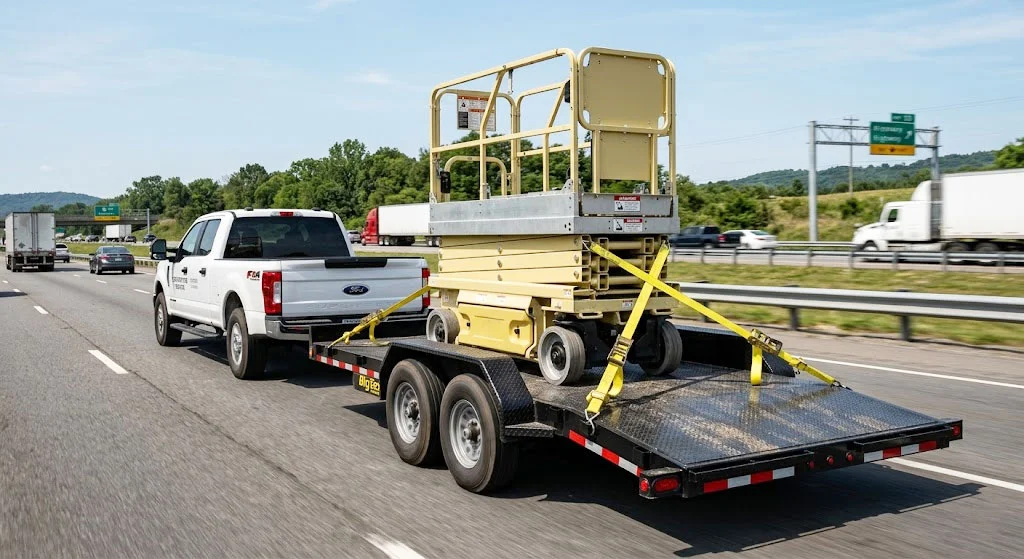
- Scissor Lift Transport Trailer: A specialized equipment trailer towed by a heavy-duty truck is often the most versatile option. For smaller units, low-profile utility trailers work well, while larger rough-terrain scissor lifts require heavy-duty deck-over or lowboy trailers. Always verify that the gross vehicle weight rating (GVWR) of the truck and trailer exceeds the combined weight of the vehicle, trailer, and the lift itself.
Loading Equipment Safely
When learning how do you transport a scissor lift, the loading phase is often the most hazardous. Always look for flat, level, and solid ground to perform the loading process.
- Align the Vehicle: Position the truck/trailer and the scissor lift in a perfectly straight line.
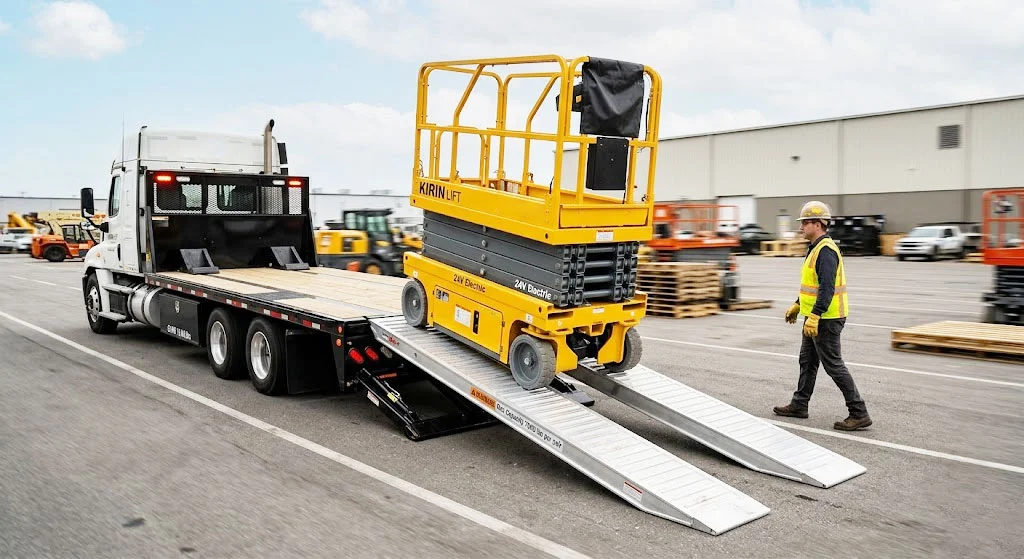
- Set the Ramps: Ensure the loading ramps are fully extended, clear of debris, and adjusted to match the track width of the lift. If the ramp angle is too steep, use longer ramps or a tilt-bed trailer to prevent the high-centering or bottoming out of low-clearance compact lifts.
- Drive at Low Speed: Drive the lift up the ramps in its lowest speed torque setting (usually denoted by a “turtle” icon). Do not make steering corrections while on the ramps. If the manufacturer prohibits driving the lift up inclines exceeding a specific grade, use a heavy-duty winch rated for the machine’s weight to pull it up safely.
Weight Distribution and Securing the Load
Proper weight distribution prevents dangerous trailer sway at highway speeds.
- Center the Mass: Position the heavy base of the scissor lift directly over or slightly ahead of the trailer axles. Approximately 10% to 15% of the total trailer weight should rest on the trailer tongue or hitch.
- Tie-Down Points: Heavy industrial safety guidelines dictate that you must use dedicated, manufacturer-approved tie-down points on the scissor lift chassis (typically marked with tie-down decals). Never attach chains or straps to the scissor arms, hydraulic cylinders, or the platform guardrails.
- Chains and Straps: Utilize heavy-duty transport chains or grade-70 rated tie-down straps. Apply a minimum of four independent tie-down vectors (two pulling forward, two pulling rearward) and tighten them using heavy-duty binders. Place wheel chocks firmly against the front and back of the lift tires to prevent shifting.
Transporting the Scissor Lift Safely
With the load secured, the transport phase requires defensive driving adjustments:
- Pre-Trip Route Planning: Plan your route ahead of time, paying close attention to bridge weight limits, low-clearance overpasses, and construction detours.
- Allowance for Weight and Height: A loaded scissor lift transport trailer significantly alters your vehicle’s braking distance and overhead clearance. Maintain a large following distance behind other vehicles.
- Routine Checks: For long-distance hauling, pull over safely after the first 25 miles, and then every 100 miles thereafter, to inspect the tie-downs. Vibrations from the road can cause straps or chains to settle and loosen.
Unloading and Setting Up
Unloading is essentially the loading process reversed, but it requires just as much vigilance.
- Park on Level Ground: Choose a flat, stable area away from active site traffic.
- Clear the Area: Establish a safety perimeter to ensure no ground personnel are within the unloading zone or the potential tip path.
- Release Tie-Downs Carefully: Remove the chains or straps only after confirming the trailer wheels are chocked and the lift’s brakes are engaged.
- Descend the Ramps: Back the scissor lift down the ramps slowly and smoothly, maintaining a straight line until all wheels are safely on solid ground.
- Post-Transport Inspection: Before putting the lift to work, perform a quick function test of the lift and drive controls to verify that nothing shifted internally or sustained electrical damage during travel.
Tips for Cost-Effective and Efficient Transport
Optimizing how to transport a scissor lift can cut down operational costs and minimize project downtime:
- Consolidate Shipments: If you are managing multiple jobs, bundle equipment moves. Transporting a compact scissor lift alongside other light machinery on a single large flatbed reduces fuel and labor costs compared to making multiple trips.
- Invest in Right-Sized Trailers: Matching your fleet with the correct scissor lift transport trailer eliminates the need to rent specialized hauling equipment or hire third-party logistics firms.
- Maintain Equipment Brakes: Ensure the scissor lift’s automatic parking brakes are regularly serviced. A lift with malfunctioning brakes is highly dangerous to load and unload.
- Train Your Team: Ensure that all operators are fully trained on loading protocols and understand how do you transport a compact scissor lift versus a large, rough-terrain model. Proper training minimizes the risk of costly accidental damage.
Conclusion
Mastering how to transport a scissor lift protects your workforce, keeps your machinery in optimal condition, and ensures your business complies with strict global industrial safety standards. By following systematic preparation, picking the correct vehicle, utilizing proper tie-down points, and driving defensively, you can pull off seamless equipment transport for every project.
If you have questions about specific model weights, tie-down configurations, or need technical support for your aerial work platforms, our team of experts is here to help. Contact us today to ensure your fleet moves smoothly and safely:
- Email: info@klingtec.com
- WhatsApp: +86 188 6686 3188
FAQ
Can I tow a scissor lift behind a standard pickup truck?
Yes, provided the total weight of the scissor lift and the trailer does not exceed the truck’s maximum towing capacity and tongue weight rating. While a standard half-ton truck can often handle a compact slab scissor lift, larger rough-terrain models usually require a three-quarter-ton or one-ton truck.
How many tie-down points should I use for scissor lift transport?
You should use a minimum of four independent tie-down points attached directly to the designated tie-down lugs on the lift chassis. This ensures the equipment cannot shift forward, backward, or sideways during sudden stops or sharp turns.
Is it safe to drive a scissor lift up loading ramps?
It is safe only if the ramp incline does not exceed the maximum gradeability rating specified by the manufacturer (typically found in the user manual). If the ramps are too steep, wet, or icy, you must use a winch to pull the lift onto the transport bed safely.
Do I need special permits for transporting a scissor lift?
Standard slab and compact scissor lifts fit within standard legal width and height limits, so they do not require special oversize permits. However, oversized, high-capacity, or rough-terrain scissor lifts may require permits if their total transport height or width exceeds local DOT regulations. Always check local weight and dimension thresholds before moving large equipment.