Whether you are a facility manager, a construction contractor, or an ambitious DIYer, mastering how to operate a towable boom lift is a game-changer for working at heights. These versatile machines, often called “cherry pickers,” provide the reach of a standard boom lift with the portability of a trailer.
In this comprehensive guide, we will break down the mechanics, safety protocols, and step-by-step instructions to ensure your towable boom lift operation is both productive and accident-free.
What Is a Towable Boom Lift?
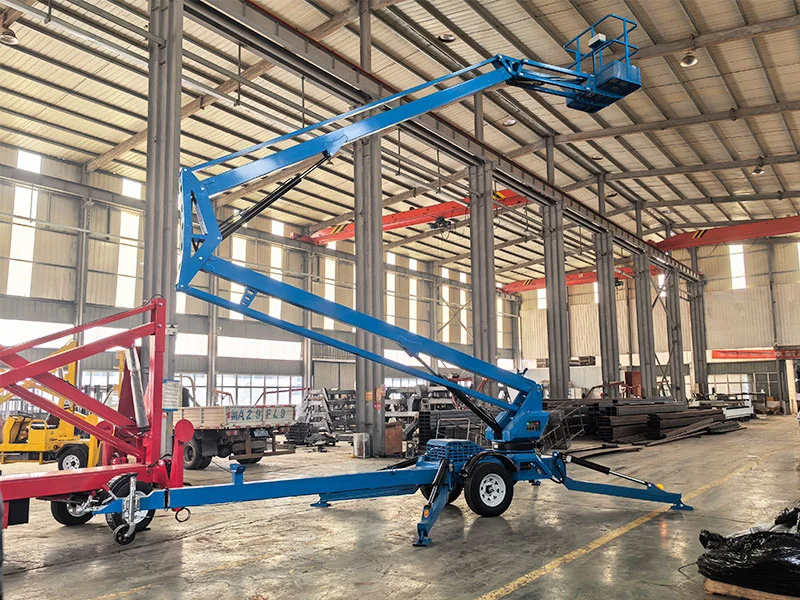
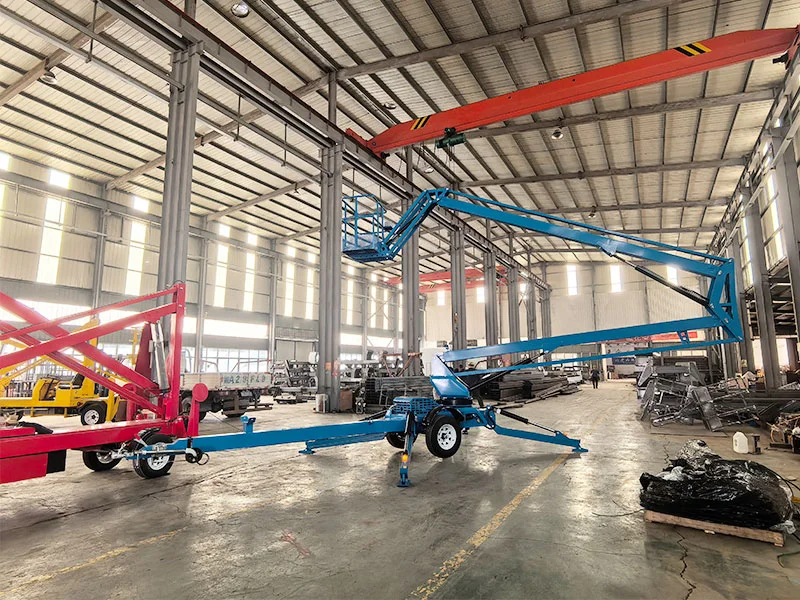
A towable boom lift is a piece of aerial work equipment mounted on a trailer chassis. Unlike self-propelled models that move via a joystick while the boom is elevated, towable versions are designed to be hauled by a standard pickup truck or SUV to the job site. Once unhitched, they rely on hydraulic outriggers to create a stable “footprint.”
Difference from Other Aerial Lifts
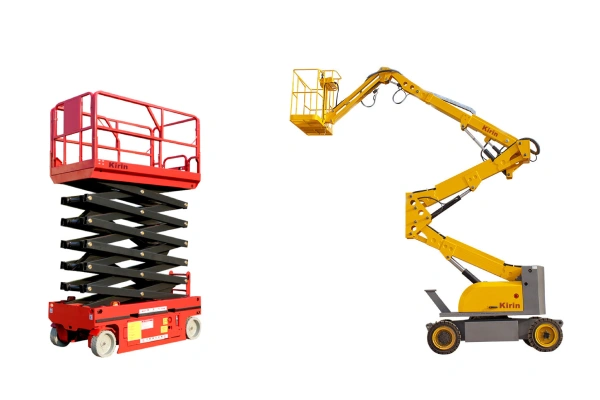
- Scissor Lifts: These only move vertically. A towable boom lift offers “up and over” reach, allowing you to bypass obstacles.
- Self-Propelled Boom Lifts: These are heavy and require a low-boy trailer for transport. Towable models are lightweight and significantly more cost-effective for multi-site projects.
Common Applications
Learning how to operate a towable boom lift opens doors to various industries:
- Maintenance: Changing high-altitude parking lot lights or cleaning gutters.
- Tree Trimming: Safe access to branches without the instability of a ladder.
- Construction: Installing siding, roofing, or windows on residential projects.
- Signage: Installing or repairing commercial signs and banners.
Key Components of a Towable Boom Lift
Before you learn how to operate a towable boom lift, you must speak the language of the machine.
- Trailer Base and Hitch: The foundation of the unit, including the tow bar, coupler, and safety chains.
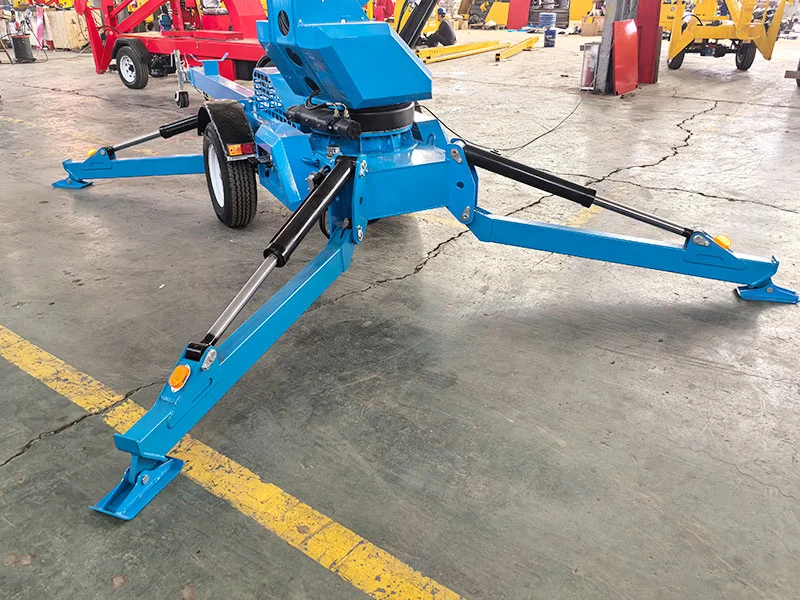
- Outriggers/Stabilizers: Four hydraulic “legs” that lift the tires off the ground to level the machine.
- Boom Arm: Can be telescopic (straight extension) or articulating (knuckle-jointed for reaching over obstacles).
- Platform/Basket Controls: The upper control station where the operator manages movement.
- Ground Control Panel: The secondary controls located on the base, used for testing and emergency lowering.
- Hydraulic System: The “muscles” of the machine that power the lift and outriggers.
Pre-Operation Safety Checklist
You should never wonder how to use a towable boom lift without first ensuring the machine is air-worthy. Perform these checks daily:
- Tires and Hitch: Check for proper PSI and ensure the hitch ball is the correct size (usually 2″ or 2-5/16″).
- Fluids: Inspect hydraulic fluid levels, engine oil (if gas-powered), or battery water levels (if electric).
- Emergency Stops: Push the red “E-Stop” buttons on both the ground and platform controls to ensure they kill power instantly.
- Guardrails and Anchors: Check for cracks in welds and ensure the lanyard anchor point is secure.
- Ground Conditions: Ensure the soil is firm. Avoid mud, soft sand, or “revisited” soil that might collapse under pressure.
- PPE Requirements: You must wear a full-body harness with a shock-absorbing lanyard, a hard hat, and non-slip boots.
How To Operate A Towable Boom Lift (Step-by-Step Guide)
Understanding how to operate a towable boom lift requires a disciplined, sequential approach. Follow these seven steps for a successful lift.
Step 1: Position and Tow the Lift
Drive your towing vehicle to the exact spot where the lift is needed. When learning how to use a towable boom lift, remember that the “reach” starts from the center of the turret. Position the trailer so the boom has a clear path to the work area. Once in place, engage the trailer’s parking brake and chock the wheels.
Step 2: Secure and Stabilize the Lift
This is the most critical stage of towable boom lift operation. Unhitch the lift from your vehicle. Deploy the hydraulic outriggers using the ground controls. Most modern lifts have “auto-level” features. Ensure the bubble level on the base is perfectly centered. If the outriggers are not firmly planted, the lift sensors will prevent the boom from rising.
Step 3: Power on the Equipment
Turn the key switch to “Ground Controls” first. If it’s a battery-powered model, ensure the disconnect switch is on. For gas/diesel models, engage the choke if necessary and start the engine. Allow the hydraulics to warm up for a minute, especially in colder 2026 winter climates.
Step 4: Perform a Test Run
Before anyone enters the basket, use the ground controls to cycle the boom. Raise it a few feet, extend it, and rotate it. This ensures the hydraulic lines are pressurized and the limit switches are functioning. Knowing how to use a boom lift safely means verifying the machine’s integrity from the ground first.
Step 5: Enter the Platform Safely
Don your harness and clip your lanyard to the designated anchor point before your feet leave the ground. Use “three-point contact” (two hands and one foot, or one hand and two feet) while climbing into the basket. Close and latch the entry gate securely.
Step 6: Operate the Boom Lift
Switch the key to “Platform Controls.” Use the foot switch (deadman switch) to enable the joysticks. Move the controls with slow, deliberate pressure. If you are learning how to operate a towable boom lift, avoid “flicking” the joysticks, as this causes the basket to sway dangerously at high altitudes.
Step 7: Lower and Shut Down Properly
When the job is done, retract the boom fully before lowering it into the “travel” cradle. Once the boom is stowed, exit the basket, retract the outriggers, and re-hitch the unit to your vehicle. Turn off the power and remove the key to prevent unauthorized use.
Essential Safety Tips When Using a Towable Boom Lift
Safety is the cornerstone of how to operate a towable boom lift.
- Load Capacity: Most baskets are rated for 500 lbs. This includes the operator, their tools, and any materials. Overloading can cause the lift to tip.
- Weather Watch: Never operate in winds exceeding 28 mph (45 kph). The boom acts like a sail, and high gusts can destabilize the outriggers.
- Power Line Clearance: Maintain at least 10 feet (3 meters) of distance from energized power lines.
- Fall Protection: A harness isn’t optional; it’s a legal requirement. In a “catapult effect” (where the wheels hit a bump), the harness keeps you inside the basket.
Common Mistakes to Avoid
Even those who think they know how to use a towable boom lift often fall into these traps:
- Improper Leveling: Using the lift on a slope greater than its rated capacity (usually 5–10 degrees).
- The “Ladder” Mistake: Never stand on the guardrails or use a ladder inside the basket to gain extra height.
- Jerky Movements: Rapidly changing directions causes structural stress and operator vertigo.
- Ignoring the Manual: Every model (Genie, JLG, Niftylift) has slight variations in towable boom lift operation. Always read the specific manual located in the weather-proof container on the basket.
Maintenance Tips for Long-Term Performance
To keep your equipment ready for how to operate a towable boom lift tasks, follow this maintenance schedule:
- Daily: Clean debris from the boom tracks and check for hydraulic leaks.
- Monthly: Lubricate all grease points (turret gear, boom pins).
- Quarterly: Inspect the battery terminals for corrosion and check the torque on the wheel lug nuts.
- Annual: Schedule a professional structural and functional inspection by a certified technician.
When Should You Use a Towable Boom Lift?
You should choose a towable model when:
- You have limited budget (renting a towable is 40% cheaper than a self-propelled unit).
- The job site has narrow access points that a large truck cannot enter.
- The ground is sensitive (towable lifts are lighter and less likely to damage manicured lawns).
FAQs About Operating a Towable Boom Lift
Do you need a license to operate a towable boom lift?
While a driver’s license isn’t required to move the boom, OSHA (in the US) and similar bodies globally require “authorized” training. Most rental companies provide a brief safety orientation on how to operate a towable boom lift.
How high can a towable boom lift reach?
Most commercial models reach between 35 and 65 feet. Always check the “range of motion” chart, as horizontal reach is always less than vertical reach.
Can it be used on uneven ground?
Yes, but only within the limits of the outriggers. If the ground is too steep for the outriggers to level the base, you cannot safely begin towable boom lift operation.
How much weight can it hold?
Standard capacity is typically 500 lbs (227 kg). This is designed for two adults or one adult with heavy equipment.
Is training required before use?
Yes. Employers are legally required to ensure operators are trained. If you are a homeowner, a thorough walkthrough of how to use a boom lift from the rental agency is highly recommended.
Conclusion
Mastering how to operate a towable boom lift effectively is a vital skill for modern industrial and maintenance work. By following these 7 steps and prioritizing safety, you can maximize your productivity while minimizing risk. As the industry moves forward in 2026, staying updated on the latest equipment standards ensures your team remains both safe and competitive.
If you have additional questions about towable boom lift operation or need professional assistance in selecting the right lifting equipment for your next project, our team is here to help. You can reach our senior design engineers and sales staff directly via email at info@klingtec.com or connect with us instantly on WhatsApp at +86 188 6686 3188. We look forward to supporting your aerial work needs with reliable, high-performance solutions.