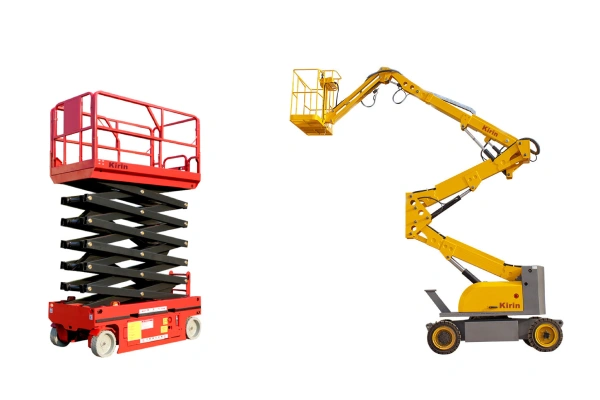
The question of how much does a scissor lift weight is far more critical and complex than it might initially appear. Whether you’re a construction foreman planning a project’s logistics, a warehouse manager arranging floor space, or a transportation specialist trying to calculate trailer load limits, knowing the precise scissor lift weight is essential for safety, compliance, and operational efficiency. It’s a fundamental piece of information that affects everything from the flooring material it can safely operate on to the type of truck and trailer required for transport.
A common answer to how much does a scissor lift weight is: it varies significantly, typically ranging from 1,800 pounds for a small, electric slab model to over 22,000 pounds for a large, heavy-duty rough terrain unit. This massive difference highlights why a detailed understanding of the factors influencing the weight of a scissor lift is absolutely necessary. This guide will break down the crucial details about scissor lift weight, exploring the different types, key factors, and methods for finding the exact figure you need.
Why Scissor Lift Weight Matters
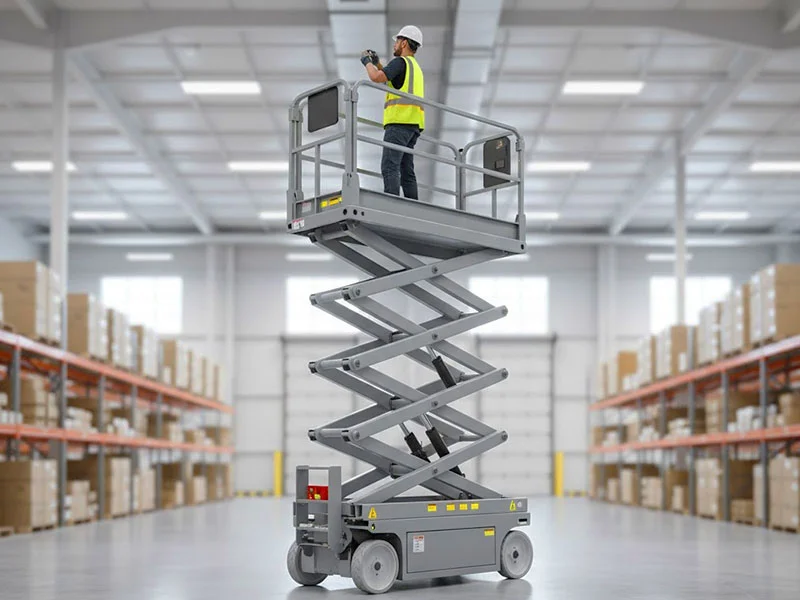
Understanding the scissor lift weight is not just an arbitrary technical detail; it’s a cornerstone of safe and effective machine operation and project planning. The consequences of miscalculating or underestimating the weight of a scissor lift can range from minor logistical headaches to catastrophic structural failures and severe injuries.
1. Transportation and Logistics
The most immediate practical concern is transportation. To safely and legally move a machine, you must know the exact scissor lift weight.
- Load Limits: Every truck, trailer, and winch has a maximum weight limit. Exceeding these limits is illegal and dangerously strains the equipment, potentially leading to breakdowns or accidents on the road. Knowing the scissor lift weight ensures you select the correct capacity vehicle.
- Permitting: Oversized or overweight loads may require special permits, escorts, and route planning, which are all predicated on the accurate weight of a scissor lift and its total combined load.
- Trailer Deck Strength: Ramps and trailer decks must be rated to handle the concentrated weight of the machine during the loading and unloading process.
2. Job Site Safety and Floor Loading
Perhaps the most critical reason to know the scissor lift weight is to ensure job site safety and prevent structural damage.
- Floor Capacity: When operating indoors, especially in multi-story buildings, warehouses, or mezzanines, the weight of a scissor lift must be significantly less than the floor’s maximum load capacity. A small, electric slab lift is designed to distribute its scissor lift weight evenly for this purpose, but misapplication can lead to collapsed floors.
- Ground Penetration: On outdoor, soft, or uneven terrain, the overall scissor lift weight dictates whether the machine will sink or tip. Heavier rough terrain (RT) scissor lifts often require outriggers and cribbing to safely distribute their substantial scissor lift weight over a larger area, reducing ground pressure.
- Stability and Tipping: While design specifications account for safe operation, understanding the gross weight and its distribution is essential for operators to respect operational boundaries and avoid situations that could lead to tipping.
3. Equipment Selection and Cost
The scissor lift weight is a direct indicator of the machine’s size, power, and construction, which, in turn, influences cost.
- Machine Class: A project requiring a massive rough terrain scissor lift weight of 20,000 pounds indicates a need for extreme height and capacity, which demands a much higher rental or purchase price than a compact model.
- Fuel/Power Consumption: Heavier machines require more robust components and consume more power (whether fuel or battery power) to move their substantial scissor lift weight and lift their maximum scissor lift weight capacity.
In short, the precise knowledge of how much does a scissor lift weight is a mandatory prerequisite for successful planning, safe operation, and legal compliance.
Scissor Lift Weight by Type and Height
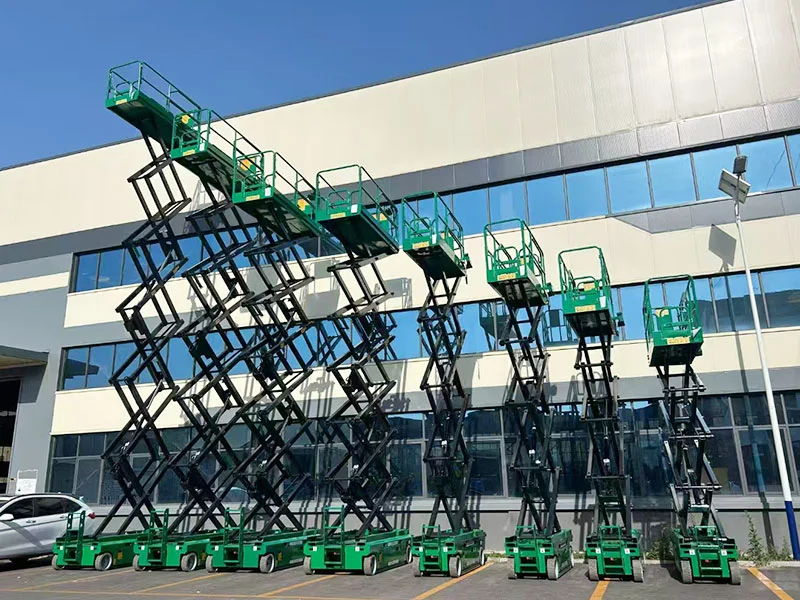
The two primary categories of scissor lifts—electric slab and rough terrain—are differentiated by their intended operating environment and their construction, which is the chief driver of their dramatic difference in scissor lift weight. Generally, the higher the lift’s maximum platform height, the heavier the machine is, as the base and structural components must be significantly reinforced to safely handle the stress.
A. Electric Slab Scissor Lifts (Indoor/Flat Surfaces)
Electric slab scissor lifts, sometimes called indoor or slab lifts, are designed for operation on smooth, level, indoor surfaces. They are powered by rechargeable batteries, which contributes to their weight of a scissor lift, but they are fundamentally lighter than their rough terrain counterparts. Their weight is minimized to prevent damage to delicate flooring and to allow them to be used in weight-restricted buildings.
| Platform Height (Approx.) | Typical Scissor Lift Weight Range (lbs) | Key Features Influencing Weight |
| 12-19 Feet (Compact) | 1,800 – 3,500 | Narrow chassis, small platforms, lighter gauge steel, compact battery pack. This is the lightest class of scissor lift weight. |
| 20-26 Feet (Standard) | 3,800 – 5,500 | Larger battery packs, wider base for stability, heavier mast steel. This is the most common scissor lift weight range for indoor use. |
| 32-40 Feet (High Reach) | 6,000 – 8,000 | Much thicker, reinforced steel structure, heavier ballast in the base, and high-capacity battery systems. |
For example, a common 19-foot electric slab scissor lift weight is often around 3,000 pounds, a manageable figure for most commercial flooring.
B. Rough Terrain (RT) Scissor Lifts (Outdoor/Uneven Ground)
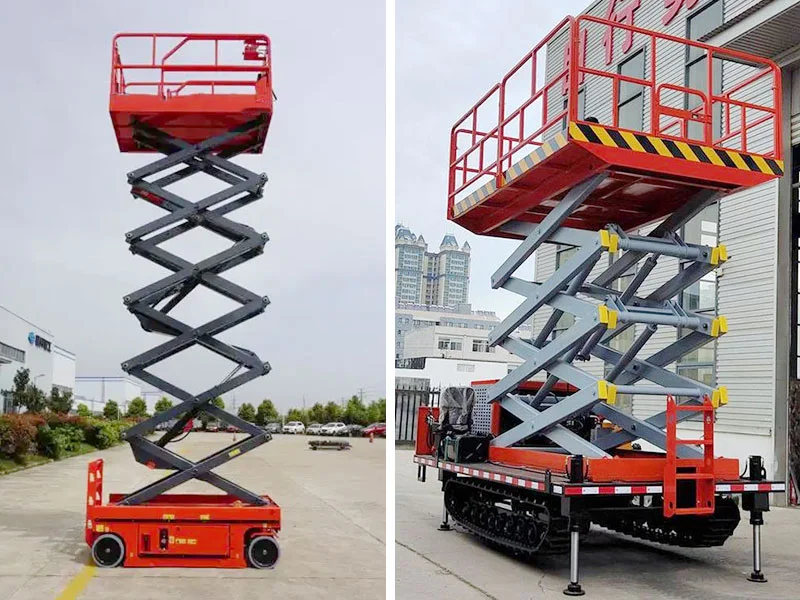
Rough Terrain (RT) scissor lifts are built for the challenging demands of outdoor construction sites, featuring powerful diesel or gasoline engines, robust 4-wheel drive systems, and massive, foam-filled or pneumatic tires. The requirement for extreme stability on uneven, sloped, and soft ground necessitates a much heavier, more robust construction, leading to a drastically higher scissor lift weight.
| Platform Height (Approx.) | Typical Scissor Lift Weight Range (lbs) | Key Features Influencing Weight |
| 26-33 Feet (Compact RT) | 7,500 – 10,000 | Diesel engine, larger tires, beefier steel, rudimentary 4WD system. |
| 40-53 Feet (Standard RT) | 12,000 – 16,000 | Full-sized diesel engine, heavy-duty chassis and axles, often includes outriggers and level sensors, all significantly adding to the scissor lift weight. |
| 60+ Feet (High-Capacity RT) | 18,000 – 22,000+ | Extreme structural reinforcement, very heavy counterbalance/ballast, and the inclusion of extensive hydraulic systems and larger platforms, resulting in the heaviest scissor lift weight class. |
When considering how much does a scissor lift weight in the rough terrain class, it’s clear the presence of a combustion engine, heavy-duty drivetrain, and massive steel structure are the main contributors, often doubling or tripling the weight of a scissor lift when compared to an indoor model of similar height.
Factors That Increase Scissor Lift Weight
When calculating the total load, it’s critical to remember that the listed scissor lift weight (the empty operating weight) is rarely the final figure you will encounter on a job site or transport vehicle. Several operational and structural factors will increase the total working weight of a scissor lift.
1. Fuel and Fluids
For rough terrain lifts, the engine, hydraulic, and fuel systems add considerable scissor lift weight.
- Diesel Fuel: Diesel is heavy. A full tank on a large RT lift can easily add several hundred pounds.
- Hydraulic Fluid: The hydraulic system—which powers the lift, steering, and outriggers—contains gallons of fluid, a substantial contributor to the overall gross scissor lift weight.
2. Batteries and Power Source
The power source is a major component of the weight of a scissor lift for both types.
- Electric Lifts: The deep-cycle lead-acid batteries in electric slab lifts are extremely heavy. The typical battery pack is composed of several large batteries, which act as both the power source and necessary counterbalance to stabilize the machine. These components significantly contribute to the overall empty scissor lift weight.
- Engine & Transmissions (RT Lifts): The internal combustion engine, radiator, and transmission on a rough terrain lift are made of dense metals and represent a massive increase in the base scissor lift weight compared to an electric motor.
3. Attachments and Accessories
Any non-standard equipment bolted onto the machine will increase the total operating scissor lift weight.
- Generators/Welders: Some lifts are equipped with on-board generators or welding units, adding substantial bulk and weight.
- Pipe Racks/Tool Trays: These are often used to carry materials, increasing the machine’s empty weight, though their primary impact is often on the total platform load.
- Outriggers: While integral to the safety of larger lifts, the heavy hydraulic outrigger systems and their associated steel components contribute significantly to the total empty weight of a scissor lift.
4. Operator, Tools, and Materials (The Maximum Capacity Factor)
While this doesn’t change the empty operating scissor lift weight, it determines the total load for transport and operation. You must always add the following to the empty scissor lift weight to determine the total gross weight:
- The Operator(s): Personnel weight must be included.
- Tools and Materials: The machine’s scissor lift weight capacity (the maximum weight the platform can hold) is the limit, but the actual materials (e.g., HVAC units, drywall, structural steel) being lifted must be added to the base scissor lift weight for transport calculations.
The total gross weight—empty machine weight plus maximum platform load—is the most critical figure for floor load and transport safety.
How to Find the Exact Weight of Your Scissor Lift
Generic ranges for how much does a scissor lift weight are useful for initial planning, but for final logistics and safety sign-off, you need the exact number. Never guess the weight of a scissor lift.
1. Check the Manufacturer’s Data Plate (The Most Reliable Source)
Every piece of heavy equipment is legally required to have a permanently affixed manufacturer’s data plate (also called a serial number plate or rating plate).
- Location: This plate is usually a metal tag located in a prominent, protected location on the chassis—often near the controls, on the base frame, or near the entry point.
- Key Information: This plate will explicitly list the machine’s Empty Weight (or Operating Weight) in both pounds (lbs) and kilograms (kg). It will also list the maximum scissor lift weight capacity (Platform Capacity) and the machine’s serial and model numbers. This is the most authoritative source for the scissor lift weight.
2. Consult the Owner’s or Operator’s Manual
If the data plate is obscured, damaged, or missing, the operator’s manual is the next best source. The manual’s Specifications section will contain a complete table of figures, including the exact weight of a scissor lift for that specific model and serial number range, as well as crucial dimensions.
Conclusion
Understanding how much does a scissor lift weight is fundamental to the safe, legal, and efficient operation of these vital pieces of aerial work platform equipment. The scissor lift weight can range dramatically, from a compact 1,800-pound electric slab model designed for indoor work to a colossal 22,000-pound rough terrain behemoth intended for heavy-duty outdoor construction.
Key takeaways for managing scissor lift weight include:
- Indoor vs. Outdoor: Electric slab lifts are lightweight to protect floors, while rough terrain lifts are massive to ensure stability and power.
- Logistical Must-Know: The empty operating scissor lift weight is essential for determining transport vehicle load limits and required permits.
- Safety First: The total gross weight (machine weight plus the scissor lift weight capacity being utilized) is critical for assessing floor load capacity and ground pressure to prevent accidents.
Always rely on the manufacturer’s data plate or the official operator’s manual for the precise empty operating weight of a scissor lift. Never estimate this figure, as the margin for error is simply too dangerous when dealing with such heavy machinery. This careful attention to detail ensures that your project stays safe, compliant, and on track.
FAQs
What is the average weight of a scissor lift?
There is no single average, but the weight generally falls into two broad categories: Electric Slab Lifts typically weigh between 1,800 and 8,000 pounds. Rough Terrain (RT) Lifts are significantly heavier, generally weighing between 7,500 and over 22,000 pounds. The single largest factor determining how much does a scissor lift weight is its maximum platform height and the type of engine/drivetrain it uses.
Does the weight of a scissor lift include the outriggers?
Yes, the manufacturer’s listed “Empty Weight” or “Operating Weight” for a rough terrain lift includes all permanently attached components, such as the engine, chassis, batteries, tires, and the fully assembled hydraulic outrigger system. The outriggers are a permanent, non-removable part of the overall structure and contribute significantly to the base scissor lift weight.
Why are electric scissor lifts so heavy if they don’t have an engine?
Electric scissor lifts are heavy primarily due to two components. First, the deep-cycle lead-acid batteries are extremely dense and heavy, often weighing hundreds of pounds. Second, this scissor lift weight from the batteries is intentionally placed low in the chassis to act as a counterbalance. This weight is crucial for stability, especially when the platform is fully extended and loaded with the maximum scissor lift weight capacity.
What is the difference between “empty weight” and “gross vehicle weight” for a scissor lift?
The Empty Weight (or Operating Weight) is the weight of the machine itself, exactly as it leaves the factory or rental yard (including full fluids/fuel/batteries). The Gross Vehicle Weight (GVW) is the total weight of the machine plus the maximum platform capacity (e.g., the combined weight of the operator, tools, and materials). When transporting the machine, you must use the Empty Weight plus the weight of any non-standard attachments. When calculating floor load, you must use the machine’s Empty Weight plus the actual load on the platform.
How much does a small, 19-foot scissor lift weigh?
A small, compact 19-foot electric slab scissor lift weight is typically in the range of 2,800 to 3,500 pounds (approximately 1,270 to 1,580 kg). This is the most common and lightest class of scissor lift weight, designed for easy maneuverability and minimal floor loading in interior spaces.