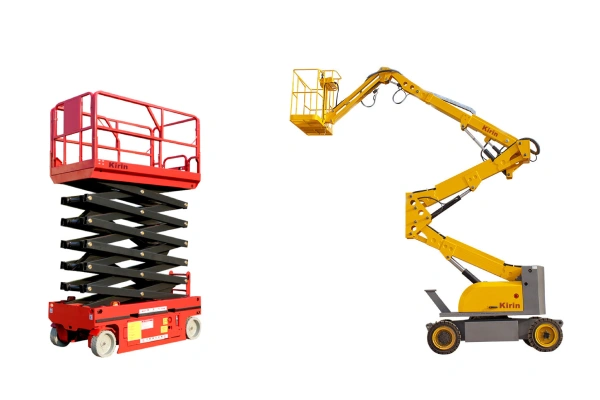
Operating a scissor lift efficiently is essential for keeping any construction or maintenance project on schedule. One of the most common questions fleet managers and operators ask is: how long does a scissor lift take to charge? Understanding the nuances of battery care, from the type of scissor lift battery charger you use to the environmental conditions on-site, can mean the difference between a productive workday and a machine that dies halfway through a shift. In this comprehensive guide, we will break down everything you need to know about charging times, maintenance, and best practices to ensure your equipment is always ready for the job.
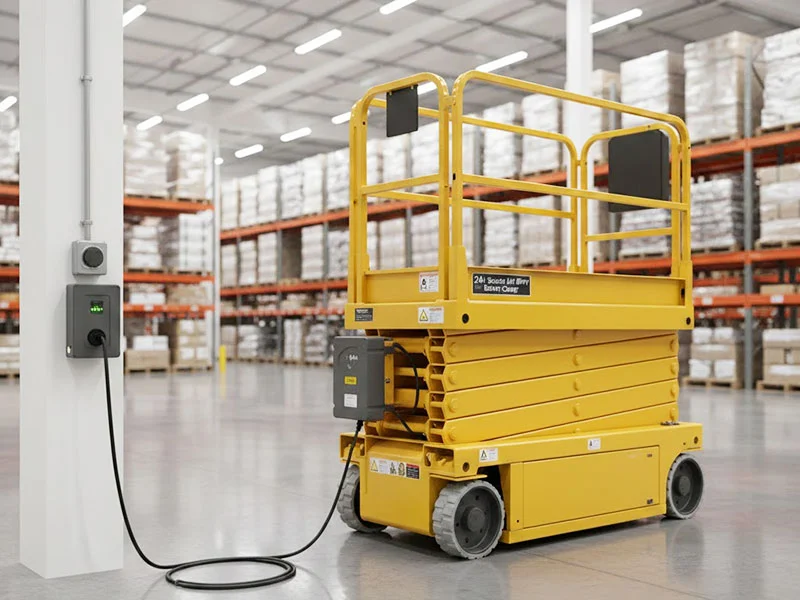
Electric scissor lifts are the backbone of indoor and flat-surface outdoor work. Unlike their diesel counterparts, they rely entirely on deep-cycle batteries to power both their drive motors and hydraulic lifting systems. Because these machines are often used for 8-hour shifts, the charging window usually occurs overnight. However, not all machines are the same. Whether you are using a standard 24 volt scissor lift battery charger or a newer lithium-ion system, knowing exactly how long does a scissor lift take to charge helps you plan your labor and equipment rotation effectively.
How Long Does It Take for a Scissor Lift to Charge?
On average, a standard electric scissor lift takes between 6 to 12 hours to reach a full charge. The wide range is due to several variables, including the depth of discharge and the age of the batteries.
Standard Charging Estimates
- Lead-Acid Batteries: These are the most common in the industry. For a typical 24V system, you should expect a charge time of 8 to 10 hours. It is generally recommended to charge them overnight.
- Lithium-Ion Batteries: Growing in popularity, these can often reach a full charge in just 2 to 4 hours. They also support “opportunity charging,” which allows you to plug them in during lunch breaks without damaging the battery.
- Partial vs. Full Charge: If you only have a few hours, a 24v scissor lift charger can often get the battery to 80% relatively quickly (within 4-5 hours), but that final 20% takes significantly longer due to the “absorption” phase of the charging cycle.
Scissor Lift Charging Steps
To ensure your battery lasts as long as possible, you must follow a specific sequence when using a battery charger for scissor lift units.
- Park on Level Ground: Always ensure the lift is on a flat, stable surface.
- Power Down: Turn off the machine and hit the emergency stop button on the base and the platform.
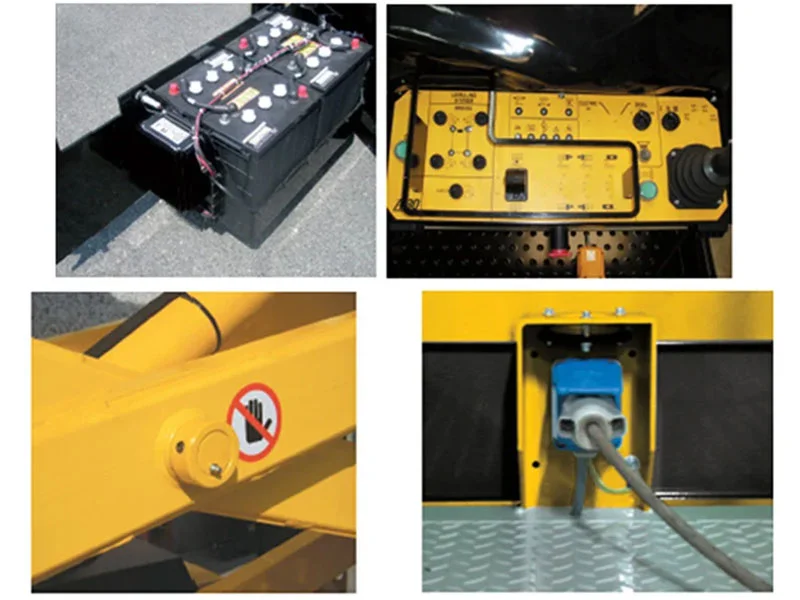
- Inspect the Charger: Check your scissor lift charger and cables for any signs of fraying, burns, or corrosion.
- Connect to Power: Plug the 24v battery charger for scissor lift into a dedicated AC outlet. Avoid using long or thin extension cords, as they can cause voltage drops that extend the time how long to charge a scissor lift.
- Monitor the Indicators: Most modern chargers have LED lights. A flashing light usually indicates charging, while a solid green light indicates the cycle is complete.
- Disconnect Safely: Once the scissor lift charge time is complete, unplug the AC cord first before moving the machine.
Factors That Influence Charging Time
If you find yourself asking why your machine is taking longer than 8 hours, consider these critical factors:
Battery Type and Capacity
A 24 volt scissor lift battery charger will take longer to charge a high-capacity (high Amp-hour) battery pack than a smaller one. Lead-acid batteries inherently take longer than lithium because they require a cooling and equalization phase.
Ambient Temperature
Extreme cold is the enemy of battery efficiency. In freezing temperatures, a battery’s internal resistance increases, which can extend the time how long does it take a scissor lift to charge by up to 30% or 50%. Conversely, extreme heat can cause the charger to throttle back its power to prevent the battery from overheating.
Depth of Discharge (DoD)
If you run your lift until it barely moves (90% discharged), the how long to charge scissor lift window will be much longer than if you plug it in at 30% remaining power. It is best practice to never let lead-acid batteries drop below 20%.
Charger Output
The amperage of your scissor lift battery charger matters. A 20-amp charger will naturally take twice as long as a 40-amp 24 volt charger for scissor lift to fill the same battery.
Understanding the Charging Cycle
To truly grasp how long do scissor lifts take to charge, you have to understand the three stages of a deep-cycle charging profile:
- Bulk Stage: The charger sends maximum current to the battery. This covers the first 80% of the charge and is the fastest part of the process.
- Absorption Stage: The voltage remains constant, but the current tapers off. This is where the battery “soaks up” the remaining 20%.
- Float/Finish Stage: The charger drops to a low voltage to maintain the charge without boiling the electrolyte. If you are using a 24v battery charger for scissor lift, this stage is crucial for preventing “sulfation,” which ruins batteries.
| Feature | Lead-Acid (Standard) | Lithium-Ion (Advanced) |
| Typical Charge Time | 8-12 Hours | 2-4 Hours |
| Opportunity Charging | Not Recommended | Highly Recommended |
| Cooling Period | Required (8 hours) | Not Required |
| Maintenance | High (Watering) | Zero |
How to Tell if Your Scissor Lift is Fully Charged
Don’t guess how long does a scissor lift take to charge—use the built-in indicators.
- LED Indicator Lights: Most 24 volt scissor lift charger units have a “State of Charge” (SoC) display.
- Red/Yellow: Charging in progress.
- Green: Fully charged and in float mode.
- Voltage Testing: If your indicator is broken, you can use a multimeter. For a 24V system, a fully charged pack should read approximately 25.4V to 26.2V when at rest.
- The “Amp Meter” Test: Some older chargers have an analog needle. When the needle drops near zero, the battery is effectively full.
Best Practices for Faster & Safer Charging
Want to minimize how long does it take to charge a scissor lift? Follow these pro tips:
- Use a Dedicated Circuit: Sharing an outlet with other heavy machinery can trip breakers or reduce the current available to your 24 volt scissor lift battery charger.
- Charge in a Ventilated Area: Lead-acid batteries release hydrogen gas during the final stages of charging. Proper airflow prevents gas buildup and helps keep the batteries cool, which speeds up the chemical reaction.
- Avoid “Short-Cycling”: For lead-acid systems, plugging and unplugging the machine multiple times a day (short-cycling) can actually lead to “battery memory” issues and decrease the overall lifespan. Stick to full overnight charges.
Maintenance Tips to Improve Battery Health
The health of your battery directly impacts how long does a scissor lift battery charge last.
- Check Water Levels Weekly: For flooded lead-acid batteries, ensure the plates are covered with distilled water. Never use tap water, as the minerals will shorten the battery life.
- Clean the Terminals: Corrosion (that white crusty stuff) acts as an insulator, making your scissor lift charger work harder and longer. Use a mix of baking soda and water to clean the terminals monthly.
- Equalization Charge: Once every 30 days, perform an equalization charge (if your charger supports it). This is a controlled overcharge that balances the cells and removes sulfate crystals from the plates.
Conclusion & Summary
So, how long does a scissor lift take to charge? For most users, the answer is an 8 to 10-hour overnight session. While lithium-ion technology is shortening this window significantly, the majority of the world’s fleet still relies on lead-acid batteries that require patience and proper care.
By using the correct 24 volt scissor lift charger, maintaining proper water levels, and avoiding extreme temperatures, you can ensure that your scissor lift charge time stays consistent and your batteries last for years. Remember, a well-charged lift is not just a matter of convenience—it’s a matter of safety and job site efficiency.
FAQs
Can I leave my scissor lift charging over the weekend?
Yes, if you are using a modern, “smart” scissor lift battery charger. These units automatically switch to a “float” or “maintenance” mode once the battery is full to prevent overcharging.
Why does my scissor lift die so fast even after a full charge?
This usually indicates a “dropped cell” or heavy sulfation. If the batteries are more than 3-5 years old, they may no longer be able to hold a charge, regardless of how long to charge scissor lift.
Can I use a regular car charger on my scissor lift?
No. A standard car charger is designed for 12V starting batteries. Most scissor lifts require a specific 24 volt scissor lift battery charger or 48V charger designed for deep-cycle applications.
Is it okay to charge a scissor lift that is only half-depleted?
For lithium-ion, yes. For lead-acid, it is better to wait until the battery is around 20-30% discharged to avoid “cycle counting” against the battery’s lifespan.
Does the age of the charger affect how long it takes to charge?
Definitely. An old or failing 24v scissor lift charger might not output the full rated amperage, significantly increasing how long does a scissor lift take to charge.