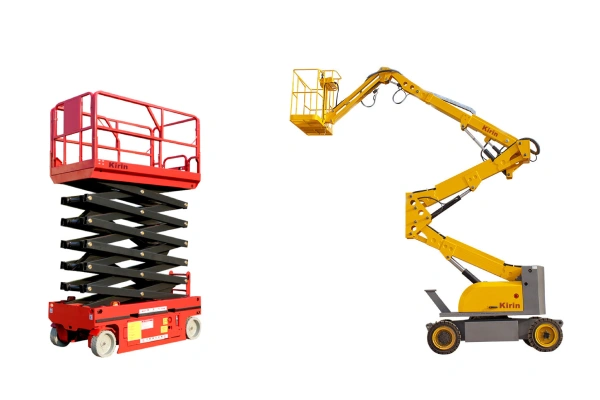
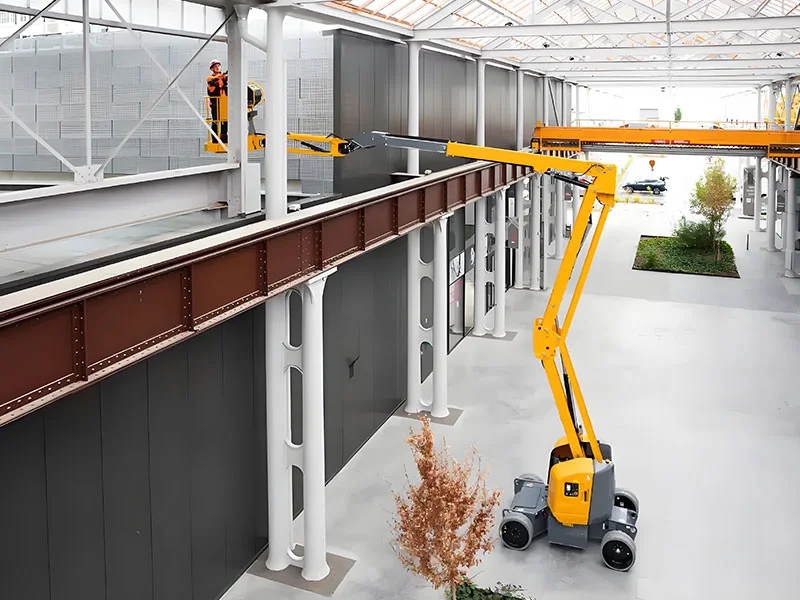
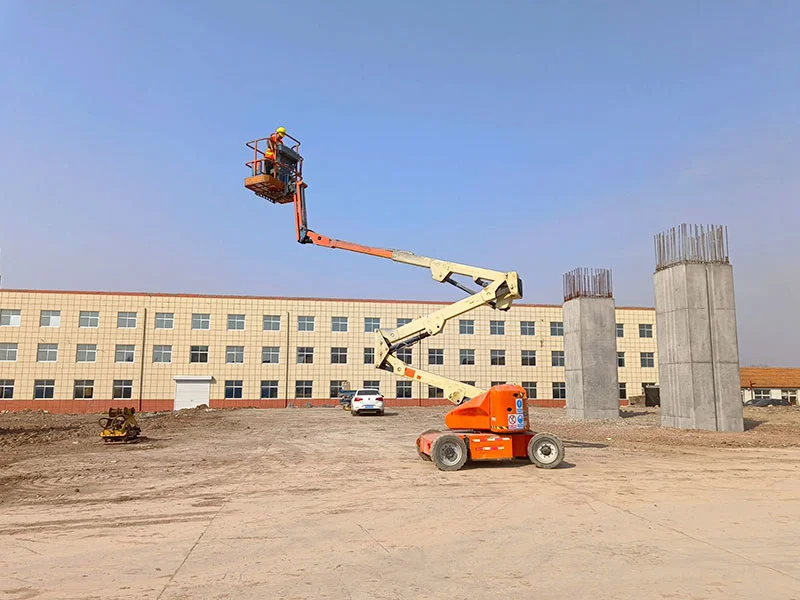
A hydraulic boom lift is a powerful piece of machinery used to elevate personnel and equipment to considerable heights. You’ve likely seen them on construction sites, during maintenance work, or even trimming trees. But have you ever wondered exactly how a hydraulic boom lift operates? The secret lies in its ingenious hydraulic system, which utilizes the principles of fluid power to provide impressive lifting capabilities. Let’s delve into the mechanics behind these versatile aerial work platforms.
The Core Principle: Pascal’s Law
At the heart of every boom lift hydraulic system lies Pascal’s Law. This fundamental principle of fluid mechanics states that pressure applied to an enclosed fluid is transmitted undiminished to every portion of the fluid and the walls of its container. In simpler terms, when force is applied to a confined fluid, that force is distributed equally in all directions. This is the magic that allows a relatively small force to be amplified into the immense lifting power of a hydraulic boom lift.
The Key Components
A hydraulic boom lift is made up of several critical parts that work together in harmony:
Fluid Reservoir: This tank holds the hydraulic fluid, typically a specialized oil, that powers the entire hydraulic system. It ensures a sufficient supply of fluid for the boom aerial lift to operate smoothly.
Pump: Driven by an engine or an electric motor, the pump draws hydraulic fluid from the reservoir and forces it into the hydraulic system, creating the pressure needed to lift the boom. Different types of pumps are used, but they all serve the essential function of generating hydraulic pressure.
Control Valves: These are the command center of the hydraulic boom lift. Operators use levers and switches that control these valves to direct the pressurized hydraulic fluid to specific hydraulic cylinders. This precise control allows for the raising, lowering, extending, and retracting of the boom.
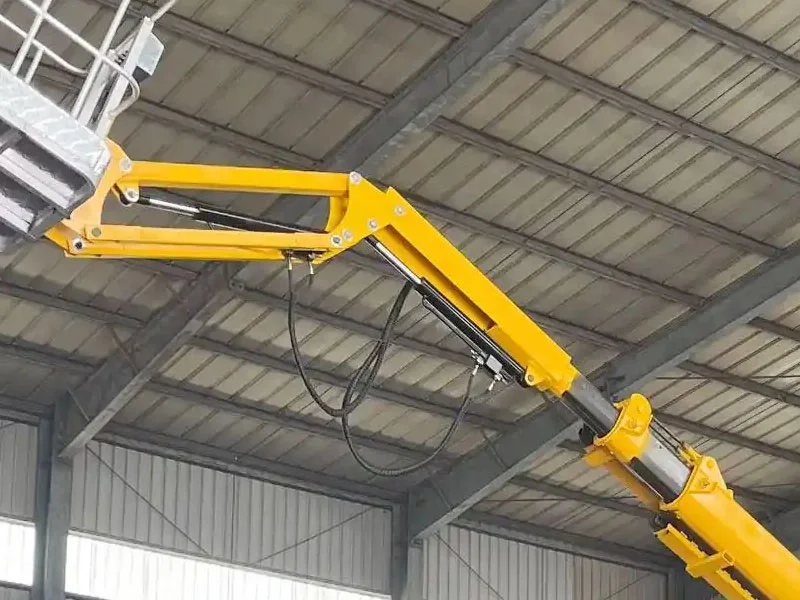
Hydraulic Cylinders: These are the workhorses of the boom lift hydraulic system. They consist of a piston moving within a cylinder. When pressurized hydraulic fluid is directed into the cylinder, it pushes against the piston, generating linear motion and force. These cylinders are strategically placed to control the various movements of the hydraulic boom lift’s arm and platform.
The Step-by-Step Process
The boom lift operation relies on a carefully orchestrated sequence:
- The operator engages the power source, which drives the hydraulic pump.
- The pump draws hydraulic fluid from the reservoir and pressurizes it.
- The operator manipulates the control valves to direct the pressurized fluid to the appropriate hydraulic cylinders.
- For example, to raise the boom, fluid is directed to the main lift cylinder, causing its piston to extend and lift the arm. Similarly, extending the telescopic sections of the boom involves directing fluid to other dedicated cylinders.
- The pressurized fluid exerts force on the pistons within the cylinders, resulting in the desired movement of the boom and platform.
- When the operator releases the controls, the valves redirect the fluid flow, often back to the reservoir, and the boom’s movement stops and is held in place by the hydraulic pressure.
Why Hydraulics Are Ideal for Boom Lifts
Hydraulic systems are the preferred choice for boom aerial lifts due to several key advantages:
- Power and Force Multiplication: As explained by Pascal’s Law, hydraulics allow for significant force amplification, enabling hydraulic boom lifts to lift heavy loads to great heights.
- Precise Control: The smooth and responsive nature of hydraulic fluid allows operators to have very fine control over the boom’s movements, which is crucial for safety and accuracy when working at height.
- Durability and Reliability: Hydraulic systems are generally robust and can withstand demanding conditions, making them suitable for the rigorous use often encountered by hydraulic boom lifts.
- Compactness: Compared to mechanical or pneumatic systems offering similar power, hydraulic components can be relatively compact, contributing to the overall design efficiency of the boom aerial lift.
Where Are Boom Lifts Used?
The versatility of the hydraulic boom lift makes it an indispensable tool in a wide range of industries and applications, including:
- Construction: Reaching high areas for building, painting, and installing materials.
- Maintenance: Inspecting and repairing bridges, buildings, and other structures.
- Utilities: Working on power lines, telephone cables, and lighting fixtures.
- Arboriculture: Trimming trees and accessing high branches safely.
- Warehousing: Accessing high shelves and performing inventory tasks.
- Entertainment: Setting up lighting and sound equipment for events.
Conclusion
The hydraulic boom lift is a marvel of engineering, relying on the elegant principles of hydraulics to provide safe and efficient access to elevated work areas. Understanding how its hydraulic system works, from Pascal’s Law to the function of its key components, provides a greater appreciation for the power and versatility of these essential machines. Whether it’s a boom lift hydraulic or another type of aerial work platform, the underlying hydraulic principles remain the same, enabling countless tasks to be performed safely and effectively at height.
FAQs
Q: Are hydraulic boom lifts safe?
A: Yes, when operated correctly and maintained regularly, hydraulic boom lifts are designed to be safe. They are equipped with various safety features, and proper operator training is crucial.
Q: What are the different types of boom lifts?
A: Common types include articulating boom lifts (knuckle booms), telescopic boom lifts (stick booms), and hybrid boom lifts, each suited for different applications and work environments.
Q: How high can a hydraulic boom lift reach?
A: The reach varies depending on the model, with some hydraulic boom lifts capable of reaching heights of over 100 feet.
Q: What maintenance is required for a hydraulic boom lift?
A: Regular maintenance includes inspecting fluid levels, checking for leaks, lubricating moving parts, and ensuring all safety features are functioning correctly, as outlined in the manufacturer’s guidelines.