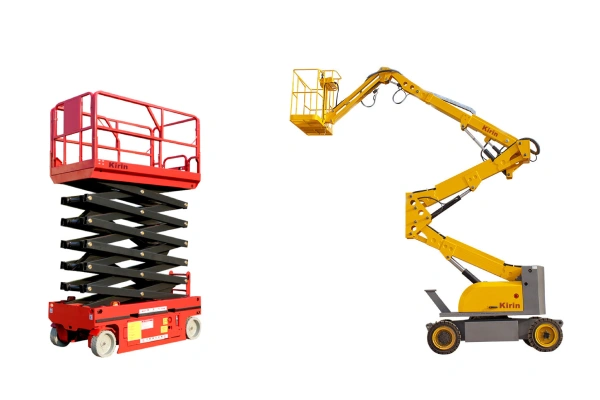
Choosing the right aerial work platform is a decision that can make or break your project’s timeline and budget. Whether you are managing a massive construction site or performing routine maintenance in a high-ceilinged warehouse, the debate usually boils down to two heavy hitters: electric models and diesel scissor lifts.
Both machines serve the same fundamental purpose—lifting personnel and equipment safely to high elevations—but their “DNA” is remarkably different. In this comprehensive guide, we will dive deep into the mechanics, benefits, and drawbacks of each to help you determine which machine deserves a spot on your job site.
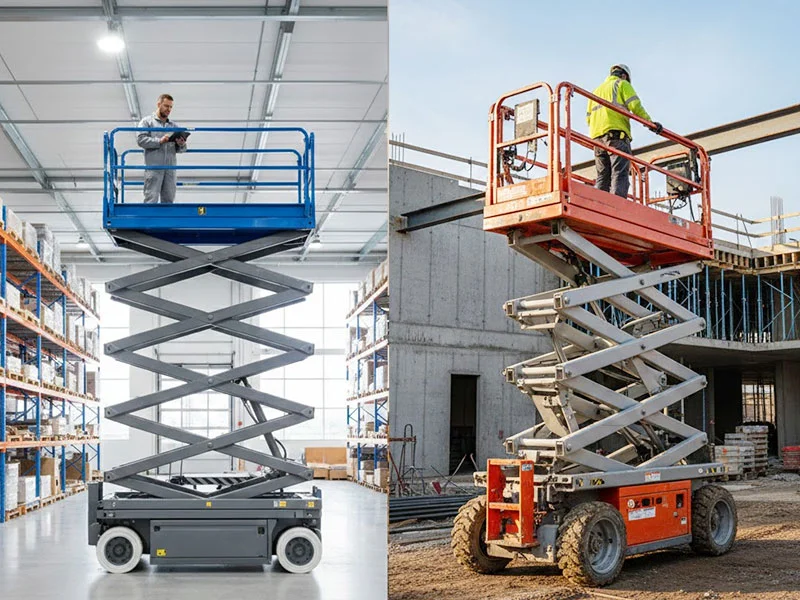
Scissor lifts are the unsung heroes of the industrial world. They provide a stable, spacious platform that allows workers to perform tasks that would be impossible or dangerous on a ladder. However, the power source of that lift—electricity or diesel fuel—dictates where the machine can go, how much it can carry, and how it impacts the surrounding environment.
As technology evolves, the lines between these two categories are blurring slightly, but the core distinction remains: one is built for finesse and indoor precision, while diesel scissor lifts are engineered for raw power and rugged environments.
Understanding Diesel Scissor Lifts: The Outdoor Powerhouse
When you think of a machine that can conquer mud, gravel, and steep inclines while carrying a crew of three and their heavy tools, you are thinking of diesel scissor lifts. These machines are the workhorses of the construction industry.
Built for the Elements
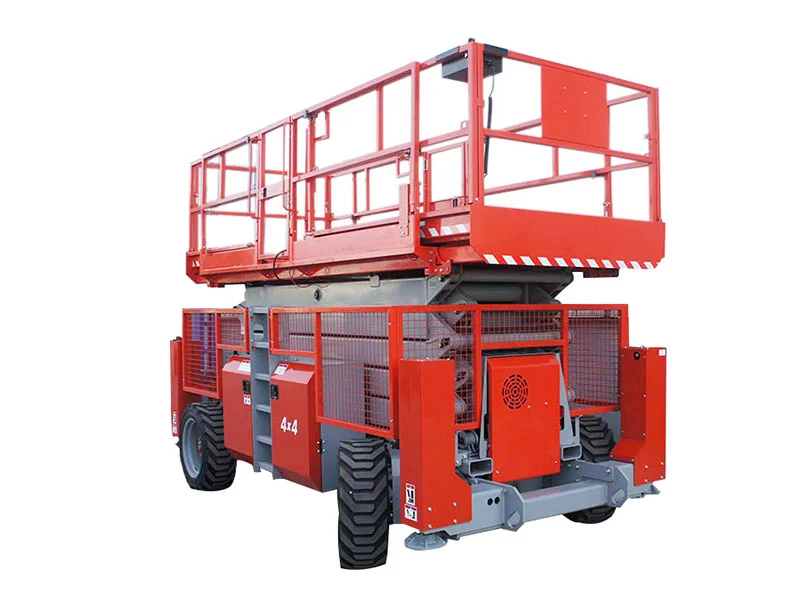
Diesel scissor lifts are almost exclusively designed for outdoor use. They are equipped with internal combustion engines that provide high torque, allowing them to navigate uneven terrain that would leave an electric model stuck in the mud. Most diesel scissor lifts feature “Rough Terrain” (RT) capabilities, including four-wheel drive, positive traction control, and oscillating axles.
Performance Without Borders
The primary advantage of diesel scissor lifts is their independence. Unlike electric models that require hours of charging at a power outlet, diesel scissor lifts can run indefinitely as long as you have a fuel canister on hand. This makes them indispensable for new construction sites where the electrical grid hasn’t been established yet. If your project involves heavy-duty tasks like installing exterior cladding or steel beams, the robust nature of diesel scissor lifts ensures you have the power you need to get the job done.
Understanding Electric Scissor Lifts: The Indoor Specialist
While diesel scissor lifts roar to life on the construction site, electric scissor lifts glide silently through warehouses, hospitals, and shopping centers. These machines are powered by deep-cycle battery packs and are the gold standard for indoor maintenance and finishing work.
Precision and Cleanliness
The most defining feature of an electric lift is its “non-marking” tires. Unlike the heavy-treaded tires found on diesel scissor lifts, electric lifts use smooth, light-colored rubber to ensure they don’t leave scuff marks on finished flooring like epoxy, tile, or polished concrete.
Compact and Efficient
Electric lifts are generally more compact than their diesel counterparts. They are designed to fit through standard doorways and navigate tight aisles. While they lack the raw horsepower of diesel scissor lifts, they offer a level of maneuverability and environmental friendliness that internal combustion engines simply cannot match.
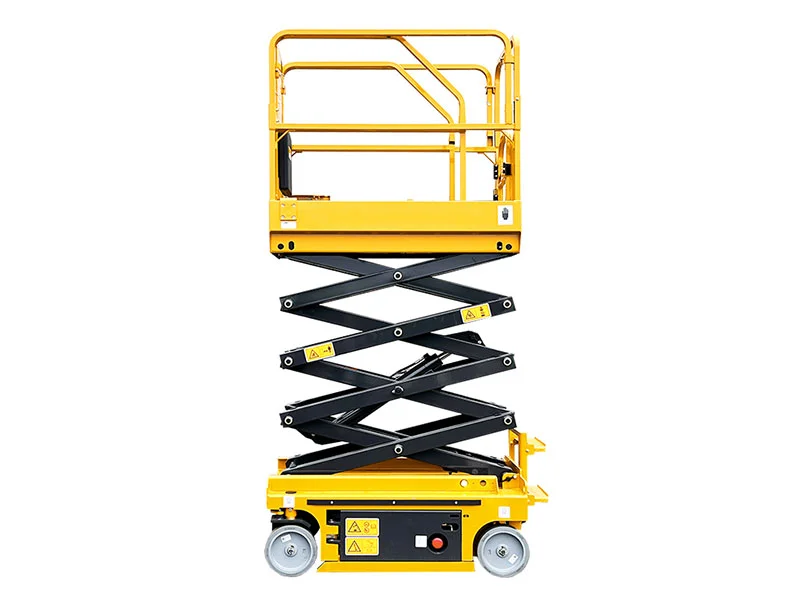
Diesel vs Electric Scissor Lift
To make an informed choice, we need to look at how these machines stack up side-by-side. While diesel scissor lifts and electric lifts share the same “scissor” mechanism for elevation, their operational profiles are worlds apart.
Similarities
At their core, both machines prioritize operator safety. Both types feature:
- Emergency Stop Buttons: Located both on the platform and at the ground control station.
- Tilt Sensors: Alarms that sound if the machine is on an unsafe incline.
- Safety Rails: Robust fall protection for everyone on the platform.
- Extendable Decks: Most models allow the platform to slide out for extra “reach” over obstacles.
Differences
The differences, however, are where the decision-making happens.
Differences in Noise Level
Noise is a critical factor, especially in urban environments or occupied buildings. Diesel scissor lifts are loud. The internal combustion engine generates a constant hum and a significant roar when the hydraulic system is engaged. This can make communication difficult on-site and is often prohibited in noise-sensitive areas like school zones or residential neighborhoods at night.
Conversely, electric lifts are nearly silent. This allows for better communication between the operator and the ground crew, enhancing overall site safety.
Height Range
In the world of vertical reach, diesel scissor lifts often take the crown. Because they have a larger base and more weight (providing a lower center of gravity), diesel scissor lifts can safely extend to much higher altitudes—sometimes reaching over 60 feet. Electric lifts typically top out around 30 to 45 feet, as their lighter frames are less suited for the wind caught at higher elevations.
Load Capacity
If you need to lift a pallet of bricks or a heavy HVAC unit, diesel scissor lifts are your best bet. They generally offer a significantly higher lift capacity. While a standard electric lift might be rated for 500–800 lbs, many diesel scissor lifts can easily handle 1,500 lbs or more.
Fumes
This is the “deal-breaker” for indoor work. Diesel scissor lifts emit carbon monoxide and other exhaust fumes. Using a diesel engine in a confined, poorly ventilated space is a major health hazard and a violation of OSHA standards. Electric lifts produce zero emissions, making them the only viable choice for indoor food processing plants, malls, or offices.
Size
Electric lifts are built for “slender” profiles. They can often be as narrow as 30 inches. Diesel scissor lifts, due to their engine housing and wide-base rough terrain tires, are much bulkier. A diesel model will rarely fit through a standard double door, let only a single one.
| Feature | Electric Scissor Lift | Diesel Scissor Lift |
| Primary Environment | Indoor / Flat Surfaces | Outdoor / Rough Terrain |
| Emissions | Zero | High (Exhaust Fumes) |
| Noise Level | Very Low | High |
| Tires | Non-marking | Rough Terrain / Lugged |
| Power Source | Battery (Requires Charging) | Diesel Fuel (Refillable) |
Critical Decision Factors (How to Choose)
When choosing between electric and diesel scissor lifts, ask yourself the following four questions:
1. Where is the work being performed?
If the answer is “inside an occupied building,” your choice is made: go electric. If the answer is “in a muddy field before the walls are up,” you need the 4WD capabilities of diesel scissor lifts.
2. Is there access to power?
Electric lifts need to be plugged into a 110V or 220V outlet for 6–10 hours to achieve a full charge. If your job site is remote and lacks a power grid, keeping an electric lift running will be a logistical nightmare involving portable generators. In this scenario, diesel scissor lifts are much more convenient.
3. How much weight are you lifting?
Calculate the combined weight of your workers, their tools, and the materials (like pipes or panels). If the total exceeds 1,000 lbs, you should lean toward the heavy-duty ratings of diesel scissor lifts.
4. What is the ground surface?
Electric lifts require a firm, level surface (concrete or asphalt). They have low ground clearance and can easily bottom out on uneven dirt. Diesel scissor lifts have high clearance and stabilizers (outriggers) that allow them to level themselves on slopes.
Maintenance and Total Cost of Ownership
The “true” cost of a machine isn’t just the rental or purchase price; it’s the maintenance required to keep it running.
Maintenance for Electric Lifts
Electric models have fewer moving parts than diesel scissor lifts. There are no oil filters, spark plugs, or coolant systems. However, the batteries are the “heart” of the machine. They require regular “watering” (distilled water topped up in the cells) and must be charged correctly to avoid “battery memory” issues. Replacing a full set of deep-cycle batteries can be quite expensive.
Maintenance for Diesel Scissor Lifts
Because they have an internal combustion engine, diesel scissor lifts require standard engine maintenance. This includes oil changes, air filter replacements, and fuel system checks. Furthermore, because diesel scissor lifts are used in harsher, dirtier environments, their hydraulic seals and chassis often require more frequent cleaning and lubrication to prevent premature wear from grit and mud.
In terms of fuel, the cost of diesel can fluctuate, whereas the cost of electricity is generally lower and more stable. However, for many contractors, the productivity gained by the power of diesel scissor lifts far outweighs the incremental cost of fuel.
Conclusion
In the battle of Electric vs. Diesel, there is no objective “winner”—only the right tool for the specific job.
Electric scissor lifts are the masters of the finished interior, offering quiet, fume-free operation and delicate handling for indoor maintenance. On the other hand, diesel scissor lifts are the undisputed kings of the construction site, providing the grit, power, and height necessary to tackle the toughest outdoor challenges.
If your project involves mud, heavy loads, and high altitudes, you cannot beat the reliability of diesel scissor lifts. But if you’re working in a library, a retail store, or a warehouse with pristine floors, the electric model is your best friend.
Before you make your final decision, evaluate your terrain, your weight requirements, and your ventilation. Choosing between electric and diesel scissor lifts is ultimately about matching the machine’s strengths to your project’s constraints.
Frequently Asked Questions
Can I use diesel scissor lifts indoors if I open all the windows?
Generally, no. Even with windows open, the accumulation of carbon monoxide can reach dangerous levels quickly. Some diesel scissor lifts can be fitted with scrubbers, but for indoor work, an electric or hybrid lift is almost always the required safety standard.
How long does the fuel last in diesel scissor lifts?
Most diesel scissor lifts have a fuel tank large enough to last for a full 8-to-10-hour shift of active use. Unlike electric lifts that might lose power toward the end of the day, diesel scissor lifts maintain 100% power until the tank is empty.
Are there “hybrid” scissor lifts?
Yes! Hybrid models are becoming more popular. They use a small diesel generator to charge the batteries, allowing the machine to work indoors on battery power and outdoors using the engine. They offer a “best of both worlds” solution but often come with a higher rental or purchase price than standard diesel scissor lifts.
Do I need a special license to operate diesel scissor lifts?
While you don’t need a driver’s license, OSHA requires that anyone operating diesel scissor lifts or electric lifts be “trained and authorized.” This involves both classroom learning and a practical evaluation on the specific type of machine you will be using.
Which type of lift is better for cold weather?
Diesel scissor lifts can sometimes struggle to start in extreme sub-zero temperatures without a block heater. Electric lift batteries also lose efficiency in the cold. However, for outdoor winter construction, the mechanical ruggedness of diesel scissor lifts usually makes them the preferred choice despite the cold-start challenges.