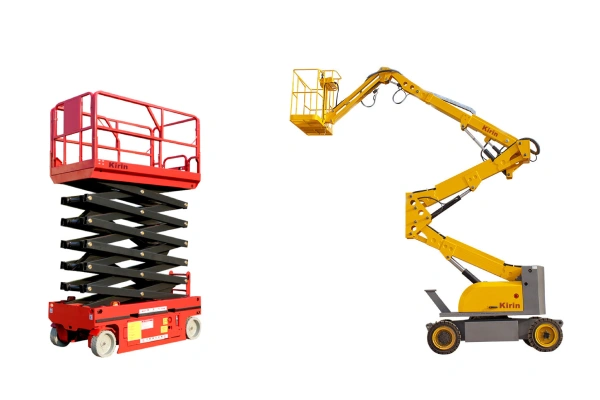
If you have ever looked up at a construction site or watched a utility crew repair a power line, you have seen a high-reach aerial platform in action. However, if you asked three different people what that machine is called, you might get three different answers. Is it a man-lift? A bucket truck? A boom lift? Or a cherry picker?
When it comes to the boom lift vs cherry picker debate, the terminology often gets blurred. In the world of heavy machinery, people tend to use these terms interchangeably, but for a project manager, a contractor, or a DIY enthusiast, knowing the technical and functional distinctions is vital. Choosing the wrong equipment can lead to wasted rental costs, inefficient workflows, or even safety hazards on the job site.
In this comprehensive guide, we will dive deep into the boom lift vs cherry picker comparison to help you understand their designs, their strengths, and exactly which one you need for your next project.
What is a Boom Lift?
A boom lift is a type of aerial work platform (AWP) designed to provide both vertical and horizontal reach. It is a heavy-duty piece of machinery used to hoist workers, tools, and materials to significant heights. Unlike a scissor lift, which only moves straight up and down, a boom lift is defined by its “boom”—a long, maneuverable arm that extends from a grounded base.
Types of Boom Lifts
To understand the boom lift vs cherry picker dynamic, you first have to recognize that “boom lift” is an umbrella category. There are two primary types:
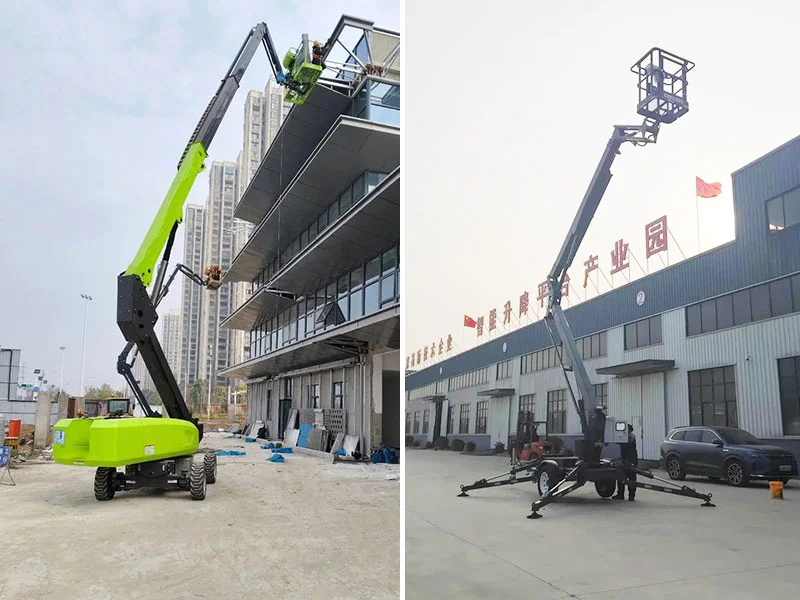
- Telescopic Boom Lifts (Stick Booms): These feature a straight, extendable arm. They are the best choice for maximum height and reaching areas that are far away horizontally, provided there are no obstacles in the path.
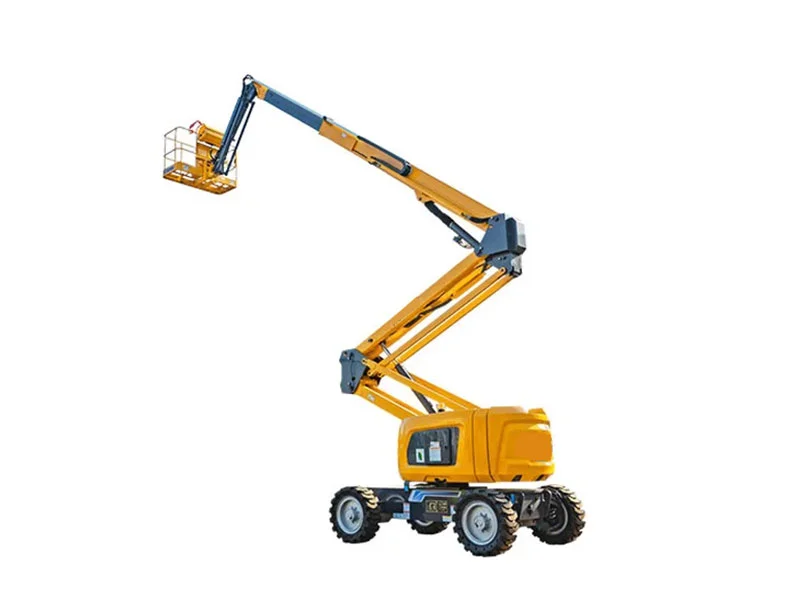
- Articulating Boom Lifts (Knuckle Booms): These have arms with multiple sections that “bend” like a finger or a knuckle. This allows the platform to “up and over” obstacles like walls, rooflines, or machinery.
Power Sources
Boom lifts are built for various environments. Electric boom lifts are common for indoor warehouse work because they are quiet and produce zero emissions. Diesel or Dual-Fuel boom lifts are the workhorses of outdoor construction sites, offering the torque needed to navigate rough terrain.
What is a Cherry Picker?
The term “cherry picker” has a much more specific (and literal) history than the broader “boom lift.” Originally, these machines were designed precisely for what the name suggests: harvesting fruit in orchards. Because fruit trees are dense and delicate, workers needed a way to reach the canopy without damaging the branches.
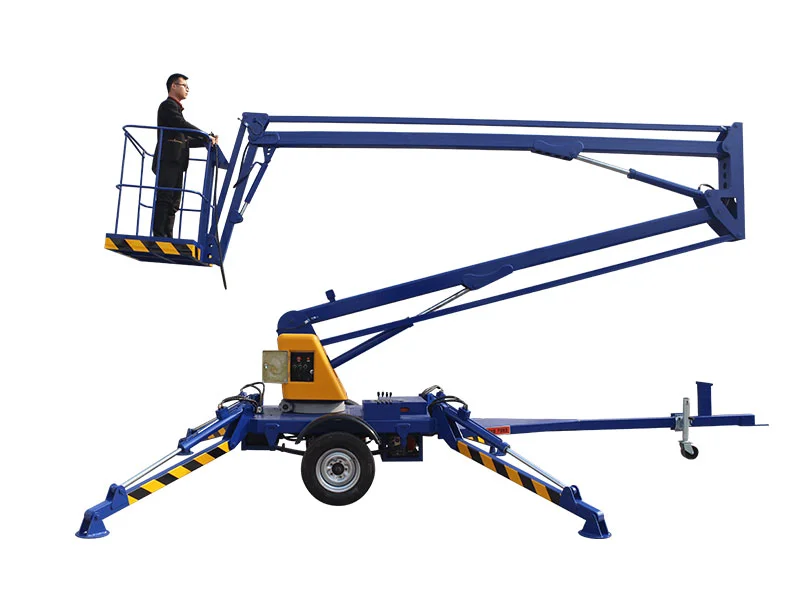
Today, when people discuss the boom lift vs cherry picker distinction, a “cherry picker” usually refers to a specific type of light-duty aerial lift, often mounted on a truck or a trailer (towable).
Characteristics of a Cherry Picker
- Simplicity: They generally have a simpler hydraulic arm than a heavy-duty industrial boom lift.
- Portability: Many cherry pickers are “tow-behind” units, meaning you can hitch them to a pickup truck and drive them to the site.
- Stability: Because they are lighter, they often utilize outriggers (stabilizing legs) to prevent the unit from tipping over while the arm is extended.
While some people use “cherry picker” as a slang term for any boom lift, in the rental industry, it usually implies a smaller, more mobile unit suitable for light maintenance or residential work.
Physical Design Similarities
Before we dissect the boom lift vs cherry picker differences, it is helpful to look at why people get them confused in the first place. Structurally, they share a common DNA:
- The Base: Both require a sturdy base to counteract the weight of the extended arm. This is either a heavy motorized chassis or a vehicle.
- The Arm (Boom): Both utilize a hydraulic lifting system that extends outward and upward.
- The Platform/Bucket: Both feature a secure area for a worker to stand, equipped with safety railings and attachment points for harnesses.
- Control Systems: Most modern versions of both machines allow the operator to control movements directly from the platform.
Because they both solve the problem of “getting a human into the air,” the boom lift vs cherry picker distinction often feels like a matter of scale and specialized utility rather than a completely different technology.
Key Differences: Boom Lift vs. Cherry Picker
To make the right choice for your project, you need to look past the similarities. Here is the breakdown of the boom lift vs cherry picker comparison across several key categories.
1. Reach and Flexibility
The most significant difference in the boom lift vs cherry picker comparison is the range of motion.
- Boom Lifts (specifically articulating models) offer “up and over” capabilities. They can reach heights of up to 180 feet and can navigate around complex steel structures.
- Cherry Pickers typically have a more limited range, usually topping out around 30 to 50 feet. They are designed for “point A to point B” reaching rather than navigating complex 3D spaces.
2. Weight and Footprint
- Boom Lifts are incredibly heavy. An industrial boom lift doesn’t need outriggers because the base itself is weighted with massive counterweights. This makes them great for driving while extended, but they can damage soft turf or indoor flooring.
- Cherry Pickers are often lighter. Towable versions are designed to be moved by standard vehicles. Because they lack the massive counterweight of a dedicated boom lift, they almost always require outriggers to be deployed before the lift can go up.
3. Terrain Capability
In the boom lift vs cherry picker battle for the outdoors, the boom lift often wins. Industrial boom lifts are frequently equipped with 4WD, oscillating axles, and foam-filled “lug” tires designed for mud and rocky construction sites. Cherry pickers, especially truck-mounted ones, are generally restricted to flat, paved, or firm surfaces.
1. Comparison Table: At a Glance
| Feature | Boom Lift (Industrial) | Cherry Picker (Towable/Truck) |
| Max Height | Up to 180+ ft | Typically 30–60 ft |
| Mobility | Self-propelled (can drive from basket) | Must be towed or driven as a vehicle |
| Footprint | Compact but very heavy | Large (due to outriggers) |
| Best For | Construction, High-reach industrial | Utilities, Landscaping, DIY |
| Obstacle Clearing | Excellent (Articulating models) | Moderate |
When to Choose a Boom Lift
If your job requires brute force, extreme height, or navigating a “forest” of steel beams, the boom lift vs cherry picker decision tips heavily toward the boom lift.
Industrial Construction
On a new build, you often need to reach the fourth or fifth floor of a structure before the stairs are even installed. A telescopic boom lift provides the “straight-shot” reach needed to hoist cladding or glazing materials to these heights.
High-Density Warehousing
For indoor maintenance in massive distribution centers, an electric articulating boom lift is the gold standard. Its ability to fold its arm allows it to navigate narrow aisles and reach over shelving units to repair lighting or sprinkler systems.
Rough Terrain Work
If the ground hasn’t been paved yet, a cherry picker will likely get stuck. A 4WD diesel boom lift is designed specifically for these “first-phase” construction environments. When comparing boom lift vs cherry picker for a site with nothing but dirt and rocks, the boom lift is the clear winner.
When to Choose a Cherry Picker
The “cherry picker” name persists because these machines are perfect for “delicate” or “mobile” tasks. In the boom lift vs cherry picker debate, the cherry picker wins on convenience and cost-efficiency for smaller-scale jobs.
Utility and Telecommunications
You’ve likely seen “bucket trucks” fixing power lines after a storm. These are essentially truck-mounted cherry pickers. They allow a crew to drive to a location, deploy the lift, fix the wire, and move to the next pole in minutes.
Tree Trimming and Landscaping
For arborists, the boom lift vs cherry picker choice is easy. A towable cherry picker can be parked on a driveway, stabilizing itself with outriggers, to allow a worker to trim branches overhanging a house. Its lighter weight is less likely to crack a residential driveway compared to a 20,000-pound industrial boom lift.
Home Maintenance and Signage
If you need to paint a two-story house or install a sign on a storefront, renting a full-scale articulating boom lift is overkill. A towable cherry picker is much more affordable and can be picked up with a standard hitch, saving you significant delivery fees.
Safety Considerations for Both
Regardless of where you land in the boom lift vs cherry picker selection process, safety is the most important factor. Both machines involve working at heights, which carries inherent risks.
Fall Protection
In both a boom lift and a cherry picker, the operator must wear a full-body harness with a lanyard attached to an approved anchor point in the basket. Unlike scissor lifts (where railings are often considered sufficient), the “catapult effect” in a boom-style lift can eject an operator if the base hits a bump or a curb.
Ground Conditions
In the boom lift vs cherry picker comparison, stability is achieved differently.
- For boom lifts, you must ensure the ground can support the massive “ground bearing pressure” of the tires.
- For cherry pickers, you must ensure the outriggers are set on firm, level ground using spreader pads to prevent them from sinking into the soil.
Overhead Obstructions
Before operating either machine, a “walk-around” is mandatory. Look for power lines! Electrocution is a leading cause of fatalities in aerial lift accidents. Always maintain a minimum distance of 10 feet from overhead power lines unless you are a qualified utility worker.
The Cost Factor: Boom Lift vs. Cherry Picker
Budget often dictates the final decision. Generally speaking, a boom lift is more expensive to rent and operate.
- Rental Rates: A large articulating boom lift can cost significantly more per day than a towable cherry picker.
- Transportation: Because boom lifts are so heavy, they require a flatbed semi-truck for delivery. A cherry picker can often be towed by the user, eliminating delivery fees that can range from $100 to $500.
- Fuel/Power: Large diesel booms consume more fuel than the small engines or electric batteries found in most cherry pickers.
When weighing boom lift vs cherry picker, ask yourself: “Am I paying for more machine than I actually need?” If a cherry picker can reach the target, it will almost always be the more budget-friendly option.
Conclusion
The choice of boom lift vs cherry picker isn’t about which machine is “better”—it’s about which tool is right for the specific environment.
- Choose a Boom Lift if you are working on a heavy-duty construction site, need to reach heights above 60 feet, or need to navigate over complex obstacles without moving the base of the machine.
- Choose a Cherry Picker if you need mobility between multiple sites, are working on a residential property, or have a straightforward task like tree trimming or light maintenance.
Understanding the nuances of boom lift vs cherry picker ensures that your project stays on schedule, within budget, and, most importantly, safe for everyone involved. By identifying your height requirements, terrain type, and budget constraints, you can confidently select the aerial platform that will get the job done right.
FAQs
Is a cherry picker considered a boom lift?
Technically, yes. A cherry picker is a sub-type of boom lift. However, in the industry, “boom lift” usually refers to self-propelled industrial machines, while “cherry picker” refers to vehicle-mounted or towable units.
Do I need a license to operate a boom lift vs cherry picker?
In many regions, you don’t need a “driver’s license” for the lift itself, but OSHA (in the US) and similar bodies elsewhere require “authorized” and “trained” operators. Most rental companies offer a short certification course.
Can a boom lift be used as a crane?
No. This is a dangerous misconception. Neither a boom lift vs cherry picker is designed to lift external loads hanging from the basket. They are designed to lift personnel and their hand tools only.
Which is safer: boom lift vs cherry picker?
Both are safe when used according to the manufacturer’s guidelines. The primary risks for boom lifts are tip-overs on uneven ground, while the primary risks for cherry pickers involve improper outrigger deployment.
Can I drive a boom lift while the basket is raised?
Most industrial boom lifts allow you to “creep” or drive at slow speeds while extended. However, most cherry pickers (especially towable ones) must be fully lowered and their outriggers retracted before they can be moved.