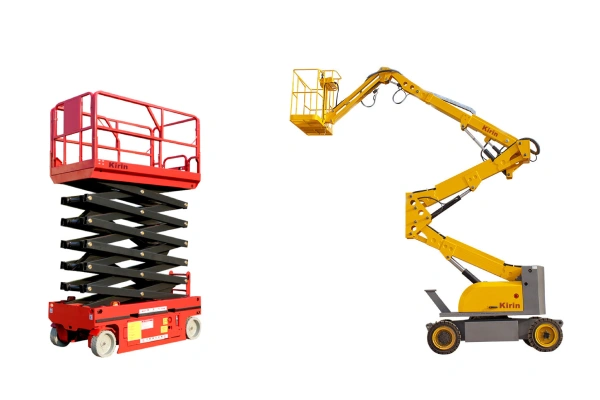
When it comes to high-altitude work, whether you’re repairing power lines after a storm or painting the exterior of a modern skyscraper, the boom lift truck is an indispensable asset. Often referred to as a cherry picker or a bucket truck, this versatile piece of machinery combines the mobility of a commercial vehicle with the vertical reach of a crane.
However, operating a boom lift truck is not as simple as getting behind the wheel. It requires a deep understanding of the machine’s mechanics, an awareness of its physical limits, and a strict adherence to modern safety protocols. In this comprehensive guide, we will break down everything you need to know about the boom lift truck to ensure your next project is both efficient and safe.
What Is a Boom Lift Truck?
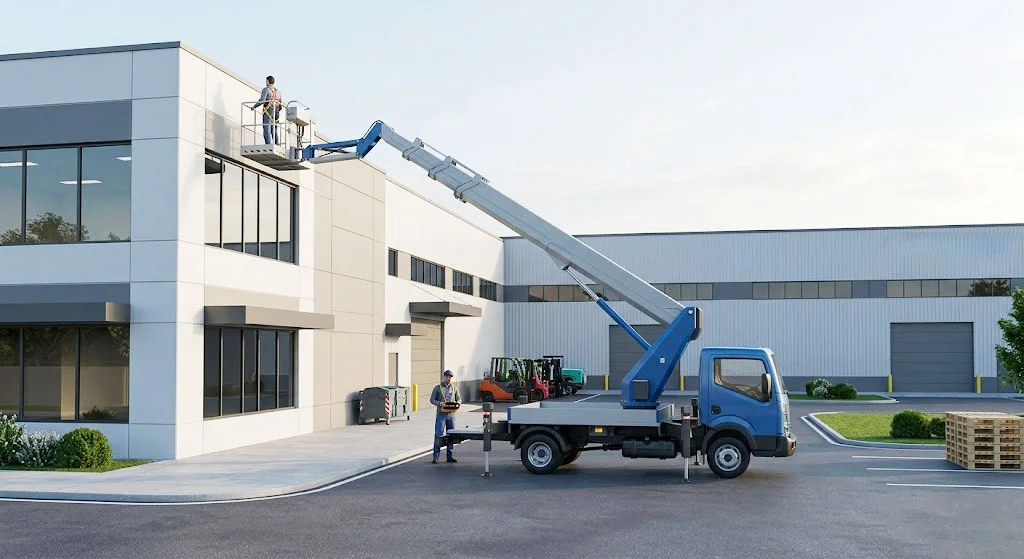
A boom lift truck is a specialized utility vehicle equipped with a hydraulic lifting mechanism (the boom) and a personnel platform (the basket). Unlike stationary aerial lifts, a truck mounted boom lift is integrated directly onto a truck chassis, allowing it to travel at highway speeds between job sites. Its primary function is to safely elevate workers, tools, and materials to heights that are otherwise inaccessible by ladders or scaffolding.
Main Components of a Boom Lift Truck
To understand how a boom lift truck operates, you must be familiar with its five core components:
- Platform/Basket: The reinforced enclosure where the operator stands. Modern platforms are equipped with tie-off points for safety harnesses and often feature auxiliary power outlets for tools.
- Hydraulic Arm (The Boom): The “muscle” of the machine. This arm can be a single straight section or a series of jointed sections that extend and retract using high-pressure hydraulic fluid.
- Truck Chassis: The vehicular base that supports the entire lifting apparatus. The weight and wheelbase of the chassis are critical for counterbalancing the weight of the extended boom.
- Control Systems: Boom lift trucks typically feature dual controls—one set in the basket for the worker and a secondary set at the base for ground-level emergency overrides.
- Stabilizers/Outriggers: These are extendable legs that provide a wider footprint. They take the weight off the tires and prevent the boom lift truck from tipping when the arm is extended horizontally.
Common Types of Boom Lift Trucks
Not every boom lift truck is built for the same task. Depending on your reach requirements, you will likely choose one of these three:
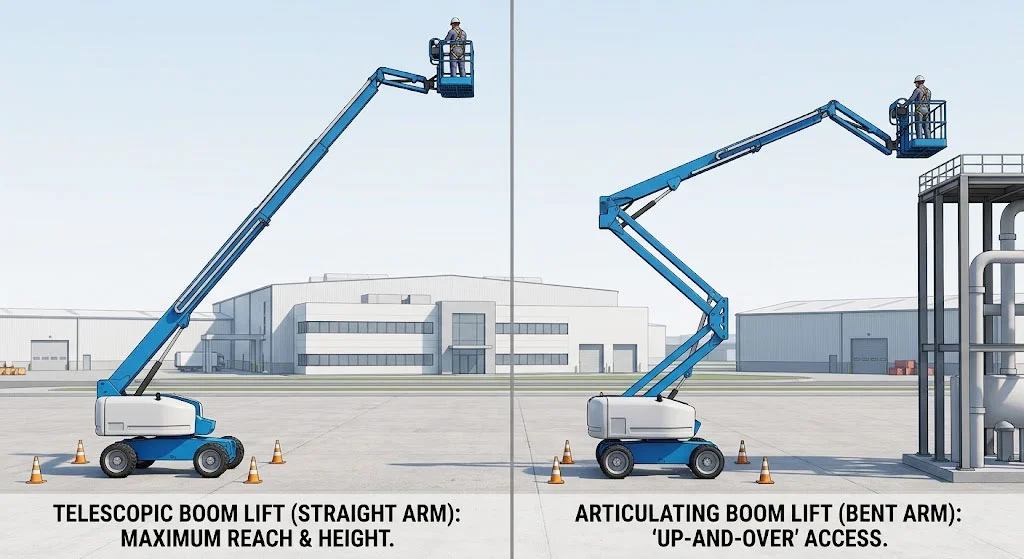
- Telescopic Boom Lift Trucks: Known as “straight booms,” these extend outward and upward in a single line. They offer the greatest horizontal reach and are perfect for work on bridges or tall buildings where you have plenty of clearance.
- Articulating Boom Lift Trucks: Also called “knuckle booms,” these have multiple joints that allow the arm to “bend” over obstacles. These are ideal for reaching over rooftops or working in congested industrial plants.
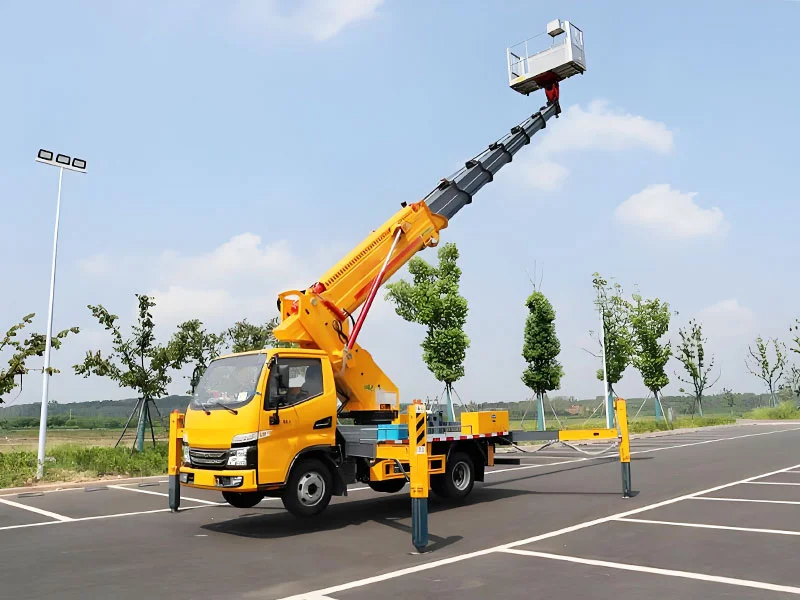
- Truck-Mounted Boom Lifts: These are the most common for utility and municipal work. Because the lift boom truck is built onto a standard truck frame, it provides maximum mobility for crews moving through city streets.
What Can a Boom Lift Truck Do?
Reach High and Hard-to-Access Areas
The most obvious capability of a boom lift truck is its reach. With some industrial models reaching heights of over 150 feet, these machines allow workers to perform precision tasks on cell towers, wind turbines, and high-rise facades that would be impossible with traditional methods.
Improve Worker Safety at Height
Before the widespread use of the boom lift truck, workers relied on ladders or precarious scaffolding. A boom lift bucket truck provides a stable, fenced-in environment. According to 2026 OSHA standards, the integration of guardrails and fall-arrest systems within the basket significantly reduces the risk of gravity-related workplace fatalities.
Increase Efficiency on Job Sites
Time is money. A truck mounted boom lift can be positioned, stabilized, and extended in a matter of minutes. This eliminates the hours required to build scaffolding, allowing teams to complete maintenance tasks and move to the next location rapidly.
Handle Multiple Industry Applications
The versatility of boom lift applications is staggering. You will find them in:
- Utilities: Repairing power lines and transformers.
- Construction: Installing HVAC systems or exterior glazing.
- Film & Media: Positioning cameras and lighting for overhead shots.
- Arboriculture: Safe tree trimming and removal.
Operate on Different Terrain Types
- Indoor vs. Outdoor Models: Indoor models are often electric-powered with non-marking tires to protect warehouse floors.
- Rough Terrain Capabilities: Outdoor-specific boom lift trucks feature 4-wheel drive, oscillating axles, and heavy-duty tires designed to navigate mud, gravel, and uneven construction sites.
What a Boom Lift Truck Cannot Do
While powerful, the boom lift truck has distinct physical and mechanical boundaries.
Lift Excessive Loads
A boom lift truck is designed for personnel, not heavy cargo. Each basket has a strictly defined weight capacity (usually between 500 and 1,000 lbs). This includes the worker, their tools, and any replacement parts. Overloading the basket can lead to structural failure or a tip-over.
Replace Cranes for Heavy Material Lifting
It is a common mistake to use a lift boom truck as a makeshift crane. These machines are not designed to “side-load” or hoist heavy beams from the exterior of the basket. Doing so shifts the center of gravity dangerously and can snap the boom.
Operate Safely in Extreme Weather
Wind is the natural enemy of the boom lift truck. Most manufacturers prohibit operation in winds exceeding 28 mph (45 km/h). High winds turn the platform into a sail, creating enough force to tip the truck even if the outriggers are deployed.
Work Effectively on Unsafe Ground Conditions
A boom lift truck is only as stable as the ground beneath it. It cannot be used on soft mud, uncompacted fill, or steep slopes without specialized cribbing or plates. If the outriggers sink, the boom will lean, often resulting in a catastrophic collapse.
Reach Every Space
While articulating models are flexible, they still have a “dead zone” directly beneath the boom and a minimum turning radius. They cannot navigate through standard doorways or extremely narrow corridors unless you are using a specialized “atrium lift” variant.
Key Safety Tips for Using a Boom Lift Truck
Safety in 2026 has moved toward a “zero-incident” framework. To keep your crew safe, follow these non-negotiable rules.
Perform Pre-Operation Inspections
Every shift must begin with a documented walk-around of the boom lift truck.
- Hydraulic Systems: Check for leaks, frayed hoses, or low fluid levels.
- Tires and Outriggers: Ensure tires are at the correct PSI (if pneumatic) and outriggers show no signs of structural bending.
- Emergency Controls: Test the ground controls to ensure they can override the basket controls in case the operator becomes incapacitated.
Follow Manufacturer Load Limits
Always consult the load chart located inside the basket. Remember that “capacity” decreases as the boom extends further horizontally. If you are at full extension, your allowable weight is significantly lower than when the boom is vertical.
Use Proper Fall Protection Equipment
In a boom lift truck, a guardrail is not enough. OSHA requires the use of a full-body harness with a short lanyard attached to a designated anchor point. This prevents “the catapult effect,” where a sudden jolt (like driving over a curb) can launch an unattached worker out of the basket.
Train Operators Properly
Only “Qualified Persons” should operate a boom lift truck. Modern certification now involves both classroom theory and hands-on evaluation. In 2026, many companies are also utilizing VR (Virtual Reality) simulators to train operators on how to handle emergency “tip-over” scenarios without actual risk.
How to Choose the Right Boom Lift Truck
Consider Working Height Requirements
- Maximum Platform Height: This is the height of the basket floor. Remember to add 6 feet for “working height” (the height the worker’s hands can reach).
- Horizontal Outreach: If you need to reach over a swimming pool or a busy highway, horizontal reach is more important than vertical height.
Evaluate Job Site Conditions
Before looking at a boom lift truck for sale, assess your terrain. Will you be on finished concrete (Electric) or a muddy construction site (4WD Diesel)? Are there overhead power lines? (Note: You must maintain a minimum 10-foot clearance from energized lines).
Compare Power Options
- Diesel-powered boom lift trucks: Best for outdoor use, offering high torque and the ability to run 24/7 with simple refueling.
- Electric boom lift trucks: Ideal for indoor use or “green” zones where noise and emissions are prohibited.
- Hybrid models: The growing trend for 2026, these use a small engine to charge batteries, offering the best of both worlds.
Understand Maintenance Needs
A boom lift truck mounted on a chassis requires two types of maintenance: automotive (engine, brakes, tires) and aerial (hydraulics, structural pins, load sensors). Ensure you have a service partner who can handle both.
Common Mistakes to Avoid
- Driving with the Boom Elevated: Unless the manufacturer specifically states otherwise, the boom should be stowed before the truck is moved.
- Using the Boom as a Jack: Never use the boom to push or pull objects; it is a lifting device, not a lever.
- Bypassing Safety Sensors: Modern truck mounted boom lifts have tilt and load sensors. Never “jump” these circuits to get a few extra feet of reach.
- Climbing on the Rails: Always keep both feet firmly on the floor of the basket. If you can’t reach it, you need a bigger boom lift truck.
Conclusion
The boom lift truck is a marvel of modern engineering that has revolutionized how we interact with the vertical world. By understanding the specific capabilities of different models—from the reach of a telescopic boom to the agility of an articulating arm—you can select the right tool for any job. However, the power of a boom lift truck comes with the responsibility of rigorous safety and maintenance.
Whether you are looking for a boom lift truck for sale to expand your fleet or renting a truck mounted boom lift for a one-time project, always prioritize operator training and site inspection. If you have questions about selecting the right model or need technical specifications for your next project, the experts at Kirin Lift are here to help. Contact us today at Email: info@klingtec.com or message us via WhatsApp: +86 188 6686 3188 to find the perfect aerial solution for your needs.
FAQs
Can I drive a boom lift truck on a standard driver’s license?
It depends on the Gross Vehicle Weight Rating (GVWR) of the truck. Many smaller boom lift bucket trucks can be driven with a standard license, but larger industrial models may require a Commercial Driver’s License (CDL).
How often does a boom lift truck need to be inspected?
Beyond daily pre-shift inspections, ANSI and OSHA require a “frequent inspection” every 3 months or 150 hours of use, and an “annual inspection” every 12 months.
What is the difference between a man lift and a boom lift?
“Man lift” is a generic term for any aerial platform. A boom lift truck is a specific type of man lift that uses a hydraulic arm to provide both vertical and horizontal reach, whereas something like a scissor lift only moves vertically.
Are there electric truck-mounted boom lifts?
Yes. While traditionally diesel-dominant, the 2026 market has seen a surge in fully electric and hybrid boom lift truck mounted options to meet stricter urban emission standards.