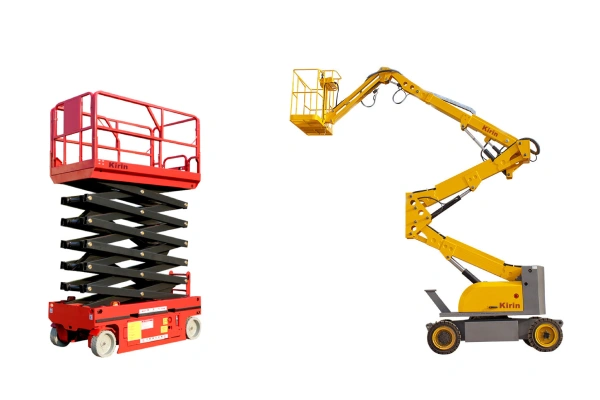
Operating an aerial lift requires a strict commitment to safety, precision, and regulatory compliance. Whether you are managing a busy construction site, overseeing an industrial facility, or operating heavy machinery yourself, maintaining equipment integrity is non-negotiable.
According to the Occupational Safety and Health Administration (OSHA), mechanical failures and operator errors are leading causes of aerial work platform accidents. A comprehensive boom lift inspection checklist serves as your first line of defense, ensuring that potential mechanical issues are identified and resolved before the equipment ever leaves the ground.
This guide provides an exhaustive breakdown of OSHA-compliant inspection protocols, practical field templates, and best practices to keep your job site safe and legally compliant.
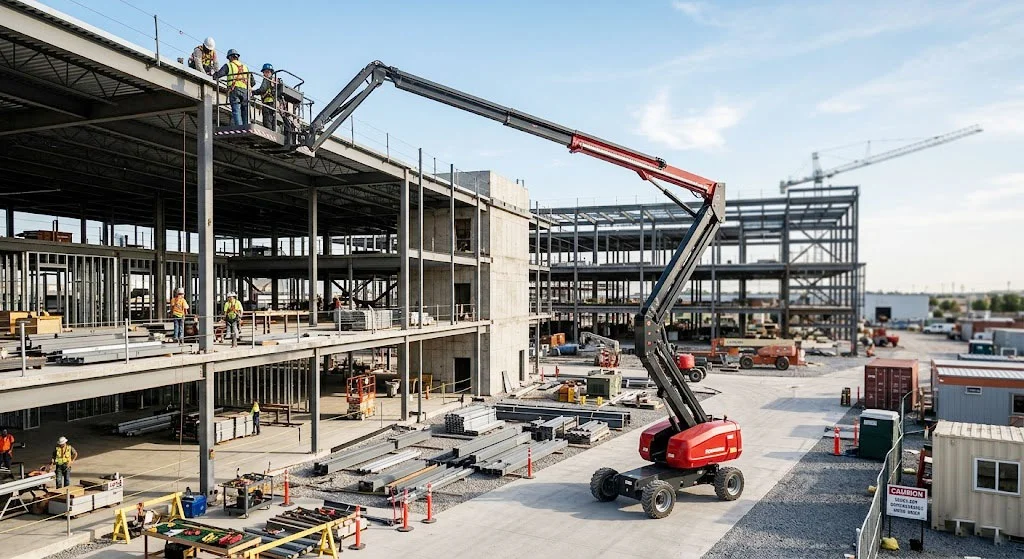
What Is a Boom Lift Inspection Checklist?
A boom lift inspection checklist is a standardized, step-by-step document used by operators and maintenance technicians to verify the structural, mechanical, electrical, and functional safety of an aerial boom lift.
Rather than relying on memory or a casual walk-around, this checklist provides a systematic framework to examine every critical component of the machine. It transitions the inspection from a vague safety recommendation into an actionable, verifiable protocol. A properly executed checklist documents the exact condition of the machinery, establishing accountability and providing an administrative paper trail that proves your company is actively meeting safety mandates.
Why OSHA Requires Boom Lift Inspections
OSHA does not view equipment inspections as optional administrative tasks. Under OSHA Standard 1926.453 (Aerial Lifts) and ANSI/SAIA A92.20 standards, employers are legally obligated to ensure that aerial lifts are inspected and verified safe before every single work shift.
The core reasons behind these strict regulations include:
- Mitigating Catastrophic Risks: Aerial lifts elevate personnel dozens or hundreds of feet into the air. Tip-overs, structural collapses, and catastrophic hydraulic failures frequently result in severe injury or fatality.
- Preventing Legal and Financial Liability: Operating a sub-standard or uninspected machine exposes a business to severe OSHA citations, heavy financial penalties, and immense legal liability in the event of an accident.
- Maximizing Equipment Lifespan: Regular tracking catch minor wear-and-tear issues—such as a weeping hydraulic seal or a frayed wire—before they develop into prohibitively expensive, site-halting mechanical failures.
When Should a Boom Lift Inspection Be Performed?
Timing dictates the validity of your safety documentation. Industry compliance requires multiple tiers of equipment verification:
- Pre-Operation / Daily: A boom lift daily inspection checklist must be executed by the designated operator prior to the start of every single work shift. If a machine is shut down and handed over to a different operator later in the day, the incoming operator should perform their own check.
- Frequent Inspections: Performed if the lift has been out of service for a period exceeding three months, or if environmental conditions (such as extreme weather or corrosive environments) warrant extra oversight.
- Annual Inspections: A comprehensive, structural, and mechanical teardown inspection must be performed every 13 months. This cannot be done by a standard operator; it must be executed by a qualified mechanic or factory-trained technician.
Pre-Operation Boom Lift Inspection Checklist
The pre-operation phase focuses heavily on visual and physical checks while the engine is turned off. This ensures the physical structure and vital systems are sound before power is applied.
Visual Walk-Around Inspection
Walk slowly around the entire perimeter of the machine. Look closely at the chassis, turntable, boom arms, and the underside of the platform. Check for any obvious signs of structural damage, missing parts, weld cracks, buckled plates, or loose bolts. Ensure that all safety placards, warning labels, and capacity charts are fully legible and securely attached.
Tire and Wheel Inspection
Because boom lifts rely on a stable footprint to prevent tipping, tires are safety-critical components.
- Check for proper inflation pressure if using pneumatic (air-filled) tires.
- Inspect the tread surface for deep cuts, punctures, bulging, or embedded debris.
- Verify that all wheel lug nuts are present, tight, and showing no signs of rust tracking (which indicates a loose nut).
- If using solid or foam-filled tires, inspect for missing chunks of rubber or separation from the wheel rim.
Hydraulic System Inspection
The hydraulic system provides the immense force required to lift and extend the boom. Check all hydraulic cylinders for scoring or fluid film on the chrome rods. Examine all flexible hydraulic hoses, couplings, and metal tubes for signs of sweating, weeping, chafing, or kinking. A minor leak under high pressure can cause catastrophic component failure or severe fluid injection injuries.
Electrical System Inspection
Examine all visible wiring harnesses, electrical cables, and conduits. Look for signs of dry rot, cracked insulation, pinched wires, or exposed copper conductors. Ensure that all electrical connectors are tightly seated and that the protective cable tracks (cat tracks) move freely without binding or crushing the wires inside.
Fluid Level Checks
Open the engine compartments and utility cowlings to check all core fluid levels. This includes:
- Engine oil
- Hydraulic fluid reservoir
- Engine coolant
- Fuel levels (diesel, gasoline, or propane pressure)
- Brake fluid (if applicable)
Look beneath the chassis for any active puddles or drips that indicate a fluid containment failure.
Functional Testing Checklist
Once the visual inspection is complete and deemed safe, start the engine or turn on the electrical power system to perform functional testing. This phase ensures that the machine responds accurately and safely to control inputs.
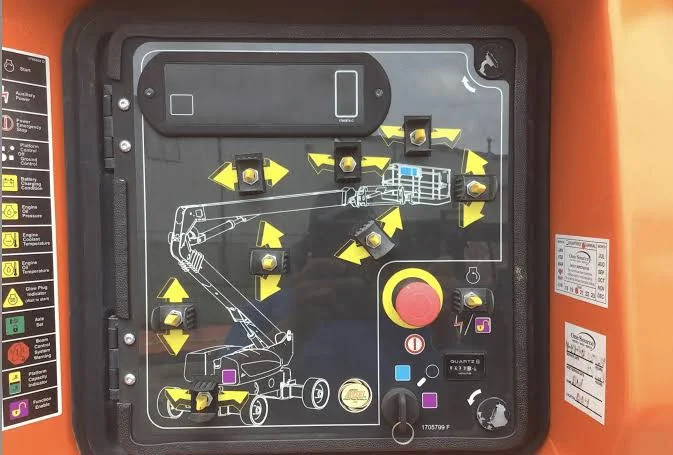
Ground Controls Test
Always test the ground controls first before anyone enters the basket. This ensures you can safely lower the platform from the ground if an issue arises.
- Test all boom movements: lift, lower, extend, retract, and rotate.
- Verify that the controls stop movement immediately when released.
- Test the ground-level Emergency Stop (E-Stop) switch to ensure it completely cuts power to the system.
- Verify that the auxiliary lowering system (emergency bleed-down or backup pump) operates correctly.
Platform Controls Test
Enter the basket utilizing proper three-point contact and attach your fall protection lanyard.
- Test the foot switch (deadman switch) to ensure the upper controls remain completely inactive unless the foot switch is actively depressed.
- Test all joysticks and toggle switches for smooth control response, verifying there is no delayed reaction or sticking.
- Check the upper Emergency Stop switch functionality.
- Test the horn to ensure clear job site communication.
Safety Device Inspection
Modern boom lifts rely heavily on automated safety interlocks.
- Verify that the tilt alarm sounds when the machine is placed on an unlevel surface beyond its rated tolerance.
- Check that travel speed automatically restricts to a slow creep when the boom is elevated or extended.
- Ensure all limit switches are clear of debris and function perfectly.
Fall Protection Inspection Requirements
A boom lift safety checklist is completely inadequate without a meticulous look at fall protection systems. OSHA strictly mandates personal fall arrest systems (PFAS) or fall restraint systems for all open-basket boom lift operations.
- Platform Gate and Guardrails: Inspect the mid-rails, top-rails, and toe-boards for structural bending or rust. The entry gate or safety chain must close completely and lock automatically. It should never open outward.
- Lanyard Anchorage Points: Inspect the designated, welded structural anchor points inside the platform. Look for cracks, stretching, deformation, or wear. Never tie off to guardrails unless explicitly rated by the manufacturer.
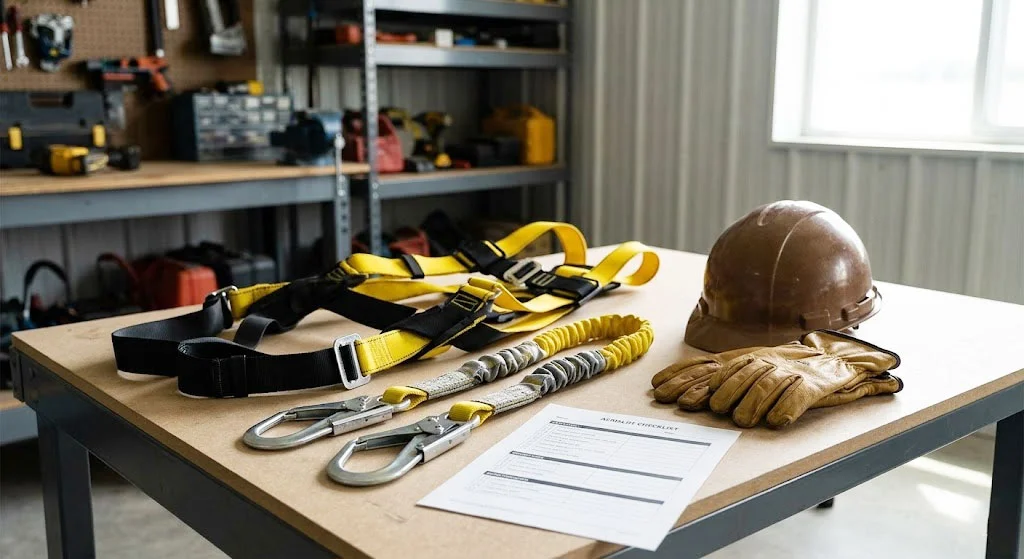
- Harness and Lanyard Checks: Inspect your personal safety harness and shock-absorbing lanyard. Check for frayed webbing, broken stitching, chemical burns, or corroded metal buckles. Verify that the inspection tag on the harness is current.
Common Problems Found During Boom Lift Inspections
When running through your aerial boom lift pre-use inspection checklist, certain failure points appear far more frequently than others. Identifying these issues early prevents dangerous operating conditions.
- Hydraulic fluid leaks: Often found at hose crimp fittings or cylinder rod seals due to continuous operational pressure.
- Damaged control switches: Broken toggle boots or sticky joysticks caused by exposure to rain, dust, and dropping tools.
- Worn tires: Tread wear or sidewall gouges from navigating sharp debris on rough construction sites.
- Faulty alarms: Backup alarms or tilt sensors that have been disconnected, damaged, or muffled by dirt.
- Platform gate issues: Gates that fail to snap shut automatically due to weak springs, rust, or physical deformation.
- Battery corrosion: Heavy acid buildup on terminals or low electrolyte levels in electric models, leading to sudden power loss.
- Structural cracks: Micro-cracks in high-stress areas like boom pivot pins, welds, and outrigger pads.
How to Address Problems Immediately
The Golden Rule of Safety Compliance: If a boom lift fails any single point on your safety inspection, the machine must be immediately locked out and tagged out of service.
Do not attempt to complete “one quick job” with a malfunctioning lift. Affix a highly visible “Do Not Operate” tag to both the ground and platform controls, remove the ignition key, and report the issue to an authorized mechanic immediately. The machine must remain offline until a qualified technician signs off on the repair.
Daily Boom Lift Inspection Checklist Template
Below is a scannable, practical template that can be digitized or printed for field use as a standard boom lift checklist.
| Inspection Category | Specific Item to Check | Pass | Fail | N/A | Notes / Details |
| Visual / Structural | Welds, boom sections, chassis integrity | □ | □ | □ | |
| Legible placards, capacity charts, manuals | □ | □ | □ | ||
| Wheels & Tires | Inflation pressure, lug nut tightness | □ | □ | □ | |
| Tread condition, cuts, foam/solid chunks | □ | □ | □ | ||
| Fluids & Systems | Engine oil, hydraulic fluid, coolant levels | □ | □ | □ | |
| Hydraulic hoses, fittings, cylinder seals | □ | □ | □ | ||
| Wiring insulation, connectors, cat track | □ | □ | □ | ||
| Ground Controls | Emergency Stop (E-Stop) function | □ | □ | □ | |
| Boom function execution & auxiliary lower | □ | □ | □ | ||
| Platform Controls | Foot switch (deadman) & joystick response | □ | □ | □ | |
| Upper E-Stop, horn, and display lights | □ | □ | □ | ||
| Fall Protection | Guardrails, auto-closing entry gate | □ | □ | □ | |
| Rated lanyard anchorage points | □ | □ | □ | ||
| Safety Interlocks | Tilt alarm, drive speed limiters | □ | □ | □ |
Boom Lift Inspection Best Practices
To make inspections as effective as possible on your job sites, implement these operational habits:
- Incorporate the OEM Manual: Every model is unique. Always keep the manufacturer’s specific Operation and Safety Manual inside the weather-proof storage container mounted directly to the platform basket. Refer to it for exact fluid types, pressures, and specialized test procedures.
- Provide Ongoing Operator Training: Do not assume a licensed operator knows how to properly inspect a specific machine model. Run regular toolbox talks to review checking points, emphasizing what true component wear looks like.
- Establish a Standardized Filing System: Store completed checklists systematically. Whether you use a cloud-based digital asset tracking application or physical logbooks, keep records organized by the machine’s unique serial number.
Mistakes to Avoid During Boom Lift Inspections
Avoid these common oversight errors that undermine your safety program:
- Pencil-Whipping the Form: Don’t sit in a truck cab simply checking off “Pass” boxes without standing up to physically look at the machine. It takes only one missed hydraulic leak or missing pin to cause a major accident.
- Ignoring Environmental Site Conditions: A proper pre-use inspection must evaluate the environment where the boom lift will operate. Look upward for overhead power lines, check for ground hazards like drop-offs or uncompacted soil, and verify wind speeds are below the manufacturer’s safe threshold.
- Allowing Unauthorized Repairs: Operators are trained to inspect equipment, not fix it. Never allow an operator to patch a hydraulic line with tape, bypass a safety limit switch, or weld a structural component themselves.
Frequently Asked Questions About Boom Lift Inspection Checklist
How often should a boom lift be inspected?
A visual and functional pre-use check must be conducted before every single work shift (boom lift daily inspection checklist). Additionally, comprehensive frequent inspections are required every three months, and a detailed boom lift annual inspection checklist teardown must be executed every 13 months.
What does OSHA require for boom lift inspections?
OSHA mandates that employers ensure lifts are inspected prior to operation by a trained, designated user. The inspection must cover clean operating controls, safety devices, structural elements, hydraulic/fuel/electrical systems, and fall protection gear. Any defects must be repaired prior to use.
Who can perform a boom lift inspection?
Daily pre-operation checks can be performed by any qualified, trained operator who has been properly certified on that specific classification of aerial lift. Annual or complex frequent inspections must be completed by a qualified mechanic or factory-authorized service technician.
What happens if a boom lift fails inspection?
The machine must be shut down immediately. Apply proper lock-out/tag-out (LOTO) protocols to isolate its power and controls, place a warning tag on the machine, and report the defect to service personnel. The lift cannot return to service until repairs are fully completed and verified.
Are inspection records required by OSHA?
Yes. While daily pre-operation checklists should be logged for safety assurance, written documentation for 3-month frequent inspections and annual inspections is strictly required by OSHA and ANSI. These records must be retained on file for at least four years.
Conclusion
Utilizing a rigorous boom lift inspection checklist is about more than just checking off compliance boxes or passing an OSHA audit—it is about establishing a workplace culture where safety is built directly into daily operations. Taking 15 minutes before every shift to meticulously check your equipment protects your workforce, safeguards your business from liability, and keeps your project moving forward without costly structural or mechanical breakdowns.
If you have questions about specific machinery standards, need replacement safety decals, or are looking to upgrade your fleet with heavy-duty, fully compliant lifting solutions, our engineering and support teams are here to help. Get in touch with us today for expert guidance and factory-direct equipment support:
- Email: info@klingtec.com
- WhatsApp: +86 188 6686 3188