
When working at heights, a boom lift is an indispensable piece of equipment. But choosing the right one can be a daunting task, especially if you’re not familiar with the boom lift dimensions and specifications. The right choice is crucial for safety, efficiency, and project success. Selecting a lift that’s too small can limit your reach, while one that’s too big may be difficult to maneuver in tight spaces and more expensive to rent or buy. This guide will break down everything you need to know about boom lift dimensions, helping you make an informed decision for your next project.
Why Boom Lift Dimensions Matter
Understanding boom lift dimensions isn’t just about knowing how tall a machine is; it’s about matching the equipment to your specific job requirements. The right boom lift dimensions ensure you can safely and effectively reach your work area without over-extending the machine’s capabilities. It’s a matter of safety and productivity. Knowing the boom lift dimensions you need before you even start looking for equipment saves you time and money. For instance, a small job in a tight warehouse won’t need a massive 135-foot boom lift; a compact articulating model will do. This understanding of boom lift dimensions prevents costly mistakes and ensures your team can work efficiently.
Understanding the Core Boom Lift Dimensions
To accurately assess a boom lift, you need to be familiar with a few key boom lift dimensions that define its capabilities. These are the fundamental metrics you’ll find on any spec sheet.
A. Working Height
The working height is one of the most critical boom lift dimensions. It’s the maximum vertical height the platform can reach, plus about six feet, which is the average height of a worker’s head and shoulders. For example, a boom lift with a 40-foot platform height will typically have a 46-foot working height. This distinction is crucial because the working height is the metric you use to determine if the lift can reach your intended work area. If your target is 45 feet high, you’ll need a lift with a working height of at least 45 feet. When a project requires reaching over obstacles, the working height is a crucial boom lift dimension to consider.
B. Platform Height
The platform height is the maximum height of the floor of the work platform when the boom is fully extended vertically. This is a more precise measurement than working height and is a key factor in determining the overall boom lift dimensions. While working height accounts for the person on the platform, the platform height is a physical measurement of the machine itself. For a 46-foot working height, the platform height will be around 40 feet. This boom lift dimension is especially important when you need to clear a specific obstacle, such as a tall wall or a high piece of equipment, before reaching your final destination.
C. Horizontal Reach (Outreach)
The horizontal reach, or outreach, is the maximum horizontal distance the platform can extend from the boom lift’s central axis. This is a critical boom lift dimension for jobs where you can’t position the base directly under your work area, such as reaching over a trench, a fence, or another building. A lift with a high horizontal reach provides flexibility and can sometimes eliminate the need for repositioning the machine multiple times. Understanding this boom lift dimension is essential for jobs that require navigating around obstacles.
D. Other Key Dimensions and Specifications
Beyond the core boom lift dimensions like working and platform height, several other specifications are vital for safe and effective operation.
- Platform Capacity: This is the maximum weight the platform can hold, including workers, tools, and materials. This is a critical safety specification. Overloading the platform can lead to instability and serious accidents. Always check this boom lift dimension before loading up the platform.
- Stowed Dimensions: These include the length, width, and height of the boom lift when it is fully retracted and ready for transport. This is a crucial boom lift dimension to consider for logistics, such as transportation on a trailer and maneuvering in and out of job sites, especially those with narrow gates or doorways.
- Tail Swing: The tail swing is the amount the rear of the machine extends beyond the chassis as the boom rotates. A machine with zero tail swing is ideal for confined spaces, as it won’t hit walls or other obstacles when turning. This boom lift dimension is a key differentiator between different models.
- Gradeability: This indicates the maximum incline the boom lift can safely climb. It’s an important boom lift dimension for construction sites with uneven terrain.
- Power Source: Boom lifts are typically powered by diesel, electric, or hybrid engines. The power source affects noise levels, emissions, and where the lift can be used. Electric lifts, for instance, are perfect for indoor use where fumes are a concern. The choice of power source is a crucial consideration beyond the typical boom lift dimensions.
A Breakdown by Boom Lift Type
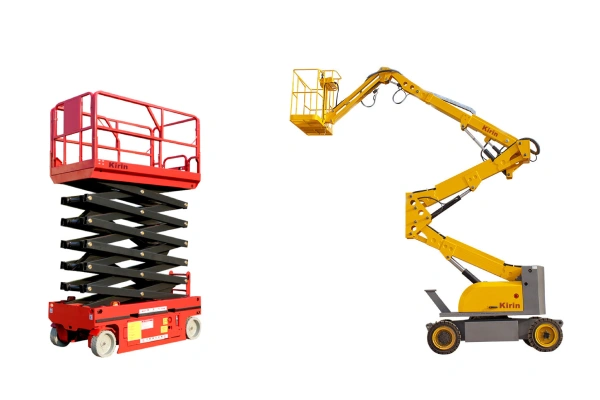
The term “boom lift” covers a wide range of machinery, each with unique boom lift dimensions and capabilities. The two primary types are telescopic and articulating.
A. Telescopic Boom Lifts (Straight Booms)
Telescopic boom lifts, also known as straight booms or stick booms, have a single, straight arm that extends and retracts. They are known for their exceptional horizontal reach and high-reaching capabilities. They are ideal for jobs that require a straight line of sight to the work area. Understanding the boom lift dimensions of a telescopic lift is straightforward, as their movement is less complex than their articulating counterparts.
Key Boom Lift Dimensions:
- Working Height: Telescopic lifts offer a wide range of working heights, typically from 40 feet to over 185 feet. The largest telescopic boom lift, the JLG 1850SJ, has a working height of 191 feet, making it the king of boom lift dimensions in its class.
- Horizontal Reach: This is where telescopic booms truly excel. Their outreach can be substantial, often reaching from 30 feet to over 80 feet, allowing them to access hard-to-reach areas without constant repositioning. This impressive boom lift dimension is a major selling point.
- Typical Sizes: Common models include 40-foot, 60-foot, 80-foot, and 125-foot working heights. The larger the working height, the more significant the overall boom lift dimensions and footprint.
- Best Use Cases: Telescopic booms are perfect for large-scale construction projects, shipbuilding, petrochemical facilities, and other applications where the work area is high and has a clear path. Their impressive boom lift dimensions make them suitable for jobs like steel erection, stadium construction, and exterior building maintenance.

B. Articulating Boom Lifts (Knuckle Booms)
Articulating boom lifts, or knuckle booms, feature a boom with multiple jointed sections, allowing them to bend and “articulate” around obstacles. They are incredibly versatile and are the go-to choice for jobs in tight or cluttered environments. Their unique boom lift dimensions allow them to navigate complex spaces.
Key Boom Lift Dimensions:
- Working Height: The working height of articulating boom lifts generally ranges from 30 feet to 150 feet. While they may not reach as high as the largest telescopic lifts, they offer superior maneuverability.
- Horizontal Reach: Their horizontal reach is also significant, typically ranging from 15 feet to over 60 feet. The “up and over” capability is their main advantage, a direct result of their unique boom lift dimensions.
- Typical Sizes: Common models have working heights of 45 feet, 60 feet, and 85 feet. The ability to work in confined spaces is a primary reason for their popularity, a feature directly related to their compact stowed boom lift dimensions.
- Best Use Cases: Articulating boom lifts are ideal for indoor maintenance, industrial facilities, tree trimming, and projects where you need to get over, around, or behind an object. Their boom lift dimensions and flexibility make them a staple in warehouses, convention centers, and factories.

Choosing the Right Boom Lift for Your Project
Selecting the right boom lift involves more than just picking a working height. You need to consider all the boom lift dimensions in the context of your project.
- Assess Your Job Site: First, measure the maximum height you need to reach and the horizontal distance from your base to the work area. Are there any obstacles you need to get over? Are you working indoors or outdoors? This assessment is the first step in determining the right boom lift dimensions.
- Determine Working Height and Reach: Use your measurements to find the required working height and horizontal reach. Remember to add a buffer for safety and flexibility. Don’t forget to account for the platform height in your calculations.
- Consider the Environment: For tight indoor spaces, an electric articulating boom lift with a compact chassis and minimal tail swing is likely the best choice. If you’re working on a large, open construction site, a diesel-powered telescopic lift with a high working height and impressive horizontal reach will be more efficient. The environment significantly impacts the ideal boom lift dimensions.
- Factor in Capacity and Weight: Make sure the platform capacity is sufficient for your workers and materials. Also, consider the ground conditions. If the ground is soft, you’ll need to choose a lift with a lower ground pressure or use mats to distribute the weight. The total weight of the lift, a key boom lift dimension, is a critical safety factor.
- Evaluate Transport and Access: Can the lift be easily transported to and from the site? Will it fit through gates, doorways, or other entry points? Checking the stowed boom lift dimensions is a simple but vital step.
By systematically evaluating these factors, you can narrow down your options and choose a lift with the ideal boom lift dimensions for your specific needs. Getting the boom lift dimensions right from the start can prevent project delays and ensure a smooth workflow.
Conclusion
The world of boom lifts is defined by boom lift dimensions. From the basic working height and horizontal reach to more nuanced specs like tail swing and platform capacity, each boom lift dimension plays a crucial role in ensuring safety and efficiency. Telescopic lifts excel at high and distant work, while articulating lifts are masters of navigating complex, cluttered environments. By taking the time to understand your project’s needs and matching them to the right boom lift dimensions, you’ll be well on your way to a successful and safe job. The key is to be thorough in your assessment and never compromise on safety. The right boom lift dimensions are the foundation of a safe worksite.
FAQs
What’s the difference between working height and platform height?
Working height is the highest point a worker can safely reach from the platform, which is typically about 6 feet higher than the platform height. Platform height is the physical measurement from the ground to the floor of the work platform when fully extended. This difference in boom lift dimensions is crucial for proper planning.
How do I know if I need a telescopic or an articulating boom lift?
If your work area is in a straight line with no obstacles, a telescopic lift is usually the best choice due to its superior horizontal reach. If you need to go “up and over” an obstacle to reach your work area, an articulating lift is necessary. The different boom lift dimensions of these two types dictate their ideal use cases.
What is a zero tail swing boom lift?
A zero tail swing boom lift is a machine where the rear of the chassis does not extend beyond the machine’s footprint when the boom is rotated. This is a critical boom lift dimension for working in tight or confined spaces, as it prevents the machine from hitting obstacles.
Is ground pressure an important consideration?
Yes, very important. The ground pressure, which is related to the machine’s overall weight (a key boom lift dimension), determines if the ground can support the lift without the risk of it sinking or becoming unstable. This is a vital safety factor, especially on soft or uneven terrain.
How do I calculate the boom lift dimensions I need?
You should first measure the highest point of your work area and the horizontal distance from where the lift will be positioned. Add a buffer to both measurements to account for any unforeseen circumstances. This will give you the required working height and horizontal reach to select the right model. Getting these boom lift dimensions right is the first step in a successful project.