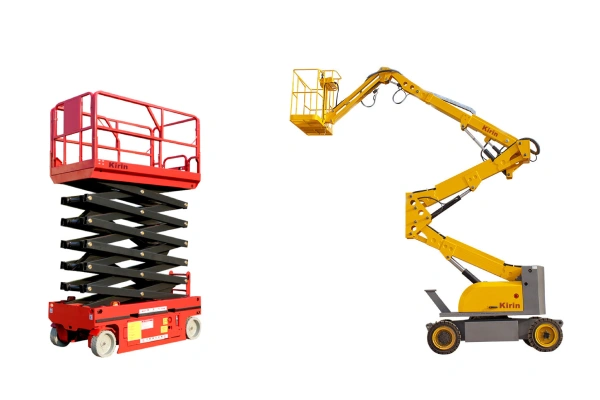
High-altitude work is a staple of modern construction, maintenance, and industrial operations. While machines like telescopic and articulating booms allow us to reach incredible heights, they also introduce significant risks. Understanding boom lift accidents is the first step toward creating a culture of safety that ensures every worker returns home at the end of the shift.
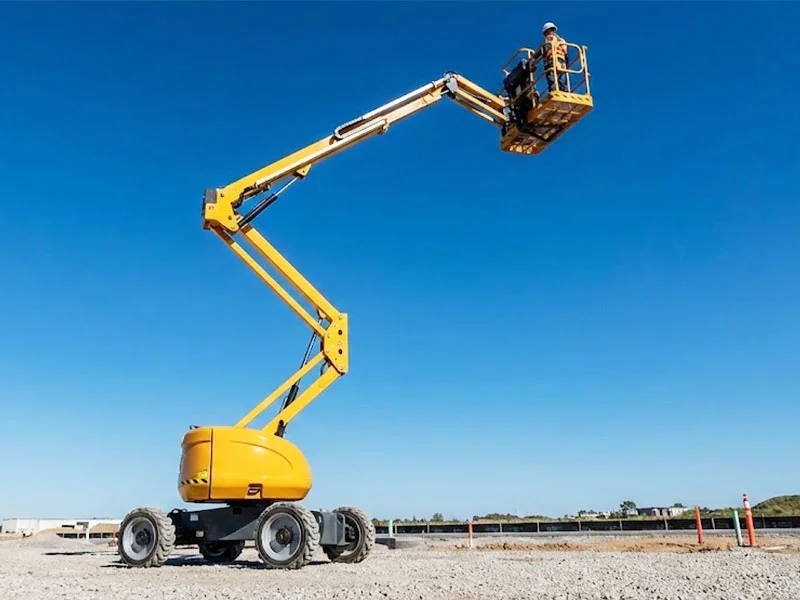
What a Boom Lift Is
A boom lift is a type of aerial work platform (AWP) designed to provide temporary access for people or equipment to inaccessible areas, usually at height. Unlike a scissor lift, which only moves vertically, a boom lift features a maneuverable arm (the “boom”) that can extend outward and upward, often rotating 360 degrees.
Why Are Boom Lifts Widely Used?
These machines are indispensable because of their versatility. Whether it is a “cherry picker” used by utility workers or a massive telescopic boom used on a skyscraper site, they provide a stable platform for tasks like painting, electrical repairs, glazing, and structural inspections. Their ability to “up and over” obstacles makes them superior to scaffolding in terms of setup time and mobility.
The Seriousness of Boom Lift Accidents in the Workplace
Despite their utility, boom lift accidents are among the most dangerous incidents in the industrial sector. When something goes wrong at 60 or 100 feet in the air, the results are often catastrophic. According to safety statistics, boom lift accidents frequently result in permanent disability or fatalities, leading to devastating emotional tolls on families and significant legal and financial burdens for companies.
How Preventable Most Boom Lift Accidents Actually Are
The sobering reality is that the vast majority of boom lift accidents are entirely preventable. They are rarely “freak occurrences.” Instead, they are usually the result of bypassed safety protocols, inadequate training, or poor equipment maintenance. By focusing on education and rigorous adherence to safety standards, the frequency of boom lift accidents can be slashed significantly.
What Are Boom Lift Accidents?
In technical terms, boom lift accidents encompass any unintended event involving the operation of a boom lift that results in property damage, injury, or death. These incidents can occur during setup, operation, or even while the machine is being transported. Because these machines involve high-pressure hydraulics, heavy counterweights, and extreme heights, boom lift accidents often involve a combination of mechanical failure and human error.
Most Common Types of Boom Lift Accidents
Understanding the “how” behind boom lift accidents is crucial for prevention. Here are the primary categories:
Tip-Over Accidents
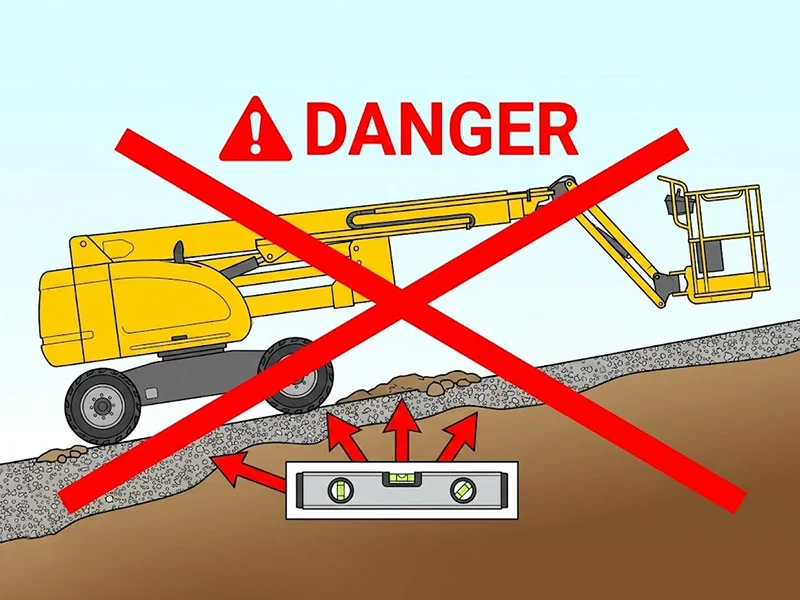
Tip-overs are perhaps the most feared of all aerial work platform accidents. A tip-over occurs when the machine’s center of gravity shifts outside its stable base. This can happen due to uneven ground, exceeding load limits, or sudden movements while the boom is fully extended.
Falls From the Platform
Falls remain a leading cause of death in boom lift accidents. Even a slight “jolt” at the base of the machine can create a whip effect at the basket, catapulting an unattached worker into the air.
Electrocution
Because boom lifts are often used for electrical work or near overhead utilities, electrocution is a major factor in boom lift accidents. Metal baskets or the boom arm itself can conduct electricity if they come into contact with live wires.
Entrapment / Crushing Hazards
These boom lift accidents occur when an operator is pinned between the basket and a fixed structure, such as a ceiling beam or a wall. This often happens during “inching” maneuvers where the operator’s view is obstructed.
Mechanical Failures
While less common than human error, mechanical failures—such as hydraulic line bursts or structural welds snapping—lead to sudden and violent aerial work platform accidents.
Falling Objects
It isn’t just the operator at risk. Tools or materials falling from a height of 50 feet can be lethal to ground workers, categorizing these as significant boom lift accidents as well.
Main Causes of Boom Lift Accidents
To prevent boom lift accidents, we must address the root causes:
- Lack of Operator Training: Many boom lift accidents occur because the operator does not understand the machine’s specific range of motion or safety features.
- Improper Ground Conditions: Setting up on soft soil, slopes, or over hidden voids (like manhole covers) is a recipe for boom lift accidents.
- Ignoring Load Capacity: Every lift has a strict weight limit. Overloading the basket is a primary trigger for structural boom lift accidents.
- Weather Conditions: High winds act like a sail against the boom, while ice makes the platform treacherous. Many boom lift accidents are the direct result of working in unsafe weather.
- Poor Maintenance: Neglecting grease points, hydraulic fluids, or tire pressure creates “accidents waiting to happen.”
OSHA and Safety Regulations You Must Know
OSHA (Occupational Safety and Health Administration) has strict guidelines to mitigate aerial work platform accidents. Under standards like 29 CFR 1926.453, OSHA requires:
- Only authorized and trained personnel may operate the lift.
- Fall protection (harnesses and lanyards) must be worn at all times.
- The manufacturer’s load limits must never be exceeded.
Failure to comply not only leads to aerial work platform accidents but also results in massive fines and legal liability.
How to Prevent Boom Lift Accidents
Prevention is a multi-layered strategy. Here is how to stop boom lift accidents before they start:
Proper Operator Training
Training shouldn’t just be a one-time video. Comprehensive training to prevent aerial work platform accidents should include classroom learning, hands-on demonstrations, and an evaluation of the operator’s skills on the specific model they will be using.
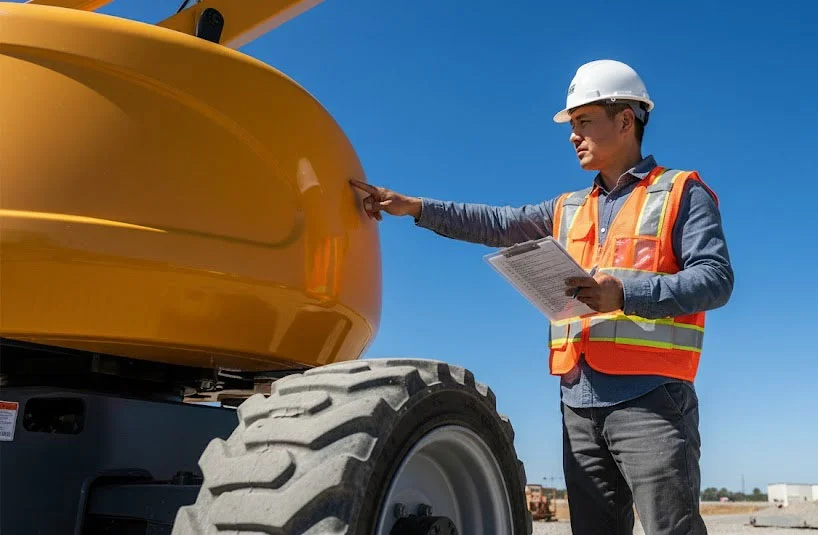
Pre-Operation Inspection Checklist
Every shift must begin with a walk-around. Checking for leaks, frayed cables, and functional controls prevents boom lift accidents caused by hidden mechanical issues.
Safe Operating Practices
- Keep the basket floor clear of debris.
- Never use “cheaters” (like ladders or boxes) inside the basket to gain extra height.
- Always look in the direction of travel.
Site Safety Planning
Assess the work zone. Identify overhead power lines, floor load limits, and pedestrian traffic to minimize the environment-related aerial work platform accidents.
Working Near Power Lines
Maintain a minimum clearance of at least 10 feet from power lines. In cases of high-voltage lines, this distance must be even greater to avoid arc-flash aerial work platform accidents.
Weather Safety
If wind speeds exceed 28 mph (or the manufacturer’s limit), the boom must be lowered. Monitoring weather apps can prevent boom lift accidents caused by sudden gusts.
Maintenance Practices That Improve Safety
A well-maintained machine is your best defense against boom lift accidents.
- Daily Inspections: Check fluid levels, tire integrity, and emergency stops.
- Scheduled Preventative Maintenance: Follow the 90-day or 150-hour service intervals to catch wear and tear.
- Hydraulic System Checks: Ensure there are no “pinhole” leaks that could lead to a sudden drop of the boom.
- Battery Maintenance: For electric lifts, ensure terminals are clean to prevent mid-air power loss.
- Manufacturer Service Intervals: Only use OEM parts to ensure the structural integrity remains intact.
- Keeping Records: Documentation proves that safety was prioritized and can be vital if aerial work platform accidents are ever investigated.
Emergency Response Plan
If aerial work platform accidents do occur, a fast, calculated response saves lives.
- If the lift tips: Operators should stay with the machine if harnessed; ground crews must clear the area immediately.
- If an operator is trapped: Use the ground controls to slowly move the basket away from the obstruction.
- Emergency Lowering: Every operator and ground person must know where the manual descent pull-valves are located.
- Rescue Team Preparation: Always have a “ground man” who is trained to operate the lift from the base in case the basket operator becomes incapacitated.
Real-World Lessons Learned From Boom Lift Accidents
Often, boom lift accidents caught on tape show a common theme: complacency. In many boom lift accidents videos, you can see the machine bouncing because it was driven while extended, or tipping because it was on an incline. By studying boom lift accident pictures, safety managers can show trainees the physical reality of structural failure and the importance of outriggers. The lesson is simple: the machine does not care about your deadline; it only cares about the laws of physics.
Safety Checklist (Quick Reference Section)
Use this checklist to reduce the risk of aerial work platform accidents on your site.
Before Use
- Is the operator trained and certified?
- Has the pre-start inspection been completed and signed?
- Are the weather conditions (wind/lightning) safe?
- Is the ground level and stable?
During Operation
Is the harness securely attached to the designated anchor point?
- Are both feet kept on the floor of the basket?
- Is the load within the rated capacity?
- Is the “slow” speed used when the boom is elevated?
After Use
- Is the boom fully retracted and lowered?
- Is the power shut off to prevent unauthorized use?
- Were any mechanical issues noted and reported?
Conclusion
The frequency of aerial work platform accidents in the industry is a reminder that we are working with powerful, complex machinery. However, boom lift accidents are not an inevitable part of the job. Through rigorous training, meticulous maintenance, and a “safety-first” mindset, we can reach new heights without the fall.
Would you like me to help you draft a specific safety policy or a more detailed inspection log to help prevent aerial work platform accidents at your workplace?
FAQs
How often do boom lift accidents happen?
While exact numbers vary by year, aerial lifts are involved in dozens of fatalities annually in the US alone. Most of these boom lift accidents involve falls or electrocutions.
Can I use a boom lift on a slope?
Most boom lifts are rated for a maximum slope of 5 degrees. Exceeding this is one of the leading causes of boom lift accidents involving tip-overs.
Is a harness required in a boom lift?
Yes. OSHA requires a body harness with a lanyard attached to the boom or basket to prevent operators from being ejected during boom lift accidents.
What is the most common cause of boom lift accidents?
Human error—specifically the failure to perform a site assessment or a pre-operation inspection—remains the top contributor to boom lift accidents.