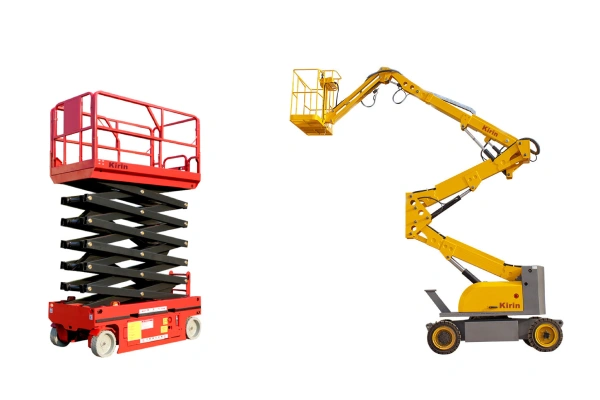
When you are facing a complex job site with overhead obstacles, tight corners, or high-reaching maintenance needs, the equipment you choose can make or break your timeline. Understanding articulating boom lift dimensions is the first step toward ensuring safety, efficiency, and project success. Often referred to as “knuckle booms” due to their multiple hinged sections, these machines offer a level of versatility that straight telescopic booms simply cannot match.
In this comprehensive guide, we will dive deep into the specific articulating boom lift dimensions that matter most, from horizontal outreach to chassis width, helping you select the perfect model for your next big lift.
What Are Articulating Boom Lifts?
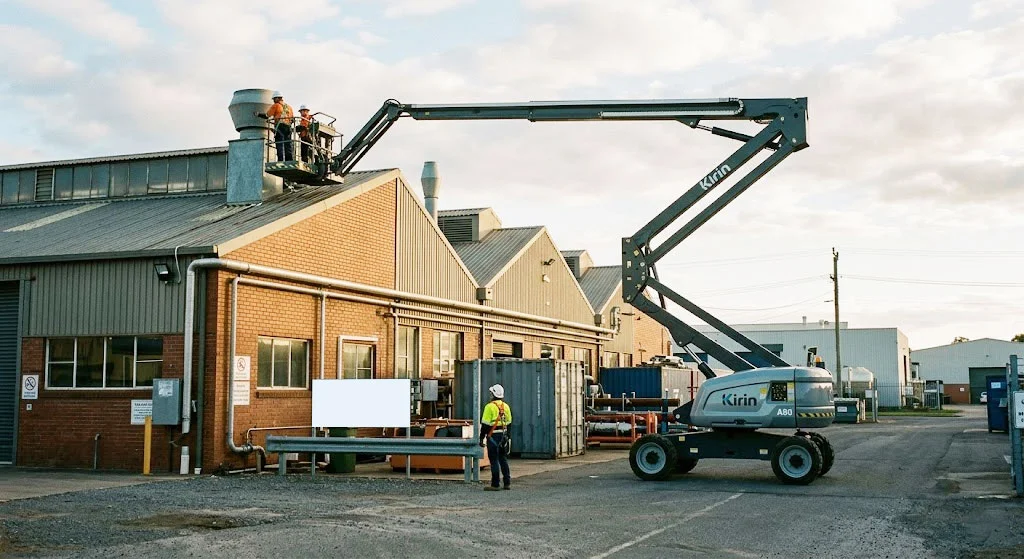
An articulating boom lift is an aerial work platform (AWP) characterized by a boom made of multiple sections that “articulate” or fold. This design allows the operator to reach “up and over” obstacles like piping, ductwork, or structural beams.
Unlike a telescopic boom, which extends in a straight line, the articulating boom features several pivot points. Because of these unique knuckle boom lift sizes, these machines are the preferred choice for indoor maintenance, electrical work, and complex construction sites where direct access is blocked by existing infrastructure.
Key Articulating Boom Lift Dimensions
To master your job site planning, you must look beyond just the maximum height. Here are the critical articulating boom lift dimensions you need to factor into your equipment rental or purchase.
Height and Reach
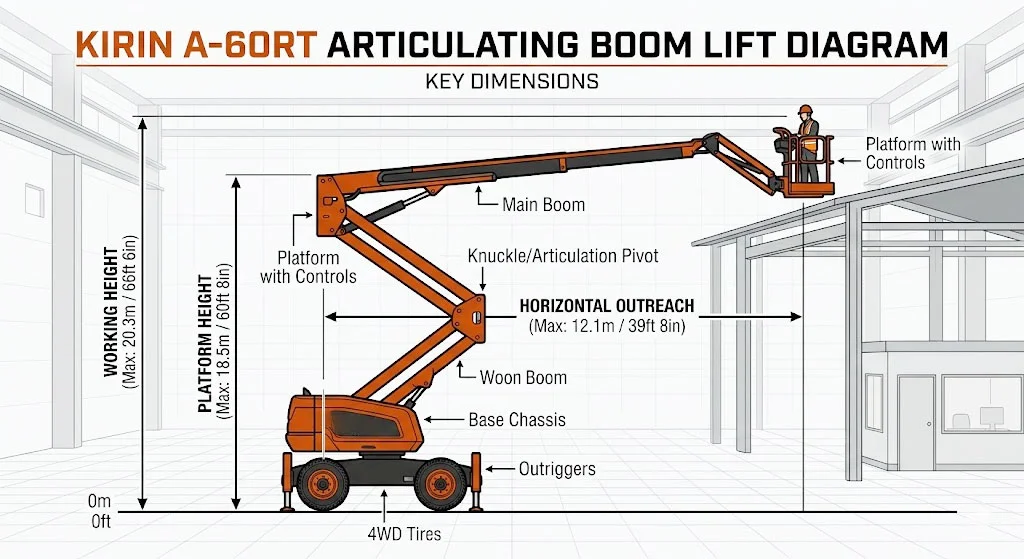
The most common metric people look for is the platform height. However, it is important to distinguish between “platform height” (where your feet are) and “working height” (usually platform height plus 6 feet). Articulating boom lift dimensions for height typically range from 30 feet for small indoor units to over 150 feet for massive industrial models.
Horizontal Outreach
This is where articulating booms shine. Horizontal outreach refers to the distance the boom can extend outward from the base. Because of the “knuckle” design, the outreach varies depending on how high the boom is positioned. Planning for articulating boom lift dimensions must include a calculation of how far you need to reach across a roof or over a machine.
Platform Size
The platform (or bucket) is your workspace. Standard articulating boom lift dimensions for platforms are usually around 30 by 60 inches or 36 by 96 inches. If you are working with a partner or heavy tools, a larger platform is essential, but it can also make maneuvering in tight spaces more difficult.
Base/Chassis Dimensions
The “footprint” of the machine is vital for indoor work. The width and length of the chassis determine whether the lift can fit through a standard double door or navigate a narrow warehouse aisle. Narrow articulating boom lift dimensions are specifically engineered to keep the chassis as slim as possible—often under 5 feet—while still providing a stable base for high-reaching tasks.
Weight and Load Capacity
Understanding articulating boom lift dimensions is incomplete without discussing the physical weight of the machine and what it can carry.
Typical Weight of Different Models
The weight of the machine (the “dead weight”) is significant for floor loading requirements.
- Small boom lift dimensions (30–40 ft reach) usually correlate to a weight of 10,000 to 15,000 lbs.
- Large models (80+ ft reach) can exceed 35,000 to 50,000 lbs.
Platform Load Capacity
Most articulating booms have a standard restricted capacity of 500 lbs, which covers two workers and basic tools. Some high-capacity models offer “unrestricted” capacities of up to 1,000 lbs, but extending the boom to its maximum articulating boom lift dimensions often requires staying within the lower weight limit to prevent tipping.
Dimensions, Stability, and Safety
The relationship between the base width and the height is a matter of physics. A wider chassis generally allows for a greater reach without the need for outriggers. When you push articulating boom lift dimensions to their limit, the machine’s center of gravity shifts. This is why manufacturers provide a “range of motion” chart—it’s the definitive guide to how weight and dimensions interact safely.
Articulating Boom Lift Types and Their Dimensions
Not all lifts are built for the same environment. The power source and intended use heavily influence the knuckle boom lift sizes available.
Electric vs. Diesel Models
- Electric Boom Lift Sizes: These are typically smaller and designed for indoor use. They feature non-marking tires and narrow articulating boom lift dimensions. Common heights range from 30 to 45 feet.
- Diesel/Internal Combustion: These are built for outdoor, rough-terrain use. They have larger articulating boom lift dimensions, larger tires, and more powerful engines to handle grades and uneven soil.
Compact vs. Large Models
Small boom lift dimensions are perfect for retail environments or gymnasiums. They often feature a “zero tailswing,” meaning the back of the machine doesn’t stick out past the chassis when the boom is rotated. Conversely, large models are used in shipyards or stadium construction where the articulating boom lift dimensions are maximized for extreme reach.
How to Choose the Right Size for Your Project
Choosing the right articulating boom lift dimensions requires a methodical approach to your job site.
- Assess Height and Reach: Don’t just measure the height of the ceiling. Measure the “up and over” distance. If you need to reach 40 feet up and 20 feet over a parapet wall, your articulating boom lift dimensions must account for that specific arc.
- Consider Workspace Constraints: Are there narrow doorways? Narrow articulating boom lift dimensions are required if you need to pass through an opening less than 6 feet wide.
- Weight Limits: Check the ground pressure. If you are working on a suspended slab or a delicate tile floor, the heavy articulating boom lift dimensions of a diesel unit might be too much.
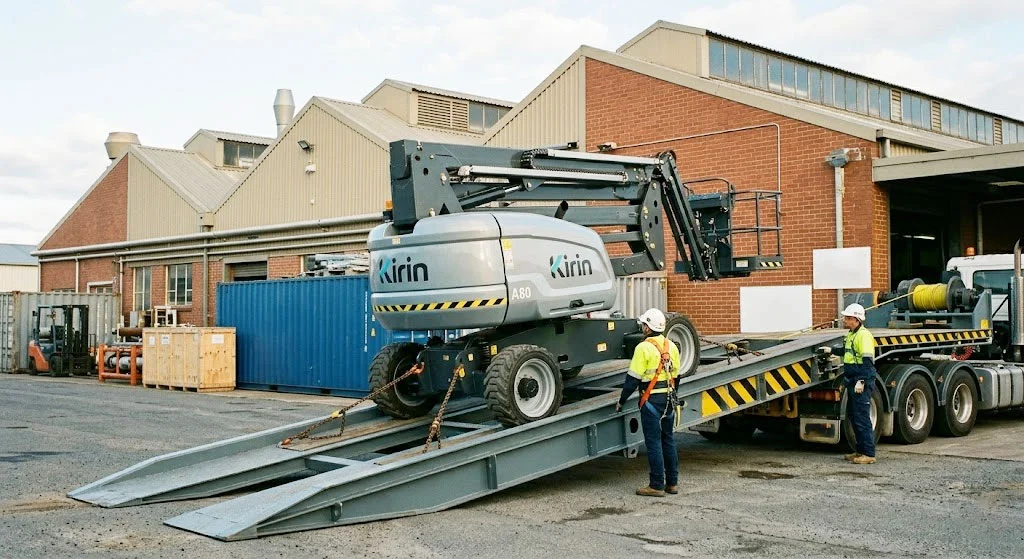
- Transportation: Ensure the stowed articulating boom lift dimensions (the size of the machine when folded) fit on your trailer or through your loading dock.
Common Challenges Related to Articulating Boom Lift Dimensions
Even with the best planning, articulating boom lift dimensions can present hurdles:
- Maneuvering in Tight Spaces: A long chassis makes sharp turns difficult. Always check the “turning radius” specification alongside the articulating boom lift dimensions.
- Overhead Clearance: When the boom is stowed, it may still be 6 to 8 feet tall. Ensure you have clearance under HVAC ducts and fire sprinters.
- Stability Concerns: Using a lift with small boom lift dimensions on a slope is dangerous. Most lifts have a tilt-alarm, but it is better to plan for a wider, more stable base if the ground isn’t perfectly level.
Tips for Measuring and Planning with Articulating Boom Lifts
To ensure the articulating boom lift dimensions you choose are accurate, follow these pro tips:
- Measure Twice: Use a laser measurer to find the exact height of the work area and the width of the narrowest path the machine must travel.
- Consult the Specs: Every manufacturer (JLG, Genie, Skyjack) provides a detailed spec sheet. Look specifically for the articulating boom lift dimensions regarding “stowed height” and “horizontal reach.”
- Use Diagrams: Range of motion charts are your best friend. They show exactly where the “knuckle” will be at various heights, ensuring you don’t hit an overhead beam while trying to reach your target.
Articulating Boom Lift Dimension Reference Table
Below is a general guide to sizes of boom lifts commonly found in rental fleets.
| Model Class | Max Platform Height | Max Horizontal Outreach | Machine Width | Approx. Weight |
| Compact Electric | 30–34 ft | 16–20 ft | 3′ 11″ | 10,000 lbs |
| Mid-Size Electric | 40–45 ft | 22–25 ft | 4′ 11″ | 15,000 lbs |
| Standard Rough Terrain | 45–60 ft | 24–30 ft | 7′ 6″ | 16,000–22,000 lbs |
| Large Industrial | 80–135 ft | 45–70 ft | 8′ 2″ | 35,000–45,000 lbs |
Conclusion
Selecting the right articulating boom lift dimensions is about more than just getting to the right height; it’s about navigating the unique geometry of your job site. Whether you need the narrow articulating boom lift dimensions of an electric model for a tight warehouse or the massive knuckle boom lift sizes of a diesel unit for outdoor construction, understanding these specs ensures you work safely and efficiently.
By carefully measuring your workspace and comparing it against manufacturer articulating boom lift dimensions, you can avoid costly mistakes and ensure your team has the “up and over” capability they need to get the job done. If you need expert advice on which model fits your specific site requirements, our team at Kirin Lift is here to help. Contact us today via email at info@klingtec.com or reach out on WhatsApp at +86 188 6686 3188 for personalized support.
FAQs
What are the most common articulating boom lift dimensions for indoor use?
For indoor use, electric boom lift sizes usually feature a width of 4 to 5 feet and a platform height of 30 to 45 feet. These narrow articulating boom lift dimensions allow them to fit through standard aisles and doors.
How do I know if a knuckle boom lift will fit through a door?
You must check the “stowed height” and “stowed width” in the articulating boom lift dimensions spec sheet. A standard double door is usually 72 inches wide, so a machine with a width of 60 inches would fit comfortably.
What is the difference between platform height and working height?
In the context of articulating boom lift dimensions, platform height is the distance from the ground to the floor of the bucket. Working height is an estimate of where a person’s hands can reach, typically calculated as platform height plus 6 feet.
Does the “knuckle” affect the articulating boom lift dimensions when turning?
Yes. Many models have “tailswing,” where the housing of the engine or counterweight extends past the chassis when the boom rotates. If you are in a tight space, look for small boom lift dimensions that specify “zero tailswing.”
Are knuckle boom lift sizes the same as telescopic ones?
No. While they may have similar platform heights, knuckle boom lift sizes usually offer less total horizontal reach than telescopic lifts but provide much better flexibility for reaching over obstacles.
How much weight can a standard articulating boom lift hold?
Most articulating boom lift dimensions are designed for a capacity of 500 lbs, though some specialized “high capacity” models can handle up to 1,000 lbs. Always check the load chart on the specific machine.