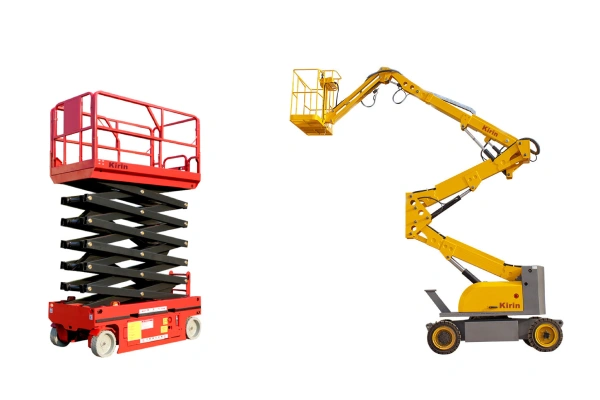
When you are managing a construction site, organizing a massive warehouse, or handling facility maintenance, reaching high places safely and efficiently is a top priority. Scissor lifts are the go-to aerial work platforms for these tasks, offering stability, significant weight capacities, and ample room for workers and tools.
However, not all aerial challenges are created equal. Sometimes you are forced to navigate tight warehouse aisles, while other times you need a massive, heavy-duty platform to lift multiple crew members on an outdoor construction site. This brings us to a critical equipment choice: should you rent or buy a wide or a narrow scissor lift?
Selecting the wrong width can severely stall your project. A lift that is too wide won’t fit through the door, while a lift that is too narrow might lack the weight capacity or platform space required for the job. In this comprehensive guide, we will break down everything you need to know about wide versus narrow scissor lifts so you can make the right choice for your specific project needs.
Choosing the Right Scissor Lift Width Matters
When planning for aerial lifts, many project managers focus solely on vertical reach. While maximum working height is undeniably important, the physical footprint—specifically the width—of the machine is just as critical to project success.
Choosing the right width impacts three core areas of any project:
- Accessibility: If your machine cannot physically pass through entryways, navigate between structural columns, or fit down narrow aisles, your project grinds to a halt before it even begins.
- Stability and Safety: The width of a lift’s wheelbase directly influences its center of gravity. Wider bases generally offer more stability on uneven ground, whereas a narrow scissor lift requires precision engineering and level surfaces to operate safely at max heights.
- Productivity: A wider platform allows more workers, tools, and materials to go up in a single lift cycle. Conversely, a narrower platform might require multiple trips but saves time by maneuvering seamlessly through tight quarters without needing a massive clearance zone.
By evaluating the width of your workspace alongside your weight and height requirements, you can optimize your equipment selection for maximum efficiency.
What Is a Narrow Scissor Lift?
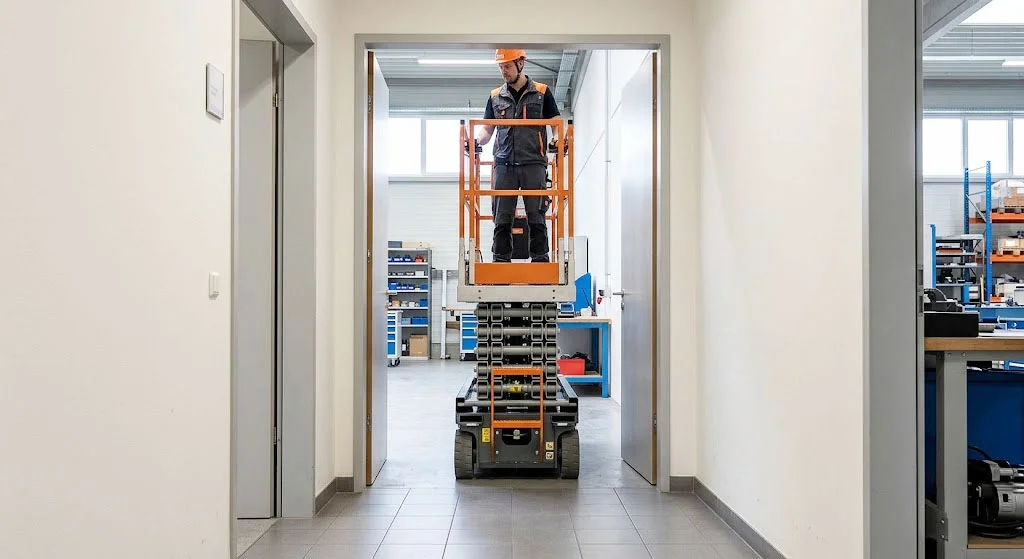
A narrow scissor lift is a specialized compact aerial work platform designed specifically to operate in confined spaces and tight environments. While standard or wide lifts require expansive operating areas, these compact machines are engineered with a slim chassis to squeeze through tight spots.
Typically, a narrow scissor lift features a chassis width ranging from 30 to 34 inches. This specific dimension is no accident—it is intentionally designed to allow the machine to pass right through standard single doorways (which are usually 36 inches wide) and navigate passenger elevators without requiring disassembly.
Most models in this category are electric-powered, making them perfect for indoor use because they produce zero emissions and operate quietly. Common variations include the highly versatile 19 ft narrow electric scissor lift, which is a staple for indoor trade work, and the taller 26 narrow scissor lift for high-ceiling warehouse applications. Whether referred to as a narrow aisle scissor lift or a narrow access scissor lift, these machines prioritize agility and compact design above all else.
What Is a Wide Scissor Lift?
A wide scissor lift is a heavy-duty aerial platform built for stability, high weight capacities, and expansive working areas. Unlike their narrow counterparts, wide scissor lifts generally feature a chassis width starting around 45 to 48 inches, stretching up to 70 inches or more on large, rough-terrain models. A classic example of a standard indoor/outdoor wide platform is the 32 wide scissor lift, which balances a modest footprint with enhanced stability.
These machines are built to handle demanding environments. Because they have a wider wheelbase, they offer a much larger platform deck, often equipped with dual extension decks that roll out to provide massive horizontal working space.
Wide scissor lifts are frequently powered by dual-fuel or diesel engines, allowing them to tackle outdoor construction sites, muddy terrain, and steep grades. They are the workhorses of heavy commercial construction, exterior cladding installations, and large-scale industrial projects where space is plentiful but demands on weight and platform size are high.
Narrow vs. Wide Scissor Lift: Key Differences
To help you visualize how these two classes of machinery stack up against one another, let’s look at their key differences across critical operational metrics:
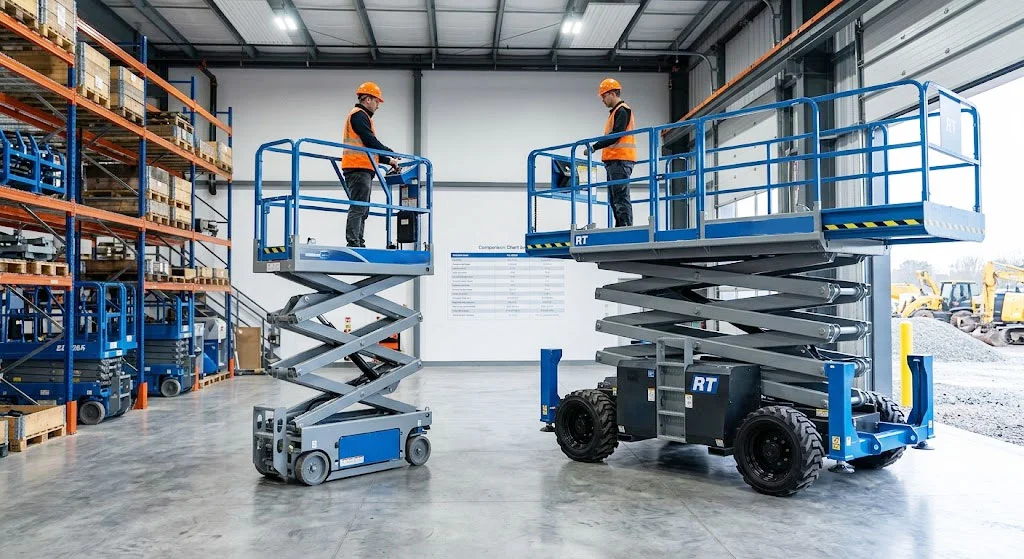
| Feature | Narrow Scissor Lift | Wide Scissor Lift |
| Average Width | 30 to 34 inches | 45 to 70+ inches |
| Primary Power Source | Battery/Electric | Diesel, Dual-Fuel, or Heavy Electric |
| Terrain Compatibility | Smooth, flat indoor surfaces | Rough terrain, uneven dirt, gravel, concrete |
| Doorway Clearance | Fits through standard single doors | Requires double doors or open construction bays |
| Platform Capacity | Typically 500 to 600 lbs | Up to 1,000 to 2,500+ lbs |
| Platform Size | Narrow, single-worker optimized | Wide, multi-worker optimized with dual extensions |
Advantages of a Narrow Scissor Lift
Investing in or renting a narrow scissor lift provides distinct operational benefits, particularly for indoor and finish-phase construction projects.
Exceptional Maneuverability
The primary selling point of a narrow scissor lift is its ability to go where other lifts cannot. It can navigate a congested warehouse floor, turn tightly around sharp corners, and slip down a narrow aisle scissor lift pathway with ease.
Seamless Indoor Access
Because a narrow access scissor lift can fit through standard 36-inch doors and inside standard freight or passenger elevators, operators can move the machine from room to room or floor to floor without needing cranes or outdoor staging. This makes them invaluable for multi-story indoor projects.
Floor Preservation
Most narrow models, such as the 19 ft narrow electric scissor lift, come standard with non-marking solid rubber tires. Because the machines themselves are lighter than wide models, they exert less ground pressure, protecting sensitive indoor flooring like tile, marble, or polished concrete from scuffs and structural cracks.
Limitations of a Narrow Scissor Lift
While highly efficient in tight spaces, the slim design of a narrow scissor lift does come with certain trade-offs that you must consider before delivery.
Restricted Platform Space
Because the chassis is slim, the platform is also narrow. This means there is less room for materials. If you need to haul large drywall sheets, lengthy pipes, or bulky HVAC ductwork, a narrow platform can feel restrictive and may require workers to make multiple trips up and down.
Lower Weight Capacities
A narrow scissor lift generally has a lower lifting capacity compared to wider models. They are usually rated for one or two workers and a limited selection of hand tools. Overloading a narrow platform can create safety hazards and cause the machine’s sensors to lock out operation.
Terrain Sensitivity
Most narrow lifts are designed for flat, level concrete slabs. Because they have a narrow track width, their center of gravity is more sensitive to slopes and bumps. While there is such a thing as a narrow all terrain scissor lift, they are specialized machines; standard narrow electric models cannot handle mud, loose gravel, or uneven outdoor terrain safely.
Advantages of a Wide Scissor Lift
When your project demands heavy lifting and plenty of physical workspace, a wide scissor lift outshines compact models.
Massive Platform Real Estate
Wide scissor lifts offer sprawling platform decks. This allows multiple crew members to work side-by-side comfortably. Furthermore, the inclusion of rollout deck extensions means workers can reach over ground obstacles without moving the entire chassis of the machine.
High Weight Capacities
Need to lift heavy tools, welding gear, stacks of lumber, or heavy piping? Wide lifts are built for exactly that. With weight capacities frequently exceeding 1,000 to 2,000 pounds, these machines act as mobile workbenches that can support an entire crew and all their materials simultaneously.
Superior Stability on Rough Terrain
With a wide footprint comes excellent stability. Wide models, particularly rough-terrain variants, utilize heavy-duty foam-filled tires, four-wheel drive, and oscillating axles. They can drive over rocks, mud, and uneven construction debris while keeping the platform remarkably stable.
Limitations of a Wide Scissor Lift
Despite their power and size, wide scissor lifts are not suitable for every job environment.
Limited Spatial Accessibility
The most obvious drawback is size. A wide lift cannot squeeze through a standard office door or travel down a tight retail aisle. If your building’s finishings, walls, or columns are already in place, a wide lift may find itself physically blocked from reaching the work area.
Transport and Storage Challenges
Because they are wider and heavier, transporting these machines requires larger trailers and more heavy-duty towing vehicles. Additionally, when they are parked on-site overnight, they take up a significantly larger footprint, which can be an issue on crowded urban jobsites.
Higher Risk of Floor Damage
Wide scissor lifts are heavy. If you run a diesel-powered wide lift with lugged tires over an indoor finished floor, you risk cracking concrete subfloors, breaking tiles, or leaving permanent black track marks. They are generally poorly suited for completed indoor spaces.
How to Choose Between Wide and Narrow Scissor Lifts
To decide whether a wide or a narrow scissor lift is ideal for your project, walk through this quick five-step assessment:
Step 1: Measure Your Tightest Access Point
Look at the path the lift must take from the delivery truck to the actual work area. Measure doorways, gates, hallways, and aisles. If any clearance point is under 40 inches, you will almost certainly need a narrow access scissor lift.
Step 2: Analyze the Ground Surface
Where will the lift be driving? If the surface is unfinished dirt, mud, or sloped gravel, you need the wide stance and rough-terrain capability of a wide lift. If the surface is level concrete, an indoor floor, or a completed deck, a narrow scissor lift is an excellent, lightweight option.
Step 3: Calculate Total Weight Requirements
Add up the weight of the workers who will be on the platform at the same time, along with their tools, parts, and equipment. If your total payload exceeds 500–600 pounds, check the specifications of your desired lift; you may need to step up to a wider platform to support the load safely.
Step 4: Evaluate the Material Dimensions
Consider what you are installing. If you are installing light fixtures, fire sprinklers, or security cameras, a 19 ft narrow electric scissor lift or a 26 narrow scissor lift works perfectly. If you are installing heavy, wide items like large glass panes or industrial HVAC units, you need a wider deck.
Step 5: Check Power and Emission Constraints
If you are working indoors in an occupied building or a space with poor ventilation, you must use electric equipment. While both wide and narrow electric lifts exist, narrow lifts dominate the indoor electric market.
Best Applications for Narrow Scissor Lifts
Because of their agility and compact footprints, narrow scissor lifts excel in several specific environments:
- Warehousing and Logistics: Operating as a narrow aisle scissor lift, these machines allow facilities to optimize space by placing shelving units closer together while still maintaining full vertical access for inventory management.
- Indoor Facility Maintenance: Replacing light bulbs, servicing HVAC vents, or painting ceilings in schools, hospitals, and office buildings is made easy with a narrow scissor lift that rolls right through the hallways.
- Electrical and Plumbing Fit-Outs: During the trim out phase of commercial construction, technicians use a 19 ft narrow electric scissor lift to run conduit, wire fixtures, and install piping in tight rooms.
- Retail Environments: Stocking high displays or hanging seasonal signage in grocery stores or department stores requires a quiet, compact, narrow-access scissor lift that won’t disrupt or endanger shoppers.
Best Applications for Wide Scissor Lifts
Wide scissor lifts are the preferred choice when raw power, space, and stability take precedence over compactness:
- Exterior Building Construction: Installing siding, brick veneer, windows, or architectural panels requires a wide rough-terrain lift that can travel along the unpaved exterior perimeter of a structure.
- Heavy Mechanical Installations: Hanging large overhead duct systems, industrial piping networks, or heavy factory machinery requires the high payload capacity of a wide lift.
- Large-Scale Event Setup: Rigging concert lighting, stadium speakers, and massive video boards requires wide platforms that can carry multiple tech crew members and heavy AV gear at once.
- Aviation and Shipyards: Servicing the exteriors of large aircraft or ships requires wide platforms that provide a massive horizontal reach and a stable workspace high off the ground.
Safety Tips When Using Scissor Lifts
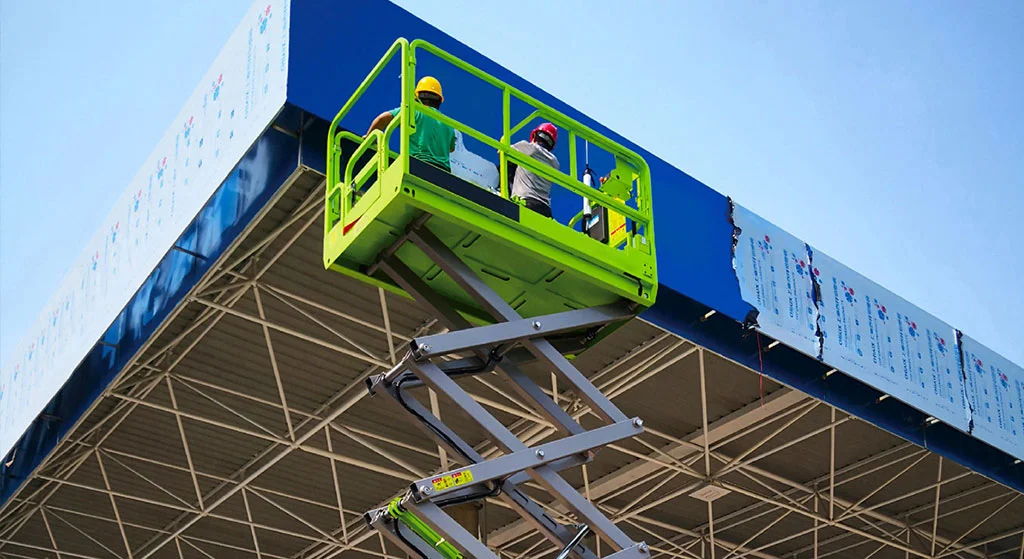
Regardless of whether you choose a wide model or a narrow scissor lift, safety should always remain your number one priority on-site.
- Check for Overhead Obstacles: Before elevating any lift, check for overhead power lines, ceiling joists, light fixtures, or structural beams.
- Never Exceed Weight Limits: Always obey the manufacturer’s capacity placard. Remember that capacity includes the weight of the workers plus all tools and materials brought onto the deck.
- Operate Only on Approved Slopes: Scissor lifts are equipped with tilt alarms. Never bypass these safety features, and avoid driving a narrow lift on an incline unless it is a certified narrow all terrain scissor lift rated for that specific slope.
- Wear Proper PPE: Ensure all operators wear required personal protective equipment, including hard hats, high-visibility vests, and safety harnesses connected to approved platform anchor points if site rules or local regulations dictate.
- Clear the Ground Zone: Keep the area immediately surrounding the base of the scissor lift clear of ground personnel, debris, and drop hazards while the platform is raised.
Maintenance Considerations
Keeping your scissor lift in top working condition prevents costly project downtime and ensures site safety.
If you are using a narrow scissor lift, your maintenance will primarily center around battery health. Because these machines run on electric battery banks, checking water levels in flooded lead-acid batteries, cleaning terminal corrosion, and ensuring proper overnight charging cycles are crucial. Keeping an eye on the condition of non-marking solid tires is also important, as embedded debris can damage indoor floors.
For wide scissor lifts—especially diesel or gas models—maintenance mimics traditional heavy machinery. You must check engine oil, hydraulic fluid levels, fuel filters, and tire pressures regularly. Rough-terrain models require frequent cleanings to remove mud and grit from the steering linkages and scissor stack pivot points to prevent premature wear.
Conclusion
There is no single “best” scissor lift; there is only the best scissor lift for your specific project environment.
If your job site involves tight spaces, standard interior doorways, or pristine indoor floors, renting or purchasing a narrow scissor lift—such as a 19 ft narrow electric scissor lift or a 26 narrow scissor lift—is your best ticket to an efficient workflow. It provides the agility required to bypass tight obstacles without breaking a sweat.
On the other hand, if your project demands that multiple workers lift heavy materials over muddy, rugged outdoor terrain, a wide scissor lift offers the stability, capacity, and platform space you need to get the job done safely.
Take the time to evaluate your workspace dimensions, terrain, and lifting requirements before making your final selection. Choosing the correct width will keep your team safe, your project on schedule, and your budget intact.
If you need expert guidance on selecting the perfect machine or want to learn more about our high-quality inventory, the team at Kirin Lift is here to help. Reach out to us today via email at info@klingtec.com or send us a message on WhatsApp at +86 188 6686 3188 to find the ideal lifting solution for your next big project!
FAQs
Can a narrow scissor lift be used outside?
Yes, certain models can be used outdoors, but with strict limitations. Standard electric narrow scissor lifts require perfectly flat, level surfaces like poured concrete pads or asphalt. If you need to navigate rough outdoor terrain with a slim machine, you must look specifically for a certified narrow all terrain scissor lift equipped with appropriate tires and stabilizers.
What is the average width of a 19 ft narrow electric scissor lift?
Most 19 ft narrow electric scissor lift models feature an overall width of approximately 30 to 32 inches. This ultra-slim footprint allows them to easily slide through standard 36-inch architectural doorways and move between tight structural spaces.
Are wide scissor lifts safer than narrow scissor lifts?
Both types of lifts are safe when operated according to manufacturer guidelines. A wide scissor lift inherently offers a broader wheelbase, making it more stable on uneven ground or under heavy loads. However, a narrow scissor lift is completely stable and safe when operated on the flat, level indoor surfaces for which it was engineered.
Will a 32 wide scissor lift fit through a standard door?
A 32 wide scissor lift (which measures roughly 32 inches in width) is designed to fit through a standard 36-inch single doorway. However, standard “wide” category lifts (usually 45 inches or wider) will not fit through a single doorway and require double doors or commercial garage bays for access. Always check the exact manufacturer specification sheet before attempting to drive a lift through a tight opening.