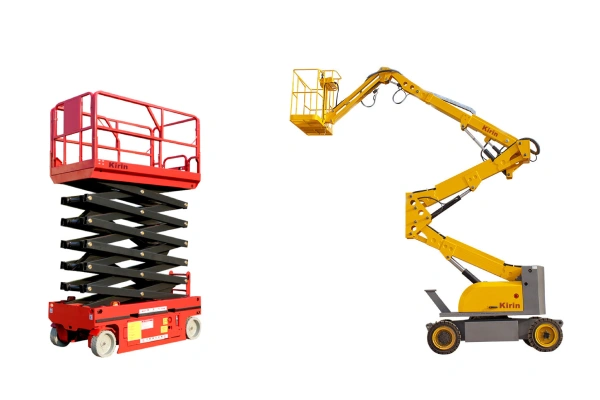
When working at heights, safety and stability are non-negotiable. Whether you are managing a massive construction site, performing routine facility maintenance, or operating an aerial platform in a rugged industrial environment, understanding the mechanical limitations of your equipment can mean the difference between a successful workday and a catastrophic accident.
Among the various technical specifications of aerial work platforms, boom lift gradeability is one of the most critical—yet frequently misunderstood—metrics. This comprehensive guide will break down everything you need to know about boom lift gradeability, why it matters, how it is calculated, and how to ensure safe operation when navigating inclines.
Introduction to Boom Lift Gradeability
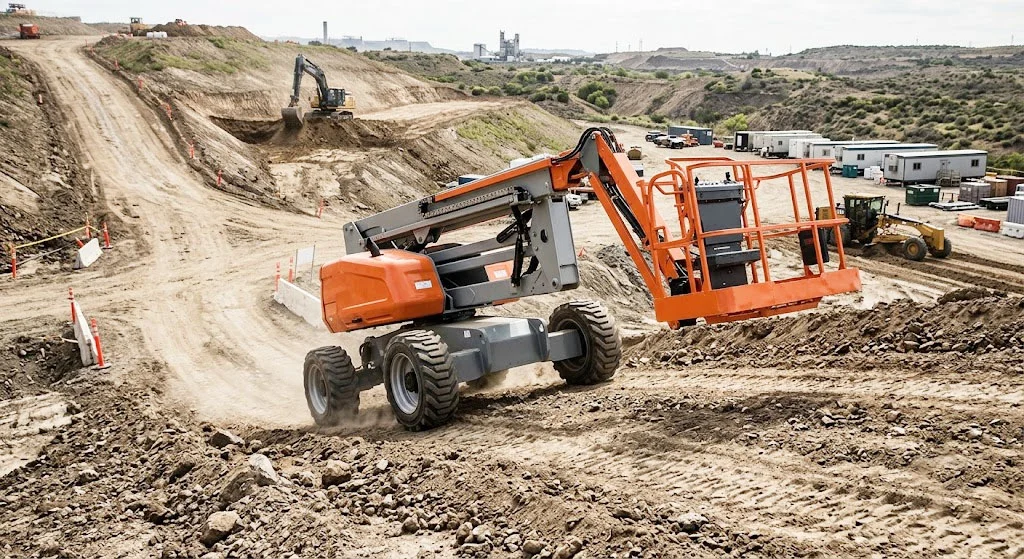
Aerial lifts are engineering marvels designed to lift workers, tools, and materials to extreme heights. However, before a boom lift can elevate anyone into the air, it must first safely navigate the terrain of the job site. Construction sites are rarely perfectly flat; they are filled with ramps, embankments, excavations, and sloped access roads.
Failing to understand how a machine handles these inclines poses severe risks, including tip-overs, loss of traction, and structural strain on the equipment. By mastering the concepts behind gradeability of a boom lift, fleet managers, safety coordinators, and operators can prevent accidents, maximize productivity, and select the exact equipment needed for challenging environments.
What Is Boom Lift Gradeability?
In technical terms, boom lift gradeability refers to the maximum slope or incline that a specific machine can climb or descend while in its stowed (lowered) transport position. It is a measure of the machine’s tractive effort, powertrain capability, and structural balance.
Gradeability is almost always expressed as a percentage rather than in degrees. This often causes confusion on the job site.
- A 100% grade represents a 45-degree angle (where the rise equals the run: for every 10 feet of horizontal distance, the ground rises 10 feet).
- Therefore, a boom lift gradeability rating of 30% does not mean 30 degrees; it means the machine can climb a slope that rises 3 feet for every 10 feet of horizontal travel (which equates to roughly 17 degrees).
Grade Percentage = ( Rise\Run) × 100
It is vital to remember that a machine’s gradeability rating is strictly for the unit in its stowed position (boom lowered and retracted). It is not an indicator of how steep a slope the machine can be on while the boom is elevated.
Why Boom Lift Gradeability Matters in Real Work Environments
Understanding boom lift gradeability isn’t just about reading a spec sheet; it has direct, real-world implications for site safety and operational efficiency.
Preventing Tip-Overs and Accidental Overturns
The center of gravity of a boom lift shifts dramatically when moving on an incline. If an operator attempts to drive a machine up a slope that exceeds its rated gradeability of boom lifts, the machine can lose longitudinal stability, causing it to tip backward or forward.
Avoiding Powertrain and Brake Failure
Driving a massive piece of machinery up a steep hill strains the hydraulic pumps, wheel motors, and engines. Conversely, a boom lift traveling down grade puts massive stress on the dynamic braking systems. Exceeding these limits can cause component failure, leading to a runaway machine.
Ensuring Site Efficiency
If you underestimate the terrain and rent a machine with insufficient gradeability, it may get stuck at the bottom of an access ramp. This leads to costly project delays, unexpected towing fees, and the need to re-rent a more capable unit.
Key Factors That Affect Boom Lift Gradeability
A boom lift’s ability to climb slopes is determined by a complex interplay of engineering design, physics, and environmental factors. Here are the primary components that dictate boom lift gradeability:
Machine Weight and Counterbalance System
Boom lifts are incredibly heavy machines, often weighing between 15,000 to over 50,000 pounds. A massive counterweight is built into the turntable to balance the weight of the extended boom. When climbing, this heavy weight works against gravity. The distribution of this weight dictates how much downforce is applied to the driving wheels to maintain traction.
Tire Type (Solid vs. Pneumatic vs. Rough Terrain)
Tires are the only contact point between the machine and the ground.
- Foam-filled or solid tires provide excellent puncture resistance but can be rigid.
- Rough terrain (RT) tires feature deep, aggressive treads designed to bite into soft soil, significantly improving real-world gradeability on unpaved surfaces.
- Smooth or worn tires drastically reduce a machine’s actual climbing ability, regardless of what the manufacturer’s manual states.
Drive System (2WD vs. 4WD)
The drive configuration is a massive factor when driving boom lift on slope areas.
- 2-Wheel Drive (2WD): Usually reserved for flat, slab-floor indoor applications. 2WD lifts typically feature lower gradeability ratings (around 20% to 30%) and struggle on loose surfaces.
- 4-Wheel Drive (4WD): Standard for outdoor and rough terrain lifts. 4WD distributes torque to all four wheels, allowing the machine to maintain momentum even if one tire loses traction. 4WD models boast the highest boom lift gradeability ratings (often 40% to 45% or more).
Chassis Design and Ground Clearance
The physical shape of the chassis matters. A low-clearance chassis might high-center when transitioning from a flat surface to a steep ramp. High ground clearance, oscillating axles, and a well-engineered wheelbase allow the machine to adapt to uneven slopes without losing wheel contact.
Load Weight and Platform Extension Effects
While gradeability is rated with an empty platform, any added weight (operators, tools, materials) alters the machine’s center of gravity. Furthermore, trying to drive while the boom is slightly raised or extended completely changes the stability dynamics, severely diminishing safe climbing capacity.
Surface Conditions (Gravel, Mud, Concrete, Slopes)
Manufacturer gradeability ratings are calculated based on hard, dry, high-traction surfaces like concrete or asphalt. Real job sites feature mud, loose gravel, wet grass, or slick clay. A machine rated for a 45% slope on dry concrete might lose traction and slide on a 15% muddy grade.
| Factor | High-Gradeability Impact | Low-Gradeability Impact |
| Drive Train | 4-Wheel Drive (4WD) | 2-Wheel Drive (2WD) |
| Tires | Deep-tread Rough Terrain (RT) | Smooth/Slab Solid Tires |
| Surface | Dry, compacted gravel/concrete | Wet mud, loose soil, ice |
| Axles | Oscillating active axles | Rigid fixed axles |
Typical Boom Lift Gradeability Ratings Explained
When shopping for or renting equipment, you will notice distinct patterns in boom lift gradeability across different classes of machines:
- Electric Slab Boom Lifts: Designed for indoor warehouse maintenance, these compact units usually feature solid, non-marking tires and 2WD. Their gradeability typically ranges from 20% to 30%. They are meant for small indoor ramps, not rugged hillsides.
- Diesel/Gas Rough Terrain Telescopic Booms: Built for heavy construction, these 4WD monsters feature oscillating axles and aggressive tires. They typically feature a boom lift gradeability rating of 40% to 45%, allowing them to conquer steep, unpaved job site access points.
- Articulating Knuckle Booms: Because of their versatile geometry and weight distribution, rough-terrain articulating lifts also frequently hit the 40% to 45% gradeability mark, providing excellent agility on uneven ground.
- Towable Boom Lifts: Setting up a towable boom lift on slope setups requires extreme caution. These lighter units usually have lower towing and self-propelled gradeability ratings (around 12% to 20%) and rely heavily on outriggers to level out before operation.
Safe Operating Guidelines on Slopes
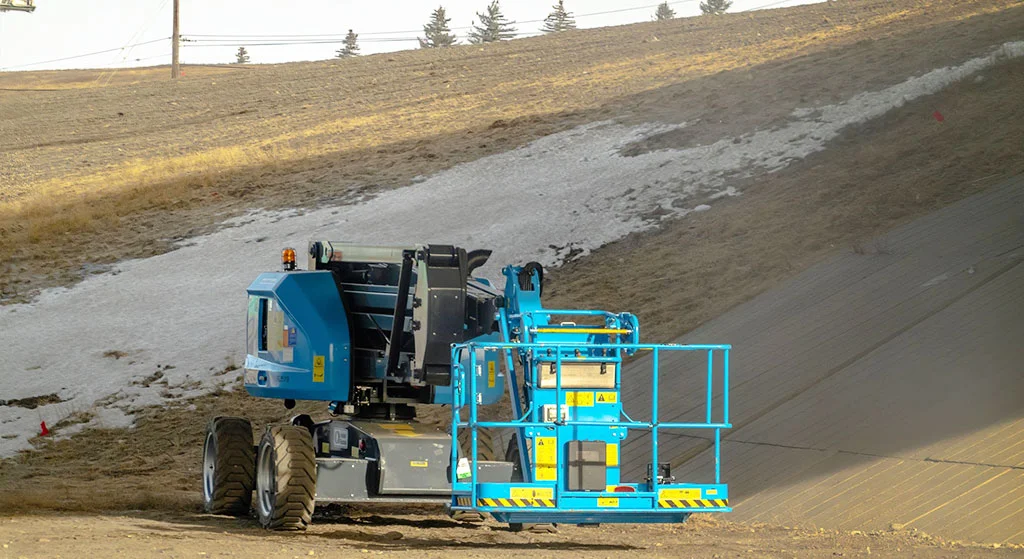
Operating near or on an incline demands strict adherence to safety protocols. Use these guidelines to ensure safety when encountering a slope:
- Read the Manual: Always consult the specific manufacturer’s operation manual for the exact gradeability of a boom lift you are operating. Never guess.
- Stow the Boom: Ensure the boom is fully lowered, retracted, and centered over the drive axles before attempting to drive up or down an incline.
- Orient the Chassis Correctly: Most manufacturers recommend driving up slopes with the counterweight positioned “uphill” to maintain optimal weight distribution over the drive wheels.
- Check the Tilt Alarm: Boom lifts are equipped with a tilt sensor. If you are driving boom lift on slope environments and the tilt alarm sounds, immediately lower the boom if elevated, and carefully drive the machine back to a level surface. Never override a tilt alarm.
- Assess the Surface: Inspect the ground for mud, ice, loose rocks, or holes. If the surface compromises traction, do not attempt the slope, even if the angle is below the official machine rating.
Common Mistakes Operators Make with Boom Lift Gradeability
Even experienced operators can make critical errors when dealing with inclines. Here are the most common pitfalls to avoid:
- Confusing Percentages with Degrees: As discussed, a 45% grade is 24 degrees. Assuming a 45% rating means a 45-degree angle will lead to an immediate tip-over disaster.
- Elevating the Boom on an Incline: The maximum slope for boom lift travel only applies when stowed. Elevating the platform on an incline greater than a few degrees (typically 3 to 5 degrees max, depending on the model) will trigger safety cutouts or cause a catastrophic overturn.
- Ignoring a Boom Lift Traveling Down Grade Risks: Operators often worry about going up, but going down can be more dangerous. The weight transfer can lift the rear wheels, causing a loss of steering control and traction.
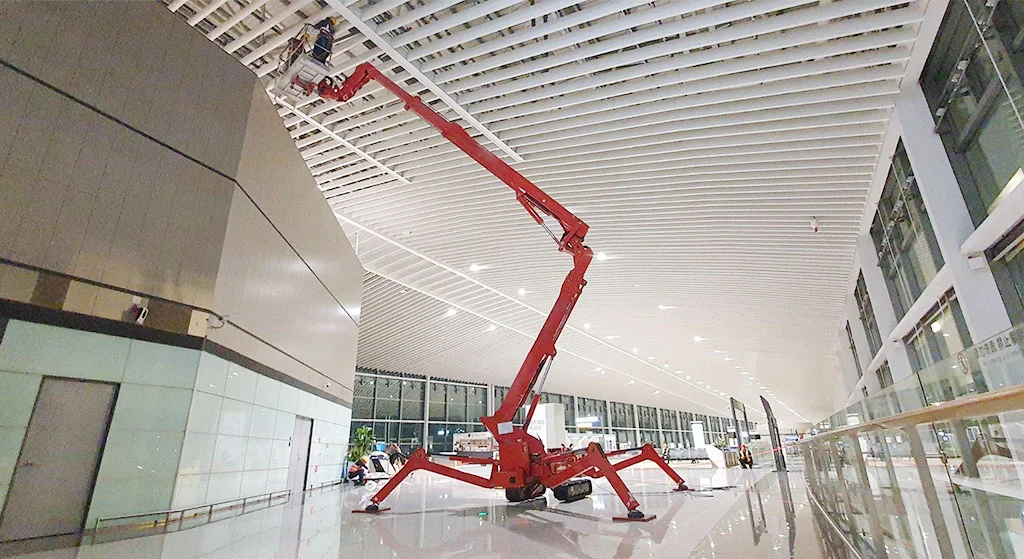
- Not Factoring in Outrigger Limits: For machines like spider lifts or when positioning a towable boom lift on slope applications, operators sometimes forget that outriggers have strict leveling limits. If the slope is too steep, the outriggers cannot safely level the machine.
How to Choose a Boom Lift Based on Gradeability Needs
To select the right machine for your project, follow this step-by-step evaluation process:
1. Measure Your Steepest Grade
Use a digital level or site survey tools to find the exact percentage of the steepest slope, ramp, or hill the machine must travel across.
2. Identify the Surface Material
Will the lift travel on dry concrete, wet grass, loose gravel, or deep mud? If the terrain is unpaved, rule out 2WD units immediately and opt for a machine with high boom lift gradeability and 4-wheel drive.
3. Factor in the Total Payload
Calculate the combined weight of your operators, tools, and materials. If you are operating near the machine’s maximum slope capacity, a heavy payload will degrade performance and safety margins.
4. Consult the Specification Sheets
Compare your site data against manufacturer specs. Always choose a machine that offers a safety buffer. If your site has a 35% slope, do not choose a machine maxed out at 35% gradeability; opt for a 45% rated rough-terrain model instead.
Maintenance Tips to Preserve Gradeability Performance
A boom lift’s gradeability rating is only accurate if the machine is maintained in peak mechanical condition. Neglect directly compromises climbing performance.
- Tire Pressure and Tread Inspection: For pneumatic tires, incorrect pressure alters the contact patch and reduces traction. Inspect solid or foam-filled tires for chunking, tearing, or bald treads that reduce grip on slopes.
- Hydraulic System Care: Boom lifts rely on robust hydraulic pressure to deliver torque to the wheel motors. Check hydraulic fluid levels daily and inspect for leaks. Contaminated fluid or worn pumps drastically reduce a machine’s climbing power.
- Brake Calibration: Ensure the automatic parking and dynamic braking systems are inspected during annual and frequent inspections. A boom lift traveling down grade must be able to stop instantly if the controls are released.
- Engine Tuning: Internal combustion engines (diesel/gas) or electric battery banks must perform at 100%. A loss of engine horsepower or a dying battery pack means the machine will stall midway up a steep ramp.
Real-World Applications of High-Gradeability Boom Lifts
High-gradeability boom lifts are essential across a wide variety of challenging industries:
- Civil Infrastructure and Bridge Construction: Workers often have to position lifts on sloped embankments, highway medians, or rugged riverbanks to access bridges and overpasses.
- Wind and Solar Farm Maintenance: Renewable energy sites are frequently located on rolling hills or mountainous terrain. 4WD articulated boom lifts with 45% gradeability are standard for accessing these remote assets.
- Large-Scale Commercial Landscaping: Trimming trees or installing fixtures on sloped corporate campuses requires machines capable of navigating turf slopes safely.
- Industrial Oil & Gas Refineries: Navigating the complex layout of a refinery often involves traveling over steep earthen dikes, containment berms, and structural ramps.
FAQ About Boom Lift Gradeability
What is the maximum safe slope for a boom lift?
The maximum slope for travel depends entirely on the machine. Rough terrain 4WD boom lifts can typically handle a maximum stowed slope of 40% to 45%. However, for operating (elevating the boom), the maximum safe slope is drastically lower, usually between 3% and 5% (approx. 1.7 to 2.8 degrees), controlled by the machine’s tilt sensor.
Can boom lifts operate sideways on slopes?
Driving or operating a boom lift perpendicular (sideways) to a slope is highly dangerous. Boom lift gradeability ratings are calculated for driving straight up or straight down an incline. Side slopes dramatically increase the risk of a lateral tip-over. Always travel straight up or down a grade whenever possible.
Does load affect gradeability?
Yes. Manufacturer gradeability of boom lifts ratings assume an empty platform. Adding heavy tools, materials, or multiple operators alters the center of gravity and increases the total mass the powertrain must push uphill, reducing actual climbing capability.
What happens if you exceed gradeability limits?
Exceeding limits can result in wheel spinout, hydraulic stalling, brake failure when a boom lift traveling down grade, or a catastrophic machine tip-over. It also causes severe structural wear and voids equipment warranties.
Conclusion
Mastering boom lift gradeability is a cornerstone of aerial lift safety. By understanding that gradeability represents a machine’s climbing limits strictly in its stowed position, recognizing the environmental factors that diminish traction, and adhering to strict operating guidelines, you can ensure your team works safely and efficiently on any terrain.
Never compromise on safety: always measure your site slopes, inspect your equipment, and choose a boom lift that gives you an ample safety margin for the job at hand.
If you are looking for high-performance, high-gradeability aerial work platforms for your next challenging project, the team at Kirin Lift is here to help you choose the ideal equipment configuration. Contact our equipment specialists today at info@klingtec.com or reach out directly via WhatsApp at +86 188 6686 3188 to find the perfect machine for your job site terrain.