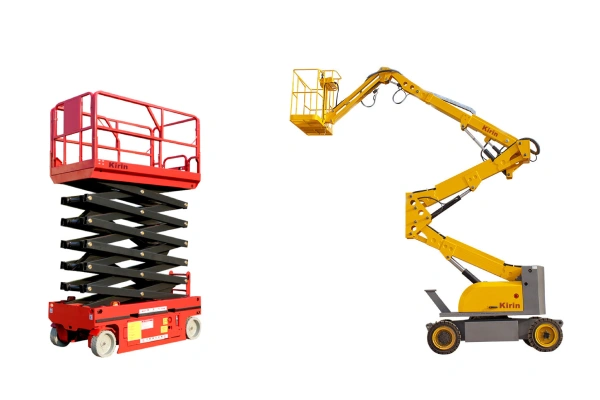
In modern industrial, construction, and facility maintenance environments, aerial work platforms must balance powerful performance with strict environmental compliance. As indoor emissions standards tighten and urban noise regulations expand, the battery-operated boom lift has become an indispensable asset for fleet managers, contractors, and facility operators.
This comprehensive guide breaks down the core features, structural variations, practical applications, and maintenance practices that make the battery-operated boom lift a leading choice for high-altitude operations.
What Is a Battery-Operated Boom Lift?
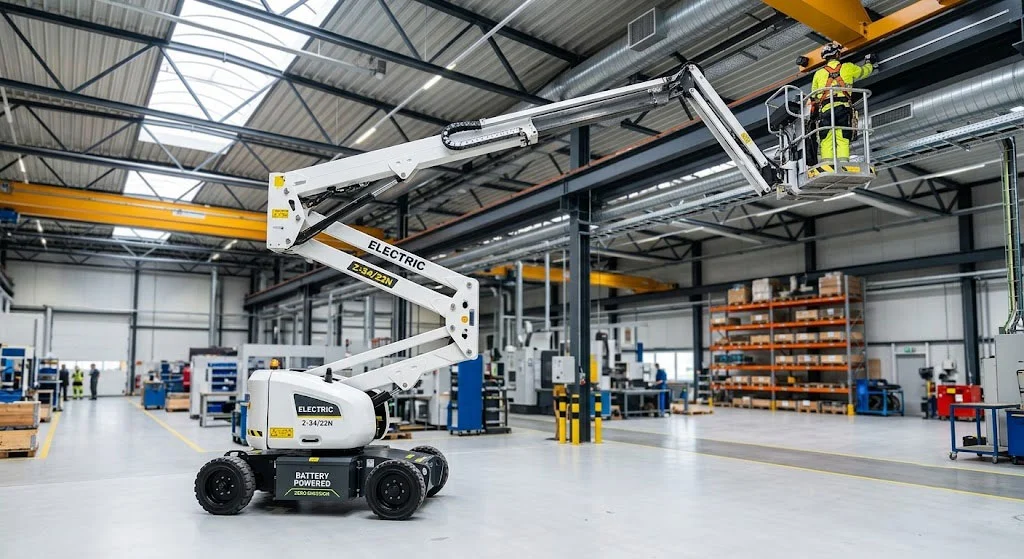
A battery-operated boom lift is a mobile elevating work platform (MEWP) engineered to lift personnel, tools, and materials to elevated work zones using clean electric power. Unlike traditional internal combustion models, these lifts rely entirely on an industrial boom lift battery bank—typically high-capacity lead-acid or advanced lithium-ion systems—to drive both the hydraulic functions and the machine’s drivetrain.
Main Types of Battery-Operated Boom Lifts
Selecting the proper equipment configuration depends heavily on the specific spatial constraints and reach requirements of your work site:
- Articulating Boom Lifts: Featuring a jointed “up-and-over” arm configuration, these lifts allow operators to navigate around overhead obstructions, structural piping, and complex architectural elements.
- Telescopic Boom Lifts: Designed with a straight, telescoping arm, these machines offer maximum horizontal outreach, making them ideal for work sites where the machine’s base cannot be positioned directly adjacent to the work area.
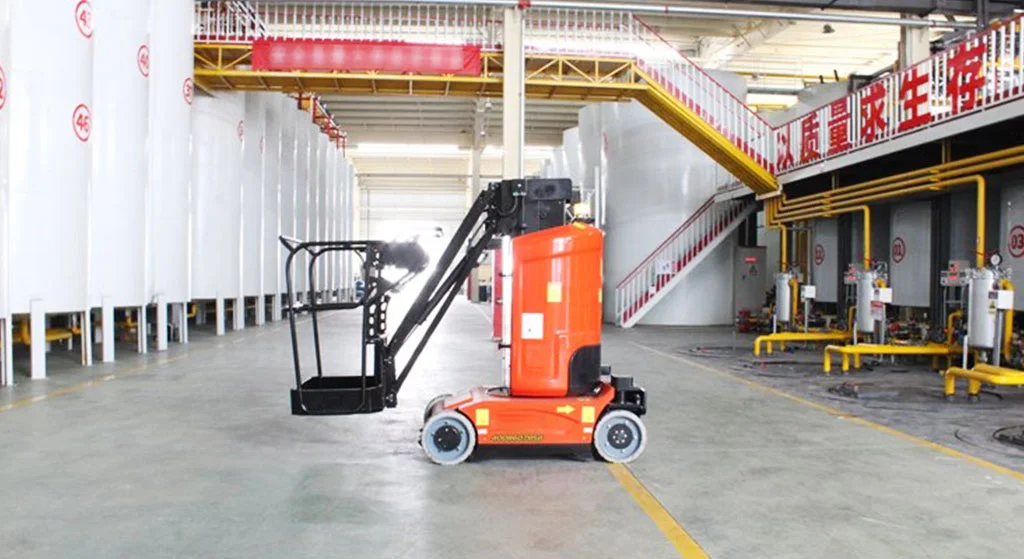
- Vertical Mast Boom Lifts: A highly compact option utilizing a vertical elevating mast combined with a small jib, built specifically for tight warehouse aisles and precise, narrow-access maintenance tasks.
Key Features of a Battery-Operated Boom Lift
The engineering behind a modern battery-operated boom lift prioritizes clean operation, precise control, and spatial adaptability.
Zero-Emission Operation
Because they do not emit exhaust gasses or carbon monoxide, these machines comply fully with strict indoor air quality standards and environmental regulations, making them completely safe for confined spaces.
Quiet Working Performance
The electric motors run at a fraction of the decibel level of diesel engines. This low-noise operation is a critical asset when working in occupied office buildings, hospitals, schools, or residential neighborhoods during night shifts.
Compact and Maneuverable Design
Most electric models feature a narrow chassis, a tight turning radius, and non-marking tires. These features allow operators to navigate standard doorways, maneuver down narrow corridors, and work on delicate finished flooring without causing structural damage.
Advanced Safety Features
High-quality electric lifts integrate tilt sensors, automatic pothole protection systems, overload sensors, and emergency lowering valves to ensure compliance with global safety standards, including CE, ANSI, and OSHA regulations.
Long Battery Runtime
Equipped with heavy-duty battery boom lift power setups, these machines provide consistent voltage output throughout the shift, allowing for reliable operation without midday recharges.
Benefits of Using a Battery-Operated Boom Lift
Investing in a battery-operated boom lift yields significant operational and financial advantages over traditional internal combustion alternatives:
- Reduced Total Cost of Ownership (TCO): Without engine oil, spark plugs, air filters, or fuel systems to maintain, routine servicing costs are dramatically lower.
- Lower Energy Costs: Recharging an electric boom lift battery system from standard grid power is significantly less expensive than purchasing diesel fuel.
- Versatile Indoor/Outdoor Flexibility: While optimized for indoor use, many modern electric lifts feature solid rubber or foam-filled rough terrain tires, allowing them to transition seamlessly to outdoor slab work.
Common Applications of Battery-Operated Boom Lifts
The unique combination of zero emissions and a compact footprint allows a battery-operated boom lift to excel across a wide range of industries:
- Warehouse and Logistics Management: Ideal for high-bay racking inspections, inventory audits, and overhead lighting maintenance.
- Facility and Property Maintenance: Widely used for window cleaning, HVAC duct maintenance, painting, and structural repairs in commercial properties.
- Aviation and Automotive Manufacturing: Used in 4S dealerships, assembly plants, and aircraft hangars to access upper machinery components and vehicle chassis safely.
- Construction and Fit-Out Projects: Essential during the secondary phases of commercial construction, such as installing electrical conduit, drywalling, and ceiling finishes.
Battery-Operated Boom Lift vs Diesel Boom Lift
When planning equipment procurement, understanding the operational boundaries between electric and diesel power is crucial.
| Feature | Battery-Operated Boom Lift | Diesel Boom Lift |
| Primary Environment | Indoor facilities, slab work, noise-sensitive zones | Outdoor construction sites, rough unpaved terrain |
| Emissions | Zero local emissions | Exhaust fumes requiring open-air ventilation |
| Noise Level | Ultra-quiet electric motor | High decibel engine operation |
| Maintenance Needs | Minimal (Battery charging and hydraulic checks) | High (Engine oil, fuel filters, exhaust components) |
| Initial Investment | Moderately higher upfront cost (offset by low operating expenses) | Standard initial cost with recurring fuel and maintenance expenses |
How to Choose the Right Battery-Operated Boom Lift
To maximize safety and efficiency, evaluate these specific criteria before selecting a model:
- Maximum Working Height and Horizontal Reach: Determine the highest point you need to reach and calculate if you need to extend horizontally over obstructions.
- Platform Load Capacity: Ensure the machine can safely handle the combined weight of your operators, heavy tools, and materials.
- Ground Conditions: Assess whether the lift will operate exclusively on smooth, flat concrete slabs or if it needs to traverse uneven outdoor ground.
- Transport Dimensions: Verify the lift’s stowed width and height to confirm it can pass through your facility’s doorways and service elevators.
Important Safety Tips for Operating a Battery-Operated Boom Lift
Safety is the highest priority during any high-altitude operation. Always enforce the following protocols:
- Pre-Operation Inspection: Check the fluid levels, controls, brakes, and structural components before every shift.
- Utilize Proper PPE: Operators must wear a full-body harness connected to an approved platform lanyard anchor point at all times.
- Respect the Load Capacity: Never exceed the manufacturer’s specified platform weight limit to prevent tipping hazards.
- Monitor Ground Surface Conditions: Ensure the machine is positioned on a stable, level surface capable of supporting its full operating weight before elevating the platform.
Maintenance Tips for Extending Boom Lift Lifespan
Proactive preventative care ensures your aerial lift remains reliable, safe, and productive for years to come.
Regular Battery Maintenance
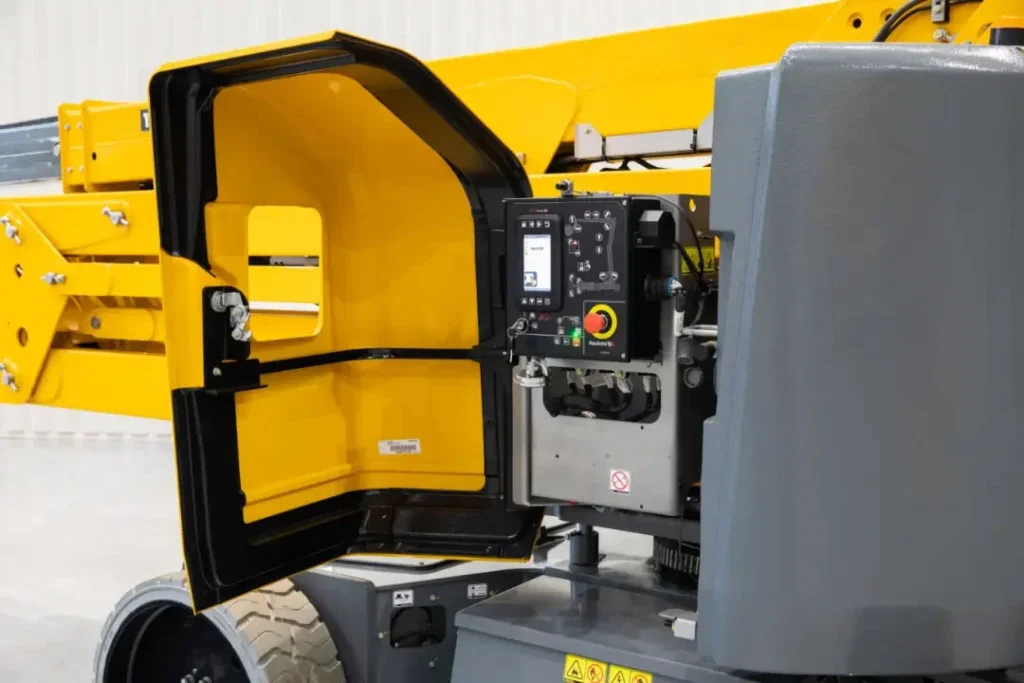
Keep the electric boom lift battery bank clean, dry, and free of corrosion. For flooded lead-acid batteries, monitor distilled water levels consistently and top them off after charging. If using lithium-ion technology, avoid deep discharge cycles to preserve cell lifespan.
Hydraulic System Inspection
Regularly check hydraulic fluid levels and inspect hoses, seals, and cylinders for any signs of leaks or wear. Contaminated hydraulic fluid should be flushed and replaced according to the manufacturer’s recommended schedule.
Tire and Brake Checks
Examine non-marking tires for cracks, deep gouges, or embedded debris. Test the automatic braking system daily to ensure positive engagement on inclines and flat surfaces.
Cleaning Electrical Components
Use low-pressure compressed air to blow dust and debris out of electrical control boxes and contactors. Avoid using high-pressure water near sensitive electronic controllers and wiring harnesses.
Scheduled Preventive Maintenance
Adhere strictly to standard manufacturer service intervals. Documenting professional inspections every six to twelve months ensures long-term operational safety and protects the machine’s resale value.
Conclusion
The battery-operated boom lift represents a smart, eco-conscious, and highly cost-effective solution for modern high-altitude work. By offering quiet, emission-free operation alongside a compact design, these lifts deliver the adaptability required to handle complex indoor tasks and urban outdoor projects with ease.
Looking for Reliable Aerial Lift Solutions?
Contact KIRIN Company for high-quality electric boom lift solutions engineered to meet strict international standards. Whether you require a specialized articulating model or a compact vertical mast lift, our professional technical team is ready to assist.
- Email: info@klingtec.com
- WhatsApp: +86 188 6686 3188
Contact us today to request a comprehensive quote or a complimentary technical consultation for your project.
FAQ Section
What is a battery-operated boom lift used for?
A battery-operated boom lift is primarily used to elevate workers, tools, and maintenance equipment to high, hard-to-reach areas. Common tasks include indoor warehouse stocking, commercial facility maintenance, factory electrical installations, and building renovation work where emissions and noise must be kept to a minimum.
How long does a battery-operated boom lift run on a single charge?
Most high-capacity battery-powered boom lifts are designed to operate for a full standard 8-hour shift on a single charge, depending on the frequency of drive travel and lifting cycles. Transitioning to advanced lithium-ion battery packs can extend this runtime further and allow for rapid opportunity charging during breaks.
Are battery-operated boom lifts suitable for outdoor use?
Yes, electric boom lifts can be used outdoors, provided they are operated on stable, flat surfaces like concrete slabs, asphalt, or hard-packed gravel. If your outdoor site involves muddy or highly uneven terrain, you should select a model specifically equipped with a rough-terrain package and higher ground clearance.
What are the advantages of electric boom lifts over diesel models?
Electric models provide zero-emission operation, near-silent performance, lower routine maintenance costs, and a much tighter turning radius. These advantages allow them to operate safely inside enclosed public buildings where diesel engines are prohibited due to exhaust fumes and loud noise.
How often should boom lift batteries be charged?
To maximize boom lift battery longevity, the system should be plugged in and fully recharged at the end of every workday. Avoid leaving batteries in a deeply discharged state overnight, and ensure they are charged in a well-ventilated area away from open flames.
Are battery-operated boom lifts safe for indoor applications?
Absolutely. Because they feature zero emissions, low noise levels, and non-marking tires that won’t scuff finished floors, they are considered the safest and most efficient choice for indoor commercial, industrial, and institutional workspaces.