When you operate aerial work platforms, safety and reliability are your top priorities. At the heart of every aerial lift’s lifting power is a robust, hard-working component: the boom lift hydraulic cylinder.
Without a properly functioning boom lift hydraulic cylinder, your equipment becomes an expensive, stationary weight on the job site. Regular upkeep is non-negotiable if you want to prevent sudden failures, avoid costly repairs, and keep your operators safe. This comprehensive guide breaks down everything you need to know about maintaining your boom lift hydraulic cylinder to ensure peak performance.
Why the Boom Lift Hydraulic Cylinder Matters
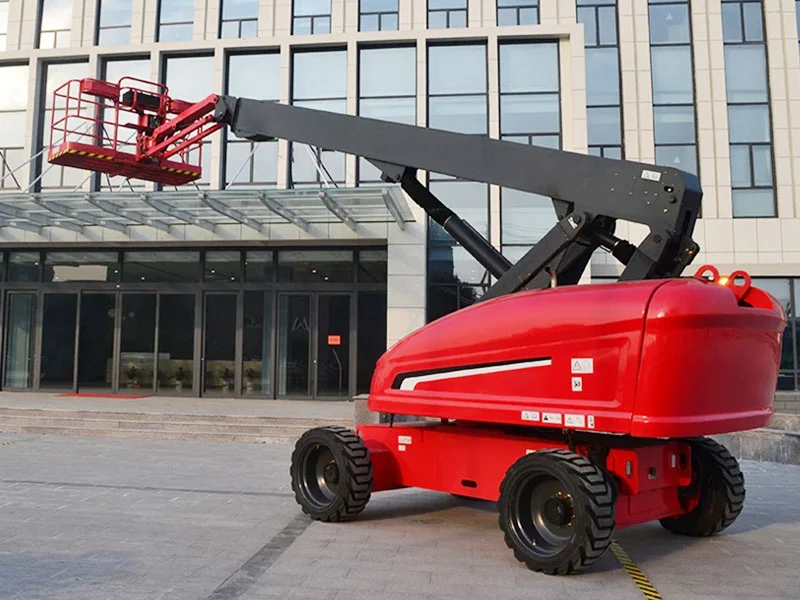
The boom lift hydraulic cylinder is the muscle of your aerial platform. It converts fluid energy into powerful linear force, allowing the machine to extend, elevate, and articulate heavy loads to extreme heights.
If a boom lift hydraulic cylinder fails or loses pressure while an operator is mid-air, the consequences can be catastrophic. Beyond the obvious safety hazards, a malfunctioning boom lift cylinder leads to immediate project delays, expensive emergency field service, and accelerated wear on surrounding mechanical components. Taking care of your boom lift hydraulic cylinder isn’t just about equipment longevity—it’s about protecting your crew and your bottom line.
Understanding the Boom Lift Hydraulic Cylinder System
To properly maintain a boom lift hydraulic cylinder, you first need to understand how it operates and where it fits within the machine’s overall ecosystem.
Basic Components of a Hydraulic Cylinder System
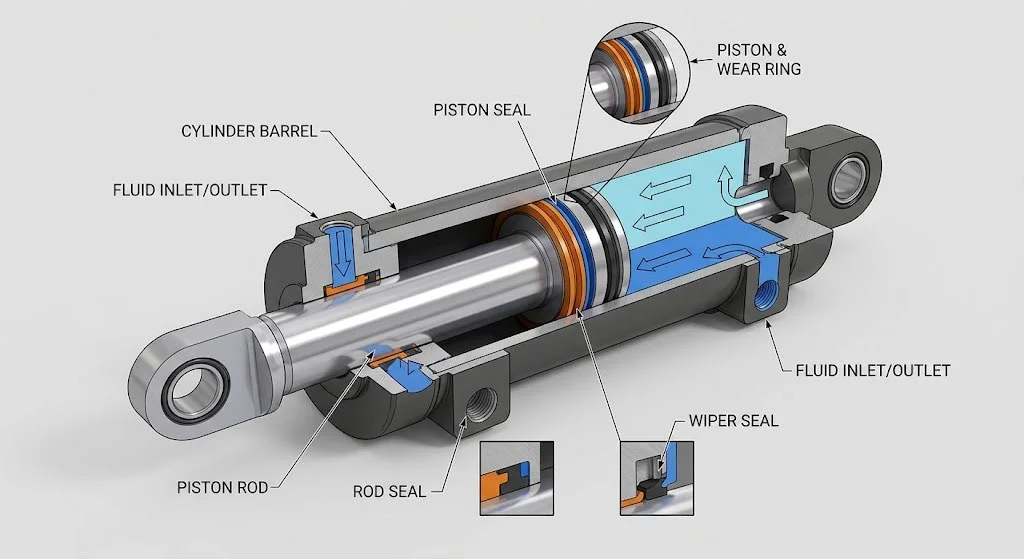
A standard boom lift hydraulic cylinder consists of several precision-engineered parts working in tandem:
- Cylinder Barrel: The heavy-duty housing that contains the high-pressure fluid.
- Piston and Rod: The piston moves inside the barrel, driven by fluid, while the chrome-plated rod extends outward to move the boom.
- Cylinder Head and Gland: The end cap through which the rod extends, housing vital sealing systems.
- Seals and Wipers: Components that keep high-pressure oil inside while wiping dirt away from the retreating rod.
- Boom Lift Cylinder Adapter: Specialized fittings and adapters that securely connect the cylinder ports to the main hydraulic hoses.
How Hydraulic Pressure Creates a Lifting Force
Hydraulic systems operate on Pascal’s Principle. When the lift’s pump forces hydraulic oil through the boom lift cylinder adapter into the cylinder barrel, it pushes against the piston. Because hydraulic fluid cannot be compressed, this fluid pressure translates into a massive, smooth linear force that extends the heavy steel sections of the boom.
Single-Acting vs. Double-Acting Cylinders
- Single-Acting Cylinders: Use hydraulic pressure to push the cylinder in one direction (usually up), relying on gravity or internal springs to retract it.
- Double-Acting Cylinders: Use hydraulic fluid to power both the extension and the retraction. Most modern boom lift cylinders are double-acting to provide precise control in both directions.
Common Locations of Cylinders in a Boom Lift
A typical boom lift utilizes multiple boom lift hydraulic cylinder units across its frame:
- Master/Slave Leveling Cylinders: Keep the platform level relative to the ground.
- Lift Cylinders: Push the primary and secondary boom sections upward.
- Telescope Cylinders: Housed inside the boom structure to extend it outward.
- Steering Cylinders: Found in the chassis to handle wheel articulation.
Common Problems in Boom Lift Hydraulic Cylinders
Even the toughest hydraulic boom lift cylinder will face wear and tear. Spotting these issues early prevents minor glitches from turning into complete system failures.
- Hydraulic Oil Leaks: Puddles beneath the machine or fluid weeping down the barrel usually indicate compromised seals or a loose boom lift cylinder adapter.
- Seal Wear and Failure: Over time, heat, friction, and debris degrade internal seals, causing internal bypassing or external fluid leaks.
- Rod Scoring or Corrosion: Scratches (scoring) or rust on the shiny cylinder rod damage the seals every time the rod retracts.
- Slow or Uneven Lifting Movement: Often caused by trapped air, low fluid levels, or internal fluid bypassing the piston seals.
- Pressure Loss Issues: If a boom “drifts” or slowly sinks under a load, the boom lift hydraulic cylinder is losing internal pressure.
- Contamination Inside the Hydraulic Fluid: Microscopic dirt, water, or metal particles act like sandpaper inside the system, destroying the boom lift hydraulic cylinder from the inside out.
Key Maintenance Tip #1: Regular Visual Inspection
The simplest way to maintain a boom lift hydraulic cylinder is to use your eyes before turning the key.
Walk around the machine daily. Check the polished cylinder rods for deep scratches, pitting, or signs of rust. Inspect the connection points where the boom lift cylinder adapter joins the hoses, looking for dampness or active drips. Catching a nicked rod or a weeping seal during a pre-shift inspection prevents an unexpected breakdown mid-job.
Key Maintenance Tip #2: Maintain Hydraulic Fluid Quality
Fluid is the lifeblood of your hydraulic boom lift cylinder. Contaminated or degraded oil is responsible for up to 80% of all hydraulic system failures.
Never mix different grades of hydraulic oil, and adhere strictly to the manufacturer’s fluid change intervals. Periodically check the fluid level and clarity; cloudy oil indicates water contamination, while dark, burnt-smelling oil indicates overheating. Always utilize high-quality filtration systems to catch microscopic debris before it scores your boom lift hydraulic cylinder walls.
Key Maintenance Tip #3: Inspect and Replace Seals
Seals bear the brunt of the pressure inside a boom lift hydraulic cylinder.
If you notice a film of oil coating the rod as it extends, your rod seals or wiper seals are failing. Do not wait for a catastrophic blowout to take action. Replacing a worn seal early is a relatively quick, inexpensive fix that protects the expensive internal piston and barrel from irreversible damage.
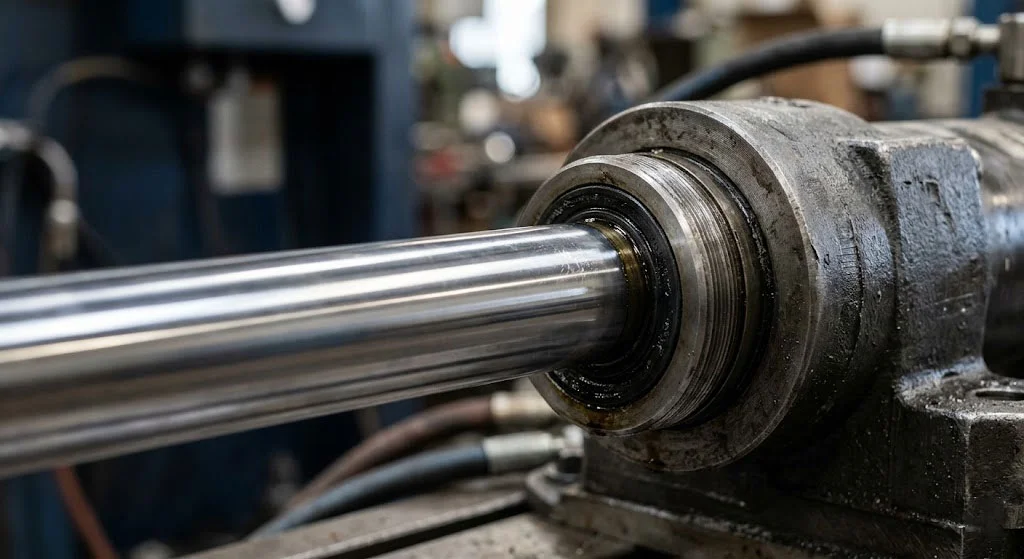
Key Maintenance Tip #4: Keep Cylinder Rods Clean and Protected
When a boom lift hydraulic cylinder extends, the chrome rod is exposed to the elements—including paint overspray, welding slag, concrete dust, and mud.
When the rod retracts, the wiper seal attempts to clean it, but harsh contaminants can still breach the seal or scar the chrome surface. Regularly wipe down exposed rods with a clean, lint-free cloth. If the machine will sit idle for an extended period, store it with the boom lift hydraulic cylinder units fully retracted to protect the polished rods from airborne moisture and corrosion.
Key Maintenance Tip #5: Monitor Operating Pressure
Operating your machine outside its designated pressure limits puts extreme stress on every boom lift hydraulic cylinder.
Too little pressure results in a sluggish, weak lift, while excessive pressure can crack cylinder heads, balloon the barrel, or burst hoses at the boom lift cylinder adapter. Use built-in pressure gauges or diagnostic tools during routine servicing to verify that relief valves are set correctly and that the system operates within OEM specifications.
Key Maintenance Tip #6: Lubricate Moving Components Properly
A boom lift hydraulic cylinder doesn’t work in isolation; it is anchored to the boom by heavy steel pins and bushings.
If these pivot points seize up or dry out, they introduce twisting forces (side-loading) to the cylinder rod. Side-loading forces the rod against one side of the gland, causing rapid, uneven seal wear and potential rod bending. Use high-quality grease on all cylinder mounting pins according to your hourly service schedule.
Key Maintenance Tip #7: Schedule Preventive Maintenance Checks
Don’t wait for something to break before giving your equipment attention. Implement a strict preventive maintenance timeline based on operational hours (e.g., 250-hour, 500-hour, and annual checks).
A professional technician should periodically test the drift rate of each boom lift hydraulic cylinder to measure internal bypass and ensure compliance with safety standards.
Safety Practices When Servicing Hydraulic Cylinders
Hydraulic systems store massive amounts of energy, even when the machine is turned off. Before performing any boom lift cylinder repair or inspection:
⚠️ CRITICAL SAFETY WARNING: Always fully lower the boom or securely block the boom structure using approved mechanical supports before loosening any fittings. Never crack open a boom lift cylinder adapter or hose while the system is pressurized. Escaping hydraulic fluid under pressure can easily penetrate skin, causing severe, life-threatening injuries. Wear proper PPE, including safety glasses and heavy-duty gloves, at all times.
When to Repair vs. Replace a Boom Lift Hydraulic Cylinder
When a boom lift hydraulic cylinder acts up, you face a choice: fix it or buy a new one?
| Scenario | Best Action |
| Leaking oil, worn seals, or minor weeping | Boom lift cylinder repair (Re-seal kit) |
| Loose or stripped threads at the adapter port | Replace the boom lift cylinder adapter or port |
| Deeply scored chrome rod, bent rod, or rusted barrel | Full boom lift cylinder replacement |
| Barrel is structural deformed or “ballooned” from over-pressure | Immediate full replacement |
If the internal walls of the cylinder barrel are gouged or warped, a standard boom lift cylinder repair will not hold. In these cases, installing brand-new boom lift cylinders is the only safe option.
Conclusion: Extending the Life of Your Boom Lift Hydraulic Cylinder
Your boom lift hydraulic cylinder is a durable piece of engineering, but it relies entirely on your maintenance habits to survive the harsh realities of the job site. By committing to daily visual inspections, keeping your hydraulic fluid pristine, protecting the chrome rods, and executing timely boom lift cylinder repair work, you ensure your equipment remains safe, efficient, and ready to reach new heights. Take care of your boom lift hydraulic cylinder, and it will take care of your crew day after day.
Contact Us
Need expert advice or a high-quality boom lift for your fleet? The team at Kirin Lift is here to help you keep your operations moving safely. Reach out to us today:
- Email: info@klingtec.com
- WhatsApp: +86 188 6686 3188
FAQs
How often should I check the fluid in my boom lift hydraulic cylinder system?
You should check the hydraulic fluid level and inspect the visible parts of the boom lift hydraulic cylinder daily before operation. Complete fluid analysis and filtration checks should be done every 500 to 1,000 operating hours, depending on the manufacturer’s guidelines.
What causes a boom lift hydraulic cylinder to drift downward?
Cylinder drift is usually caused by fluid leaking past the internal piston seals or a malfunctioning holding valve. This allows oil to escape the pressurized side of the boom lift hydraulic cylinder, causing the boom to slowly lower on its own.
Can I perform a boom lift cylinder repair myself?
Basic external tasks like changing a leaking boom lift cylinder adapter or wiping down a rod can be done by a trained mechanic. However, internal tear-downs, rod re-chroming, and internal sealing should be handled by professional hydraulic technicians to ensure safety and maintain certification.