As a contractor, managing projects that involve working at heights presents a unique set of challenges. Whether you are a professional arborist pruning mature oaks or a residential contractor painting a multi-story home, having the right equipment is paramount to both safety and efficiency. Among the various types of aerial work platforms available today, a boom lift for trees and houses is arguably one of the most versatile investments or rentals you can make.
However, selecting the wrong machine risks damaging property, harming your crew, or finding yourself unable to safely reach the workspace at all. This comprehensive guide breaks down everything you need to know about selecting the ideal boom lift for trees and houses so you can complete your projects safely, on time, and within budget.
Understanding Boom Lifts
Before diving into specific models and applications, it is essential to understand what these machines are and what makes them uniquely suited for residential construction and tree care operations.
What Is a Boom Lift?
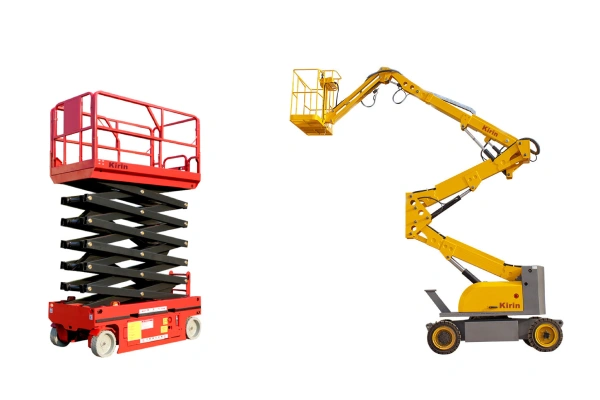
A boom lift is a type of aerial work platform (AWP) designed to lift personnel, tools, and materials to elevated work areas. Unlike scissor lifts, which only move vertically up and down, a boom lift utilizes a hydraulic arm capable of extending both vertically and horizontally. This multidirectional movement allows contractors to navigate over complex obstacles, such as fences, landscaping, porches, and roofs, making a boom lift for trees and houses an indispensable asset on the modern job site.
Key Features of Boom Lifts
When evaluating a boom lift for trees and houses, several key structural features dictate how the machine performs:
- The Boom Arm: The hydraulic extension that provides the vertical height and horizontal outreach.
- The Platform/Basket: The secure enclosure where workers stand. It typically includes control panels, safety harness attachment points, and sometimes integrated power or air lines.
- The Turntable: The rotating base that allows the boom arm to swing left or right, often providing a full 360-degree continuous or non-continuous rotation.
- Chassis and Outriggers: The base structure supporting the weight. Many lifts feature stabilizing outriggers that extend outward to widen the machine’s footprint and prevent tipping on soft or uneven ground.
Boom Lift Types for Trees and Houses
Not all lifts are built the same. Depending on whether you are working in a tight residential cul-de-sac or clearing limbs in an open backyard, you will need to choose a specific equipment configuration.
Telescopic (Straight) Boom Lifts
Telescopic boom lifts, often referred to as “stick lifts,” feature a straight mast that extends outward and upward via telescoping hydraulic sections.
- Pros: They offer incredible horizontal reach and unmatched stability at maximum heights. If you need a boom lift for trees and houses 60 feet or higher in an open area, a telescopic lift is a powerful choice. It allows you to park farther away from a structure or tree trunk and reach straight to the target area.
- Cons: They require a large operational footprint because the arm cannot bend. This makes them difficult to use in tight residential areas where branches, utility lines, or adjacent homes block a straight line of sight.
Articulating (Knuckle) Boom Lifts
Articulating boom lifts feature multiple sections that “hinge” or “knuckle,” allowing the operator to navigate up, over, and around obstacles.
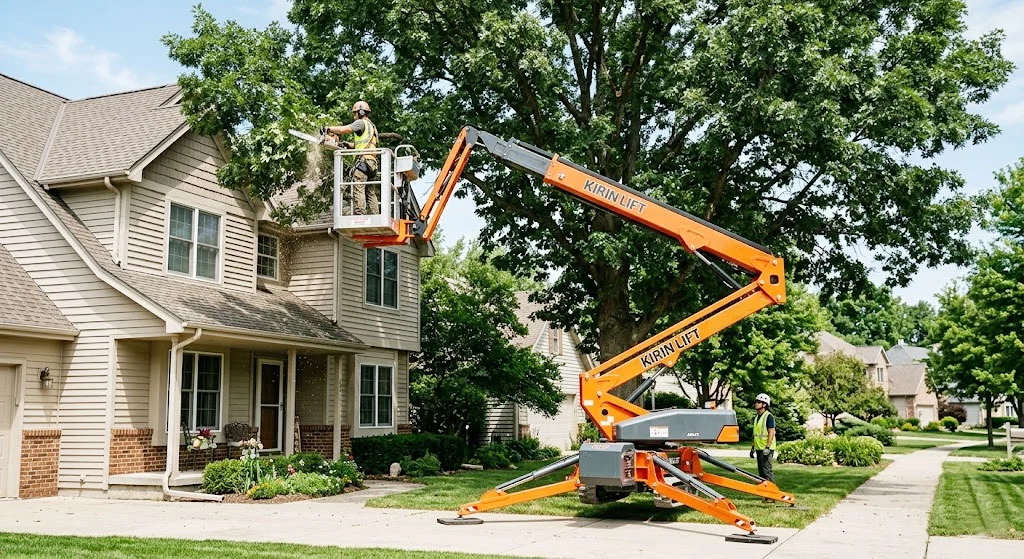
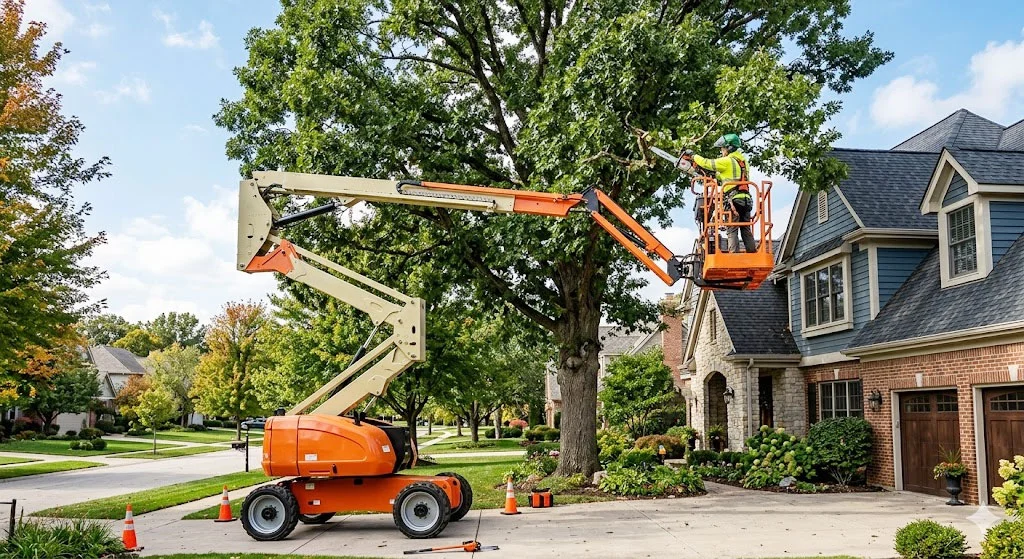
- Application: This is widely considered the best boom lift for tree trimming and residential renovations. If you need to position a basket over a steep residential roofline to paint a chimney, or bend an arm through a dense canopy without damaging healthy branches, an articulating lift is ideal.
- Versatility: It gives you “up-and-over” capabilities, meaning you can lift the primary boom over a fence or roof, and then extend the secondary jib directly toward the workspace. This is the ultimate boom lift for trees and houses when maneuverability is favored over pure vertical height. It is highly sought after as a boom lift for cutting trees because it safely dances around unpredictable branch configurations.
Compact or Trailer-Mounted Boom Lifts
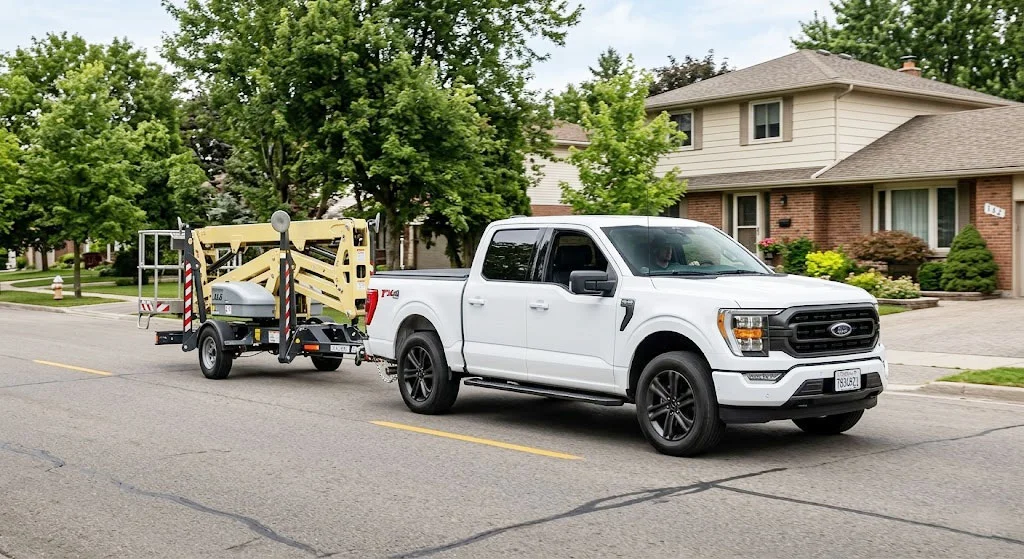
For many residential contractors, heavy-duty commercial lifts are simply too massive. This is where compact crawler lifts (spider lifts) and towable boom lifts for tree work come into play.
- Towable Boom Lifts: These are lightweight units that can be hitched to a standard pickup truck. They rely on manual or hydraulic outriggers for stability. Utilizing towable boom lifts for tree work is highly popular among independent contractors because it eliminates heavy transport fees, commercial driver’s license requirements, and complex logistics.
- Spider Lifts: These compact machines feature rubber tracks that distribute weight evenly, preventing them from ruining manicured residential lawns. They can fold up tightly enough to fit through a standard backyard pedestrian gate, yet unfold into a highly capable boom lift for trees and houses once positioned in the yard.
Factors to Consider When Choosing a Boom Lift
Selecting the perfect boom lift for trees and houses requires balancing the physical constraints of the job site with the technical capabilities of the machine.
Height and Reach Requirements
You must calculate both your vertical working height and your horizontal outreach. Working height is typically defined as 6 feet above the actual platform height, accounting for the reach of an average worker standing in the basket.
- The 60-Foot Benchmark: A boom lift for trees and houses 60 feet is a common sweet spot for residential contractors. This height allows you to comfortably reach the rooflines of three-story homes and access the upper canopy of most mature residential trees. Always consult a layout chart to ensure the machine’s horizontal reach does not drop off too sharply at the specific angle your project requires.
Terrain and Mobility
Residential yards are rarely perfectly flat, paved surfaces. You must evaluate the ground conditions before renting or purchasing a boom lift for trees and houses.
- Rough Terrain (RT) Models: If you are operating on mud, wet grass, slopes, or loose dirt, look for 4WD rough terrain models with lugged pneumatic or foam-filled tires.
- Turf Protection: Heavy machinery can crack concrete driveways and leave deep, destructive ruts in lawns. For delicate residential properties, a lightweight spider lift or a towable option is preferred over a massive 15-ton diesel telescopic unit.
Platform Capacity
Every boom lift for trees and houses has a strict unrestricted and restricted weight limit. Unrestricted capacity means the basket can hold that weight throughout its entire range of motion, while restricted capacity limits movement at maximum horizontal extension.
- What to Calculate: Factor in the weight of the operator, heavy chainsaws, rigging gear, fuel cans, paint buckets, or structural materials. For a boom lift for tree work, ensure the basket has enough surplus capacity to handle occasional small limbs or heavy rigging blocks without tripping the machine’s automatic overload sensors.
Safety and Stability
Stability is a primary concern when using a boom lift for tree trimming. Trees are dynamic; when a heavy limb is cut, the tree shifts, and limbs can fall unpredictably.
- Outriggers: Ensure the lift has reliable outriggers with large spreader pads to distribute weight safely on soft residential soil.
- Tilt Sensors: Modern lifts feature automatic cut-offs if the chassis tilts beyond a safe angle (usually 3 to 5 degrees).
Budget and Cost Considerations
Contractors must weigh the financial implications of renting versus buying a boom lift for trees and houses.
- Renting: Ideal for occasional jobs or when different projects require completely different lift types (e.g., a spider lift this week, a 60-foot stick lift next week). It eliminates maintenance, storage, and transport logistical headaches.
- Buying: Makes financial sense if your weekly schedule constantly requires a boom lift for tree trimming or exterior property maintenance, allowing you to build equity and guarantee equipment availability on demand.
Practical Tips for Contractors
Operating a boom lift for trees and houses requires deep situational awareness and strict adherence to safety protocols.
Inspecting Boom Lifts Before Use
Never start a shift without performing a rigorous pre-operation inspection. This includes checking fluid levels (hydraulic oil, engine oil, fuel), inspecting hoses for leaks, verifying that the emergency descent system works, and checking that the platform gates lock automatically. When using a boom lift for tree work, look closely for any bark, sap, or wood chip buildup in the boom’s telescoping tracks, as this debris can bind the hydraulic mechanisms over time.
Positioning and Maneuvering Around Trees and Houses
- Avoid the Drop Zone: When using a boom lift for cutting trees, never park the main chassis directly under the limbs you intend to drop. Falling wood can crush the control panel, snap hydraulic lines, or tip the machine.
- Watch the Tailswing: Remember that when you rotate the turntable, the counterweight at the back of the machine swings outward in the opposite direction. Keep a safe distance from house gutters, windows, and decorative brickwork to prevent catastrophic structural damage.
- Utility Lines: Maintain a minimum clearance of 10 feet from standard residential overhead power lines, and significantly more for high-voltage transmission lines.
Training and Certification
OSHA and ANSI demand that any worker operating an aerial lift be properly trained and certified. This training covers safe operation, hazard recognition, and the mandatory use of Personal Protective Equipment (PPE)—including a full-body harness and an appropriately rated lanyard attached to an approved anchor point in the basket. Operating a boom lift for trees and houses without formal training is a severe liability that can void insurance coverage and endanger lives.
Case Studies/Examples
Case Study 1: The Tight-Access Backyard Oak
- The Scenario: A tree service company was hired to prune a historic, decaying white oak located in a tightly enclosed residential backyard surrounded by a delicate wooden fence and a pristine lawn.
- The Solution: The contractor avoided heavy diesel lifts and instead utilized a compact, track-mounted spider boom lift for trees and houses.
- The Result: The tracked machine easily squeezed through a 36-inch side pedestrian gate. Its wide outrigger pads protected the turf from rutting, and the articulating arm allowed the arborist to navigate around the home’s roof gutters to safely access the canopy. It proved to be the best boom lift for tree trimming in tight urban environments.
Case Study 2: Commercial Painting and Fascia Repair
- The Scenario: A general contractor needed to repair fascia boards and paint the exterior of a large, three-story historic estate surrounded by wide lawns but no close fencing obstacles.
- The Solution: The contractor selected a 4WD telescopic boom lift for trees and houses 60 feet.
- The Result: Because there were no dense tree canopies or overhead obstructions blocking a straight path, the telescopic lift allowed the crew to park on the driveway and extend straight up to the peaks. The straight stick design provided maximum stability, allowing two painters to work out of the basket simultaneously with heavy paint sprayers, finishing the job two days ahead of schedule.
Frequently Asked Questions (FAQ)
How high can a typical boom lift reach trees and houses?
For residential work, most contractors utilize lifts ranging from 40 to 60 feet. A boom lift for trees and houses 60 feet is usually more than sufficient for multi-story homes and standard residential tree canopies. However, commercial models can reach heights well over 130 feet if required for massive historic trees or high-rise urban buildings.
Can boom lifts be used on uneven terrain?
Yes, but you must choose the right model. Many articulating and telescopic lifts are explicitly designed for rough terrain, featuring heavy 4WD systems and oscillating axles. Alternatively, towable boom lifts for tree work and compact spider lifts use adjustable hydraulic outriggers to level the machine’s base perfectly on slopes before the boom is allowed to extend.
What is the average weight capacity?
Standard unrestricted platform capacity for a residential boom lift for trees and houses typically ranges between 500 and 650 pounds. This safely accommodates two average-sized workers and their tools. Always check the machine’s load chart, as capacity decreases when the boom is fully extended horizontally.
Is special training required to operate a boom lift safely?
Absolutely. OSHA requires all operators to complete an aerial lift safety training and certification course. Additionally, when using a boom lift for tree work, operators should have specialized knowledge regarding how cutting heavy wood changes load distributions and how to manage falling debris hazards safely.
Conclusion
Choosing the right boom lift for trees and houses is a balancing act between reach, mobility, site constraints, and safety. By matching your specific project environment to the appropriate equipment—whether that means leveraging the up-and-over agility of an articulating lift, the raw reach of a 60-foot telescopic unit, or the low-impact transportability of towable boom lifts for tree work—you protect your crew, your client’s property, and your bottom line.
Take the time to assess your next job site thoroughly, prioritize proper operator training, and select the machine that keeps your business moving safely upward. If you need expert guidance on selecting the perfect aerial platform for your fleet or rental inventory, our team is here to help. Reach out to us today via email at info@klingtec.com or message us directly on WhatsApp at +86 188 6686 3188 to find the ideal lifting solution for your business.