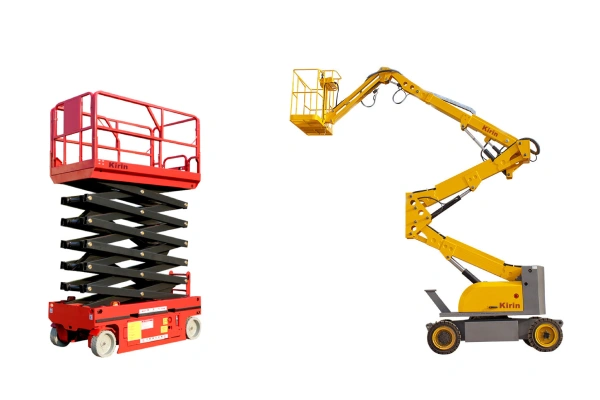
Operating a boom lift places you dozens—or even hundreds—of feet in the air, transforming minor errors into catastrophic accidents. Whether you are navigating a crowded construction yard or handling facility maintenance, adhering to OSHA boom lift safety requirements is not just about avoiding regulatory fines; it is an absolute necessity to ensure everyone returns home safely at the end of the shift.
According to the Occupational Safety and Health Administration (OSHA), mobile elevated work platforms (MEWPs) like telescoping and articulating boom lifts present significant risks if managed incorrectly. To protect your crew and stay completely compliant, you must understand the exact standards, checklists, and safe operating guidelines mandated by federal law.
This comprehensive guide breaks down the essential OSHA boom lift safety requirements every owner, project manager, and operator must know before turning the key.
What Are OSHA Boom Lift Safety Requirements?
OSHA boom lift safety requirements are federal regulations designed to eliminate or significantly reduce the hazards associated with operating vehicle-mounted elevating and rotating work platforms. Officially classified under 29 CFR 1910.67 (for General Industry) and 29 CFR 1926.453 (for Construction), these standards detail the exact rules for design, mechanical testing, operator authorization, and daily operation.
Under these standards, a boom lift is legally defined as an aerial device used to position personnel. Because these machines can move both vertically and horizontally, OSHA enforces unique guidelines that distinguish them from standard scaffolding or scissor lifts. These rules encompass comprehensive training programs, mandatory personal protective equipment (PPE), rigorous pre-use machine diagnostics, and strict on-site work zone evaluations.
Why OSHA Boom Lift Safety Requirements Matter
The core objective of these safety standards is simple: protecting human life. Boom lifts are inherently top-heavy structures that carry workers into high-risk environments. Failing to implement established OSHA boom lift safety requirements frequently results in severe, life-threatening incidents.
The most common aerial lift accidents include:
- Falls: Workers being ejected from the basket due to bumps, sudden movements, or overreaching.
- Tip-overs: Machines collapsing due to steep inclines, overloaded platforms, or high winds.
- Electrocutions: The boom or basket coming into contact with live overhead power lines.
- Entrapment: Operators getting crushed between the basket guardrails and overhead structures.
Beyond the moral imperative of keeping your workforce safe, compliance directly impacts your business’s bottom line. Violating OSHA boom lift safety requirements can lead to severe financial penalties, with serious violations exceeding $15,000 per instance, and willful or repeated infractions surging past $150,000. Additionally, a history of safety failures degrades your company’s safety rating, driving up insurance premiums and rendering you ineligible to bid on major commercial contracts.
Operator Training and Certification Requirements
You cannot simply hand a set of keys to a worker and assume they know how to operate heavy machinery. OSHA strictly forbids unauthorized personnel from managing aerial devices.
OSHA Training Requirements for Boom Lift Operators
To achieve a valid osha boom lift certification, an individual must undergo a formal training program administered by a qualified instructor. The employer is legally responsible for ensuring that every operator is fully trained, evaluated, and deemed competent before they are permitted to run a lift. This boom lift certification osha process requires a blend of classroom instruction (covering theories, hazards, and regulations) and a hands-on operational evaluation where the student must physically demonstrate their proficiency to the evaluator.
What Boom Lift Training Should Include
A legally compliant training curriculum must be comprehensive, covering more than just basic control manipulation. The course must explicitly cover:
- Explanations of mechanical, electrical, fall, and falling-object hazards.
- Procedures for recognizing, avoiding, and mitigating unsafe jobsite conditions.
- The manufacturer’s explicit instructions, weight capacity limitations, and warnings.
- Proper selection, inspection, and utilization of personal fall protection equipment.
- How to perform detailed pre-operation inspections and function tests on both the ground and platform controls.
When Retraining Is Required
An osha boom lift certification is not a permanent, lifetime pass. While formal evaluations must happen regularly, employers are legally required to immediately retrain an operator if any of the following triggers occur:
- An incident or near-miss occurs during operation.
- The operator is observed running the equipment in an unsafe or non-compliant manner.
- Workplace conditions change significantly, introducing new hazards.
- The company introduces a completely different type or model of boom lift that the operator has not been trained on.
Pre-Operation Inspection Requirements
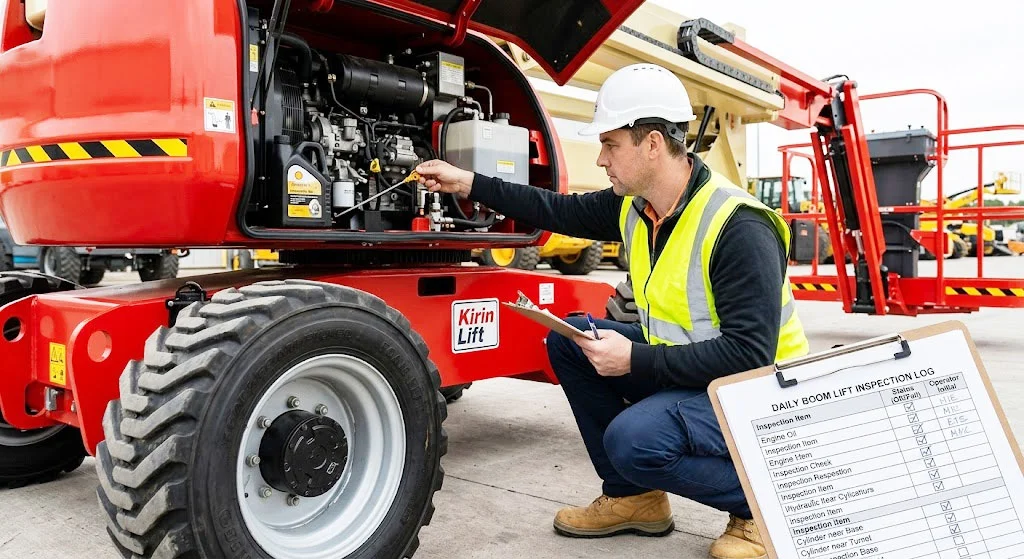
Before any worker steps into a basket at the beginning of a shift, a comprehensive mechanical evaluation must take place. This routine check ensures that undetected component failures do not compromise the machine while it is extended mid-air.
Daily Boom Lift Inspection Checklist
A standard pre-start assessment requires evaluating both the vehicle chassis and the lift components. Operators must visually and physically inspect:
- Fluid Levels: Check engine oil, hydraulic fluid, fuel, and coolant for leaks.
- Wheels and Tires: Inspect for structural cracks, loose lug nuts, and improper air pressure.
- Structural Integrity: Examine the boom structure for welds, cracks, or metal fatigue.
- Safety Decals: Ensure all capacity placards, danger signs, and controls are legible.
- Control Systems: Test lower-level ground controls and upper platform controls.
- Safety Devices: Function-test the horn, backup alarms, gauges, and emergency stop buttons.
- Interlocks & Outriggers: Verify stabilization systems deploy smoothly and lock into place.
Workplace Hazard Assessment
A pre-use check is completely useless if you ignore the environment surrounding the machine. Operators must walk the designated travel path and working area to identify potential workspace threats. This assessment requires checking for ground drop-offs, deep holes, steep slopes, slick mud, debris, low ceilings, and overhead obstructions.
Why Pre-Use Inspections Are Essential
Skipping these checks means you are operating entirely on guesswork. A slow hydraulic leak or a malfunctioning lower-level emergency bypass control can trap a worker in mid-air or cause a structural collapse. Documenting these daily checks protects your team and provides proof of compliance if an OSHA inspector arrives on your jobsite.
Fall Protection Requirements for Boom Lifts
When it comes to fall protection, boom lifts are treated with absolute zero tolerance. Unlike scissor lifts, where built-in guardrails are often deemed sufficient by standard regulations, boom lifts require secondary active restraint systems.
OSHA Rules for Harnesses and Lanyards
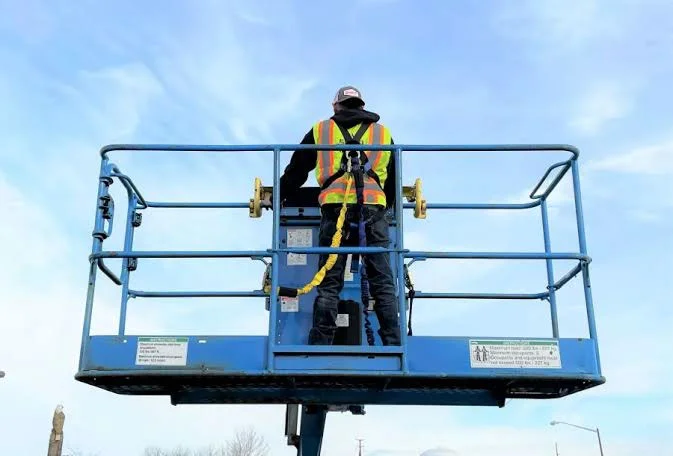
Per 29 CFR 1926.453(b)(2)(v), a personal fall arrest or travel restraint system must be worn, and the lanyard must be attached securely to the boom or basket when working from an aerial lift. This means meeting strict osha boom lift harness requirements is completely mandatory from the moment the basket leaves the ground.
Operators must wear a full-body safety harness. The lanyard must be short enough to act as a travel restraint system, preventing the operator from being buckled out or ejected from the basket floor in the first place, rather than simply catching them mid-fall.
Common Fall Protection Mistakes
The single most dangerous mistake is “belting off” to an adjacent structure, pole, or piece of equipment while standing inside the lift basket. If the lift shifts or slips, the worker can be instantly pulled out or crushed. Another major violation is tying off directly to the outer guardrails instead of using the manufacturer-designated, engineered anchor points welded inside the basket. Finally, workers must never stand on the guardrails or use ladders, steps, or planks inside the basket to gain extra height. Both feet must remain planted firmly on the platform floor.
How to Inspect Fall Protection Equipment
Harnesses and lanyards must be inspected by the user before every single shift. Look for frayed stitching, cuts in the webbing, burns, chemical damage, and deformed metal D-rings or snap hooks. If a harness has been subjected to an actual fall impact, it must be removed from service immediately and destroyed.
Safe Boom Lift Operating Practices
Safe operation requires constant situational awareness and a strict refusal to bypass built-in safety mechanisms.
Maintaining Proper Stability
The structural stability of an osha boom lift relies entirely on keeping its center of gravity within its physical footprint. Operators must never exceed the strict load capacity limits posted on the machine’s placard. This weight calculation must factor in the operator’s body weight, personal gear, and all tools or materials loaded into the platform. Additionally, if the lift is equipped with stabilizing outriggers, they must be fully deployed on solid, level surfaces or heavy-duty pads.
Safe Travel and Positioning
As a general rule, do not drive or travel with a boom lift while the platform is elevated or extended unless explicitly permitted by the manufacturer’s design manuals. When moving the machine, always look in the direction of travel, monitor your blind spots, and ensure a designated spotter is on the ground to manage blind zones.
Keeping a Safe Distance From Power Lines
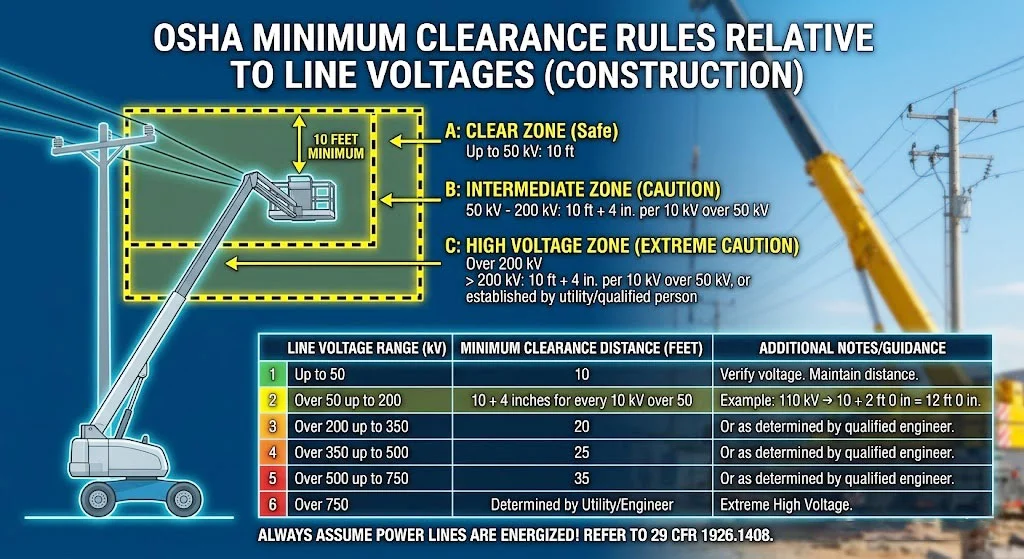
Electrocution is a leading cause of fatalities among aerial lift operators. OSHA requires maintaining a strict minimum clearance distance of at least 10 feet from all energized overhead power lines and communication cables. If the voltage of the utility line exceeds 50 kilovolts (kV), that safety clearance distance must expand by 4 inches for every additional 10 kV over the 50 kV threshold. Treat all overhead wires as live and energized until the utility company officially confirms they are de-energized.
Weather-Related Safety Requirements
Environmental conditions can quickly turn an easy job into a crisis. High wind speeds degrade lateral machine stability and cause extended booms to sway dangerously. Generally, operations must cease if sustained winds or sudden gusts exceed 20 miles per hour (mph), or whatever lower threshold the specific manufacturer dictates. Furthermore, lifts should never be operated during active lightning storms, heavy downpours, or freezing ice conditions that coat the control platforms.
OSHA Boom Lift Safety Requirements for Jobsite Conditions
Every unique job site layout presents a distinct set of physical challenges that must be accounted for during planning.
Working on Uneven Ground
Standard boom lifts are highly susceptible to tip-overs on sloped surfaces. If you must set up an aerial lift on an incline, wheel chocks must be securely placed against the tires to prevent accidental rolling. Never override the machine’s built-in tilt alarms; if the slope warning sensor sounds, lower the boom immediately and reposition the base onto flatter terrain.
Indoor vs. Outdoor Boom Lift Safety
Operating indoors eliminates wind concerns but introduces other critical hazards. Operators must carefully monitor overhead clearances (ceiling trusses, ductwork, and lighting fixtures) and verify that the floor’s maximum load-bearing capacity can support the immense weight of the machine chassis. Additionally, internal combustion engines (diesel or gas) must never be run in enclosed indoor spaces without extensive industrial ventilation systems to prevent lethal carbon monoxide buildup; electric or battery-powered lifts must be used instead.
Traffic and Pedestrian Control
When working in public zones or active warehouse aisles, you must set up physical work zone warnings. Use high-visibility safety cones, barricades, and clear warning signs to keep pedestrians and secondary vehicles out from underneath the raised platform. This eliminates the risk of ground crews being struck by falling tools or materials.
Emergency Procedures and Rescue Planning
When someone is suspended in a full-body harness following a fall or slip, every second counts. Prolonged suspension can restrict blood flow, leading to suspension trauma—a life-threatening medical emergency that can cause unconsciousness or heart failure within minutes.
What To Do During a Boom Lift Emergency
If the upper platform controls fail or the operator becomes incapacitated, ground personnel must use the emergency lower-level auxiliary controls to safely bring the basket down. Ground workers must know exactly where these override switches are located and how to operate them.
Rescue Plan Requirements
An OSHA-compliant site must feature a documented, written rescue plan. This plan details the exact protocols for retrieving a stranded worker, lists the location of on-site ladders or secondary backup lifts, and assigns specific roles to ground crew members to ensure emergency response times are minimized.
Reporting OSHA Incidents
If a serious workplace injury, hospitalization, or structural equipment failure occurs, employers are legally required to report the incident to OSHA. Fatalities must be reported within 8 hours, while any incident resulting in an in-patient hospitalization, amputation, or loss of an eye must be formally reported within 24 hours.
Common OSHA Violations Related to Boom Lift Safety
Understanding where others fail can help your company avoid costly citations. The most common violations recorded by inspectors include:
| Violation Type | Specific Safety Failure |
| Fall Protection Negligence | Operators failing to wear a harness or using non-approved, lengthy lanyards. |
| Lack of Training Documentation | Allowing workers to operate machinery without proof of up-to-date certification records. |
| Bypassing Safety Controls | Using tape, zip-ties, or mechanical bypasses to disable foot switches or tilt alarms. |
| Ignoring Manufacturer Specs | Using a boom lift as a crane to hoist heavy external loads or structural beams. |
| Failure to Inspect | Operating machinery continuously over multiple shifts without filling out daily safety logs. |
Best Practices for OSHA Boom Lift Safety Compliance
To move beyond basic compliance and build a truly resilient, proactive culture of workplace safety, implement these operational practices:
- Enforce 100% Tie-Off Rules: Establish a strict, zero-tolerance policy where any worker who steps into a basket without a harness attached to an approved anchor point is immediately removed from the job site.
- Keep On-Board Documentation: Keep a weather-proof plastic canister on the machine containing the manufacturer’s operational manual and a pad of daily pre-start inspection logs.
- Conduct Daily Safety Meetings: Spend five minutes every morning discussing specific overhead hazards, line voltages, and expected weather conditions before commencing work.
- Perform Mock Rescue Drills: Run quarterly tests where ground crews must physically practice using lower-level override systems to bring an empty basket down under simulated emergency conditions.
Frequently Asked Questions About OSHA Boom Lift Safety Requirements
Does OSHA require a harness in a boom lift?
Yes, absolutely. Under federal standard 29 CFR 1926.453, all occupants inside an extensible or articulating boom lift basket must wear a personal fall arrest or travel restraint system secured to an approved anchor point inside the platform.
How often should boom lift operators be trained?
Initial formal classroom and practical training must occur before an operator ever runs a lift. While an official recertification evaluation typically occurs every three years under general industry best practices, immediate retraining is legally mandatory if an operator is seen driving unsafely, causes an accident, or encounters new models or job site hazards.
Can a boom lift be used in high winds?
Boom lifts should generally not be operated in winds exceeding 20 mph. Always consult your specific machine’s user manual, as manufacturers often set lower speed restrictions depending on the total extension height.
What is the OSHA standard for aerial lifts?
The primary OSHA standards governing aerial devices are 29 CFR 1910.67 for general industrial applications and 29 CFR 1926.453 for construction-related environments.
Who is responsible for boom lift safety compliance?
The employer bears ultimate legal responsibility for providing compliant equipment, a hazard-assessed work zone, comprehensive fall protection gear, and complete training programs. However, individual operators are responsible for following safe practices, inspecting their gear, and operating the machinery within its structural limits.
Are daily inspections mandatory for boom lifts?
Yes. OSHA requires that lift controls and mechanical components be function-tested and physically inspected each day prior to operation to confirm the machine is in safe working condition.
Conclusion
Mastering OSHA boom lift safety requirements is an ongoing operational commitment. By executing comprehensive pre-operation inspections, maintaining absolute fall protection compliance, and ensuring every single operator holds a valid certification, you protect your crew from severe workplace hazards and shield your business from devastating liabilities. Safety should never be treated as a shortcut—take the time to inspect your machine, assess your environment, secure your harness, and operate with complete caution on every single shift.
At Kirin Lift, we are dedicated to helping you maintain a safe, productive, and fully compliant jobsite with reliable equipment solutions. If you have questions about aerial platform safety features, equipment compliance, or need advice on selecting the right machinery for your next project, our team is here to help. Reach out to us today via Email: info@klingtec.com or connect with us directly on WhatsApp: +86 188 6686 3188 to discuss your fleet requirements.