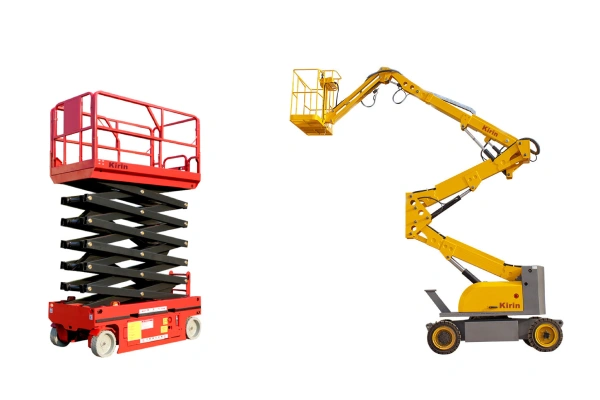
Operating a boom lift allows workers to reach incredible heights safely, but it also exposes them to one of the most unpredictable elements on any job site: the wind. When you are suspended dozens or hundreds of feet in the air, a sudden gust can turn a standard task into a high-risk situation.
Understanding the maximum wind speed for boom lift operations is not just a best practice—it is a critical safety requirement that protects lives, prevents equipment damage, and ensures compliance with federal law.
In this comprehensive guide, we will break down the safety limits, regulatory standards, and practical site procedures you need to know to manage wind risks effectively.
What Is the Maximum Wind Speed for Boom Lift Operation?
Standard Industry Wind Speed Limit
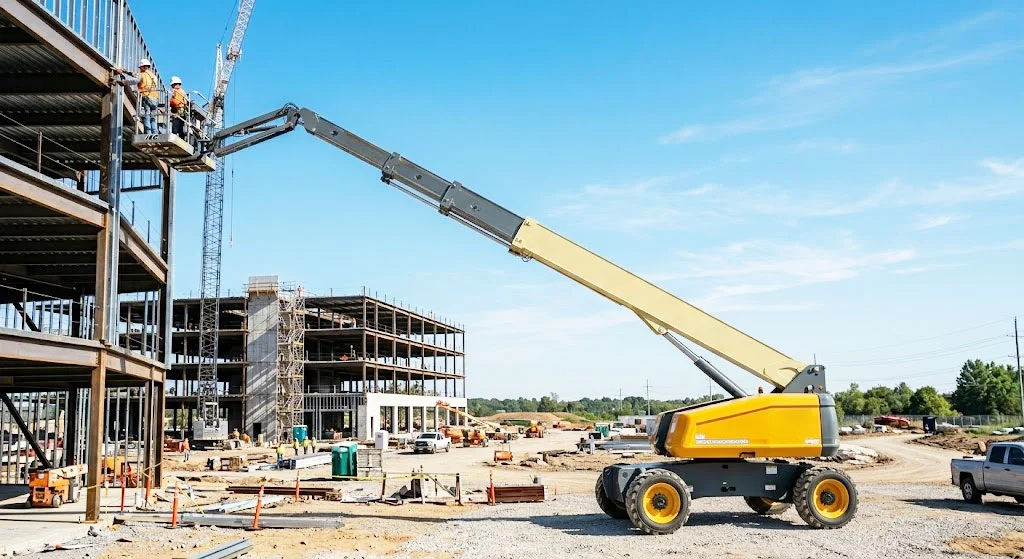
The standard maximum wind speed for boom lift operation is 28 mph (45 km/h). This is an absolute ceiling; safe operation often requires stopping work at lower speeds depending on the lift type, load, and environment.
Why Wind Speed Limits Matter
Operating beyond the designated boom lift wind speed limit can lead to structural failures or tip-overs. High winds cause platform sway, making it difficult for operators to maintain balance or avoid striking adjacent structures.
Wind Speed Ratings by Boom Lift Type
Different styles of boom lifts interact with the wind in unique ways due to their engineering, weight distribution, and center of gravity.
- Telescopic boom lifts: These machines feature straight, extendable arms. When fully extended, they have a massive surface area exposed to lateral forces, making them highly sensitive to crosswinds.
- Articulating boom lifts: Known as “knuckle booms,” these units have multiple bending sections. While versatile, their multiple joints introduce various pivot points that can experience complex stress patterns under high boom lift wind speed.
- Towable boom lifts: Because these are lightweight and rely on outriggers rather than a massive counterweighted chassis, their stability margins are narrower. They often have stricter boom lift wind restrictions than self-propelled units.
- Crawler boom lifts: Designed with tracks for rough terrain, these lifts provide excellent ground stability, but their upper structures are still subject to standard max wind speed for boom lift constraints when extended high into the air.
OSHA Guidelines for Boom Lift Wind Safety
OSHA Requirements for Aerial Lift Safety
Interestingly, federal osha boom lift regulations do not state a single, blanket numerical value for the maximum wind speed for boom lift deployment. Instead, OSHA addresses wind safety through broader performance-based directives.
Under 29 CFR 1926.453 and 1910.67, osha regulations for boom lifts mandate that employers provide a workplace free from recognized hazards. OSHA explicitly requires operators to follow all manufacturer guidelines. If a manufacturer states that a machine cannot handle winds over 28 mph, exceeding that speed violates OSHA law.
ANSI Standards Related to Wind Limits
While OSHA provides the legal teeth, the American National Standards Institute (ANSI) provides the specific technical blueprints. Under the ANSI A92 standards, aerial lift manufacturers must clearly define the boom lift wind rating for every machine they produce.
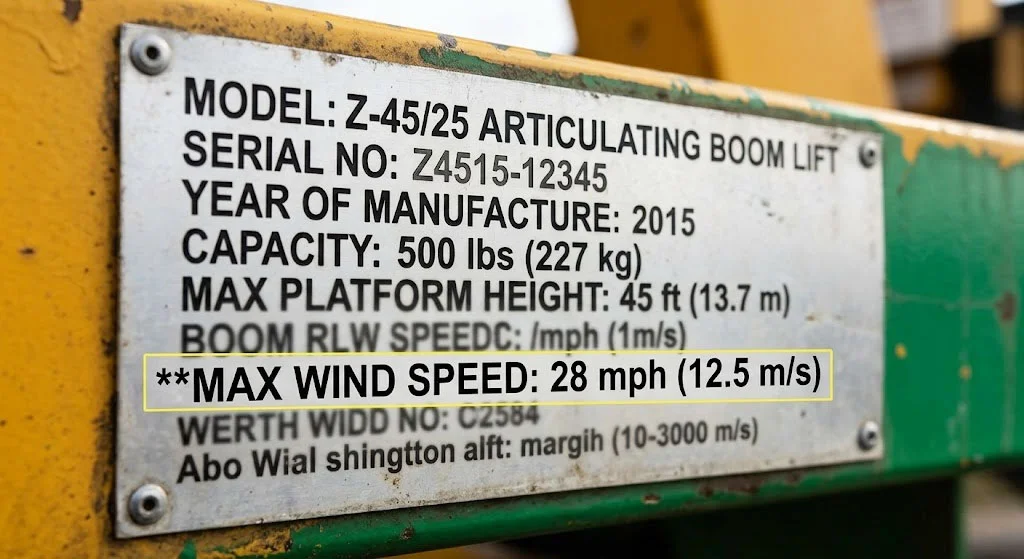
ANSI requires this rating to be clearly displayed on the machine’s data plate or decals within the platform, making it easily accessible to the operator.
Consequences of Ignoring Wind Restrictions
Ignoring established boom lift safety regulations and wind boundaries carries heavy consequences:
- Legal & Financial: OSHA citations for “willful” violations can exceed $160,000 per infraction.
- Civil Liability: If an accident occurs due to ignored wind limits, site managers and employers face massive lawsuits.
- Human Cost: The most severe consequence is catastrophic structural collapse or machine tip-over, which regularly results in fatal injuries for workers in the basket.
How Wind Affects Boom Lift Stability
To understand why the maximum wind speed for boom lift operations is capped where it is, we have to look at the physical forces at play.
The Physics Behind Wind Load
Wind applies dynamic physical pressure to every square inch of an elevated work platform. This is known as wind load. The formula for wind pressure shows that force increases with the square of the wind velocity.
P = 0.00256 × V²
A 30 mph wind applies four times the force of a 15 mph wind, pushing against the basket and threatening to cross the machine’s tipping line.
Factors That Increase Wind Risk
Several secondary variables can amplify the dangerous effects of a high maximum wind speed to operate boom lift:
- Platform Enclosures: Adding mesh, solid tarps, or banners to a basket creates a literal sail, catching significantly more wind and drastically lowering the machine’s stability.
- Material Size: Carrying large panels, drywall, or plywood sheets acts as an extra sail area, transferring massive rotational forces to the boom arm.
- Elevated Wind Gradients: Wind speeds are rarely uniform. A breeze that feels like 10 mph at ground level can easily be blowing at 25 mph or more at an operating height of 80 feet.
Understanding Wind Gusts vs. Sustained Winds
A common and dangerous mistake is relying entirely on sustained wind reports. Sustained wind is an average speed measured over a set period.
However, wind gusts are sudden, brief spikes in wind speed. A job site might experience sustained winds of 15 mph, but sudden gusts could peak at 35 mph. Because a single gust can tip an extended machine over instantly, safety decisions must always be based on the maximum expected gust speed, not the sustained average.
How to Measure Wind Speed on a Job Site
Determining when is it too windy to use a boom lift cannot be left to guesswork. Site supervisors and operators must implement reliable measurement protocols.
Using an Anemometer
Handheld or boom-mounted anemometers provide instantaneous readouts of sustained speeds and peak gusts, eliminating guesswork regarding when is it too windy to use a boom lift.
Checking Weather Forecasts
Review specialized forecasts before shifts begin. Proactively delay operations if high-velocity wind fronts are predicted.
Recognizing Visual Warning Signs
- Flags: Extended horizontally indicate winds of 20–25 mph.
- Dust: Swirling rapidly signals hazardous gusts.
- Trees: Large branches in continuous motion signal that conditions are approaching limits.
Safe Operating Practices in Windy Conditions
- Pre-Operation Risk Assessment: Document current wind readings and manufacturer-designated limits before deployment.
- Reduce Platform Exposure: Face the narrowest profile of the basket directly into the wind path to minimize lateral sway.
- Lower the Platform: If gusts approach the machine’s limit, stop work and lower the platform to the stowed ground position.
- Maintain Communication: Use high-visibility hand signals or noise-canceling headsets to overcome wind noise.
Manufacturer Wind Speed Recommendations
Why Manufacturer Guidelines Override General Rules
Operating outside of manufacturer specifications violates ANSI standards and osha regulations for boom lifts.
Common Boom Lift Brands and Wind Ratings
- JLG / Genie / Skyjack / Snorkel: Typical maximum wind speed rating is 28 mph (12.5 m/s) for standard outdoor models under optimal conditions. Always consult the specific manual for your serial number.
Indoor-Rated vs. Outdoor-Rated Boom Lifts
Many compact units feature a wind rating of 0 mph. Using an indoor-rated lift outdoors in any breeze is highly dangerous because the machine is not engineered to handle lateral wind forces.
Warning Signs That Wind Conditions Are Unsafe
- Excessive Platform Movement: Pronounced, violent swaying or sudden lurching.
- Difficulty Steering: Hydraulic resistance when rotating the turntable or extending the boom arm.
- Sudden Weather Changes: Rapid arrival of dark storm clouds or abrupt shifts in wind direction.
- Operator Discomfort: Inability to maintain steady control of tools due to basket movement.
Common Mistakes Operators Make in High Winds
- Ignoring Manufacturer Limits: Relying on past luck rather than the printed data plate limits.
- Relying on Visual Judgment: Guessing wind velocity based on feel, which is highly inaccurate.
- Carrying Oversized Materials: Handling large materials that act as a sail.
- Continuing Work During Gusty Weather: Assuming conditions are safe because the average wind speed is low.
Emergency Procedures for Wind-Related Incidents
- Cease Work: Drop tools and secure loose objects.
- Retract First: Retract the boom length before lowering the angle to reduce tipping leverage.
- Descend: Lower the platform fully to the ground position.
- Use Emergency Systems: If primary power fails, ground personnel must use auxiliary power units or manual bleed-down valves to lower the platform.
Tips for Employers and Site Supervisors
- Create a Wind Safety Policy: Define the site’s maximum wind speed to operate boom lift equipment and authorize who can halt operations.
- Provide Proper Training: Ensure all operators complete OSHA-compliant certification covering load charts and wind restrictions.
- Schedule Around Weather: Monitor weekly outlooks to schedule high-altitude tasks during low-wind windows.
- Ensure Equipment Inspections: Verify mandatory pre-shift and annual structural checks to maintain engineered stability margins.
Frequently Asked Questions
What is the OSHA wind limit for boom lifts?
OSHA does not set a single numerical wind limit. Instead, osha boom lift regulations mandate that employers follow the specific wind limits set by the machine’s manufacturer, which is typically capped at 28 mph.
Can boom lifts operate in 20 mph winds?
Yes, most outdoor-rated boom lifts can operate safely in a 20 mph wind, provided that maximum gusts do not exceed the machine’s overall rating (typically 28 mph) and the platform is not carrying oversized, high-sail materials.
What happens if wind exceeds the boom lift rating?
Exceeding the boom lift wind rating causes extreme platform swaying, structural bending stress, and hydraulic strain. In worst-case scenarios, it overcomes the weight of the counterweight chassis, causing the machine to tip over completely.
Are indoor boom lifts safe outdoors?
No. Indoor-rated boom lifts are engineered with a 0 mph wind rating. They lack the heavy counterweights or structural wide bases needed to offset lateral wind pressures, making them prone to tipping over outdoors in even minimal breezes.
How do operators measure wind speed on-site?
Operators use digital handheld or boom-mounted anemometers to obtain real-time, accurate wind readings at the specific height where the work is occurring.
Do different boom lifts have different wind limits?
Yes. While 28 mph is the common standard for large, outdoor industrial models, smaller lifts, towable units, and indoor-rated machines often feature lower limits or strict wind restrictions. Always check the machine’s specific data plate.
Conclusion
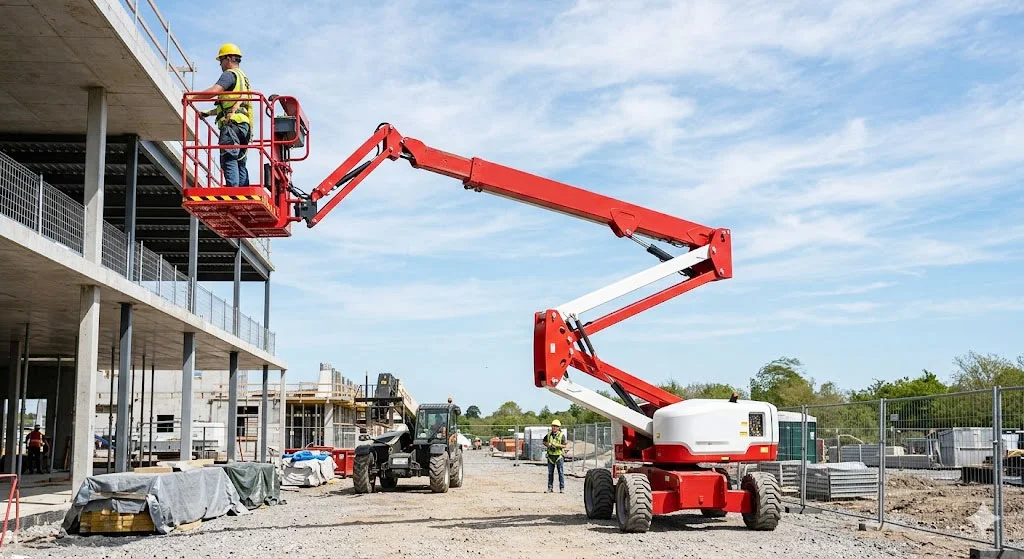
Managing the risks associated with the maximum wind speed for boom lift operations requires knowing equipment limits, utilizing accurate measuring tools, and respecting regulatory standards. Prioritizing manufacturer guidelines ensures your job site remains completely accident-free.
For expert guidance on selecting the right equipment with the appropriate wind ratings for your job site, contact us today:
- Email: info@klingtec.com
- WhatsApp: +86 188 6686 3188