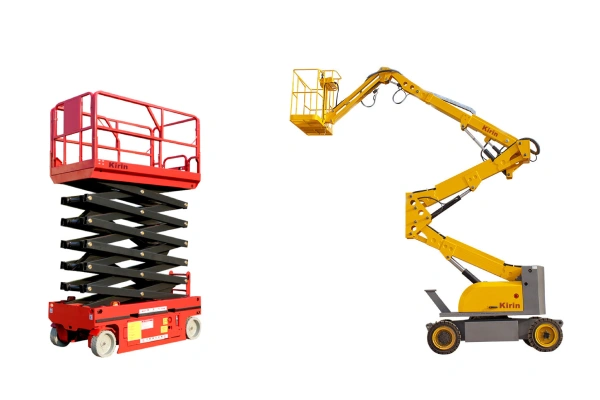
Working at heights introduces a distinct set of operational challenges. Whether you are an electrician routing conduit along a commercial ceiling, an HVAC technician balancing complex ductwork, or a facility maintenance manager keeping a massive warehouse running, your mobile elevating work platform (MEWP) is your lifeline. However, standard aerial platforms lack dedicated storage systems. Operators frequently resort to balancing expensive power tools on top of narrow guardrails, jamming hand tools into overstuffed pockets, or leaving parts scattered across the deck.
These disorganized practices compromise job site safety, reduce physical productivity, and frequently result in broken equipment or injuries from dropped objects.
To solve these persistent operational bottlenecks, implementing a dedicated scissor lift tool tray is the single most effective upgrade you can make to your aerial workspace. This comprehensive guide details everything you need to know about selecting, utilizing, and maintaining a high-performance scissor lift tool tray to build a safer, more productive work environment.
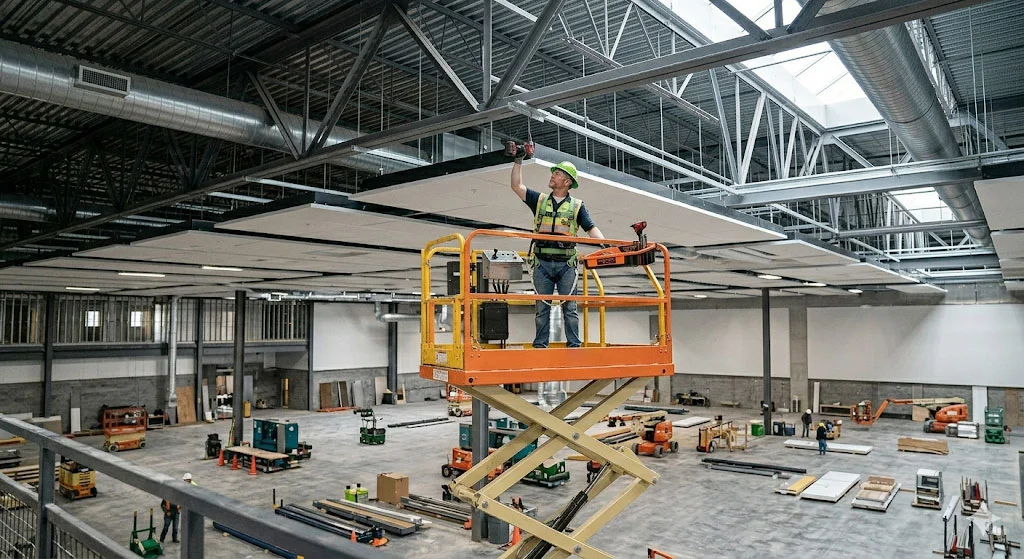
What Is a Scissor Lift Tool Tray?
A scissor lift tool tray is a highly specialized, heavy-duty storage accessory designed explicitly to attach securely to the guardrails or corners of an aerial work platform. Unlike generic, improvised storage bins, a scissor lift tool tray is engineered to withstand the rigorous vibrations, shifting forces, and environmental exposures typical of industrial, construction, and commercial jobsites.
These specialized organizers are marketed under several industry names, including a scissor lift tool caddy, a tool tray for scissor lift, an industrial scissor lift tool storage unit, a reinforced scissor lift tool bag, or an open-top scissor lift tool basket. Ultimately, all these variants serve a singular mission: keeping your hand tools, diagnostic equipment, fasteners, and heavy power gear organized and within arm’s reach while keeping the platform deck clear.
Most high-quality scissor lift tool tray models feature partitioned storage dividers, specialized slots for screwdrivers and pliers, magnetic parts dishes to secure small screws, and dedicated holsters for cordless power drills or impact wrenches. They are primarily constructed from impact-resistant polymers, industrial-grade textiles, or reinforced aluminum to survive accidental strikes from heavy equipment or tools.
Why a Scissor Lift Tool Tray Is Essential
Operating a scissor lift without dedicated scissor lift tool storage compromises job safety and productivity. Here is why outfitting your aerial lift with a designated scissor lift tool tray is a vital operational necessity rather than a minor accessory:
Eradicating Dropped Object Risks
According to occupational safety data, dropped objects rank among the leading causes of preventable injuries on industrial jobsites. A heavy impact wrench or a steel pipe wrench slipping off a guardrail from a height of 30 feet carries lethal kinetic force for workers on the ground below. A securely mounted scissor lift tool tray completely isolates this hazard. By containing all loose items within a dedicated structural enclosure, a scissor lift tool tray provides a reliable mechanical barrier against accidental drops.
Maximizing Available Platform Floor Space
The platform deck of a standard scissor lift is surprisingly narrow, and space disappears quickly once an operator and materials are on board. When workers use the floor as an unorganized scissor lift tool organizer, it creates a high-risk tripping hazard. Tripping while elevated can cause workers to strike guardrails or accidentally bump control joysticks. Utilizing a rail-mounted scissor lift tool tray elevates equipment off the floor, restoring the platform deck to its intended purpose: giving operators a clear, safe, and stable stance to execute their tasks.
Boosting Operational Efficiency and Productivity
Without a scissor lift tool caddy, operators spend an enormous amount of time constantly bending down to find specific tools scattered across the floor, or wasting time descending the lift entirely to retrieve a forgotten tool left in a ground-level gang box. A scissor lift tool tray positions every necessary wrench, meter, and fastener at waist height. This ergonomic layout minimizes physical fatigue and shortens project cycle times, allowing teams to complete more work per shift.
Protecting Your Valuable Tool Inventory
Industrial power tools, laser levels, and digital multimeters are expensive investments. Letting them slam against the steel floor of a moving scissor lift or exposing them to stray overspray damages internal components and shortens their lifespan. Safely storing gear inside a molded scissor lift tool tray shields your equipment from impact damage, keeping your tools calibrated and operational.
Key Features to Look for in a Scissor Lift Tool Tray
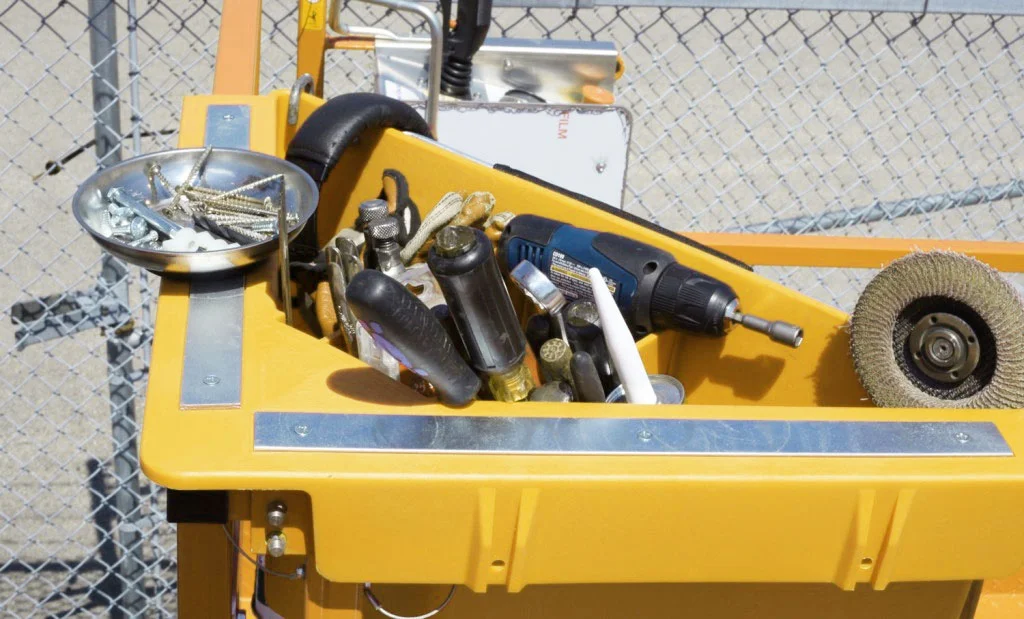
Not all aerial storage solutions are built to the same standards. When evaluating a scissor lift tool tray for your fleet or personal gear kit, look for these specific design features:
- Impact-Resistant, Heavy-Duty Materials: Avoid thin, brittle plastics that crack under freezing temperatures or sudden impacts. Opt for a scissor lift tool tray manufactured from high-density polyethylene (HDPE), structural foam polymers, or powder-coated steel/aluminum.
- Universal, Secure Mounting Mechanisms: The tool tray for scissor lift must feature a mounting system that securely grips varying guardrail dimensions (such as standard 1.5-inch to 2-inch square or round tubing) without slipping or rattling during lift transit. Look for tool-free, heavy-duty locking pins, dual-clamp hooks, or high-tensile brackets.
- Integrated Magnetic Compartments: Loose washers, nuts, screws, and drill bits easily slide around and fall through the floor mesh of an aerial platform. A premium scissor lift tool tray features integrated neodymium magnetic trays or strips that hold tiny metallic fasteners firmly in place, even if the lift experiences sudden movements.
- Ergonomic Partitions and Specialized Tool Holsters: The tray should provide a smart mix of storage zones: deep bins for bulky items, narrow vertical slots for hand tools (screwdrivers, pliers, wire strips), and wide cutouts designed to cradle the handles of cordless power tools securely.
- Weep Holes and Drainage Systems: For outdoor jobsites exposed to unpredictable weather, your scissor lift tool basket must feature drainage holes at the base of its compartments. This prevents rainwater or washing fluids from pooling inside, protecting your tools from rust and corrosion.
Industries That Benefit From Scissor Lift Tool Trays
A high-performance scissor lift tool tray is an incredibly versatile asset across dozens of trades. Any industry relying on aerial mobility will see immediate improvements:
Commercial Electrical and Data Communications
Electricians spend hours in scissor lifts installing overhead conduit runs, pulling miles of wire, mounting lighting fixtures, and wiring junction boxes. A scissor lift tool tray allows an electrician to cleanly organize wire nuts, couplings, conduit benders, multi-meters, stripping tools, and cordless drills right at working height.
HVAC and Mechanical Contracting
Installing heavy ductwork, overhead piping, exhaust systems, and commercial rooftop units requires an array of sheet metal shears, impact drivers, levels, sealants, and heavy fasteners. A scissor lift tool organizer or a rugged scissor lift tool bag provides the payload capacity needed to support these heavy, awkwardly shaped mechanical tools without overloading the lift’s guardrails.
Commercial Painting, Coating, and Drywall Finishing
For finishing crews, dropping a paint can or a mud pan creates an expensive mess. Using a specialized scissor lift tool basket ensures that paint cans, caulking guns, taping knives, and cleaning rags are safely contained, preventing spills and drops onto pristine floors or equipment below.
Industrial Facilities Maintenance and Warehouse Operations
Modern distribution centers and factories feature soaring ceilings packed with conveyor networks, lighting arrays, and structural components. Facilities maintenance technicians use a scissor lift tool tray as a mobile workstation, ensuring they have every specific wrench, replacement bulb, fuse, and sensor on hand to minimize downtime during critical equipment repairs.
How to Choose the Right Scissor Lift Tool Tray
Selecting the right scissor lift tool tray requires analyzing your specific trade applications, tool weights, and the exact models of aerial lifts you operate. Use this structured comparison table to match your work profile with the ideal style of scissor lift tool storage:
| Feature/Specification | Molded Polymer Tray | Heavy-Duty Fabric Bag/Caddy | Aluminum/Steel Basket |
| Primary Material | High-Density Polyethylene / Foam | Ballistic Nylon (1680D+) | Powder-Coated Metal |
| Best Used For | General trades, electricians, mixed hand & power tools | Fine finishing trades, maintenance tech kits | Heavy industrial construction, pipefitting |
| Durability Level | High (crush-resistant, weather-proof) | Medium (pliable, susceptible to sharp cuts) | Maximum (structural metal, heavy abuse) |
| Portability | Rigid, relies on quick-release brackets | Exceptionally high, features shoulder straps | Rigid, typically bolted or heavy-clamped |
| Weight Capacity | Medium to High (typically 25–50 lbs) | Low to Medium (typically 15–30 lbs) | Extreme (often 50+ lbs) |
Before completing your purchase, double-check your scissor lift’s manufacturer user manual to confirm the platform guardrail weight allowances. Ensure the combined weight of your chosen scissor lift tool tray and the tools stored inside does not exceed the lift’s safe working load or guardrail capacity.
Best Practices for Using a Scissor Lift Tool Tray Safely
Simply purchasing a scissor lift tool tray is only half the battle; you must integrate it safely into your daily field operations. Adhere to these critical safety rules to maintain OSHA compliance and protect your crew:
Step 1: Execute a Pre-Use Inspection
Before hooking your scissor lift tool caddy to the rails, inspect the unit for structural integrity. Check for hairline cracks in molded plastic, frayed stitching or torn straps on a scissor lift tool bag, and signs of metal fatigue or loose mounting hardware on metal baskets. Never use a compromised storage tray.
Step 2: Secure the Tray Only to Approved Guardrail Structures
Mount your tool tray for scissor lift strictly on the mid-rails or top-rails as directed by the tray manufacturer. Ensure it is placed away from the lift’s main control joystick panel to eliminate any risk of a tool shifting and accidentally depressing a lift control or emergency stop button.
Step 3: Never Exceed Rated Load Limits
Every scissor lift tool tray has a strict weight limit stamped on its housing or detailed in its manual. Overloading a tray can bend guardrails, cause the tray mounting brackets to fail, or alter the overall center of gravity of smaller, lightweight scissor lifts. Distribute heavy tools evenly across the bottom of the tray.
Step 4: Secure Tall or Top-Heavy Items
If you are storing long tools, such as level bars, long screwdrivers, or conduit sleeves inside your scissor lift tool organizer, ensure they are oriented vertically and cannot tip outward over the perimeter of the lift basket. Use secondary lanyards or tether straps for high-mass tools when working over active walkways.
Common Mistakes to Avoid
To maintain a safe workplace, make sure your crews avoid these common field mistakes when managing their scissor lift tool storage:
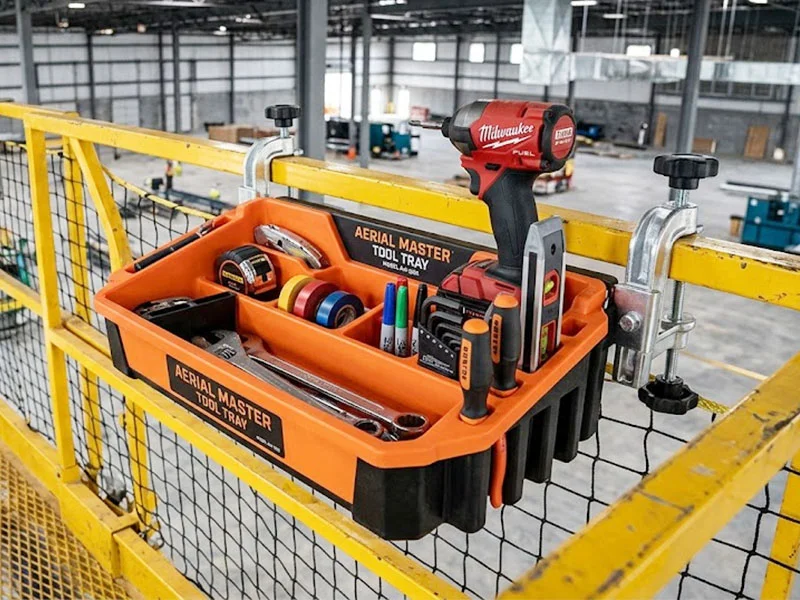
- Using Improvised DIY Plastic Buckets: Hanging a standard five-gallon plastic bucket over a guardrail using a piece of scrap wire or a bungee cord is an accident waiting to happen. These improvised containers can easily tilt, slide along the rail, or break under load, dropping tools onto workers below. Always rely on a professionally engineered scissor lift tool tray with locking mechanical mounts.
- Overfilling Past the Structural Rim: Piling tools and components higher than the outer walls of your scissor lift tool basket defeats its purpose. Vibrations from lift travel will cause top-heavy items to bounce out. Keep all items fully submersed below the upper rim of the tray.
- Leaving Tools in the Tray During Transport: Always empty your scissor lift tool tray before loading the scissor lift onto a transport trailer or driving it across rough, unpaved jobsite terrain. Violent bumps during transport can eject tools, damaging your gear or vehicle windshields.
- Ignoring the Lift’s Gate Clearance: Mounting a wide tool tray for scissor lift directly onto or adjacent to the platform’s swing-gate or drop-bar entry point can obstruct emergency exit and entry pathing. Keep the access gate completely clear at all times.
Maintenance Tips for Long-Lasting Performance
Investing in professional-grade scissor lift tool storage pays off long-term if you care for the equipment properly. Follow these straightforward maintenance protocols to extend the service life of your gear:
Regular Cleaning and Debris Removal
At the end of each workweek, empty your scissor lift tool tray and flip it over to dump out collected metal shavings, drywall dust, sand, and stray screws. If you work around lubricants or wet adhesives, wipe down the tray using a mild industrial degreaser or soapy water to prevent slick residues from building up on tool handles.
Lubricating and Tightening Mounting Hardware
If your scissor lift tool caddy utilizes metal thumbscrews, quick-release clamps, or adjustment pins, periodically apply a light coat of silicone lubricant spray to prevent rust. Check all integrated nuts and bolts every month and tighten any that have vibrated loose during equipment operations.
Sun Protection and UV Mitigation
Extended exposure to harsh ultraviolet (UV) solar rays can degrade plastic polymers over time, making them brittle and prone to cracking. When your scissor lift is parked or stored for long periods between projects, remove plastic trays or park the equipment indoors out of direct sunlight to preserve structural integrity.
Conclusion
When it comes to elevating job site productivity and optimizing safety, the smallest adjustments often yield the largest returns. Outfitting your aerial equipment with a premium scissor lift tool tray eliminates clutter, prevents costly dropped-object injuries, protects your tool investments, and keeps your workforce operating at peak ergonomic efficiency.
Don’t let tool clutter compromise your safety standards or slow your project timelines. Upgrade your workspace with a dedicated, professional-grade scissor lift tool tray today, and transform your scissor lift platform into a clean, safe, and highly efficient mobile workstation.
If you are looking to equip your fleet with the highest-quality aerial work platform accessories or need professional guidance selecting the perfect storage solutions for your machinery, our team is here to support you. Contact us today for product recommendations, fleet pricing, and custom specifications:
- Email: info@klingtec.com
- WhatsApp: +86 188 6686 3188
FAQs
Can a scissor lift tool tray fit any model of scissor lift?
Most modern scissor lift tool tray units are engineered with adjustable universal mounting brackets, enabling them to clamp securely onto standard square or round guardrails across major aerial lift brands, including Genie, JLG, Skyjack, and Snorkel. Always verify the rail width dimensions before purchasing.
Do scissor lift tool trays comply with OSHA regulations?
Yes. OSHA requires jobsites to implement effective measures to prevent tools and materials from falling from elevated platforms. Utilizing a securely mounted, professionally manufactured tool tray for scissor lift directly supports dropped-object prevention compliance, provided you do not overload the tray or alter the lift’s factory safety mechanisms.
What is the typical weight capacity of an aerial tool basket?
Depending on the specific materials used in construction, a standard molded polymer scissor lift tool tray safely supports between 25 to 50 pounds of equipment. For ultra-heavy industrial tools, heavy-duty steel or aluminum structural baskets are available that feature significantly higher payload ratings. Always consult the manufacturer’s specific product label.