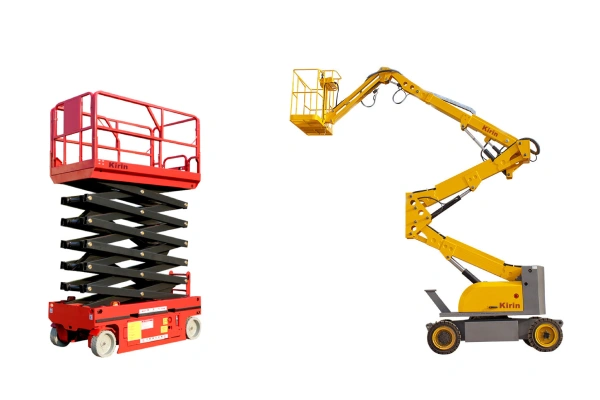
Selecting the proper equipment for work at height isn’t just a matter of convenience—it’s a critical decision that impacts project efficiency, budget, and, most importantly, the safety of your crew. If you find yourself staring up at a high-reach task, you are likely considering a mobile boom lift. However, with various models, power sources, and configurations available, pinpointing the best mobile boom lift for your specific needs requires a deep dive into the technicalities of the trade.
In this comprehensive guide, we will explore everything you need to know about selecting a boom lift, from understanding different types to weighing the financial pros and cons of renting versus buying.
What Is a Mobile Boom Lift?
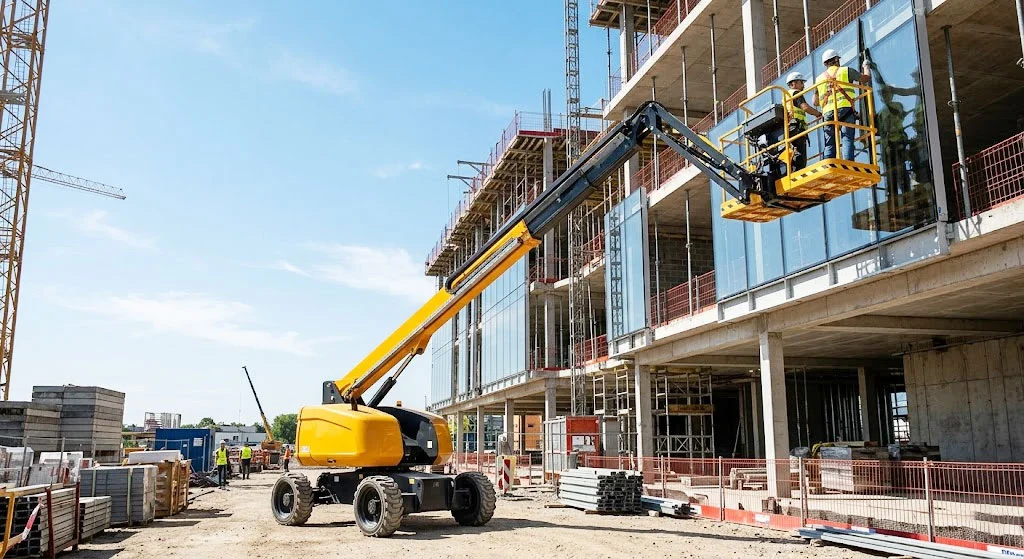
A mobile boom lift is a type of aerial work platform (AWP) designed to provide both vertical and horizontal reach. Unlike scissor lifts, which only move straight up and down, a boom lift features a hydraulic arm (the “boom”) that can maneuver around obstacles to position a work platform—and the workers on it—exactly where they need to be.
The “mobile” aspect refers to the equipment’s ability to be driven or moved around a job site, often even while the boom is extended (depending on safety protocols and model specifications). Whether you are looking for a mobile boom lift for sale to add to your permanent fleet or a temporary rental, these machines are the gold standard for high-access tasks in construction, maintenance, and industrial sectors.
Types of Mobile Boom Lifts
Not all booms are created equal. The geometry of the arm determines how the lift interacts with its environment. Choosing the right type of mobile boom lift is the first step in ensuring your team can actually reach the target area.
Articulating Boom Lifts
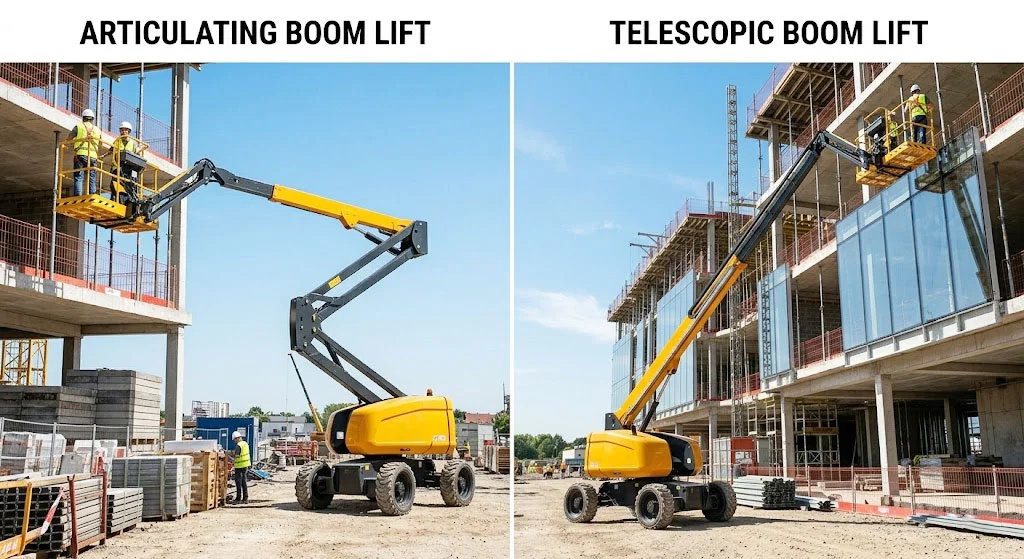
Often called “knuckle booms,” articulating mobile boom lifts have multiple sections that “fold.” This allows the arm to bend over obstacles like walls, rooflines, or machinery.
- Best for: Tight spaces and “up-and-over” requirements.
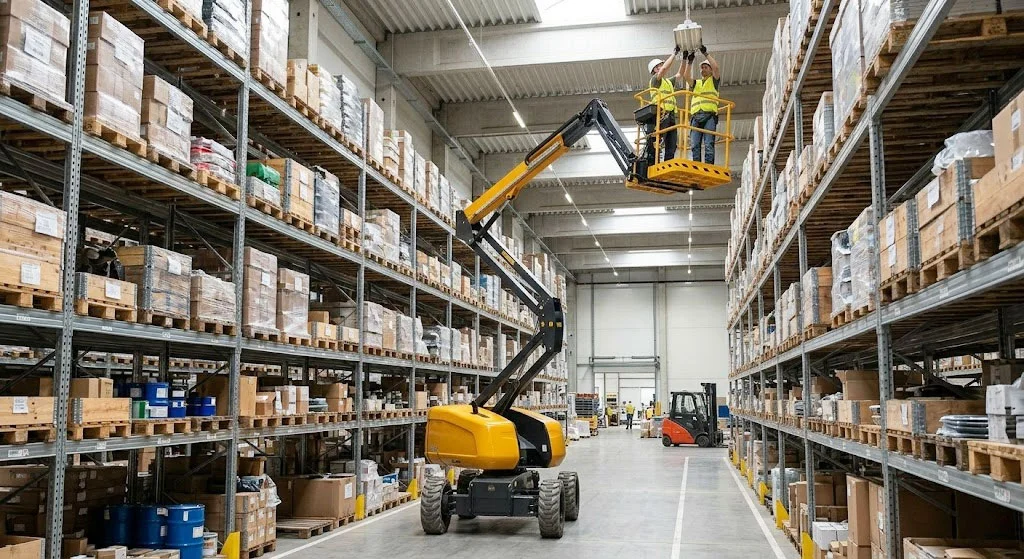
- Versatility: These are excellent for indoor maintenance where you might need to reach over shelving or ductwork.
Telescopic Boom Lifts
Telescopic boom lifts feature a straight arm that extends outward and upward. While they lack the “bend” of an articulating lift, they offer superior reach and speed.
- Best for: Projects requiring maximum height and horizontal outreach.
- Stability: Because they have a simpler pivot point, they are often used on rugged construction sites where distance from the work zone is necessary.
Towable Boom Lifts
For smaller contractors or DIY projects, a towable mobile boom lift offers mobility without the need for a heavy-duty transport trailer. These can be hitched to a standard pickup truck.
- Best for: Tree trimming, residential painting, and light utility work.
- Trade-off: They usually have lower weight capacities and require outriggers to be manually set before use, meaning they aren’t as “driveable” on-site as self-propelled boom lifts.
Key Factors to Consider When Choosing a Mobile Boom Lift
Selecting the best mobile boom lift involves more than just picking the tallest one. Over-specifying can lead to unnecessary mobile boom lift cost, while under-specifying can lead to safety hazards.
Working Height and Reach
The most fundamental question is: How high do you need to go?
- Vertical Height: Calculate the height of the work surface and add 6 feet for the worker’s reach.
- Horizontal Reach: This is often overlooked. If you can’t park the base of the boom lift directly under the work area, you need to know how far the arm can extend sideways.
Load Capacity
Every mobile boom lift has a maximum weight limit. This must include:
- The weight of the operator(s).
- All tools and equipment.
- Materials being lifted (e.g., windows, siding, or heavy electrical components). Exceeding this capacity can cause the lift to tip or the hydraulic systems to fail.
Terrain and Work Environment
Where will the mobile boom lift be operating?
- Slab/Indoor: Requires non-marking tires and a compact footprint.
- Rough Terrain: Requires 4WD, foam-filled lugs, and high ground clearance to navigate mud, gravel, or uneven soil.
- Slope: Check the “gradeability” rating of the boom lift to ensure it can climb the ramps or hills on your site.
Power Source
- Electric: Ideal for indoor use; quiet and emission-free.
- Diesel: Best for outdoor, heavy-duty construction where high torque and long run times are needed.
- Hybrid: A growing segment among every major mobile boom lift manufacturer, offering the flexibility to work both indoors and out.
Platform Size and Maneuverability
If your job requires two workers to stand side-by-side, you’ll need a wider platform. If you are working in a crowded warehouse, you need a boom lift with a zero-tail-swing design, meaning the back of the machine doesn’t rotate outside the width of the chassis.
Mobile Boom Lift Applications
The versatility of the mobile boom lift makes it a staple across dozens of industries.
- Construction and Building Maintenance: From installing HVAC systems to washing windows on a skyscraper, boom lifts provide the necessary access.
- Warehouse Operations: While scissor lifts are common, a boom lift is superior for reaching over tall racking systems to perform structural repairs.
- Electrical and Utility Work: Technicians use insulated mobile boom lifts to repair power lines and streetlights safely.
- Tree Trimming and Outdoor Projects: Arborists rely on the articulating reach of a boom lift to navigate through branches without damaging the tree or surrounding property.
Safety Considerations
Operating a boom lift is high-risk work. Safety should never be secondary to speed.
- Fall Protection: Operators must wear a full-body harness with a lanyard attached to the designated anchor point in the platform.
- Training: Only OSHA-certified (or local equivalent) operators should be behind the controls of a mobile boom lift.
- Pre-Operation Inspection: Check hydraulics, tires, and controls daily.
- Wind Speeds: Mobile boom lifts have strict wind speed limits. Operating in high winds can lead to catastrophic tip-overs.
Renting vs. Buying a Mobile Boom Lift
When you see a mobile boom lift for sale, the price tag might be intimidating. Deciding whether to invest or lease depends on your long-term project pipeline.
When to Rent
Renting a mobile boom lift is often the better choice if:
- You only need the lift for a one-off project.
- You don’t want to deal with maintenance and storage costs.
- You need different types of boom lifts for different jobs (e.g., an articulating lift this week and a telescopic one next month).
When to Buy
Purchasing a mobile boom lift makes sense if:
- The machine will be in use more than 60-70% of the year.
- You want the tax benefits of asset depreciation.
- You have the facilities to perform routine maintenance and the transport equipment to move it.
Maintenance Tips for Mobile Boom Lifts
To protect your investment and ensure safety, a boom lift requires a rigorous maintenance schedule.
- Fluid Levels: Regularly check hydraulic oil, engine oil, and coolant.
- Battery Care: For electric mobile boom lifts, ensure distilled water levels are maintained and the batteries are charged correctly to avoid “sulfation.”
- Structural Integrity: Inspect the boom sections for cracks, rust, or dents that could compromise the strength of the steel.
- Annual Inspections: Most jurisdictions require a comprehensive annual inspection performed by a qualified technician from an authorized mobile boom lift manufacturer.
Cost of Mobile Boom Lifts
The mobile boom lift cost varies wildly based on height and power.
- Rental Costs: Expect to pay anywhere from $300 to $1,500 per day, depending on the size.
- Purchase Price: A new, mid-sized boom lift can range from $40,000 to over $200,000 for high-reach telescopic models.
- Used Market: You can often find a used mobile boom lift for sale at a significant discount, but be sure to verify the “hour meter” and service history.
Conclusion
Choosing the right mobile boom lift is a balance of technical requirements and financial reality. By accurately assessing your working height, terrain, and load needs, you can select a boom lift that maximizes productivity while keeping your workers safe. Whether you are browsing for the best mobile boom lift on the market or looking for a short-term rental, always prioritize quality and operator training.
With the right boom lift, no job is out of reach. If you have questions about which model is right for your specific project or if you would like a personalized quote, our team is here to help. You can reach us via Email at info@klingtec.com or send us a message on WhatsApp at +86 188 6686 3188. We look forward to helping you reach new heights!
FAQs
Can I drive a mobile boom lift on a public road?
Generally, no. Most boom lifts are not street-legal and must be transported via a trailer. Towable models are the exception.
How often does a mobile boom lift need to be inspected?
Daily pre-start inspections are required, with more thorough “frequent” inspections every 3 months and a major annual inspection.
Which mobile boom lift manufacturer is the best?
Leading brands include JLG, Genie, and Skyjack. The “best” depends on your local dealer support and the specific model’s features.
What is the maximum height a mobile boom lift can reach?
Some ultra-high telescopic boom lifts can reach heights exceeding 180 feet, though 40-80 feet is more common for standard jobs.
Do I need a license to operate a mobile boom lift?
While you don’t need a “driver’s license,” OSHA and ANSI require all operators to be “trained and authorized” to operate a mobile boom lift safely.
Which mobile boom lift is best for indoor use?
An electric articulating boom lift is usually the best choice due to its compact size and lack of exhaust fumes.