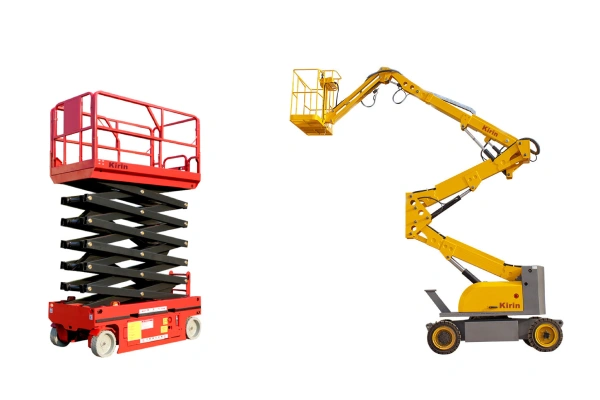
In the world of industrial operations, warehouse management, and construction, choosing the right machinery is the difference between a project that runs like clockwork and one that stalls due to inefficiency. Two of the most ubiquitous pieces of equipment found on job sites today are the forklift and scissor lift. While both are designed to help workers manage heights and heavy loads, they serve fundamentally different purposes.
Understanding the nuance of a forklift and scissor lift is essential for safety, productivity, and budget management. Whether you are looking to optimize a distribution center or facilitate overhead maintenance, this guide provides a deep dive into the unique capabilities of each machine.
What Is a Forklift?
Definition and Primary Purpose
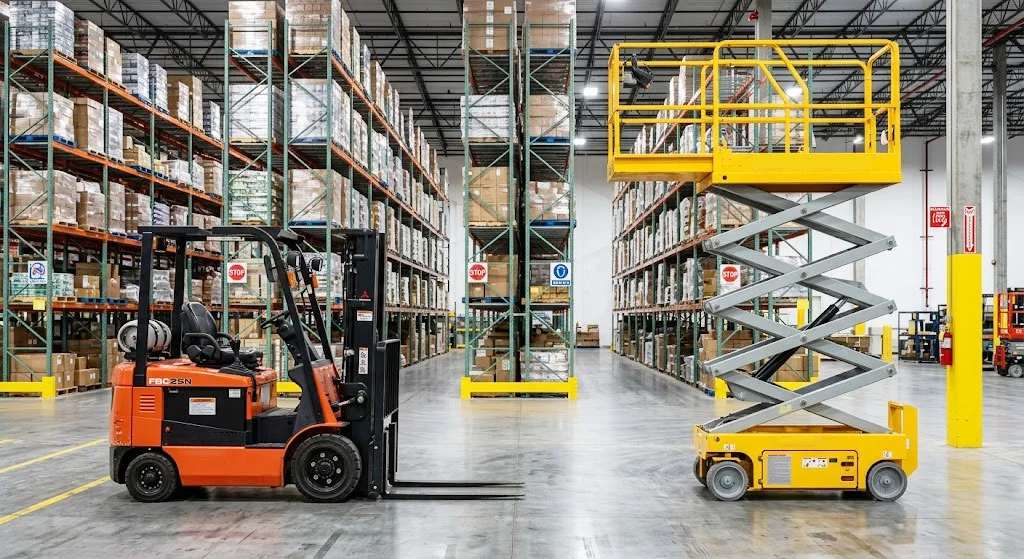
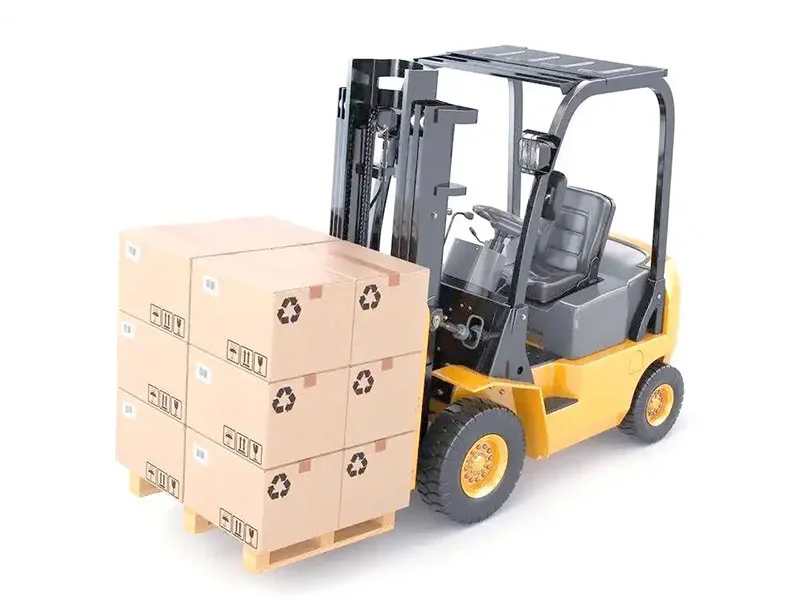
A forklift is a powered industrial truck used to lift and move materials over short distances. Its defining feature is the pair of hydraulic “forks” at the front, which can be inserted into the openings of a pallet to lift heavy loads. The primary purpose of a forklift is horizontal and vertical material transport—moving heavy goods from point A to point B and stacking them in high-density storage.
Common Types of Forklifts
- Counterbalance Forklifts: The most common type. They feature a heavy weight at the rear of the vehicle to offset the weight of the load being lifted at the front.
- Reach Trucks: Designed specifically for narrow aisles in warehouses. These trucks “reach” out into the shelving units to retrieve pallets, making them indispensable for high-density storage.
- Rough Terrain Forklifts: Equipped with large, pneumatic tires and robust engines, these are built for outdoor construction sites where the ground is uneven or muddy.
Typical Applications
- Warehouse Material Handling: Organizing inventory and maximizing vertical space.
- Loading/Unloading Trucks: Quickly moving pallets from shipping containers to the warehouse floor.
- Pallet Transport: Moving large quantities of raw materials or finished goods across a facility.
What is a Scissor Lift?
Definition and Primary Purpose
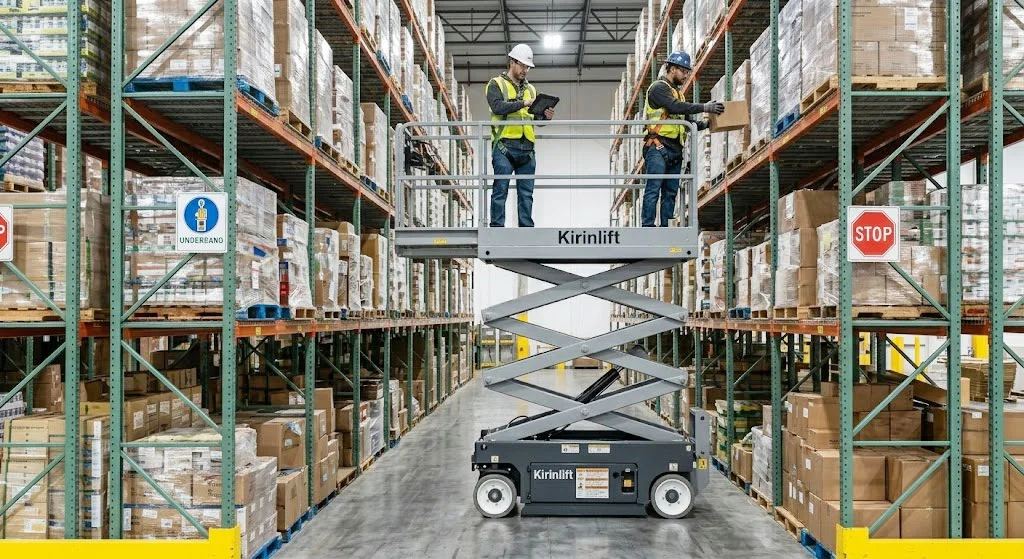
A scissor lift is a type of Aerial Work Platform (AWP) designed to move personnel and equipment vertically. It derives its name from the folding “criss-cross” supports (the pantograph) that extend to raise the platform. Unlike a forklift, which focuses on moving goods, a scissor lift focuses on providing a stable, elevated workspace for people.
Types of Scissor Lifts
- Electric Scissor Lifts: These are typically smaller, quieter, and leave no emissions, making them perfect for indoor maintenance in hospitals, schools, or warehouses. They often feature non-marking tires to protect finished floors.
- Diesel/Rough Terrain Scissor Lifts: Powered by combustion engines, these feature larger platforms and rugged tires. They are used on outdoor construction sites where workers need to reach high exterior walls or ceilings.
Common Applications
- Elevated Maintenance: Changing light fixtures, repairing HVAC systems, or painting high ceilings.
- Installation Work: Installing signage, sprinkler systems, or electrical wiring in large facilities.
- Construction Tasks: Providing a mobile scaffolding solution for workers to perform masonry or siding work.
Forklift and Scissor Lift: Key Differences
When comparing a forklift and scissor lift, the differences go beyond just their appearance. Each machine is engineered for a specific “mission profile.”
Function and Purpose
The fundamental difference between forklift and scissor lift machines is their payload. A forklift is a “beast of burden” designed to carry heavy, inanimate objects. A scissor lift is a “mobile platform” designed to safely elevate human beings and their hand tools.
Movement and Reach
Forklifts move both horizontally across the floor and vertically via a mast. Some specialized forklifts can reach heights of 30 feet or more. Scissor lifts move strictly vertically; the platform stays directly over the base. While the machine can be driven while slightly elevated, it does not have the “reach” or “tilt” flexibility of a forklift’s mast.
Load Capacity
This is a major point of divergence. A standard forklift can often lift between 3,000 and 30,000 pounds. In contrast, a scissor lift is usually rated for 500 to 1,500 pounds—just enough for a couple of workers and their equipment. If you try to lift a heavy pallet with a scissor lift, you risk a catastrophic mechanical failure.
Safety Considerations
The safety protocols for a forklift and scissor lift are distinct. Forklift safety focuses on load stability, tip-over prevention, and pedestrian awareness. Scissor lift safety focuses heavily on fall protection (guardrails and harnesses) and ensuring the ground is level to prevent the platform from tipping at high elevations.
Terrain and Environment
While both have “rough terrain” versions, forklifts are generally more agile in tight warehouse corners. Scissor lifts require a larger footprint for their base to ensure stability when the platform is extended.
Advantages of Forklifts
The primary advantage of a forklift is its sheer power and efficiency in material handling. In a high-volume warehouse, a forklift and scissor lift might both be present, but the forklift does the “heavy lifting.”
- Versatility: With various attachments (clamps, side-shifters, rotators), a forklift can handle more than just pallets; it can move rolls of paper, barrels, and even small vehicles.
- Speed: Forklifts are designed for fast-paced environments, allowing operators to move through aisles and load trailers at high speeds.
- High Lift Capacity: No other small-footprint machine can move 5,000 lbs to a height of 20 feet as efficiently as a forklift.
Advantages of Scissor Lifts
While a forklift is about power, a scissor lift is about access and safety for workers.
- Platform Space: Scissor lifts offer a large work area. This allows multiple workers to collaborate on a task at height, with plenty of room for tools and materials.
- Stability: Because the weight is distributed directly over the base, scissor lifts offer a very stable “floor” for workers, reducing the fatigue associated with working on ladders.
- Ease of Use: Compared to the complex multi-axis controls of a forklift, scissor lift controls are generally more intuitive, focusing primarily on up/down and forward/reverse movements.
Best Use Cases: When to Use a Forklift
You should prioritize a forklift when your primary goal is moving product.
- Cross-Docking: When goods need to be moved directly from an incoming truck to an outgoing one.
- High-Bay Stacking: When you need to utilize the full vertical height of your warehouse for inventory.
- Heavy Manufacturing: Moving heavy engine blocks, steel coils, or large assemblies between workstations.
Best Use Cases: When to Use a Scissor Lift
Choose a scissor lift when the job requires human intervention at height.
- Facility Maintenance: Any task involving ceiling-mounted utilities (HVAC, plumbing, electrical).
- Retail Inventory: While forklifts move pallets, scissor lifts are often used in big-box retail to allow employees to safely hand-stack smaller items on high shelves.
- Exterior Construction: Working on the facade of a building where scaffolding would be too time-consuming to erect.
Can a Forklift Replace a Scissor Lift (or Vice Versa)?
It is a common question: “Can I just use a forklift to lift a worker?” or “Can I put a pallet on a scissor lift?”
The answer is a resounding no for standard equipment. Using a forklift to lift a person on a pallet is a major OSHA violation and extremely dangerous. While you can buy a “man-basket” attachment for a forklift, it is still not a replacement for the stability and railing system of a dedicated scissor lift.
Similarly, using a scissor lift vs forklift for material transport is inefficient. Scissor lifts lack the forks required to engage a pallet and the hydraulic power to lift heavy industrial loads. Using the wrong tool for the job leads to equipment damage and increased risk of injury.
Choosing Between a Forklift and Scissor Lift
To decide between a forklift and scissor lift, ask yourself these three questions:
- What is the “Load”? If it’s a 2,000 lb pallet, you need a forklift. If it’s two technicians and a toolbox, you need a scissor lift.
- What is the Task? Is the goal to drop off a load and leave, or is the goal to stay at height and perform work? Work-at-height requires a scissor lift.
- What is the Environment? In narrow aisles where you need to reach deep into racks, a reach-truck forklift is king. In an open gym or warehouse floor where you need to reach the ceiling, a scissor lift is the better choice.
In many industrial settings, the answer isn’t “one or the other,” but rather how to integrate both a forklift and scissor lift into your workflow.
Conclusion
In the debate of forklift vs scissor lift, there is no objective “winner.” Each machine is a highly specialized tool designed for a specific set of tasks. The forklift and scissor lift are the twin pillars of modern industrial efficiency—one handles the goods, while the other handles the people who keep the facility running.
By understanding the difference between forklift and scissor lift capabilities, load capacities, and safety requirements, you can make an informed decision that protects your workers and your bottom line. Always remember that regardless of which machine you choose, proper forklift and scissor lift certification is mandatory to ensure a safe and compliant workplace.
If you have further questions or need help selecting the perfect equipment for your specific project, our team is ready to assist you. You can reach us via Email at info@klingtec.com or send us a message on WhatsApp at +86 188 6686 3188. Let’s ensure your next project is elevated by the right tools.
FAQs
What is the main difference between a forklift and a scissor lift?
The main difference lies in their primary function: a forklift is designed to lift and transport heavy materials (usually on pallets), while a scissor lift is designed to elevate personnel and their tools to a height for work or maintenance.
Can a scissor lift lift heavy materials like a forklift?
No. Scissor lifts have much lower weight capacities, usually limited to what a few people and light tools weigh. Attempting to lift heavy pallets with a scissor lift can cause the lifting mechanism to fail or the machine to tip.
Is a forklift safer than a scissor lift?
Both are safe when operated by trained professionals. However, they present different risks. Forklifts are more prone to tip-overs if overloaded, while scissor lifts present a higher risk of falls from height if safety harnesses and guardrails are not used correctly.
Which is better for warehouse use?
This depends on the task. For moving inventory and stacking pallets, a forklift is essential. For maintaining warehouse lights, sprinklers, or picking individual small items from high shelves, a scissor lift is the better tool.
Do you need certification to operate both machines?
Yes. OSHA requires specific forklift and scissor lift certification for operators. Being certified to drive a forklift does not automatically qualify you to operate a scissor lift, and vice versa. Each requires unique training on controls, safety protocols, and weight distribution.