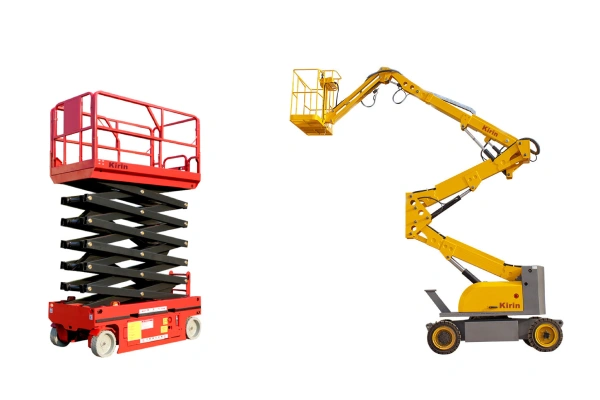
When a project demands elevation but the terrain refuses to cooperate, traditional machinery often falls short. Whether you are navigating the delicate tiles of a shopping mall atrium or the muddy, uneven soil of a new construction site, the tracked boom lift has emerged as a premier solution for high-altitude tasks.
In this comprehensive guide, we will explore why the tracked boom lift (often referred to as a “spider lift”) is becoming an indispensable asset in modern fleets, how it operates, and how to select the right model for your specific needs.
What Is a Tracked Boom Lift?
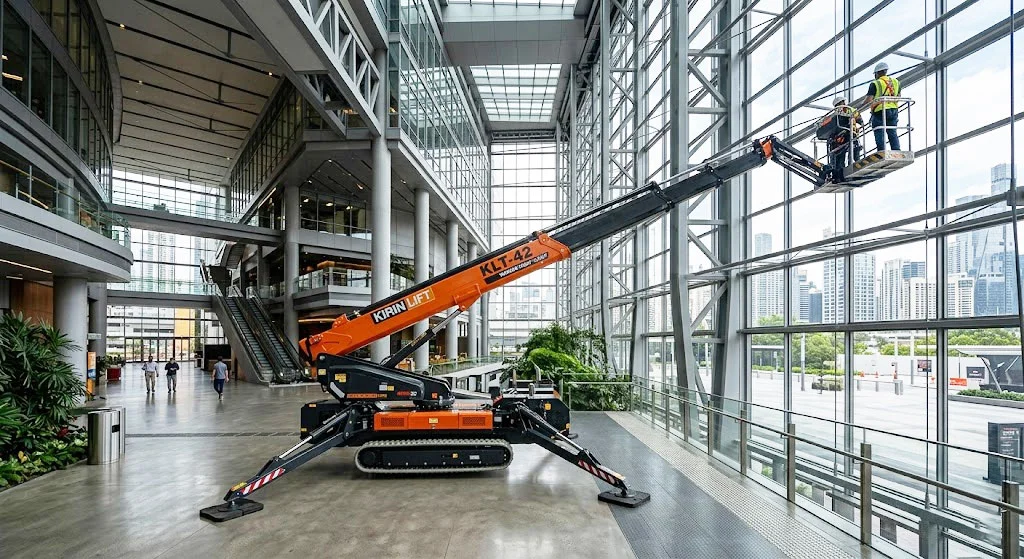
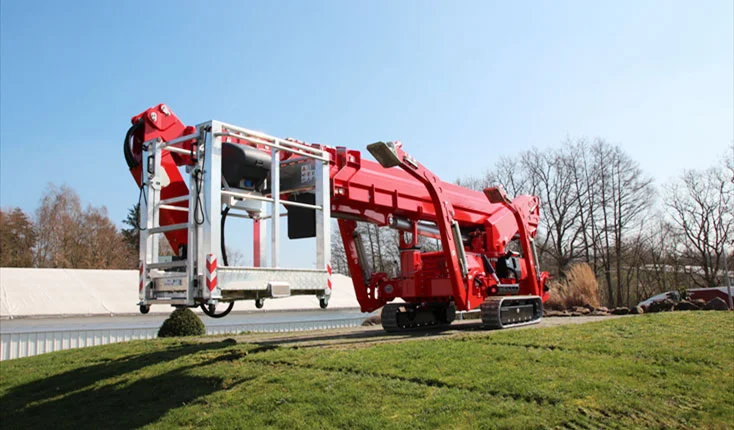
A crawler spider boom lift is a specialized type of aerial work platform (AWP) that utilizes a continuous track system—similar to a tank or an excavator—rather than traditional boom lift tires. This design allows the machine to traverse terrains that would swallow or stall a wheeled vehicle.
Key Components
- The Boom Arm: This is the heart of the machine. It can be telescopic (extending straight out) or articulating (featuring knuckles that allow it to bend over obstacles). An articulating tracked boom lift is particularly popular for its “up and over” capabilities.
- The Platform/Basket: The secure area where operators and their tools are housed. These are designed with high-strength materials and safety rails.
- The Tracks: Typically made of non-marking rubber, these tracks distribute the machine’s weight over a large surface area, providing incredible stability.
- Control System: Modern units feature intuitive controls, often including a remote-control console that allows the operator to walk alongside the machine while navigating tight gaps.
How It Differs from Wheeled Boom Lifts
The primary difference lies in ground pressure and footprint. A wheeled boom lift exerts significant pressure on four small points (the tires), which can crack sidewalks or sink into soft soil. Conversely, a tracked boom lift spreads its weight, making it a “low-impact” machine. Additionally, these models are usually much narrower, designed to fit through standard doorways, whereas wheeled models are often wide and bulky.
How a Tracked Boom Lift Works
Understanding the mechanics of a tracked boom lift helps operators maximize its potential while maintaining safety.
Basic Operating Principles
The machine operates on a center-of-gravity principle. Because the base is relatively lightweight compared to its reach, the crawler spider boom lift utilizes “outriggers” or stabilizer legs. Before the boom is extended, these legs deploy to create a wide, stable base, often leveling the machine on slopes up to 20 degrees.
Hydraulic and Electric Systems
Most machines utilize a sophisticated hydraulic system to power the boom’s movement and the outrigger deployment. To ensure versatility, many models are “Bi-Energy.” They use a diesel engine for outdoor travel and an electric motor (powered by batteries or a plug-in cord) for quiet, emission-free indoor operation.
Movement and Positioning
The tracked boom lift offers both vertical height and horizontal outreach. A tracked articulating boom lift allows the operator to reach a specific height and then “reach over” a roofline or structural beam, providing a 3D range of motion that a simple scissor lift cannot match.
Key Features of a Tracked Boom Lift
What makes the tracked boom lift so unique? It is the combination of agility and power.
- Rubber Tracks for Stability: The tracks are engineered to grip slippery or loose surfaces without leaving the ruts that traditional boom lift tires might.
- Compact Design: Many small tracked boom lift models can retract their tracks to a width of less than 3 feet, allowing them to pass through a standard single door.
- Lightweight Structure: By using high-tensile steel and clever engineering, these lifts are often light enough to be transported on a standard trailer behind a pickup truck.
- Remote Control Operation: This feature allows the operator to stand outside the machine while driving it through narrow gates or onto trailers, providing a better line of sight and increasing safety.
- Terrain Adaptability: From stairs to steep inclines, the crawler spider boom lift is designed to climb.
Advantages of Using a Tracked Boom Lift
If you are debating between a standard lift and a specialized crawler, consider these operational benefits:
Enhanced Stability
Because the outriggers can be adjusted individually, a tracked boom lift can set up on a staircase or a steep embankment where a wheeled lift would tip.
Improved Accessibility
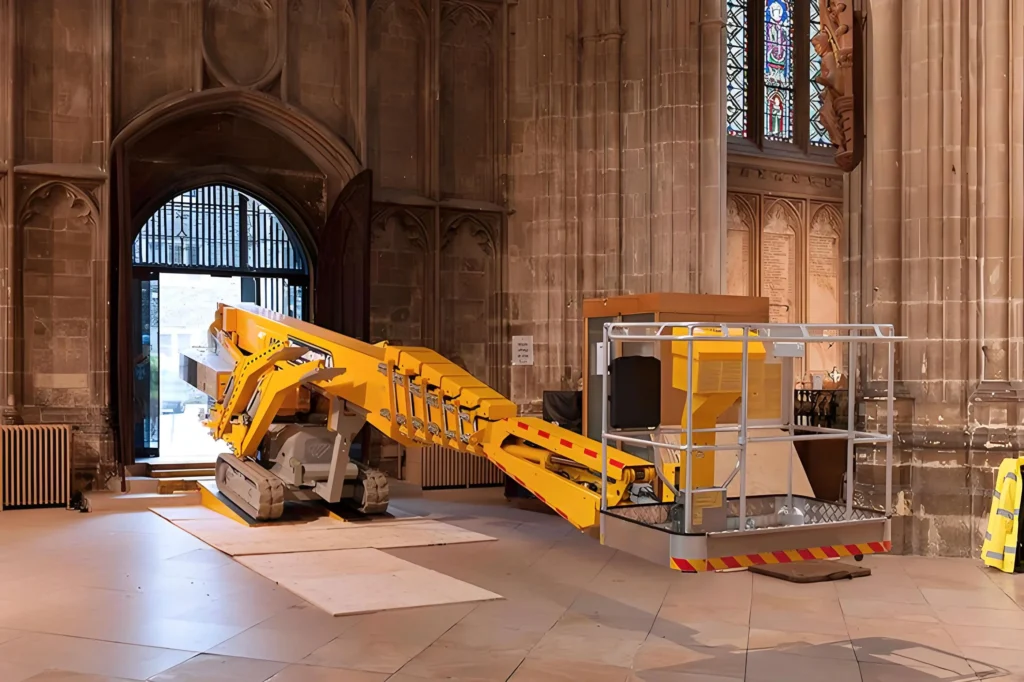
A compact tracked boom lift can access “impossible” areas—like backyard gardens with narrow gate entries or church sanctuaries with fixed pews.
Reduced Ground Damage
For finished flooring, such as marble or gymnasium wood, a crawler spider boom lift with non-marking tracks is the only safe choice. It avoids the scuffing and high-point loading associated with heavy boom lift tires.
Versatility
You don’t need two machines for one job. Use the diesel engine to drive the equipment across a muddy site, then switch to electric mode to finish the interior installations.
Common Applications of Tracked Boom Lifts
The utility of a crawler spider boom lift spans across dozens of industries:
- Tree Care and Landscaping: Arborists love the articulating tracked boom lift because it can navigate between tight residential properties to prune high branches without destroying the lawn.
- Construction and Maintenance: From painting to window installation, a tracked boom lift provides a steady platform on unfinished jobsites.
- Industrial Inspections: Checking bridges, rafters, or high-ceiling piping becomes simpler when you can maneuver a small tracked boom lift into position.
- Facility Management: Malls, airports, and museums use these lifts for lightbulb replacement and cleaning because they fit through pedestrian doors.
- Historical Restoration: When working on delicate heritage sites, the low ground pressure of a crawler spider boom lift ensures the ground is preserved.
Tracked Boom Lift vs. Other Aerial Lifts
To choose the right tool, you must understand where the tracked boom lift sits in the hierarchy of aerial access.
| Feature | Tracked Boom Lift | Scissor Lift | Telescopic (Wheeled) |
| Terrain | All-Terrain / Fragile Floors | Flat / Hard Surfaces | Rough Terrain (but heavy) |
| Reach | Vertical & Horizontal | Vertical Only | Maximum Horizontal |
| Width | Ultra-Narrow | Varies | Usually Wide |
| Weight | Lightweight | Heavy | Very Heavy |
When to choose a tracked boom lift?
Choose this machine when you have a “bottleneck” entry point, when the floor has a low weight capacity, or when the ground is too uneven for a wheeled machine to safely level itself.
Safety Tips for Operating a Tracked Boom Lift
Safety is paramount when working at heights. Even the most advanced tracked boom lift requires a trained hand.
- Inspect the Ground: Before deploying outriggers, ensure the ground isn’t hollow (like a manhole cover) or too soft to support the localized pressure of the stabilizer pads.
- Wear a Harness: Always use a full-body harness with a lanyard attached to the designated anchor point in the basket.
- Check Weather Conditions: High winds can turn a tracked boom lift into a sail. Always check the manufacturer’s maximum wind speed rating.
- Leveling: Ensure the machine’s spirit level or digital inclinometer indicates a “green” or level status before elevating the boom.
- Clearance: Be hyper-aware of overhead power lines. This equipment is a conductor, and maintaining a safe distance is critical.
How to Choose the Right Tracked Boom Lift
Not all models are created equal. To find the right fit, evaluate these factors:
Working Height Requirements
Always calculate your “working height,” which is typically 6 feet above the platform floor height. If you need to reach 50 feet, ensure your tracked boom lift is rated for at least that.
Outreach and Load Capacity
How far sideways do you need to go? A tracked articulating boom lift offers great flexibility, but the further you reach, the less weight the basket can typically hold. Check the “load chart” carefully.
Terrain Considerations
If you are working on a 15-degree slope, ensure the tracked boom lift outriggers have enough travel to level the chassis.
Power Source
- Electric: Best for indoors.
- Diesel: Best for heavy outdoor use.
- Lithium/Hybrid: The best of both worlds, offering long run times and quiet operation.
Conclusion
The tracked boom lift has revolutionized the way we think about high-access work. By combining the footprint of a compact machine with the reach of a giant, it solves the most common headaches in the construction and maintenance industries. From the stability of its rubber tracks to the versatility of an articulating tracked boom lift arm, these machines prove that you don’t have to sacrifice power for portability.
If you are ready to elevate your project efficiency with a high-quality tracked boom lift, our experts at Kirin Lift are here to help you find the perfect match for your requirements.
Get in Touch for Expert Advice & Pricing:
- Email: info@klingtec.com
- WhatsApp: +86 188 6686 3188
FAQS
Can a tracked boom lift be used on a slope?
Yes! Most models feature independent outriggers that allow the machine to level itself on significant inclines where a wheeled lift would be inoperable.
Do I need a special license to operate a tracked boom lift?
Requirements vary by region, but generally, you need an IPAF license or equivalent local certification to operate a tracked boom lift commercially.
Will the tracks damage my lawn?
A tracked boom lift is much gentler than a machine with boom lift tires. Because the weight is distributed over a larger area, it rarely leaves deep ruts.
How do I transport a compact tracked boom lift?
Many small tracked boom lift models are designed to be towed on a dual-axle trailer, making them much easier to move between jobsites.
Is an articulating tracked boom lift better than a telescopic one?
It depends on the obstacle. An articulating tracked boom lift is better for reaching over walls, while a telescopic model often provides greater horizontal reach in a straight line.