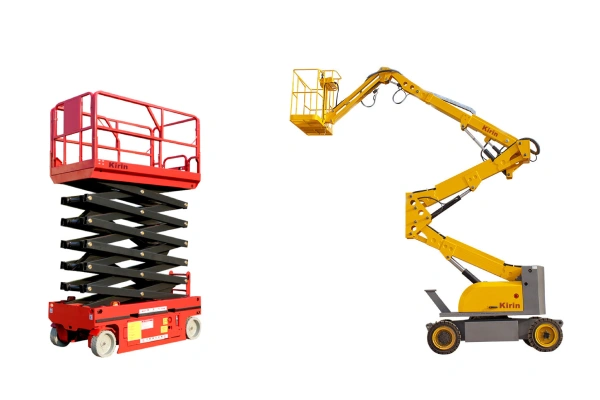
In the world of construction, warehousing, and facility maintenance, the scissor lift is an indispensable workhorse. It provides the reach and stability necessary to perform tasks at height with precision. However, because these machines elevate personnel and heavy materials, they carry inherent risks. A rigorous scissor lift inspection protocol is not just a “good idea”—it is a critical requirement for workplace safety, legal compliance, and operational longevity.
Whether you are an operator, a site supervisor, or a business owner, understanding the nuances of a scissor lift inspection can mean the difference between a productive day and a catastrophic accident. This comprehensive guide explores every facet of the inspection process to ensure your equipment remains in peak condition.
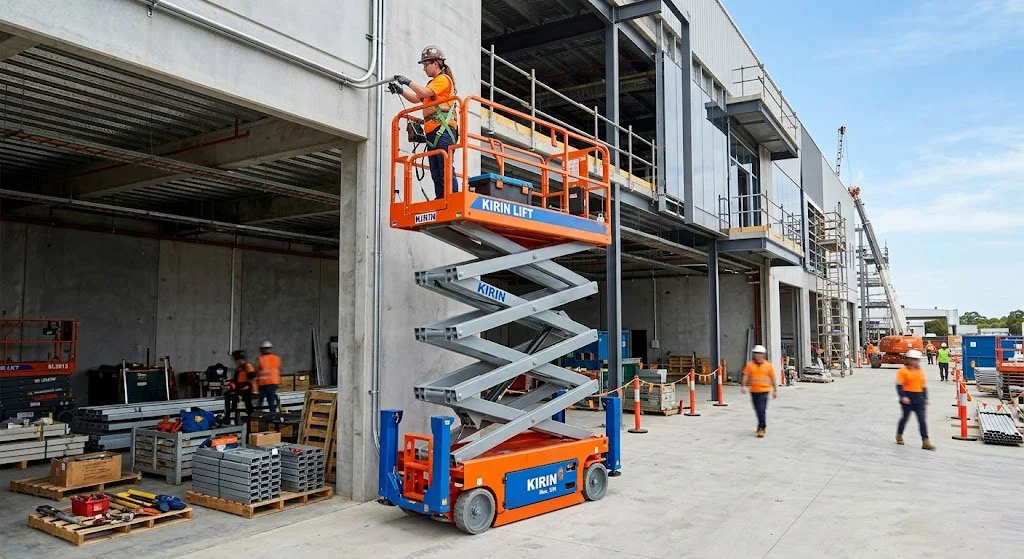
Why Scissor Lift Inspection Is Important
The primary objective of a scissor lift inspection is safety. When a machine is elevated, even a minor mechanical failure can lead to a tip-over, a fall, or a structural collapse. Beyond the moral obligation to protect workers, there are three key reasons why inspections are vital:
- Risk Mitigation: Identifying hairline cracks, hydraulic weeps, or frayed wires before they lead to a full-system failure prevents accidents.
- Regulatory Compliance: OSHA and ANSI have strict scissor lift inspection requirements. Failing to meet these can result in heavy fines and legal liability.
- Operational Efficiency: Small issues are cheaper to fix than large ones. A consistent scissor lift inspection routine identifies wear and tear early, reducing unplanned downtime and extending the machine’s lifespan.
Key Components to Check During a Scissor Lift Inspection
A thorough scissor lift inspection requires a systematic approach. You cannot simply walk around the machine; you must examine specific subsystems that govern the lift’s integrity.
Structural Components
The “bones” of the machine must be sound. Check the guardrails, toe boards, and the platform floor for any signs of deformation or damage. Most importantly, inspect the scissor arms (the “links”) for cracks in the welds or bends in the metal. Ensure all pins and bolts are secure and properly lubricated.
Hydraulic System
The hydraulic system is the muscles of the lift. During your scissor lift inspection, look for “wet” spots on hoses, cylinders, and fittings, which indicate leaks. Check the hydraulic fluid levels and ensure the fluid is clear, not milky or burnt-smelling.
Electrical System
Modern lifts rely heavily on electronics. Inspect the battery terminals for corrosion and ensure cables are not pinched or exposed. For electric models, check the charging port and cables. For internal combustion models, check the starter and alternator wiring.
Safety Mechanisms
Safety features are your last line of defense. This includes the emergency stop buttons (both on the platform and the ground controls), the tilt sensor/alarm, the pothole protection system, and the descent alarm. If a safety mechanism fails during a scissor lift inspection, the machine must be pulled from service immediately.
Tires and Wheels
Check for “chunking” (large pieces of rubber missing), flat spots, or embedded debris. Ensure the lug nuts are torqued to the manufacturer’s specifications. For pneumatic tires, verify the air pressure is correct.
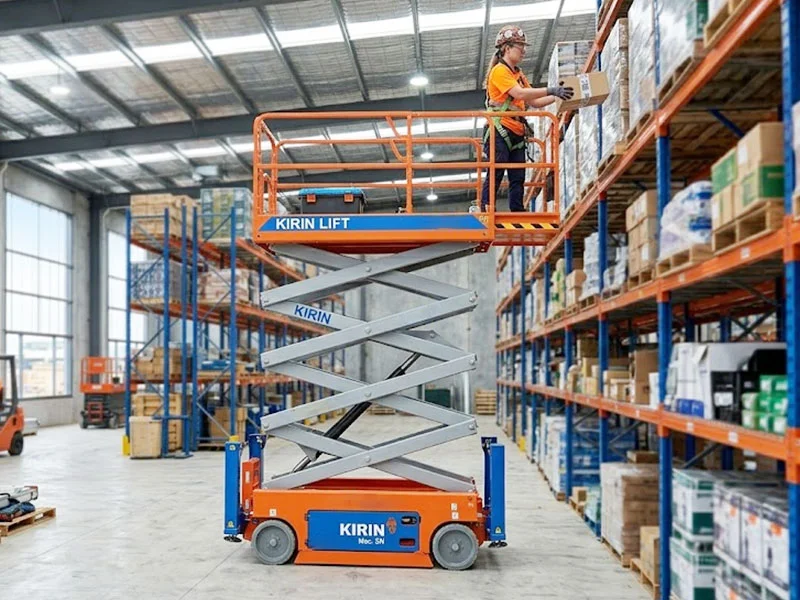
Daily (Pre-Use) Inspection Checklist
The daily scissor lift inspection form is the most frequently used tool in your safety arsenal. Every operator should perform a pre-use check at the start of every shift.
Visual Inspection Steps
- Check for fluid leaks under the machine.
- Ensure all decals and warning signs are legible.
- Verify the operator’s manual is in the weather-resistant storage container on the platform.
- Look for loose or missing parts.
Functional Tests
Once the visual check is complete, you must test the machine’s movement.
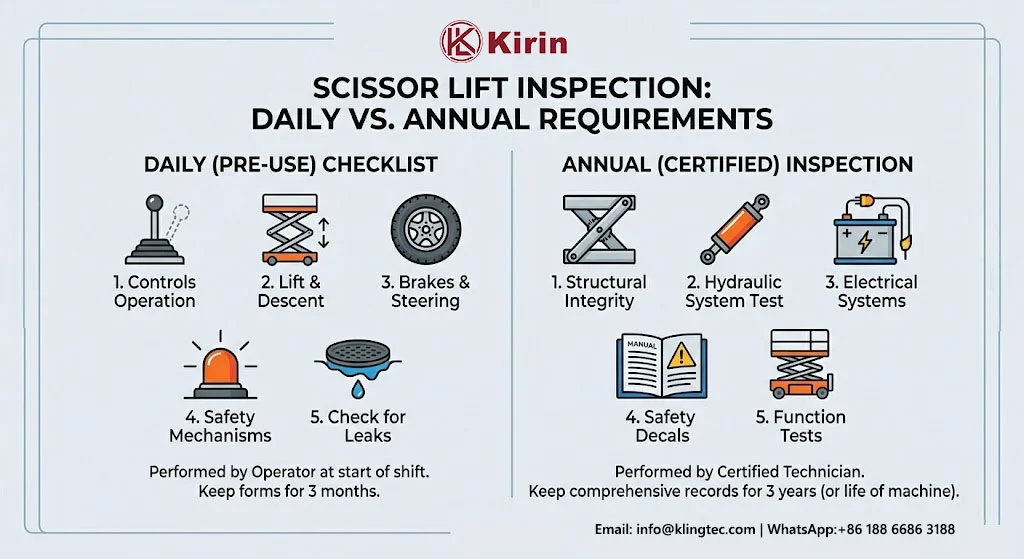
- Controls Operation: Test both the ground and platform controls. Ensure the “deadman” switch (the trigger or foot pedal) must be engaged for the lift to move.
- Lift and Descent: Raise the platform to its full height and lower it. It should move smoothly without jerking or unusual noises.
- Brakes and Steering: Drive the lift a short distance to ensure the brakes engage immediately when the controller is released. Test the full range of steering.
- Unusual Noises or Vibrations: Listen for grinding, squealing, or popping, which could indicate mechanical distress.
Importance of Documenting Daily Checks
Using a standardized scissor lift daily inspection checklist is crucial for accountability. If an incident occurs, a documented scissor lift inspection form proves that the equipment was deemed safe at the start of the shift.
Annual Scissor Lift Inspection Requirements
Many fleet owners ask: Do scissor lifts need annual inspections? The answer is a definitive yes. While daily checks are performed by operators, an annual scissor lift inspection must be performed by a qualified technician.
What is Included in a Yearly Inspection
The annual inspection is an “in-depth” version of the daily check. It involves:
- Testing all structural welds for integrity.
- Checking hydraulic pressure settings.
- Inspecting internal electrical components and motor brushes.
- Verifying that the machine meets the manufacturer’s original specifications.
Importance of Certified Inspectors
A “qualified person” (as defined by OSHA/ANSI) is someone who has the tools and knowledge to identify hidden hazards. Using a certified technician for your annual scissor lift inspection ensures that no subtle mechanical issues are missed.
Documentation and Record-Keeping
The records for an annual scissor lift inspection must be kept for at least several years (depending on local jurisdiction). These records should include the date of inspection, the name of the inspector, and any repairs made to bring the unit into compliance.
Common Issues Found During Scissor Lift Inspections
Knowing what usually goes wrong can help you focus your scissor lift inspection efforts.
- Hydraulic Leaks: Often found at the base of the lift cylinder or at hose couplings. Even a small “weep” can lead to a sudden loss of pressure.
- Battery Failure or Corrosion: In electric lifts, neglected batteries are the #1 cause of downtime. Acid buildup on terminals can impede power flow.
- Worn-out Components: Pivot pins and bushings eventually wear down, leading to “slop” or instability in the scissor stack.
- Faulty Safety Systems: Frequently, the “tilt alarm” or “limit switches” become disconnected or damaged by debris.
- Structural Damage: Dents in the guardrails or bends in the scissor arms from collisions with racking or other machinery.
Scissor Lift Inspection Best Practices
To maximize the effectiveness of your scissor lift inspection, follow these industry best practices:
- Consistency is Key: Perform the inspection at the same time every day to make it a habit.
- Cleanliness Matters: It is hard to see a hydraulic leak or a structural crack on a machine covered in mud or grease. Keep the unit clean.
- Use a Digital Form: Transitioning from paper to a digital scissor lift inspection form allows for instant reporting and photo attachments of defects.
- Train the Trainers: Ensure that the people supervising the inspections actually know what a “failing” component looks like.
Scissor Lift Inspection Safety Tips
When performing a scissor lift inspection, your own safety is paramount.
- Always Inspect Before Use: Never assume the previous shift left the machine in good condition.
- Never Bypass Safety Features: Do not “jump” a switch or tape down a control to finish an inspection.
- Use Proper PPE: Wear gloves when checking for leaks (hydraulic fluid can be hot and under high pressure) and high-visibility clothing.
- Tag Out Defective Equipment: If a scissor lift inspection reveals a flaw, use a “Danger: Do Not Operate” tag and remove the key.
- Ensure Stable Ground: Perform your functional tests on level, solid ground to prevent an accidental tip-over during the test.
How Often Should You Inspect a Scissor Lift?
The frequency of a scissor lift inspection is dictated by both regulations and usage intensity.
| Frequency | Type of Inspection | Responsibility |
| Daily | Pre-start/Pre-use | Operator |
| Monthly | Preventive Maintenance | Maintenance Staff |
| Annually | Comprehensive Compliance | Certified Technician |
Factors Affecting Frequency
- Usage: A lift used 24/7 in a warehouse needs more frequent checks than one used once a week.
- Environment: Corrosive environments (like chemical plants or coastal areas) require more frequent scissor lift inspection intervals due to rust and salt air.
- Workload: Lifts frequently operating at their maximum weight capacity experience more structural stress.
Conclusion
A rigorous scissor lift inspection program is the foundation of a safe and productive job site. By adhering to a strict scissor lift daily inspection checklist and ensuring all scissor lift inspection requirements are met annually, you protect your most valuable assets: your people. Remember, a few minutes spent checking a machine today can prevent a lifetime of regret tomorrow.
If you have any questions regarding equipment maintenance or are looking for high-quality, reliable lifting solutions, the team at Kirin Lift is here to help. We are dedicated to providing the information and machinery you need to stay safe and compliant at any height.
Contact Us:
- Email: info@klingtec.com
- WhatsApp: +86 188 6686 3188
Keep your forms updated, your technicians trained, and your equipment maintained. Safety is a choice you make every time you step onto the platform.
FAQs
What happens if I skip a scissor lift inspection?
Skipping an inspection increases the risk of mechanical failure, which can lead to injury or death. Additionally, if an accident occurs and there is no record of a recent scissor lift inspection, your company could face massive OSHA fines and legal lawsuits.
Can I use a generic scissor lift daily inspection checklist?
While a generic checklist is better than nothing, it is always best to use a scissor lift inspection checklist specifically designed for your make and model, as different manufacturers have unique components.
Where can I find a daily scissor lift inspection form?
Most manufacturers provide a daily scissor lift inspection form in the operator’s manual. You can also download standardized templates from safety compliance websites or use mobile inspection apps.
Who is authorized to perform an annual scissor lift inspection?
According to scissor lift inspection requirements, an annual inspection must be performed by a person “qualified” on that specific type of aerial work platform. This usually means a factory-trained technician or a mechanic with extensive experience.
How long should I keep my scissor lift inspection records?
It is best practice to keep scissor lift inspection records for the life of the machine, but at a minimum, you should keep the last several years of annual reports and the last 3–6 months of daily checklists to satisfy auditors.