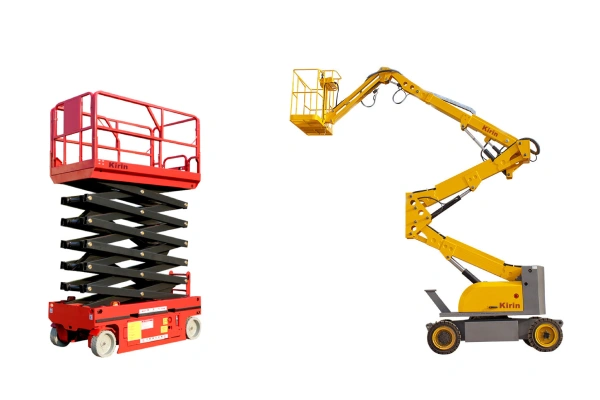
Selecting the right aerial work platform can be the difference between a project that runs like clockwork and one that is plagued by delays, safety hazards, and unexpected costs. Whether you are managing a construction site, performing warehouse maintenance, or installing signage, understanding the nuances of your equipment is vital.
While all lifts serve the primary purpose of elevating personnel and tools, they are far from “one size fits all.” The environment in which you work dictates the specifications you need. In this comprehensive guide, we will dive deep into why choosing an outdoor boom lift versus an indoor model is a critical decision for your operational success.
What Is a Boom Lift?
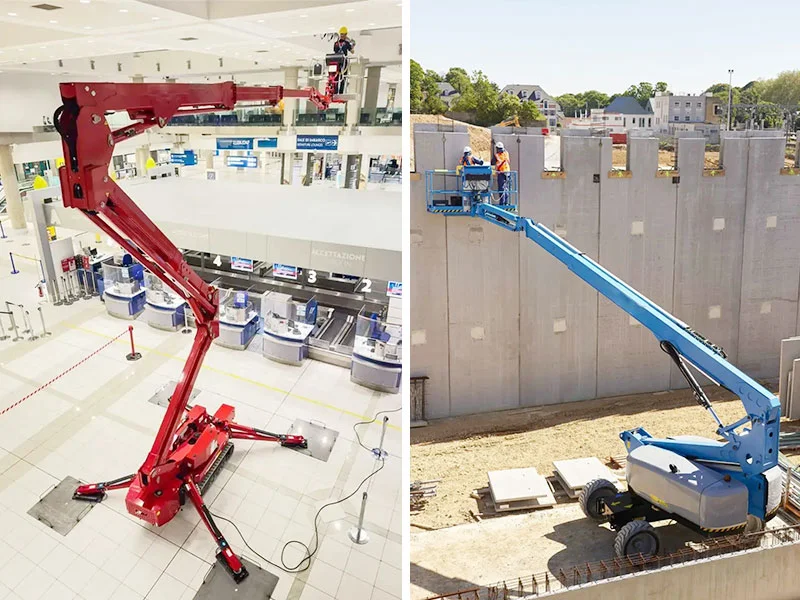
A boom lift, also known as a cherry picker or man lift, is a type of aerial work platform (AWP) that provides both vertical and horizontal reach. Unlike a scissor lift, which only moves straight up and down, these machines feature a hydraulic arm that can maneuver around obstacles to reach difficult spots.
These units consist of a grounded base, a power system, and a platform or bucket at the end of the arm where the operator stands. They are indispensable in industries ranging from telecommunications and forestry to painting and HVAC installation. Generally, they fall into two categories: telescopic (straight) or articulating (knuckle) models.
What Is an Indoor Boom Lift?
Indoor models are precision tools designed for confined spaces and sensitive environments. These machines are typically characterized by their compact frames, non-marking tires, and zero-emission power sources.
Because indoor environments like malls, warehouses, and gymnasiums often have finished flooring—such as epoxy, tile, or polished concrete—indoor lifts are lightweight. They utilize specialized rubber tires to prevent floor damage. Furthermore, since ventilation can be limited indoors, these machines are almost exclusively electric-powered to ensure air quality remains safe for workers.
What Is an Outdoor Boom Lift?
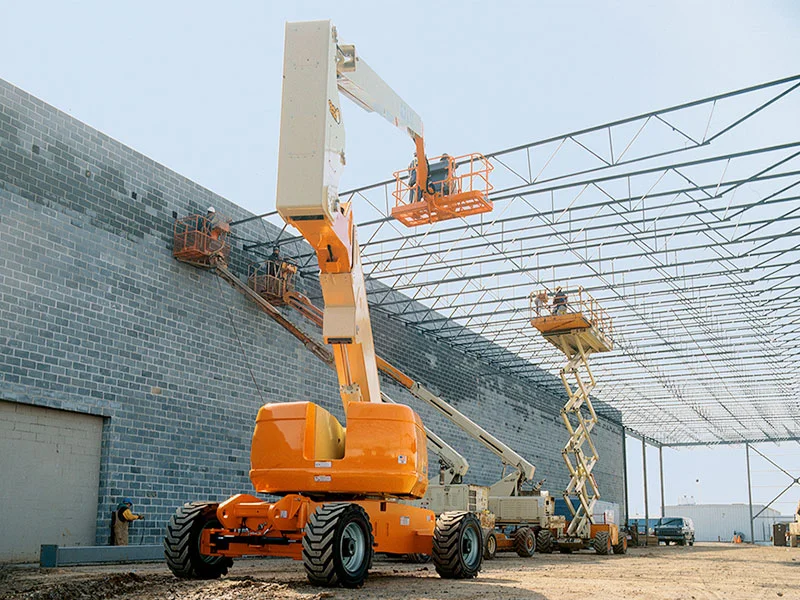
An outdoor boom lift is a rugged, heavy-duty machine engineered to withstand the rigors of the elements and uneven terrain. These are the workhorses of the construction world. Unlike their indoor counterparts, this equipment is built with a focus on stability, power, and durability.
The typical outdoor boom lifts feature a larger footprint and a more powerful engine, often internal combustion (diesel or dual-fuel), to provide the torque necessary for climbing grades and moving over mud, gravel, or sand. However, recent innovations have introduced the electric outdoor boom lift, which offers the power of traditional models with the benefit of quieter operation and lower environmental impact. Whether you are using telescopic or articulating models, outdoor boom lifts are designed to reach higher and handle more demanding environments than indoor-only units.
Indoor vs. Outdoor Boom Lift: Key Differences
Understanding the technical variations between these two categories is essential for safety and efficiency.
Power Source
Indoor lifts rely on battery-operated electric motors. This ensures there are no exhaust fumes. Conversely, a traditional outdoor boom lift usually runs on diesel or liquid propane (LPG). These engines provide the high-end torque required for rough terrain. However, if your project requires working near residential areas with noise ordinances, an electric outdoor boom lift is an increasingly popular hybrid solution.
Terrain Capability
This is perhaps the most significant differentiator. Indoor lifts require flat, level, and solid surfaces. An outdoor boom lift, however, is equipped with oscillating axles and four-wheel drive (4WD) to navigate ruts, rocks, and steep inclines. The suspension systems are designed to keep the chassis level even when the ground is not.
Lift Height and Reach
While indoor lifts usually top out around 30 to 60 feet due to ceiling constraints, these larger units can reach much higher. It is common to see a boom lift reaching heights of 135 feet or even 180 feet for high-rise construction or wind turbine maintenance.
Size and Maneuverability
Indoor lifts are slim—some are even narrow enough to fit through a standard doorway. A heavy-duty outdoor boom lift has a much wider base to provide stability at extreme heights and on uneven ground. While they may have a larger turning radius, they are designed to move across vast, open jobsites quickly.
Tire Type
Indoor lifts use “non-marking” tires, which are usually solid white or gray rubber. These tires lack deep treads to avoid trapping dirt and debris that could scratch floors. An outdoor boom lift uses heavy-duty, foam-filled or pneumatic (air-filled) tires with deep lugs. These “lug” treads provide the traction necessary to grip soft soil or slippery mud.
Emissions and Noise
Indoor units are silent and clean. A diesel-powered outdoor boom lift can be quite loud and produces exhaust, requiring its use to be restricted to well-ventilated areas. The emergence of the electric outdoor boom lift has bridged this gap, allowing for low-noise operation in urban settings.
Weather Resistance
Machines designed for the yard or site are built with “weatherized” components. The electrical systems are sealed against moisture, and the steel components are often treated with heavy-duty coatings to prevent rust from rain and snow. Indoor lifts are not designed to be left in the rain, as moisture can easily damage their sensitive electronics.
Advantages of Using an Outdoor Boom Lift
Choosing an outdoor boom lift offers several strategic advantages for large-scale projects:
- Superior Traction: With 4WD and high ground clearance, these machines can navigate jobsites that would swallow an indoor lift.
- Greater Weight Capacity: Because they have sturdier bases, many models can support higher platform capacities, allowing multiple workers and heavy tools to be lifted simultaneously.
- Reach and Versatility: The sheer horizontal outreach allows you to set up the machine further away from a building or obstacle while still reaching the work area.
- Durability: These machines are built to be used in harsh environments. From dust storms to light rain, the boom lift keeps moving.
- Continuous Run Time: While electric lifts need hours to recharge, a diesel-powered unit can be refueled in minutes, ensuring 24/7 productivity.
When Should You Choose an Outdoor Boom Lift?
You should opt for an outdoor boom lift if your project meets any of the following criteria:
- Unfinished Surfaces: If the ground is dirt, gravel, or broken asphalt, this type of machinery is mandatory for stability.
- High-Altitude Tasks: For any work exceeding 60 feet, the stability provided by the wider wheelbase of an outdoor boom lift is necessary.
- Bridge and Infrastructure Work: Projects involving overpasses or dams require extreme horizontal reach.
- Landscaping and Tree Trimming: Navigating parks or forests requires the rugged tires and high torque of these machines.
- Extreme Weather Conditions: If the equipment will be stored or used in an area prone to rain, an outdoor boom lift is designed to handle the exposure.
Safety Considerations for Outdoor Boom Lifts
Operating an outdoor boom lift comes with a unique set of safety challenges that differ from indoor environments.
- Wind Speeds: This is the most critical factor. Every outdoor boom lift has a maximum wind speed rating (usually around 28 mph). Beyond this, the lift becomes a “sail” and is at risk of tipping.
- Ground Stability: Just because the machine can handle uneven ground doesn’t mean it can handle soft ground. Operators must check for sinkholes, trenches, or underground utilities that might collapse under the massive weight of an outdoor boom lift.
- Overhead Power Lines: Outdoors, power lines are a constant threat. Always maintain a minimum “safe distance” (usually 10 feet for lines up to 50kV).
- Falling Objects: When using the platform at extreme heights, the “drop zone” below must be significantly larger and well-flagged to protect ground personnel.
Cost Differences Between Indoor and Outdoor Boom Lifts
Generally, an outdoor boom lift will be more expensive to rent or purchase than an indoor model. This price discrepancy is due to several factors:
- Size and Material: These machines require more steel, larger hydraulic cylinders, and more complex suspension systems.
- Engine Technology: The heavy-duty internal combustion engines or high-capacity batteries in an electric outdoor boom lift are more costly to manufacture than small indoor motors.
- Maintenance: Because the units are exposed to grit and grime, they require more frequent oil changes, filter replacements, and structural inspections.
- Transportation: Moving a massive outdoor boom lift to a jobsite requires heavy-haul trucking, which adds to the logistical cost compared to a compact indoor lift.
How to Choose the Right Boom Lift for Your Project
To decide whether you need an indoor model or an outdoor boom lift, ask yourself the following questions:
- What is the maximum height I need to reach? (If >60ft, look at outdoor boom lifts).
- What does the ground look like? (If it’s not finished concrete, you need rugged capabilities).
- Are there weight restrictions on the floor? (If yes, you may need a specialized lightweight indoor lift).
- Is noise or exhaust an issue? (If yes, consider an electric outdoor boom lift).
- Do I need to reach over obstacles? (If yes, look for an articulating outdoor boom lift).
By accurately assessing the jobsite environment, you can ensure that the equipment you choose is the most efficient tool for the task at hand.
Conclusion
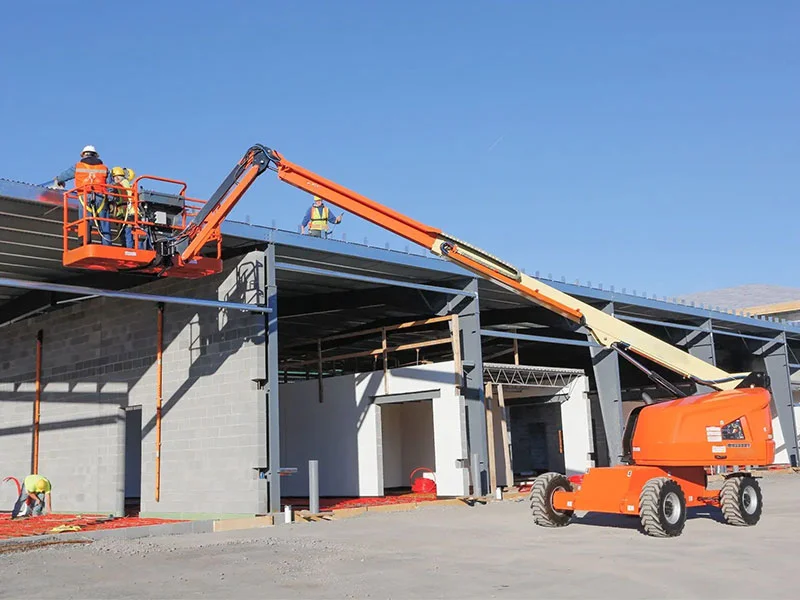
In the debate of indoor vs. outdoor boom lift, the winner is always determined by the environment. For warehouse tasks and indoor renovations, the electric indoor lift is king. However, for the vast majority of infrastructure, construction, and heavy maintenance tasks, the outdoor boom lift is an irreplaceable asset.
Investing the time to understand the differences—from tire treads to power sources—ensures that you remain safe, compliant, and profitable. Whether you choose a traditional diesel-powered beast or a modern electric outdoor boom lift, having the right equipment for the terrain is the first step toward a successful project.
If you are still deciding which model is best for your jobsite, our team is here to help you make an informed decision. For expert advice, detailed specifications, or a custom quote, please reach out to us at Kirin. You can contact us via email at info@klingtec.com or send us a message on WhatsApp at +86 188 6686 3188. We look forward to helping you safely and efficiently elevate your next project.
FAQs
Can I use an outdoor boom lift indoors?
Generally, no. A standard outdoor boom lift is usually too heavy for indoor flooring and its engine produces toxic fumes. However, an electric outdoor boom lift may be used in very large, well-ventilated indoor spaces like airplane hangars.
What makes an electric outdoor boom lift different from a regular electric lift?
An electric outdoor boom lift combines the clean energy of an indoor lift with the rugged chassis, 4WD, and high ground clearance of traditional site equipment. It is designed for outdoor use where noise and emissions must be minimized.
How often should an outdoor boom lift be inspected?
Every outdoor boom lift requires a pre-start inspection every day before use. Additionally, it must undergo a thorough annual inspection by a qualified technician to ensure structural and hydraulic integrity.
Do I need a special license to operate an outdoor boom lift?
In most regions, operators must be “certified” rather than “licensed.” This typically involves a training course (like IPAF or OSHA-compliant training) that covers the specific safety protocols for using an outdoor boom lift.
Why are outdoor boom lifts often foam-filled?
Many outdoor boom lifts use foam-filled tires to prevent flats on construction sites where nails and sharp debris are common. This ensures the machine remains stable and operational at all times.