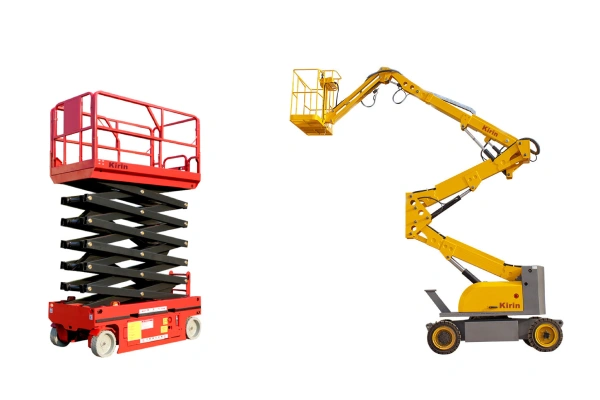
In the world of aerial work platforms, efficiency is the name of the game. Whether you are managing a massive construction site, overseeing a high-density warehouse, or handling intricate facility maintenance, the tools you choose dictate your timeline and your safety record. One of the most impactful upgrades an operator can utilize is the scissor lift extended platform.
While a standard scissor lift provides a stable vertical boost, the scissor lift extended platform takes that utility to the next level by expanding the horizontal workspace. This guide explores why this specific feature has become a non-negotiable for professionals looking to maximize their output while keeping their teams safe.
What is a Scissor Lift Extended Platform?
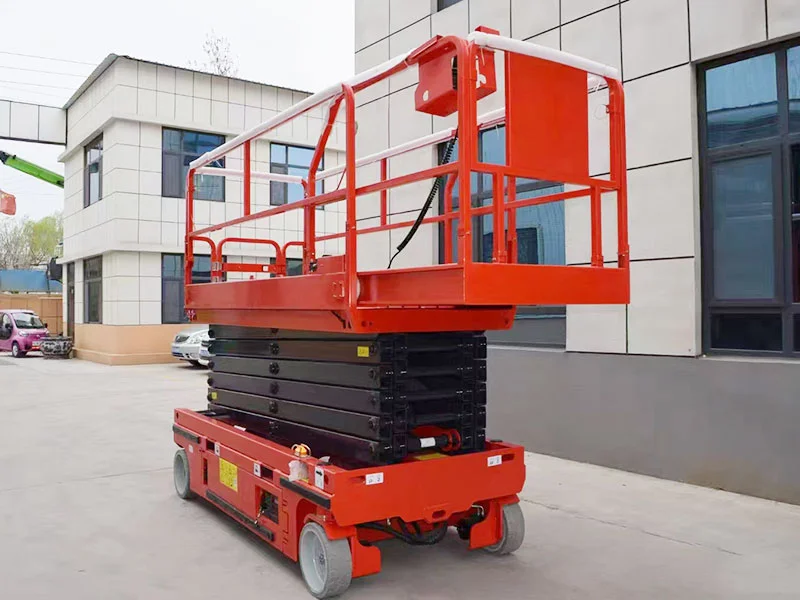
A scissor lift extended platform, often referred to as an “extension deck” or “roll-out deck,” is a secondary section of the work platform that slides outward from the main deck. While the primary scissor mechanism provides vertical lift, the extension provides horizontal reach. This allows workers to bridge the gap between the lift’s base and the specific area where work needs to be performed.
How it Differs from a Standard Scissor Lift Platform
A standard scissor lift has a fixed rectangular footprint. To reach a different section of a wall or ceiling, the operator must lower the lift, drive it a few feet over, and raise it again. In contrast, a scissor lift with extended platform allows the worker to simply slide the deck out. This creates a much larger total work area, effectively turning a compact machine into a long, versatile bridge.
Types of Extensions
There are two primary ways a scissor lift extended platform operates:
- Manual Slide-out Decks: The operator releases a foot or hand lever and manually pushes the deck forward until it locks into place. These are common on smaller, electric models used for indoor maintenance.
- Powered Extension Decks: Found more frequently on large, rough-terrain models, these use hydraulic or electric motors to extend the platform at the touch of a button. This is ideal for heavy-duty jobs where the deck itself may be too heavy to move manually.
Key Features of a Scissor Lift Extended Platform
Increased Platform Length
The primary draw of a scissor lift extended platform is the sheer increase in square footage. Depending on the model, an extension can add anywhere from 3 to 6 feet to the total length of the deck. When a scissor lift fully extended reaches its maximum horizontal capacity, it provides a “runway” that allows multiple workers to stand side-by-side or gives one worker a massive range of movement.
Load Capacity Considerations
It is vital to understand that the scissor lift extended platform has a specific weight capacity that is often lower than the main deck. For example, a lift might have a total capacity of 1,000 lbs, but the extension deck itself may only be rated for 300 lbs. Understanding these limits is crucial for maintaining the center of gravity and preventing tip-overs.
Safety Mechanisms
Modern extended scissor lift models are equipped with:
- Locking Pins: To ensure the deck doesn’t slide unexpectedly during operation.
- Reinforced Guardrails: These extend along with the platform to ensure the perimeter is always protected.
- Toe Boards: To prevent tools from slipping off the edge of the extension.
Ease of Operation
Despite the added complexity, a scissor lift extended is designed for intuitive use. Most manual decks use a “pull and push” system with ergonomic handles, while powered versions are integrated into the main control box, allowing for seamless adjustments while at height.
7 Powerful Benefits of Using a Scissor Lift Extended Platform
Enhanced Reach Without Repositioning
The most immediate benefit of a scissor lift extended platform is the ability to reach “over” obstacles. If there is ductwork, machinery, or landscaping preventing the base of the lift from getting flush against a wall, the extended deck bridges that gap. This eliminates the need to constantly reposition the heavy base of the machine.
Improved Worker Productivity
Time spent going up and down is time wasted. With a scissor lift with extended platform, workers can cover more ground in a single lift cycle. Whether painting a long hallway or installing a row of light fixtures, the ability to walk back and forth on an extended scissor lift means more “tools-on-wall” time and less “hands-on-controls” time.
Better Access to Hard-to-Reach Areas
In complex industrial environments, pipes and wires often create barriers. A scissor lift extended can “nose” into tight spaces where the wide base of the lift wouldn’t fit. This surgical precision is what makes the scissor lift extended platform a favorite for HVAC and electrical contractors.
Increased Job Site Safety
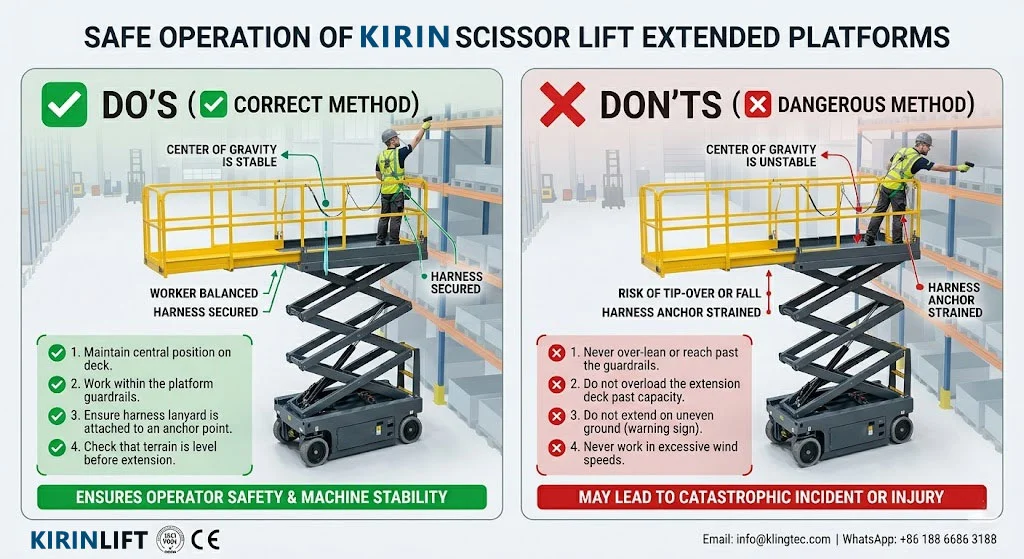
Leaning over guardrails is one of the leading causes of falls from height. A scissor lift extended platform brings the worker directly to the task, removing the temptation to overreach. By providing a stable, guarded floor directly beneath the work area, the risk of losing balance is significantly mitigated.
Cost Savings Over Time
While a scissor lift with extended platform might have a slightly higher rental or purchase price, the ROI is found in labor hours. If a crew can finish a job 20% faster because they aren’t constantly moving the lift, the machine pays for itself within the first few projects. Additionally, less movement means less wear and tear on the lift’s drive motors and batteries.
Versatility Across Applications
A scissor lift extended platform makes a machine “multi-purpose.” It can act as a standard lift for vertical tasks, but then quickly convert into a wide-reach platform for horizontal tasks. This versatility means you need fewer specialized machines on-site, simplifying logistics and reducing footprint.
Reduced Equipment Movement
Every time you move a scissor lift, there is a risk of floor damage, hitting obstacles, or encountering floor debris. By using the scissor lift extended platform to cover a wider area from a single parked position, you minimize the “traffic” on the job site, preserving the flooring and reducing the chance of accidental collisions.
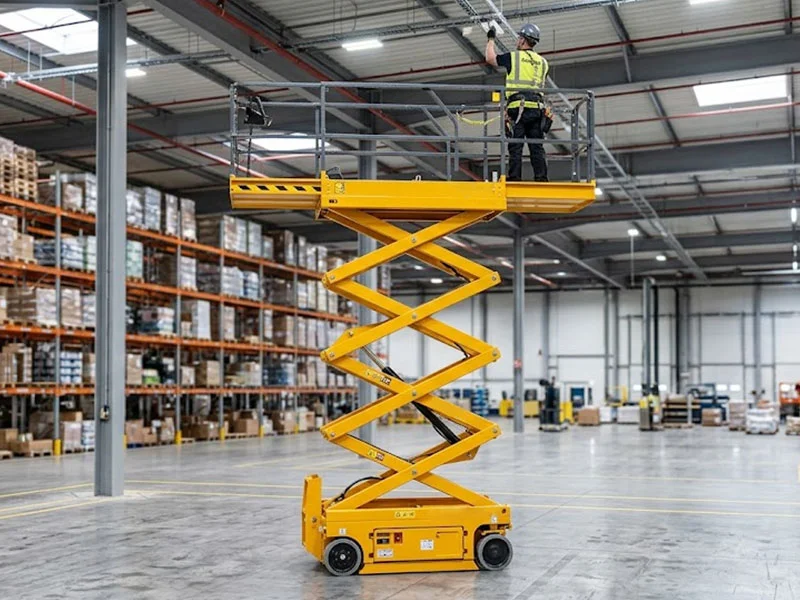
Common Applications of Extended Platform Scissor Lifts
| Application | How the Extended Platform Helps |
| Construction | Allows workers to install siding or windows across a wide span without moving the base. |
| Warehouse Management | Enables picking from deep shelves or reaching over conveyors. |
| Electrical/HVAC | Provides a “bridge” to reach ceiling-mounted units tucked behind pipes. |
| Facility Inspections | Allows inspectors to get close to structural joints and rafters safely. |
Safety Tips When Using an Extended Platform
Using a scissor lift fully extended changes the physics of the machine. To ensure safety, follow these protocols:
- Never exceed load capacity: Always check the specific rating for the extension deck, not just the main platform.
- Ensure platform is fully secured: Before stepping onto the extension, ensure the locking pins or hydraulic locks are engaged.
- Operate on stable, level ground: An extended scissor lift has a shifted center of gravity. Even a slight incline can lead to instability when the deck is out.
- Train operators properly: Ensure every user knows how to deploy and retract the scissor lift extended platform without pinching fingers or unbalancing the machine.
- Follow manufacturer guidelines: Every brand (Genie, JLG, Skyjack) has different rules for wind speeds and weight distribution when the platform is out.
How to Choose the Right Scissor Lift Extended Platform
Platform Size and Extension Length
Measure your typical “gap.” If you consistently need to reach 4 feet over a machine, ensure your scissor lift extended platform feet measurements match that requirement. Don’t buy more extension than you need, as it adds weight and footprint.
Weight Capacity Requirements
Consider your crew and their tools. If you have two workers and a heavy compressor, a standard scissor lift extended might not suffice. Look for “Heavy Duty” (HD) models that maintain high capacities even when extended.
Indoor vs. Outdoor Use
Indoor lifts (Slab Scissor Lifts) typically have smaller, manual extensions. Outdoor (Rough Terrain) lifts often feature massive, dual-powered scissor lift extended platforms on both the front and back of the machine.
Power Source
- Electric: Best for quiet, indoor work with smooth floors.
- Diesel/Dual Fuel: Necessary for outdoor sites where you need the power to drive up slopes and operate heavy hydraulic extensions.
Terrain Compatibility
If your site has gravel or mud, you need a rough-terrain model. These units are built to remain stable even when the scissor lift fully extended creates a high leverage point.
Maintenance Tips for Long-Term Performance
To keep your scissor lift extended platform sliding smoothly, follow this maintenance checklist:
- Regular Inspection: Check the slide tracks for bends, burrs, or debris that could jam the mechanism.
- Lubrication: Use manufacturer-approved grease on the rollers and sliding surfaces.
- Hydraulic Systems: If you have a powered extension, check the hoses for leaks or cracks.
- Cleanliness: Construction dust and drywall mud can “glue” a platform shut. Wipe down the tracks daily.
- Guardrail Integrity: Ensure the telescoping guardrails move freely and lock securely.
Scissor Lift Extended Platform vs. Standard Platform
| Feature | Standard Platform | Extended Platform |
| Reach | Strictly Vertical | Vertical + Horizontal |
| Setup Time | Minimal | Slightly longer to deploy |
| Stability | High | High (if used on level ground) |
| Cost | Lower | Moderate |
| Productivity | Moderate (frequent moves) | High (fewer moves) |
When to choose a standard platform: Small rooms, single-point tasks (like changing one bulb), or extremely tight budgets. When to choose a scissor lift extended platform: Large-scale installations, working over obstacles, or when two-man crews are required for wide tasks.
Conclusion
The scissor lift extended platform is more than just a convenience; it is a fundamental tool for modern industry. By allowing for a scissor lift fully extended horizontal reach, businesses can drastically improve their safety margins and bottom-line productivity. Whether you are looking to rent for a project or purchase a high-quality fleet for long-term construction, the scissor lift with extended platform offers the versatility and safety today’s high-stakes environments demand.
If you are looking for reliable lifting solutions tailored to your specific project needs, our team is here to help. You can reach out to us directly via email at info@klingtec.com or send us a message on WhatsApp at +86 188 6686 3188 for expert advice and product specifications.
FAQs
Can I drive the lift while the platform is extended?
Most modern lifts allow for “creep speed” driving while extended, but always check the manufacturer’s manual. Driving with a scissor lift fully extended is generally restricted to very flat, level surfaces.
Does the extension affect the machine’s wind rating?
Yes. An extended scissor lift acts like a sail. Many models require the platform to be retracted if wind speeds exceed a certain threshold (usually around 28 mph).
How many people can stand on the extended part?
This depends on the weight rating. Usually, the scissor lift extended platform is rated for one person plus tools, while the main deck can hold more.
Can I add an extension to my current standard scissor lift?
Generally, no. The scissor lift extended platform is an integrated structural component. Adding an aftermarket extension can compromise the machine’s balance and void its safety certification.